
Before stepping onto a paddle board, it is essential to recognize your personal limits and the safety requirements of water sports. Equipment cannot replace proper training, physical preparation, or sound judgment. Beginners should possess basic swimming competency, wear a certified personal flotation device (PFD) at all times, and use a high-quality safety leash. Always check the local weather forecasts, wind speeds, and tidal currents before launching. In Singapore, sudden afternoon thunderstorms and strong currents can develop rapidly, making it critical to know when to stay off the water or return to shore immediately.
For those starting their stand-up paddle boarding journey in Singapore’s relatively calm coastal waters and reservoirs, the most practical and stable option is an all-around inflatable stand-up paddle board (iSUP) featuring a wide, flat planing hull. Brands that specialize in stable, forgiving designs with high-quality drop-stitch construction are ideal for novices. These boards provide the necessary lateral stability to help you find your balance, while their inflatable nature solves the storage and transport challenges unique to local urban living.
Defining the Perfect Beginner Board for Singapore's Waters
A paddle board’s dimensions directly dictate how stable it feels on the water. For beginners, width is the single most critical factor. A board that is between 30 and 33 inches wide provides a broad, forgiving platform that minimizes lateral roll, allowing you to find your balance without constantly tipping over. Volume, measured in liters, represents the board’s overall buoyancy; a higher volume ensures the board sits higher on the water, offering a more stable and secure feel even when your weight shifts.
Products mentioned in this guide
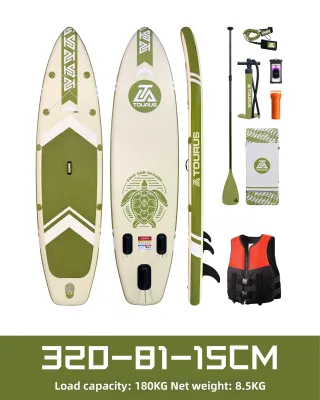
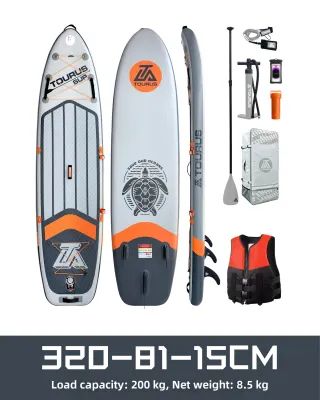
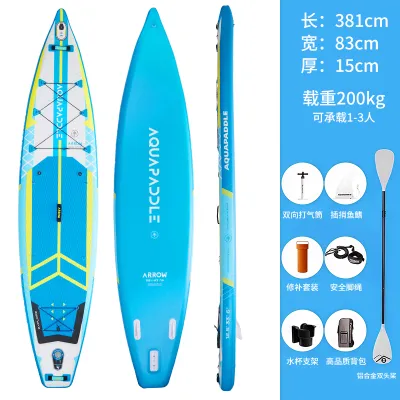
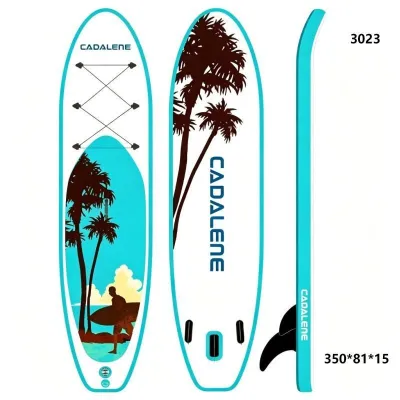
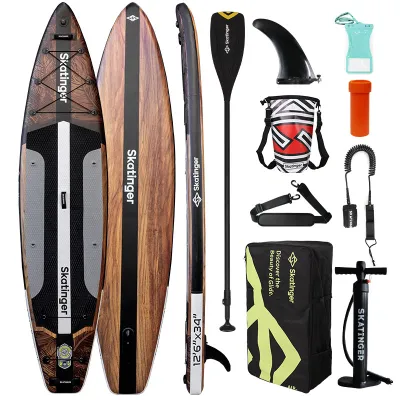
Prices are valid at publication and may change. Please refer to the product page for the latest price.
In Singapore, where the majority of residents live in high-density housing such as Housing & Development Board (HDB) flats or condominiums, storage space is a major practical consideration. Storing a rigid ten-foot composite board is virtually impossible for most households without renting dedicated warehouse space. This makes inflatable stand-up paddle boards the logical choice for local enthusiasts, as they can be deflated and stored compactly in a closet or bomb shelter.
Transporting your gear is another key factor to consider. Transporting a rigid board requires a vehicle fitted with specialized roof racks, which is impractical for many local paddlers. In contrast, an inflatable board deflates and packs into a backpack-sized bag. This allows you to transport your equipment easily in the boot of a compact car, a private hire vehicle, or even on public transit during off-peak hours, making spontaneous trips to the beach highly feasible.
The shape of the board’s hull also plays a vital role in your early success. Planing hulls are flat and wide, resembling a large surfboard. They ride on top of the water and offer excellent stability and maneuverability, which is precisely what a beginner needs to build confidence. In contrast, displacement hulls have a pointed nose designed to cut through the water for speed, but they feel tippy and unforgiving for those still finding their balance.
Exploring Paddle Board Brands That Cater to Novices
Navigating the paddle board market can be overwhelming due to the sheer variety of brands and price points available. Rather than searching for a single, universally perfect brand, beginners should evaluate options based on their specific budget, how often they plan to paddle, and the level of local customer support they require. The brands highlighted below represent non-exhaustive examples categorized by their market position. Before purchasing any board, always verify current model availability, local warranty terms, and the exact dimensions to ensure a safe fit.

Premium Inflatable Specialists
Premium inflatable paddle board brands are dedicated entirely to iSUP technology, focusing on advanced manufacturing techniques such as MSL (Monocoque Structural Laminate) or thermo-bonded double-layer PVC. This construction involves fusing multiple layers of heavy-duty PVC using heat rather than glue, which significantly reduces weight while increasing overall stiffness. The result is a highly rigid platform that can be inflated to higher pressures (often 15 to 20 PSI) without warping, mimicking the solid feel of a traditional hard board.
These premium brands typically package their boards in comprehensive starter kits that include high-quality, durable accessories. Instead of heavy aluminum paddles, they often include lighter fiberglass or carbon-composite shafts that reduce arm fatigue during long paddling sessions. Additionally, these kits usually feature dual-action manual pumps or efficient triple-action pumps that cut inflation time in half, alongside heavy-duty wheeled backpacks designed for comfortable transport.
Investing in an established premium brand also provides long-term value through reliable customer support and comprehensive warranties. For Singapore paddlers, having access to a robust manufacturer warranty offers peace of mind against potential defects such as seam leaks or valve failures. While the initial investment is higher, the durability and performance of these boards ensure they can grow with you as your skills progress.
Accessible Sporting Goods Retailers
For beginners who want to try the sport without a significant financial commitment, large-scale sporting goods retailers offer highly accessible entry points. These global brands produce entry-level inflatable boards at highly competitive prices, making them an attractive option for casual paddlers who plan to take their boards out only a few times a year during weekends or holidays.
One of the main advantages of purchasing from a major sporting goods retailer is the physical shopping experience. Having physical stores across Singapore allows you to inspect the board’s weight, material texture, and packed bag size in person before committing to a purchase. Furthermore, these retailers generally offer straightforward, customer-friendly return and exchange policies, which simplifies the buying process for novices.
While these budget-friendly boards are excellent for casual, occasional use in very calm lagoons, they often feature simpler single-layer PVC construction. This can make the board lighter but more prone to flexing under heavier loads. Beginners must carefully check the thickness and weight limits of these entry-level models to ensure they provide adequate buoyancy and rigidity for their specific body type.
Value-Driven Direct-to-Consumer Brands
Direct-to-consumer (DTC) brands operate primarily online, bypassing traditional retail markups to offer boards with competitive specifications at mid-range prices. This business model allows them to use high-quality materials—such as military-grade PVC and dual-layer drop-stitch construction—while keeping the final retail price accessible for budget-conscious buyers who still demand durability.
When evaluating DTC brands online, it is crucial to look closely at the technical specifications rather than relying solely on marketing descriptions. Look for explicit details regarding material layers, rail reinforcement (the outer edges of the board), and maximum PSI ratings. A high-quality mid-range board should comfortably support inflation pressures of at least 15 PSI to ensure a rigid, stable ride.
A key consideration when buying from an online-focused DTC brand is the availability of local support. Before ordering, verify whether the brand has authorized local distributors or service partners in Singapore to handle warranty claims or repairs. If the brand does not have a local presence, you may face expensive international shipping fees and lengthy waiting times if you ever need to return a defective product or source replacement parts.
Key Specifications to Check Before You Buy
To ensure a safe and comfortable experience on the water, you should look past brand names and evaluate specific physical specifications. Use this concrete checklist to assess any board you are considering:
- Dimensions: Look for a board length between 10 and 11 feet, which offers a good balance of tracking (paddling in a straight line) and maneuverability. The width should be between 30 and 33 inches to provide a stable platform that resists tipping. A thickness of 6 inches is standard for beginner inflatable boards, as it ensures the board remains rigid and keeps your feet elevated above the water line.
- Weight Capacity: Always check the manufacturer's recommended weight capacity. Calculate your body weight plus the weight of any gear you plan to carry, such as water bottles, dry bags, and safety equipment. To maintain optimal stability and buoyancy, your total load should remain well below the maximum limit—ideally with a safety margin of at least 20 to 30 percent.
- Deck Pad and Traction: A high-quality, textured EVA foam deck pad is essential for maintaining grip when wet. In Singapore's intense tropical climate, choose a board with a light-colored deck pad, as dark colors absorb heat rapidly and can become uncomfortably hot for bare feet. The pad should cover a generous portion of the deck to allow comfortable standing and kneeling.
- Fin Setup: A standard three-fin setup (one large center fin and two smaller side fins) provides excellent stability and tracking for beginners. Opt for a removable center fin system rather than fixed fins. Removable fins make it much easier to roll up and pack the board tightly, and they can be easily replaced if they get scraped or damaged in shallow waters.
Where to Test and Buy Your First Board Safely
Before making a financial commitment, the smartest step a beginner can take is to rent and test different boards. Local water sports centers located along East Coast Park, Sentosa (such as Siloso or Tanjong Beach), Pasir Ris Park, and Marina Reservoir offer rental services. Spending a few hours on different board widths and volumes on the water will help you identify the exact dimensions that feel most secure and comfortable for your body type.
When you are ready to buy, purchase from official brand websites, authorized local water sports distributors, or established physical retail stores in Singapore. Buying through these official channels ensures that you receive an authentic product, a valid manufacturer’s warranty, and access to proper replacement parts. Local specialty shops can also provide valuable advice on board setup and maintenance tailored to local conditions.
Exercise extreme caution when browsing unverified online marketplaces or buying from unauthorized third-party sellers. These listings often feature counterfeit products made with low-grade adhesives that can degrade rapidly in tropical conditions, leading to sudden deflation while on the water. Additionally, buying from unauthorized sources leaves you without any warranty protection or after-sales support, posing both safety and financial risks.
Protecting Your Board in a Tropical Climate
Singapore’s tropical environment is harsh on outdoor gear. High temperatures, intense UV rays, and high humidity can significantly shorten the lifespan of an inflatable board if proper care is not taken. Understanding how to maintain your equipment in these conditions is essential for your safety and the longevity of your investment.
Never leave a fully inflated board exposed to direct sunlight on land. The intense tropical heat causes the air inside the board to expand rapidly, which can lead to over-pressurization and catastrophic seam failure. If you need to leave your board on the beach during a break, place it in the shade and release a few PSI of pressure to allow room for thermal expansion, remembering to pump it back up to the correct pressure before heading back out.
Develop a consistent post-paddle routine to protect your investment. After every session, rinse your board, paddle, and safety leash thoroughly with fresh water to remove highly corrosive salt, sand, and debris. Allow the board to dry completely in a shaded, well-ventilated area before rolling it up. Storing a damp board in a humid environment like Singapore promotes the growth of mold and mildew, which can degrade the PVC materials and weaken the seams over time.
Frequently Asked Questions (FAQ)
Are inflatable paddle boards stable enough for beginners?
Yes, modern inflatable paddle boards are exceptionally stable and highly recommended for beginners. Thanks to drop-stitch technology—where thousands of polyester threads connect the top and bottom layers—and a standard 6-inch thickness, these boards can be inflated to high pressures, making them nearly as rigid as traditional hard boards while remaining forgiving during falls.
Do I need a permit to paddle board in Singapore's reservoirs?
Yes, water access regulations in Singapore are strictly managed. While coastal areas like East Coast Park and Sentosa are generally open for recreational paddling, inland reservoirs have specific zoning rules. Beginners must check the latest guidelines from local water management authorities, as some reservoirs require permits, mandatory safety equipment, or restrict paddling to designated zones and hours.
Community discussion
Share your experience or ask a question. Comments are reviewed before publication.