
Finding the right portable goal post for a space-constrained home in Singapore requires balancing structural stability, ease of storage, and safety rules. With residential options often limited to HDB corridors, compact condominium balconies, or small patios, a traditional full-sized goal is highly impractical. Instead, modern portable designs—such as flexible pop-up discs, foldable frames, and angled rebounders—allow football enthusiasts to enjoy training sessions without permanently occupying precious living space. Selecting the ideal setup involves evaluating your available floor footprint, the type of playing surface, and how easily the equipment can be packed away when not in use.
Quick Guide: Matching Goal Posts to Your Space
Living in high-density housing in Singapore means every square meter must be managed carefully. HDB corridors, narrow condo yards, and small tiled patios are the most common areas where children and adults attempt to practice their footwork. These spaces are often bordered by walls, windows, or shared walkways, which limits the size and depth of the sports equipment you can safely deploy.
Before purchasing any football gear, you must consider the playing surface and the physical boundaries of your environment. Hard tiles, vinyl, and laminate floors require non-abrasive, non-slip bases to prevent structural damage to your home. On the other hand, small patches of grass in private gardens or condominium common lawns allow for different anchoring options but require careful consideration of the surrounding landscape.
Products mentioned in this guide
Prices are valid at publication and may change. Please refer to the product page for the latest price.
It is also vital to understand the administrative rules governing your living space. For those residing in public housing, the local Town Council manages the void decks, corridors, and common green spaces. Setting up temporary sports equipment in these areas is subject to strict guidelines regarding public safety, noise levels, and obstruction of emergency pathways. Similarly, private condominium residents must adhere to Management Corporation Strata Title (MCST) by-laws, which often restrict the use of common lawns or walkways for active sports to prevent property damage and ensure peaceful enjoyment for all residents. Always verify these regulations before setting up your goal post to avoid fines or disputes with neighbors.
Recommended Types of Portable Goal Posts for Small Spaces
To help you navigate the various options available on the market, portable goal posts can be categorized into three primary designs. Each type serves a distinct training purpose and suits different spatial arrangements. While specific brand models frequently change in availability and price, understanding these core categories allows you to make an informed decision based on structural features.

The following comparison table outlines the key operational differences between these three categories to help you evaluate which design fits your specific home setup:
| Goal Post Type | Ideal Space & Surface | Setup Time | Anchoring Requirement | Storage Footprint |
|---|---|---|---|---|
| Pop-Up Training Goals | Indoors, balconies, small patios; flat surfaces | Under 1 minute | Low (requires light weights on hard surfaces) | Very small (folds flat into a circular disc) |
| Foldable Frame Mini Goals | Condo lawns, private backyards; grass or flat ground | 2 to 5 minutes | Moderate (requires sandbags or pegs) | Medium (folds flat, requires long storage slot) |
| Rebounder Nets and Targets | Narrow corridors, tight patios; hard or soft ground | 5 to 10 minutes | High (needs heavy weights or ground pegs) | Medium to large (hinged frame folds flat) |
Pop-Up Training Goals
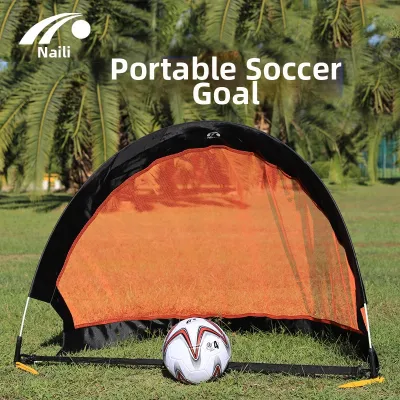
Pop-up training goals are built with highly flexible, integrated fiberglass loops that spring into shape immediately when unpacked. This design eliminates the need for complex assembly, making them an excellent choice for spontaneous play sessions in HDB bedrooms, small balconies, or living rooms. When the training session is over, these goals fold down with a simple twist-and-fold motion into a flat, circular carrying disc that can be easily slid behind a wardrobe or stored in a utility closet.
However, the lightweight nature of pop-up goals introduces specific limitations. Because the frame relies on tension and flexible fiberglass, it lacks the rigid structure needed to withstand hard, high-velocity shots. A powerful kick will easily deform the goal or push it backward. Additionally, when used outdoors on breezy days, these goals are highly susceptible to the “kite effect,” where wind catches the fabric net and blows the entire structure away. To prevent this, you must pack them away immediately after use or secure them with appropriate weights. They are best reserved for toddler play, precision passing drills, and low-impact target practice.
Foldable Frame Mini Goals
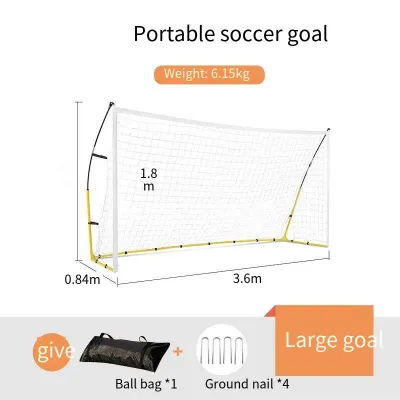
Foldable frame mini goals offer a more traditional rectangular shape, providing a realistic target for shooting practice while remaining highly portable. These goals typically feature hinged joints or quick-clip locking mechanisms made of lightweight PVC or thin-walled, powder-coated steel. This structural rigidity allows players to practice more intense shooting drills without the goal collapsing or shifting excessively upon ball impact.
Storage for these models is highly efficient, as the front and rear frames fold flat against each other. This flat profile allows you to slide the collapsed goal under a bed, behind a sofa, or along the wall of a narrow home shelter. While they offer superior stability and a more authentic playing experience on condo lawns or small backyards, they do require a slightly longer setup time than pop-ups. They also demand more storage length, meaning you must measure your storage closets or under-bed clearance to ensure the folded frame fits comfortably.
Rebounder Nets and Targets
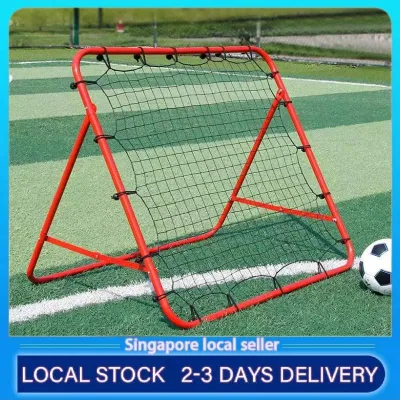
Rebounder nets present an innovative, space-saving alternative to traditional goal posts, especially for solo training sessions. Unlike a standard goal that requires space behind the net to catch the ball, a rebounder features a highly tensioned elastic net held by an angled frame. When the ball strikes the net, it is immediately returned to the player, allowing for continuous passing, trapping, and first-touch practice within a very confined area.
This return mechanism makes rebounders exceptionally well-suited for narrow HDB corridors, long balconies, or tight patio spaces where a deep goal net would block walkways. Because you do not need space behind the unit to retrieve balls, the entire setup can be pushed close to a wall. The primary trade-off is that rebounders are designed for skill development rather than traditional match play. They require a sturdy, heavy frame to absorb the impact and rebound the ball effectively, which translates to a heavier carrying weight and a slightly larger storage footprint compared to basic pop-up goals.
Safely Anchoring Goals on Hard and Shared Surfaces
Securing your portable goal post is a critical safety requirement, particularly when playing on hard, non-penetrable surfaces like HDB void deck tiles, concrete condo walkways, or indoor tiled floors. A lightweight goal that is not properly anchored can easily tip over, slide out of position, or be carried away by sudden gusts of wind. In shared residential environments, an unstable goal post poses a significant safety hazard to young children, pets, and passing pedestrians.
To secure goals on hard surfaces without causing permanent damage to the flooring or violating estate rules, you must use non-destructive anchoring methods. Weighted sandbags made of heavy-duty canvas are highly effective; they can be draped over the rear ground bars of foldable frames or placed inside the base pockets of pop-up goals. Water-filled base attachments, which can be emptied for easy transport, provide excellent stability for larger frames. For indoor smooth tiles or vinyl floors, heavy-duty rubber suction cups or non-slip rubber pads can be attached to the base contact points to prevent sliding while protecting the floor from scratches.
Under no circumstances should you use metal ground pegs, drill holes into concrete, or apply strong chemical adhesives to shared estate flooring. These methods cause permanent structural and aesthetic damage, which violates Town Council and MCST maintenance regulations and can lead to costly repair liabilities. Furthermore, metal pegs used on hard surfaces can easily ricochet or slip, creating sharp projectile hazards. Always check the manufacturer instructions of both the goal post and any aftermarket anchoring accessories to ensure they are rated for hard-surface use.
Managing trip hazards is equally important in shared spaces. When using sandbags or external weights, ensure they are painted in high-visibility colors or placed directly within the goal’s physical footprint rather than extending out into pedestrian walkways. Avoid using long anchor ropes or tension cords that stretch across paths, as these are difficult for passersby to see and can cause serious trips and falls.
Never leave lightweight, portable goals unattended outdoors. If a sudden rainstorm or strong gust of wind arises, an unanchored goal can quickly become a dangerous obstacle. Establish a strict routine of setting up the goal only when active supervision is present, and pack the entire assembly away immediately after the session concludes to maintain a safe, clear environment for your community.
Key Specifications to Verify Before Buying
When browsing online marketplaces or local sports retailers in Singapore, it is easy to be misled by product photos that make goals look smaller or larger than they actually are. To ensure your purchase fits your living space and meets your training needs, you must carefully verify several physical and material specifications before making a decision.
- Dimensions vs. Available Space: Always measure your intended play area before purchasing. Do not rely solely on the front width and height dimensions listed on the product packaging. You must check the external footprint, which includes the depth of the net and any rear support bars that extend backward. A goal that is 1.2 meters wide might require an additional 0.8 meters of rear depth, which could completely block a narrow balcony or corridor.
- Frame Material: The material of the frame directly dictates the goal's weight, durability, and suitability for different environments. PVC frames are highly popular because they are incredibly lightweight, rust-proof, and safe for young children, though they can crack under the impact of heavy, adult-level shots. Fiberglass is the standard for pop-up goals due to its flexibility and high strength-to-weight ratio, but it must be handled carefully to avoid splintering over years of use. Powder-coated steel offers the highest level of structural stability and can withstand powerful shots, but it is significantly heavier to carry and will rust quickly if the protective coating is chipped or scratched.
- Netting Quality: The durability of the net is just as important as the frame. Check the product specifications for the net's denier or ply rating, which indicates the thickness of the fibers. Thicker, knotted polyester nets (typically 30-ply or higher) offer superior resistance to frequent high-velocity ball impacts and are much less likely to tear. They also withstand the intense ultraviolet (UV) radiation of Singapore's tropical climate far better than thin, extruded plastic nets, which tend to become brittle and crumble after a few months of sun exposure.
- Carry Bag Inclusion: A durable, dedicated carry bag is an essential accessory for any truly portable goal. Look for bags made of heavy-duty, water-resistant nylon or polyester with reinforced stitching and wide, adjustable shoulder straps. Since you will likely be transporting the goal down elevators, through corridors, and across void decks, a comfortable and secure carrying system makes the difference between regular use and a piece of equipment that sits forgotten in a closet.
Care and Storage in a Tropical Climate
Singapore’s tropical climate—characterized by high relative humidity, frequent heavy downpours, and intense sunlight—presents a challenging environment for sports equipment. Without proper care, portable goal posts can quickly suffer from mold growth, rusted joints, and degraded netting, drastically shortening their lifespan. Implementing a simple maintenance routine will keep your gear safe, clean, and functional for years.
First, establish a strict drying protocol. Never pack a wet or damp goal post directly into its carry bag for long-term storage. If you play on a damp lawn or get caught in a sudden afternoon shower, unfold the goal completely in a well-ventilated indoor area or a shaded balcony when you return home. Allow both the net and the frame to air-dry fully before folding and packing them away. Storing damp synthetic netting in a sealed bag creates a perfect breeding ground for mold and mildew, which weakens the fibers and produces unpleasant, persistent odors.
For goals with metal frames or steel hinges, regular rust prevention is essential. Inspect the frame periodically for any chips, scratches, or wear in the paint or powder coating, particularly around the joints and connecting pins where friction occurs. If you notice exposed metal, apply a clear rust-inhibitor spray or a small dab of outdoor touch-up paint to seal the area against moisture. Keeping these joints lubricated with a light silicone spray also ensures the folding mechanisms continue to operate smoothly without jamming.
UV degradation is another major factor in material breakdown. While portable goals are designed for outdoor use, leaving them exposed to direct sunlight for extended periods when not in use will rapidly degrade PVC frames and polyester nets, making them brittle and prone to snapping. Always store your goal indoors, in a household shelter, or in a shaded utility closet rather than leaving it permanently set up on an open balcony or patio.
When cleaning your equipment, keep the process simple and non-destructive. Wipe down the frame and net with a damp microfiber cloth and a mild soap solution to remove dirt, sweat, and grass stains. Avoid using harsh chemical bleaches, abrasive scrubbing pads, or high-pressure washers, as these can strip away protective UV coatings, damage the structural integrity of the plastic, and weaken the delicate fibers of the net. Always consult the manufacturer’s care instructions for specific material tolerances before applying any cleaning agents.
Frequently Asked Questions (FAQ)
Can I leave a portable goal post in the HDB void deck overnight?
HDB void decks and common corridors are public communal spaces managed by local Town Councils to ensure safe access and emergency egress for all residents. Leaving personal sports equipment, including portable goal posts, unattended overnight in these areas is strictly prohibited under common estate guidelines. Unattended items can obstruct emergency evacuation routes, create fire hazards, and interfere with scheduled estate cleaning and maintenance activities. Any gear left overnight is subject to removal and confiscation by estate cleaners or enforcement officers. To keep your equipment safe and maintain good relations with your neighbors, always pack up your goal post and return it to your apartment immediately after your training session.
Are pop-up goals safe for indoor use on laminate flooring?
Pop-up goals are generally safe for indoor use due to their lightweight, flexible fiberglass frames, but certain precautions must be taken to protect your flooring. The hard plastic corner joints, exposed metal base pins, or rough fabric edges can easily scratch or scuff delicate laminate, vinyl, or polished wood floors during active play. To prevent damage, place a thick yoga mat, a rubber runner, or foam interlocking tiles underneath the contact points of the goal base. Additionally, always use a soft, low-bounce felt ball or a lightweight foam training ball indoors to protect your walls, windows, and household fixtures from high-velocity impacts.
What size goal post is best for a 5-year-old child?
For a five-year-old child, a compact goal measuring approximately 1.2 meters wide by 0.8 meters high (roughly 4 feet by 3 feet) is highly recommended. This size is perfectly proportional to a young child’s height, kicking power, and running stride, allowing them to practice basic shooting and goalkeeper skills effectively. Goals of this size are also exceptionally lightweight, making them much safer if they accidentally tip over during play. For parents, these smaller dimensions ensure the goal is incredibly easy to carry, quick to assemble, and fits comfortably within the tightest storage spaces or car boots in Singapore.
Community discussion
Share your experience or ask a question. Comments are reviewed before publication.