
Building a high-quality home gym in a Singapore Housing & Development Board (HDB) flat requires balancing heavy-duty strength training aspirations with strict spatial and structural realities. Powertec equipment, known for its robust construction and lever-based mechanics, offers an appealing alternative to traditional free weights and commercial-grade machines. However, selecting the right setup is not a matter of choosing the largest system available; it requires a systematic evaluation of your flat’s layout, ceiling height, floor load limits, and training style.
By focusing on compact lever systems, modular half racks, or adjustable benches, you can establish a highly functional training space that respects the physical boundaries of high-density residential living. This guide outlines how to assess your space, compare different equipment categories, and execute a seamless pre-purchase check to ensure your home gym is safe, efficient, and neighbor-friendly.
Assessing HDB Space Constraints for Powertec Gear
Standard HDB rooms often range from 9 to 12 square meters, making spatial efficiency your primary design constraint. A piece of strength equipment might have a compact static footprint on paper, but its dynamic footprint—the space required during actual use—is significantly larger. For instance, when performing exercises with a standard Olympic barbell, you must account for the bar’s total length of 2.2 meters, plus at least 30 to 40 centimeters of clearance on either side to safely slide weight plates onto the sleeves. This means a room needs a minimum clear width of 3.0 meters to accommodate basic barbell movements without striking walls or furniture.
Products mentioned in this guide
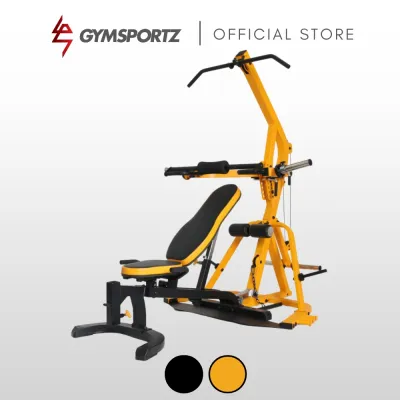
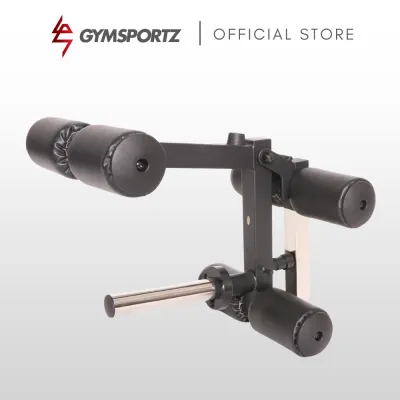
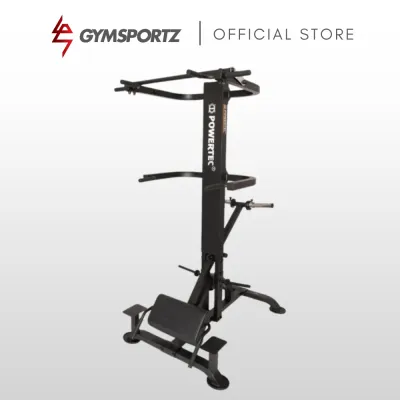
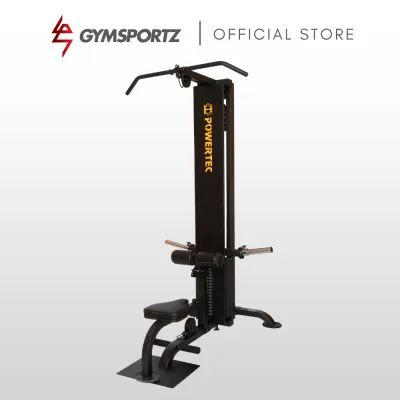
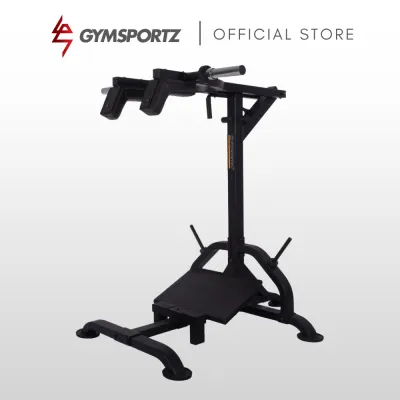
Prices are valid at publication and may change. Please refer to the product page for the latest price.
Ceiling height is another critical boundary. Standard HDB ceilings typically measure between 2.6 and 2.8 meters, though older flats or units with false ceilings may offer less vertical clearance. When planning overhead movements like military presses, pull-ups, or using high-pulley cable attachments, you must measure the maximum vertical extension of the equipment. Ensure there is at least 30 centimeters of clearance between the top of the machine (or your head at the peak of a pull-up) and the ceiling to prevent accidental contact and allow for natural movement.
Floor load capacity and vibration mitigation are paramount in high-density residential blocks. HDB floors are structurally designed to support a standard live load of 1.5 kN/m², which translates to roughly 150 kg per square meter. While a heavy rack and a lifter may not exceed the overall structural limit of the room, the concentrated load under the small feet of the equipment can be substantial. Furthermore, dropping weights or rapid dynamic movements generate impact forces that travel through the concrete slab, causing structural vibrations and noise that disturb neighbors. Proper load distribution using high-density rubber mats or a dedicated lifting platform is essential to mitigate these localized forces.
Powertec Equipment Categories for Compact Setups
Powertec offers several distinct equipment categories, each presenting unique spatial trade-offs. Choosing between multi-system gyms, free-weight racks, and lever-based machines requires matching your specific training goals with your room’s physical layout.

For users prioritizing safety and a wide variety of exercises without a spotter, lever-based systems offer excellent control within a fixed path. For those who prefer traditional barbell training, half racks or squat stands provide a smaller footprint than full power cages, though they require careful management of barbell clearance. Understanding these categories allows you to select a system that maximizes training utility per square meter.
Multi-System Gyms and All-in-One Trainers
Multi-system gyms combine multiple training stations—such as a press arm, lat pulldown, and leg developer—into a single integrated unit. The primary advantage of these systems is exercise variety; you can perform dozens of movements targeting different muscle groups without needing multiple standalone machines. This makes them highly efficient in terms of exercise-to-footprint ratio.
However, these systems have a large, fixed footprint that cannot be easily folded or moved once assembled. When evaluating an all-in-one trainer for an HDB room, you must check the clearance required for seat adjustments, pivoting arms, and weight plate storage. Some models require access from the sides or rear to load plates or adjust settings, meaning the machine cannot be pushed flush against a wall. Additionally, taller users must verify that the range of motion on lat pulldowns or press arms is not restricted by low ceilings or compact frame designs.
Power Racks, Half Racks, and Squat Stands
For purists who rely on squats, bench presses, and overhead lifts, a rack system is the standard choice. A full power rack offers the highest level of safety with enclosed spotter bars, but it occupies a significant volume of space and can feel visually overwhelming in a small bedroom. It also requires a completely flat, stable surface and a wide clearance zone for barbell loading.
A half rack or heavy-duty squat stand presents a more compact alternative, offering open front access while still providing safety spotter arms. When setting up a rack, barbell clearance is the most critical factor. You must ensure that the barbell does not strike walls, wardrobes, or windows during execution or plate loading. Additionally, because rack training involves free weights, you must implement robust noise and impact mitigation strategies, such as thick rubber tiling, to handle the inevitable contact between the barbell and the steel spotter arms.
Adjustable Benches and Lever-Based Systems
If floor space is at an absolute premium, a modular setup centered around an adjustable utility bench and a compact lever system is often the most practical solution. Powertec’s lever-based machines replace traditional cables and pulleys with heavy-duty steel arms that pivot on smooth bearings. This design provides the safety of a machine with the natural arc of free weights.
An adjustable bench can often be rolled away or stood upright when not in use, freeing up valuable floor space for floor exercises or stretching. Lever systems also eliminate the need for a wide barbell, drastically reducing the lateral clearance required. The trade-off, however, is that lever machines have specific pivot paths that may not perfectly match every body type, and they require manual plate loading on individual arms, which still demands adequate side clearance.
Selection Checklist and Pre-Purchase Checks
Before finalizing any equipment purchase, complete this step-by-step verification checklist to ensure your chosen setup is safe, practical, and compliant with your living environment.
- Step 1: Measure the Dynamic Footprint. Do not rely solely on the manufacturer's static dimensions. Draw a floor plan of your room, marking the location of doors, windows, wardrobes, and electrical outlets. Add at least 60 centimeters of clearance around the perimeter of the equipment for movement, and ensure there is sufficient space to load and unload weight plates safely.
- Step 2: Verify Delivery and Assembly Access. Heavy strength equipment is shipped in large, heavy boxes. Measure the width of your main entryway, hallway corners, lift doors, and internal room doors to ensure the packages can be delivered without obstruction. Check if the equipment requires specialized tools for assembly or if professional installation services are available in Singapore.
- Step 3: Assess Structural Anchoring Requirements. Some heavy racks or high-pulley systems are designed with the option to be bolted to the floor for maximum stability. In an HDB flat, drilling into the concrete floor slab is highly discouraged and may violate structural guidelines. Verify that the equipment you select is structurally stable and safe to use as a free-standing unit without floor anchoring.
- Step 4: Check Warranty and Local Support. Ensure that your purchase is covered by a valid manufacturer's warranty that is serviceable by a local distributor in Singapore. This guarantees access to replacement parts, such as cables, pulleys, or upholstery, should any wear and tear occur over years of consistent use.
Frequently Asked Questions (FAQ)
Can I install a Powertec power rack in an HDB without drilling into the floor?
Yes, you can safely use a Powertec power rack or half rack in an HDB flat without drilling into the floor, provided you select a model designed with a stable, wide-base frame. To ensure maximum stability and prevent the rack from shifting during intense workouts, place the equipment on a high-density rubber lifting platform or interlocking gym mats. The weight of the rack itself, combined with stored weight plates on the frame’s storage pegs, acts as an effective ballast, securing the unit firmly in place without damaging your flat’s flooring.
How do I minimize noise and vibration when using Powertec weight equipment in an HDB?
Minimizing noise and vibration is crucial for maintaining good relations with your neighbors in high-density HDB blocks. Start by installing a multi-layered flooring system: a base layer of high-density EVA foam tiles to absorb structural vibrations, topped with a heavy-duty rubber gym mat (at least 15mm to 20mm thick) to handle direct impacts. For lever-based machines or racks, use rubber-coated or urethane weight plates instead of raw cast iron, as they significantly reduce clanging. Additionally, avoid dropping weights at the end of a set, and consider using lifting straps or controlled negatives to minimize sudden impacts.
Are Powertec multi-system gyms suitable for standard HDB ceiling heights?
Most Powertec multi-system gyms and lever trainers are designed with a height of around 2.1 to 2.2 meters, making them compatible with standard HDB ceiling heights of 2.6 meters. However, you must verify the exact height of the specific model, especially if it features a pull-up bar or a high-pulley attachment. Ensure you have at least 30 centimeters of clearance above the highest point of the machine to allow room for your head during pull-ups and to prevent the cable system from contacting the ceiling during operation. Always measure your ceiling height at the exact spot where the machine will be placed, taking into account any false ceilings, light fixtures, or ceiling fans.
Community discussion
Share your experience or ask a question. Comments are reviewed before publication.