
For beginners venturing into the tropical waters of Singapore, clear underwater vision is not just a matter of enjoying the vibrant marine life at Sisters’ Islands Marine Park; it is a fundamental safety requirement. Navigating shallow reefs, reading tide changes, and keeping track of your snorkeling group require sharp, uncompromised vision. If you rely on corrective glasses in your daily life, standard snorkeling gear will leave you in a blur.
To solve this, first-time buyers must navigate a key decision path: choosing between highly affordable pre-molded step-diopter masks or investing in custom-ground optical lenses. While the lenses correct your vision, a mask is only as good as its physical seal. A perfectly corrected lens in a leaking mask will ruin your experience, meaning you must balance optical precision with a flawless physical fit. Equipment can enhance your view, but it cannot replace water safety training, physical comfort in the sea, and sound judgment.
Why You Need a Dedicated Prescription Snorkel Mask
Attempting to use everyday vision workarounds in the water presents immediate safety hazards. Wearing contact lenses under a standard snorkel mask is highly discouraged by diving and medical professionals. If water penetrates the mask skirt—a common occurrence for beginners adjusting their gear—saltwater can wash the contact lenses out of your eyes, leaving you disoriented in open water. More critically, marine environments harbor microscopic organisms; trapping saltwater behind a contact lens significantly increases the risk of severe bacterial or amoebic corneal infections.
Products mentioned in this guide
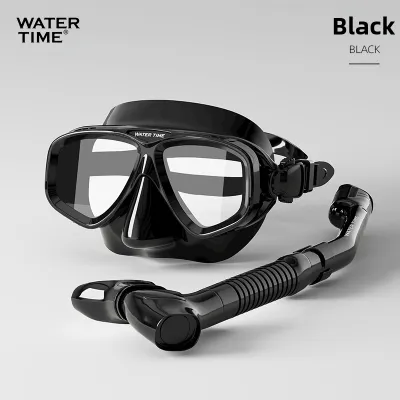
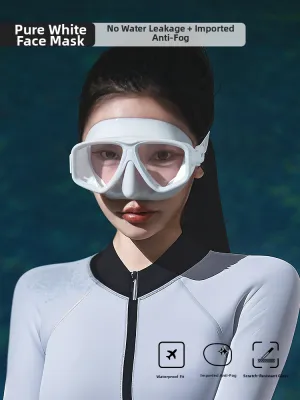
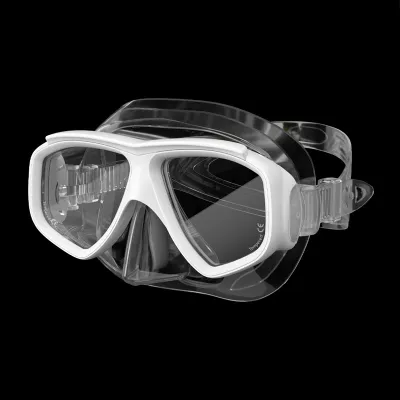
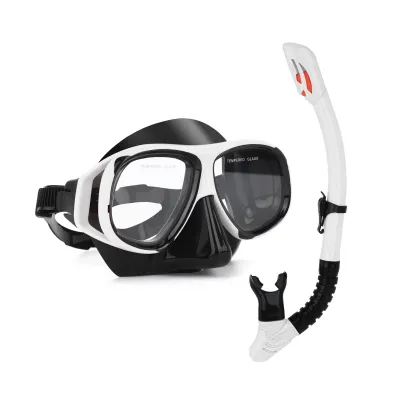
Prices are valid at publication and may change. Please refer to the product page for the latest price.
Similarly, trying to wear regular eyeglasses underneath a standard mask is physically impossible. The temples of your glasses frames will prevent the mask’s silicone skirt from sealing against your face. This creates a direct gap for water to flood the mask instantly. Even if you manage to force a partial seal, the pressure of the mask strap will push the frame painfully against your nose and temples, causing bruising and potential damage to your eyewear.
Investing in a dedicated prescription snorkel mask eliminates these workarounds, dramatically reducing beginner anxiety. When you can see clearly without the fear of losing a contact lens or flooding your mask, your heart rate remains lower, your breathing through the snorkel becomes more regular, and you can focus entirely on mastering basic buoyancy and water safety skills.
How to Translate Your Eyewear Prescription for Underwater Use
Selecting the correct lens strength for a snorkel mask requires understanding how light behaves when transitioning from water through glass and into the air space inside your mask. Water acts as a natural magnifier, refracting light in a way that makes objects appear roughly 33% larger and closer than they actually are. Because of this natural magnification, many snorkelers with nearsightedness (myopia) find that they require a slightly lower (less negative) diopter strength underwater than they do on land.

For mild nearsightedness, a common rule of thumb is to calculate the “spherical equivalent” of your prescription and potentially round down slightly to prevent eye strain or mild dizziness. If your prescription includes a correction for astigmatism (indicated by “cylinder” and “axis” values on your prescription card), you must evaluate how severe it is. For mild astigmatism (typically a cylinder value of less than -1.00), you can often ignore the cylinder value and use the spherical equivalent. However, if you have moderate to high astigmatism, relying on a basic step-diopter mask may cause persistent blurriness and headaches, making custom-ground lenses a much safer choice.
Before purchasing any optical lenses, always consult your optometrist or refer to the specific manufacturer’s conversion charts. Do not guess your underwater prescription. It is also important to note that standard pre-molded masks are designed primarily for single-vision correction; if you require progressive lenses or bifocals to read your dive computer or watch while swimming, you will need to look into specialized custom-ground lenses or stick to dedicated bifocal stick-on options.
Which Type of Prescription Mask Fits Your Needs?
To find the right balance between your budget, your optical requirements, and how often you plan to use the gear, you must understand the three primary optical mask categories available. Each method addresses different vision complexities and carries distinct trade-offs in cost and preparation time.
Pre-Molded Step-Diopter Masks
These masks use off-the-shelf lenses manufactured in standardized optical increments, typically ranging from -1.5 to -8.0 diopters in 0.5-diopter steps. Some manufacturers also offer positive diopters for farsightedness.
- Pros: Highly budget-friendly (often costing under S$100 to S$150), immediately available at local dive shops, and easy to replace if a lens is scratched.
- Cons: They do not correct for astigmatism, and you must choose the closest matching step, meaning your vision correction may not be 100% perfect.
- Best For: Beginners with straightforward nearsightedness who need a quick, reliable solution for casual holiday snorkeling.
Custom Ground Lens Masks
Custom ground masks are created by taking a high-quality dual-lens mask and replacing or bonding the glass with lenses ground by an optical lab to your exact ophthalmic prescription, matching your precise sphere, cylinder, axis, and pupillary distance.
- Pros: Flawless visual clarity, full correction for high astigmatism, bifocal options, and precise alignment with your eyes.
- Cons: High cost (frequently exceeding S$250 to S$400) and long lead times of several weeks for lab fabrication.
- Best For: Snorkelers with complex prescriptions, severe astigmatism, or those who plan to transition into scuba diving and want a long-term investment.
Drop-In Lens Frame Masks
These modular systems feature a standard snorkel mask with an internal mounting point where a lightweight plastic frame holding corrective lenses can be clipped directly behind the main mask glass.
- Pros: Highly versatile; if your vision prescription changes, you only need to replace the inexpensive inner lenses rather than buying a whole new mask. The outer mask can also be shared with family members by simply removing the insert.
- Cons: The extra layer of plastic and glass can slightly increase the risk of fogging, and the insert sits closer to your eyelashes, which may cause rubbing for some face shapes.
- Best For: Users with changing prescriptions or families looking for a shared, adaptable gear setup.
Essential Mask Features for a Comfortable Beginner Experience
While optical clarity is critical, the physical construction of the mask dictates how comfortable you will be in the water. When evaluating masks, look beyond the lenses and verify these key structural features:
- Low Internal Volume: A low-volume mask sits closer to your face, reducing the pocket of air inside. For beginners, this is incredibly helpful because a smaller air pocket requires much less effort to clear if water leaks inside. It also reduces the upward buoyant pull of the mask against your face, making it feel more stable.
- High-Grade Silicone Skirt: Avoid cheap PVC or plastic skirts, which stiffen in cooler water and fail to conform to your face. Look for liquid injection silicone skirts. High-grade silicone is soft, hypoallergenic, and highly flexible, allowing it to create a reliable seal against various facial contours without requiring you to overtighten the head strap.
- Tempered Glass Certification: Ensure the mask lenses are marked with the word "Tempered" or a "T" stamp. Tempered glass is structurally treated to resist high pressure and impact. If it does break, it crumbles into small, blunt granular pieces rather than sharp, dangerous shards. Never use plastic or non-tempered glass lenses for snorkeling or diving.
- Balanced Field of View: Because prescription masks require separate left and right lenses (dual-lens design) to accommodate different optical strengths, they naturally feature a central frame bridge. Look for a design that maximizes the vertical and lateral glass area to preserve your peripheral vision, helping you stay aware of your surroundings without causing optical distortion at the outer edges.
Where to Buy and Fit Prescription Masks in Singapore
While ordering gear online is highly convenient, buying a snorkel mask blind carries a high risk of purchasing an ill-fitting mask that leaks. For your first prescription mask, it is highly recommended to visit a specialized dive shop or a dedicated optical sports retailer in Singapore. Physical stores allow you to try on various mask frames to find one that perfectly matches your unique facial structure.
To test a mask’s fit in-store without using the head strap, perform the inhale test:
- Look up slightly and brush any hair away from your forehead and temples.
- Place the mask gently against your face without putting the strap over your head.
- Inhale gently through your nose and hold your breath.
- Look down toward the floor and gently shake your head from side to side.
If the mask remains sealed and stays firmly on your face purely from the suction of your gentle inhalation, the skirt matches your facial contours. If you feel air rushing in near your temples, nose bridge, or upper lip, the mask does not fit, and it will leak under water.
Several physical dive centers around Beach Road and central Singapore stock popular step-diopter masks and can assemble them on the spot. For custom-ground options, some local optical boutiques partner directly with dive distributors; they can take your prescription, order the appropriate compatible mask frame, and have the lenses professionally glazed by a local laboratory.
Maintenance and Anti-Fog Tips for Lasting Clarity
To protect your investment and ensure your prescription lenses remain crystal clear, you must establish a strict care routine. Saltwater, chlorine, and tropical humidity can quickly degrade silicone and damage specialized lens coatings if left unchecked.
- Immediate Fresh Water Rinse: After every session in the sea or a chlorinated pool, thoroughly rinse your mask in clean, lukewarm fresh water. This dissolves salt crystals that can scratch the lenses or dry out and split the silicone skirt. Allow the mask to air dry completely in a shaded, well-ventilated area; never dry it under direct Singapore sunlight, as intense UV rays accelerate silicone degradation.
- Safe Anti-Fog Preparation: New masks often carry a thin layer of silicone residue from the manufacturing process, which causes immediate fogging. For standard tempered glass lenses, a mild abrasive like non-gel toothpaste can be gently rubbed on the inside of the dry glass and rinsed off to remove this film. However, always check the manufacturer's care instructions first; some prescription lenses feature delicate anti-fog or anti-reflective coatings that will be permanently ruined by abrasive toothpaste or harsh chemicals.
- Pre-Swim Anti-Fog Application: Before entering the water, apply a few drops of commercial, reef-safe anti-fog solution or a highly diluted drop of baby shampoo to the dry inner lenses. Rub it gently across the glass with clean fingertips, rinse it quickly once in the water, and place the mask immediately onto your face. Avoid using saliva if you are using specialized optical coatings, as it is less effective and can introduce bacteria.
- Proper Storage: Store your dry mask in a hard, ventilated protective case. Keep it away from heavy gear that could crush the frame, and never store it alongside black rubber fins or snorkel mouthpieces, as the dark pigments can bleed into and permanently discolor clear silicone skirts.
Frequently Asked Questions (FAQ)
Can I use my exact glasses prescription for a snorkel mask?
No, you should generally adjust your land prescription for underwater use. Because water naturally magnifies objects by about one-third, wearing your exact land prescription can cause minor eye strain, headaches, or mild spatial disorientation. For mild nearsightedness, many snorkelers benefit from rounding down their prescription strength by roughly 0.25 to 0.5 diopters. Always consult your optometrist or refer to the manufacturer’s optical conversion charts before purchasing to ensure a comfortable match.
Are full-face snorkel masks available with prescription lenses?
Integrating prescription lenses into full-face snorkel masks is highly challenging. Full-face masks feature curved, wide-view polycarbonate visors rather than flat tempered glass, which causes significant optical distortion if you attempt to apply corrective lenses directly. While some brands offer specialized internal glasses-style inserts that clip inside the mask, full-face masks carry inherent safety risks for beginners—such as more difficult water clearing and potential CO2 build-up during heavy exertion. Traditional half-masks remain the safety and optical standard for prescription users.
How do I prevent my prescription mask from leaking?
To ensure a watertight seal, always clear your hair away from your forehead and temples before putting the mask on, as even a single strand of hair can break the silicone seal. Avoid overtightening the head strap; the strap should only apply enough pressure to keep the mask in place, as overtightening buckles the silicone skirt and creates gaps. Finally, ensure you are clean-shaven or apply a small amount of petroleum jelly or silicone grease to your mustache to prevent facial hair from breaking the lower seal of the mask skirt.
Community discussion
Share your experience or ask a question. Comments are reviewed before publication.