
Finding the right home workout equipment for a Singapore Housing & Development Board (HDB) flat requires balancing fitness utility with strict space constraints. When space is at a premium, traditional dumbbell racks are impractical. ProIron adjustable dumbbells offer a compact alternative by consolidating multiple weight pairs into a single, self-contained system. Selecting the ideal model depends on your specific training goals, the storage footprint of the dumbbell base, and the physical constraints of your workout area.
Assessing HDB Space and Dumbbell Footprint Requirements
Typical BTO (Built-To-Order) or resale flats often require multi-functional rooms. A bedroom corner, living room edge, or household shelter is frequently designated for workouts. Before purchasing, measure the exact floor area where the equipment will reside. Do not rely solely on the dimensions of the dumbbell handles; the storage cradle or tray often extends several centimeters wider and longer than the weights themselves, making it the true metric for storage planning.
Exercises like chest presses, dumbbell flyes, overhead shoulder presses, and walking lunges demand a buffer zone far larger than the static storage footprint. A standard HDB ceiling height is approximately 2.6 meters. If you are using a ceiling fan, overhead movements require careful positioning to avoid catastrophic contact. Measure your maximum arm reach plus the length of the fully loaded dumbbell to ensure you have at least 50 centimeters of clearance from walls, light fixtures, fan blades, and furniture.
Products mentioned in this guide
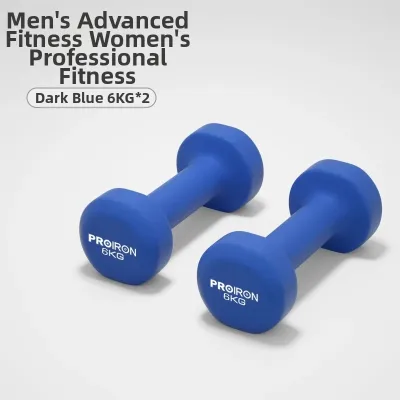
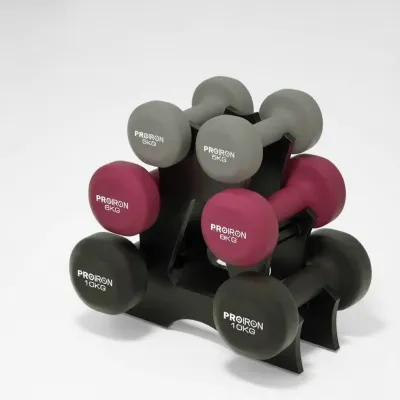
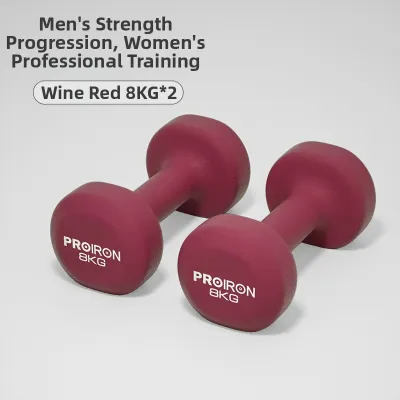
Prices are valid at publication and may change. Please refer to the product page for the latest price.
A frequent error is measuring only the horizontal storage space while neglecting the vertical clearance needed to lift the dumbbells straight up out of their cradles. Some dial-adjustable models require you to lift the handle vertically by 15 to 20 centimeters to clear the remaining plates. If you store the set under a low bed frame or inside a tight cabinet shelf, you may find it impossible to extract the weights during a workout. Always verify the manufacturer’s specified cradle height and add a comfortable hand-clearance margin.
Matching Weight Ranges to Home Training Goals
Home strength training ranges from high-repetition muscular endurance work to low-repetition hypertrophy and strength development. Beginners or those focusing on cardiovascular conditioning and physical therapy often find a lighter set more than sufficient. Conversely, experienced lifters pursuing progressive overload for compound movements like squats, deadlifts, and chest presses will quickly outgrow lighter sets, necessitating a model that scales up to 20kg or 24kg per dumbbell.

Progressive overload relies on making small, manageable increases in resistance over time. For upper-body isolation movements—such as lateral raises, front raises, and bicep curls—jumping from 2kg to 4kg represents a 100% increase in load, which can stall progress or cause injury. Look for ProIron models that offer small, incremental steps, such as 1kg or 2kg adjustments. Finer increments allow your muscles and connective tissues to adapt safely, ensuring consistent progress without compromising lifting form.
Purchasing fitness equipment for a small flat is a long-term spatial investment. If you select a set that only matches your current strength level, you will likely need to purchase additional plates or an entirely new system within a year. Opting for a slightly heavier adjustable set with a wider weight range accommodates your projected strength gains over the next 12 to 24 months. This forward-looking choice saves both money and storage space, eliminating the need to accumulate redundant fitness gear in a crowded household.
Evaluating ProIron Adjustable Dumbbells for Compact Living
ProIron offers various adjustable systems, ranging from traditional spinlock designs with a compact storage case to rapid-dial systems resting on a dedicated tray. Tray-style bases are highly stable and keep loose plates organized, which is essential for preserving the neatness of an HDB living room. Evaluate the base’s contact points; a flat, wide base distributes the heavy load more evenly across your flooring, reducing the risk of leaving permanent indentations on vinyl or laminate surfaces.
Traditional selectorized dumbbells maintain a fixed overall length regardless of the selected weight, which can feel unwieldy during close-grip exercises or when performing movements near your body. Some ProIron spinlock or plate-loaded systems allow the dumbbell’s physical length to shrink when fewer plates are attached. This design improves maneuverability and keeps the center of gravity closer to your hand, making exercises like concentration curls or overhead tricep extensions feel more natural and secure in tight spaces.
In a confined workout space, the ease of transitioning between weights directly impacts your workout flow. Dial-based mechanisms allow you to change weights in seconds with a simple turn of a wrist, making them ideal for supersets or drop sets. Spinlock mechanisms take longer to adjust as you manually thread the collars, but they offer a highly secure lock and a classic feel. Consider your patience, training style, and whether you have the physical space to set down and organize loose plates safely during a fast-paced workout session.
ProIron dumbbells are available in various materials, including classic cast iron, chrome-plated steel, and rubber or polymer-coated options. While cast iron is incredibly durable, it can chip, rust, and make significant noise when plates clink together—a major concern for high-density HDB living. Rubber-coated or polyurethane plates provide excellent noise dampening and scratch resistance. Regardless of the material, always place a high-density rubber gym mat or a thick yoga mat over your ceramic tiles or parquet flooring to absorb impact and prevent structural damage.
Safe Usage and Storage in Limited Spaces
Adjustable dumbbells contain intricate mechanical components that must align perfectly to lock the weight plates in place. Always place the dumbbells completely flat and centered into their storage cradles before attempting to turn the adjustment dials or slide the selection pins. Forcing a stuck mechanism can damage the internal gears or, worse, cause a heavy plate to slip out mid-exercise. Prioritize safety by verifying that the selected weight is fully engaged on both sides before lifting the dumbbell.
Singapore’s tropical climate features high relative humidity, which can accelerate the oxidation of metal parts and degrade synthetic materials. Avoid storing your adjustable dumbbells on open balconies, service yards, or near windows where rain spray or direct sunlight can reach them. Prolonged exposure to moisture leads to rust on steel handles and spinlocks, while intense UV rays can warp plastic dials and degrade rubber coatings. Keep your equipment in a dry, well-ventilated indoor room to ensure mechanical longevity.
Regular, low-risk maintenance keeps your adjustable dumbbells operating smoothly for years. After every workout, use a dry or slightly damp microfiber cloth to wipe down the handles and plates, removing sweat and skin oils that can cause corrosion. Periodically check the storage cradle for dust, pet hair, or debris, as small particles can clog the alignment tracks and interfere with the locking mechanism. If the adjustment dial begins to feel stiff, refer to the manufacturer’s manual for approved lubrication points rather than applying random household oils.
Frequently Asked Questions (FAQ)
Can I keep ProIron adjustable dumbbells on a balcony or near a window in an HDB flat?
Storing your fitness equipment on an unenclosed balcony or directly next to a window is not recommended. Singapore’s high humidity, frequent rain showers, and intense UV exposure can cause metal components to rust rapidly and weaken plastic adjustment dials or rubber coatings. To protect your investment, store the dumbbells in a dry, climate-controlled indoor space away from direct sunlight and moisture.
Do I need a special rack or mat for adjustable dumbbells in a small room?
While a dedicated heavy-duty storage rack is generally unnecessary unless you are building a comprehensive home gym, a high-density rubber mat is highly recommended. Placing a mat beneath the dumbbell cradles protects sensitive HDB flooring—such as parquet, vinyl, or ceramic tiles—from scratches and heavy impact. Additionally, a mat helps dampen the sound of weight adjustments and minor impacts, ensuring you remain a considerate neighbor in high-density housing.
Community discussion
Share your experience or ask a question. Comments are reviewed before publication.