
Selecting the ideal phone mount for cycling along Singapore’s extensive Park Connector Network (PCN) requires balancing immediate visibility, handlebar space, and your bicycle’s specific geometry. As you navigate the winding paths of the Eastern Coastal Loop or the green corridors of the Kallang Park Connector, keeping your navigation clear and your device secure is paramount. The Quad Lock mounting system stands out as a premier choice for cyclists due to its robust dual-stage locking mechanism, but choosing the specific mount style—whether the Out Front Mount, the Stem Mount, or the Handlebar Mount—depends entirely on your bicycle’s setup, your riding posture, and how you manage your handlebar accessories.
To make the right choice, you must evaluate how much space you have near your grips, where your eyes naturally fall while riding, and how your bike folds or stores. While the PCN paths are generally well-paved and flat, they are shared environments that demand constant situational awareness. A mount that positions your phone poorly or blocks your safety equipment can compromise your safety and that of other path users. By matching the right Quad Lock configuration to your specific bicycle setup, you can ensure a seamless, secure, and safe riding experience across Singapore’s scenic paths.
Quick Picks: Best Quad Lock Setups for PCN Cycling
Selecting a mounting setup does not have to be complicated. By identifying your bicycle type and typical riding style on the Park Connector Network, you can quickly narrow down the most effective Quad Lock configuration for your needs.
Products mentioned in this guide
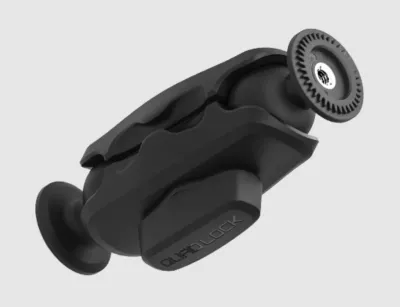
Prices are valid at publication and may change. Please refer to the product page for the latest price.
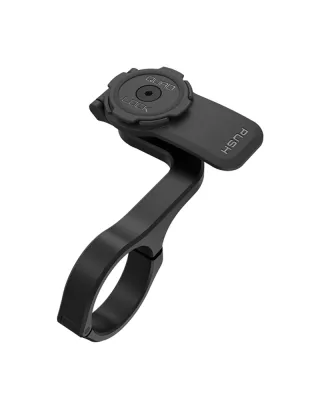
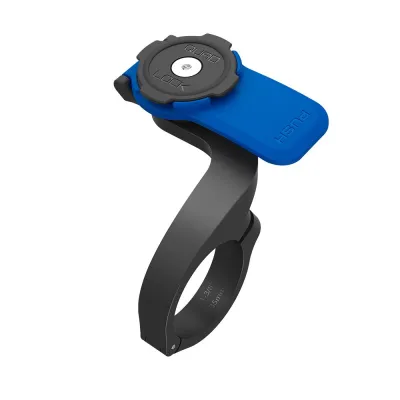
- Best for Standard Hybrid and Road Bikes: The Out Front Mount. If you ride a standard hybrid bike or a road bike with flat or drop handlebars, the Out Front Mount is the optimal choice. This mount projects your phone forward, keeping it directly in your line of sight without requiring you to look down away from the path. This forward positioning is highly beneficial on the PCN, where sudden pedestrian movements require your undivided attention. Additionally, it frees up valuable space on your handlebars for essential safety accessories like front lights and bells.
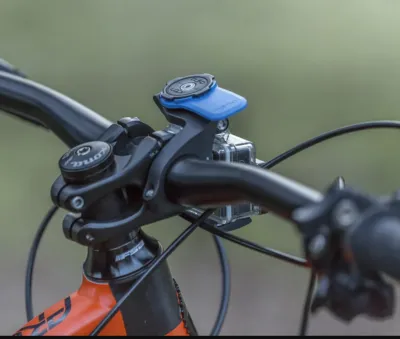
- Best for Folding Bikes and Cramped Cockpits: The Stem Mount. For riders of folding bikes (such as Brompton, Dahon, or Tern models) which are incredibly popular for commuting on Singapore's PCNs, the Stem Mount is highly recommended. Folding bikes often feature non-standard handlebar shapes, folding hinges, and a dense cluster of cables. The Stem Mount attaches directly to the stem faceplate or the steerer tube, keeping your cockpit clean, preventing interference with the bike's folding mechanism, and protecting the phone from getting snagged when the bike is collapsed.
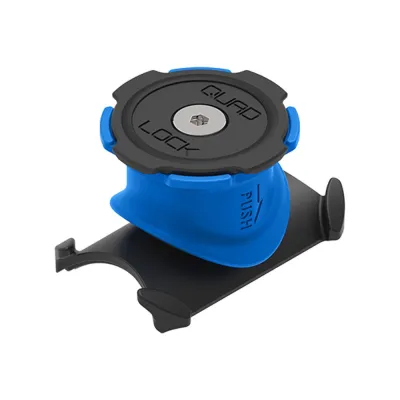
- Best for E-Bikes and Non-Standard Bars: The Handlebar Mount. If you ride an electric bike (PAB) with a large central digital display, or a cruiser with swept-back or unusually thick handlebars, the standard Handlebar Mount (or the flexible strap/zip-tie style Handlebar/Stem Mount) provides the versatility you need. It can be positioned on either side of a central console or on tapered bar sections where rigid, fixed-width metal clamps cannot secure a grip.
- The Mandatory Add-On: The Vibration Dampener. Regardless of which mount style fits your bicycle, pairing your setup with the Quad Lock Vibration Dampener is highly recommended. Modern smartphone camera systems are highly sensitive to continuous vibrations. Even though Singapore's PCN paths are paved and generally smooth, the constant micro-vibrations transmitted from the tires through rigid bicycle frames can cause long-term damage to your phone's internal components.
How PCN Path Conditions Affect Your Mount Choice
Singapore’s Park Connector Network offers a world-class cycling experience, stretching across hundreds of kilometers of scenic, paved paths. However, navigating these shared paths introduces specific environmental factors that directly influence how you should mount your phone. Unlike open roads or dedicated mountain biking trails, the PCN is a highly dynamic, shared space utilized by cyclists, runners, pedestrians, and active mobility device users. This requires a mounting solution that prioritizes quick access, stability, and clean cockpit organization.

One of the most significant factors on the PCN is the frequency of stops and transitions. Whether you are pausing at a traffic crossing, stopping at a park kiosk for a drink, or transitioning from a park path to an overhead bridge, you will find yourself mounting and dismounting your phone regularly. The Quad Lock system’s signature twist-and-lock mechanism is highly advantageous here. It allows you to detach your phone in less than two seconds to take a photo or make a payment, and reattach it just as quickly without fumbling with complex straps or screw-tight clamps.
While the PCN is mostly flat and paved, it is far from perfectly smooth. Riders frequently encounter yellow tactile warning tiles at pedestrian crossings, raised drainage grates, expansion joints on bridges, and speed bumps designed to slow down path users near high-traffic zones. These minor obstacles create sharp, repetitive micro-shocks. A loose or poorly designed phone holder can bounce, slip, or rotate under these forces, distracting you at critical moments. A rigid, secure connection ensures your phone remains perfectly stationary, allowing you to maintain your focus on the path ahead.
Finally, PCN safety regulations and etiquette demand that your bicycle is equipped with a functioning bell and active front and rear lights, especially during early morning or evening rides. Because handlebar space is limited, your phone mount must not interfere with these critical safety devices. A mount that blocks your bell’s striker or casts a shadow over your front light compromises your safety. Choosing a mount that integrates cleanly into your cockpit ensures you comply with local safety guidelines while keeping your navigation accessible.
Choosing the Right Quad Lock Mount for Your Handlebars
Selecting the right mount requires understanding the physical geometry of your bicycle’s cockpit and your personal riding posture. Quad Lock offers three distinct mounting styles, each designed to address specific handlebar configurations and rider preferences.
Out Front Mount: Best for Clear Sightlines and Flat/Drop Bars
The Out Front Mount is designed to position your smartphone ahead of your handlebars, aligning it closely with your natural forward line of sight. By extending the phone forward, this mount allows you to glance at your GPS or cycling app with minimal head movement. This positioning is particularly valuable when cycling at moderate speeds on the PCN, where keeping your eyes on the path ahead is crucial for avoiding sudden obstacles or pedestrians.
This forward-facing design also acts as an excellent space-saving solution. By moving the phone off the handlebar tube itself, you open up central real estate for mounting a front light, a cycle computer, or a loud safety bell. The Out Front Mount is highly compatible with standard handlebar diameters, typically including spacers for 22.2mm, 25.4mm, 31.8mm, and 35mm bars, making it a perfect match for most modern flat-bar hybrid bikes and drop-bar road bikes.
However, the Out Front Mount does have specific limitations. Because it projects forward, it adds a minor forward weight bias and extends the profile of your bike’s front end. This projection may not be suitable for bicycles with heavily swept-back handlebars, such as classic cruiser bikes, or setups with dense cable routing directly in front of the stem, where the mount arm might pinch or rub against gear and brake housings.
Stem Mount: Ideal for Folding Bikes and Cramped Cockpits
The Stem Mount offers a highly compact, centered mounting solution by attaching directly to your bicycle’s stem tube or steerer tube cap. This design is exceptionally popular among folding bike owners in Singapore. Folding bikes, such as those from Brompton, Dahon, or Birdy, feature unique folding hinges and compact handlebar designs that make traditional handlebar-mounted accessories difficult to position without interfering with the fold.
By mounting your phone directly over the stem, you keep the center of gravity localized over the steering column. This provides excellent stability and ensures that the phone remains completely clear of the folding hinges and dangling cables. When it is time to fold your bicycle for a ride on the MRT or to place it in the trunk of a car, the Stem Mount’s low profile ensures it does not snag or prevent the handlebars from locking into their folded position.
The primary trade-off with the Stem Mount is its positioning relative to your eyes. Because the phone sits lower and closer to your body, you must look down further to read your screen compared to an Out Front Mount. For casual PCN riders who only check their maps occasionally, this is a minor inconvenience, but for those who require continuous turn-by-turn navigation, it requires extra care to ensure you do not lose track of the path ahead while glancing down.
Handlebar Mount: The Versatile Choice for E-Bikes and Thick Bars
The standard Handlebar Mount is the most versatile and adaptable option in the Quad Lock lineup. Using a secure clamp mechanism or a heavy-duty strap/zip-tie system, this mount can be positioned almost anywhere along your handlebars, making it the ultimate fallback option for non-standard setups. It is particularly well-suited for electric bikes (PABs) that feature bulky central digital displays or control units right where an Out Front or Stem mount would typically sit.
This mount is also ideal for bicycles with non-standard handlebar shapes, such as cruisers with swept-back bars, or bikes with tapered tubing where the handlebar diameter changes rapidly. It allows you to mount your phone closer to your grips for easy touch access, or angle it precisely to avoid glare from Singapore’s bright tropical sun.
If you are using carbon fiber handlebars, however, you must exercise caution when installing any rigid clamp-style mount. Before tightening the mount, always check your handlebar manufacturer’s instructions for specific torque limits (typically measured in Newton-meters, or Nm) to prevent crushing or weakening the carbon composite structure. While highly versatile, the Handlebar Mount does take up physical space on your bar tube, which may require you to rearrange your bell, lights, or other mounted accessories to maintain a balanced and safe cockpit.
Protecting Your Phone: Do You Need the Vibration Dampener?
A common question among cyclists purchasing a Quad Lock system is whether the optional Vibration Dampener is truly necessary for riding on paved urban paths like Singapore’s PCN. To answer this, it is essential to understand how modern smartphone cameras function and how bicycle travel affects delicate electronic components.
Most modern high-end smartphones feature advanced camera systems equipped with Optical Image Stabilization (OIS) or closed-loop autofocus. These systems rely on tiny, delicate gyroscopes and physical magnetic suspensions to move the camera lens rapidly, compensating for hand tremors and ensuring sharp photos and smooth videos. While these mechanisms are highly effective for daily handheld use, they are incredibly vulnerable to high-frequency, repetitive micro-vibrations.
When you ride a bicycle, every bump, textured surface, and imperfection on the path transmits vibration directly through the front wheel, up the rigid fork, and into the handlebars. While mountain biking on rough dirt trails produces obvious, large-scale shocks, riding on paved PCN paths produces a continuous stream of high-frequency micro-vibrations. These vibrations are generated when riding over yellow tactile warning tiles at crossings, crossing textured concrete bridges, or rolling over expansion joints and drainage grates. Over time, these continuous, high-frequency vibrations can fatigue the delicate physical suspensions in your phone’s camera, leading to permanent focus failures or a completely disabled OIS system.
The Quad Lock Vibration Dampener is specifically engineered to mitigate this risk. Featuring a dual-chassis suspension system with precision-engineered silicone grommets, the dampener absorbs up to 90% of high-frequency vibrations before they can reach your phone.
If you are mounting a modern smartphone that features physical optical image stabilization, pairing your mount with the Vibration Dampener is a highly recommended safeguard. Before finalizing your setup, check your smartphone manufacturer’s official support guidelines regarding mounting devices to bicycles or motorized vehicles; many manufacturers explicitly recommend using vibration-dampening mounts to protect the camera hardware and preserve your warranty. While no accessory can provide an absolute guarantee against all forms of physical wear, the dampener serves as a crucial risk-mitigation tool that protects your valuable device during long rides.
Installation and Safety Checks for Shared Paths
A secure installation is paramount to ensuring your phone remains safe and your attention stays focused on the path. When installing your Quad Lock mount, follow a methodical process to guarantee a rigid, reliable connection before you set off on Singapore’s busy shared paths.
Begin by selecting the correct spacer ring for your handlebar diameter, ensuring a snug fit without gaps. When tightening the mounting screw, use the included hex key to tighten it until it is firm, but avoid over-tightening, especially on lightweight alloy or carbon fiber handlebars. Once the base is secure, test the dual-stage locking mechanism. Align your phone case at a 45-degree angle, press down firmly, and twist until you hear a distinct, positive click. This click indicates that the spring-loaded blue collar has engaged, locking your phone securely to the base. Give the phone a gentle tug to verify there is zero play or movement.
For added security, always utilize a secondary safety fail-safe, such as a Quad Lock Tether or the integrated strap on a Quad Lock Poncho. While the mechanical lock is incredibly secure, a tether provides vital protection against accidental knocks—such as a pedestrian’s bag brushing against your handlebars at a crowded crossing—or severe impacts from unexpected bumps. Additionally, a tether acts as an excellent deterrent against opportunistic theft if you step away from your bike for a brief moment at a PCN pitstop or water cooler.
Before riding, perform a visual check of your cockpit alignment. Ensure that your mounted phone does not block your view of the path or cast a shadow over your front headlight. The headlight must remain fully visible to oncoming path users, and your safety bell must be positioned so that you can easily reach the striker with your thumb without your hand slipping off the grip.
Finally, Singapore’s hot, humid, and occasionally wet tropical climate can accelerate the wear of plastics and rubbers. Periodically inspect your mount’s components. Check the rubber O-rings on stem mounts for dry rot or cracking caused by UV exposure, and ensure the spring-loaded locking lever moves smoothly without grit or debris binding the mechanism. Regularly rinsing your mount with fresh water after riding in heavy rain or near coastal paths (where salt air can accelerate degradation) will help maintain its smooth operation and longevity.
Frequently Asked Questions (FAQ)
Will these mounts fit popular folding bikes used on the PCN?
Yes, Quad Lock mounts can easily accommodate popular folding bikes, but you must select the correct model to avoid interference with the folding process. Folding bikes like Bromptons, Dahons, and Tern models feature unique handlebar stems and compact folding profiles. For these setups, the Stem Mount or the strap-style Handlebar/Stem Mount is highly recommended. These options keep the phone centered over the steering column, ensuring it does not protrude or get caught in brake cables, gear lines, or the folding hinges when the bike is collapsed. Before purchasing, measure your stem faceplate or handlebar diameter to ensure compatibility with the included spacers.
Is the Quad Lock Poncho necessary for Singapore's sudden rain?
While many modern smartphones feature IP68 water resistance ratings, the Quad Lock Poncho is highly recommended for cycling in Singapore due to the region’s sudden, intense tropical downpours. The Poncho acts as a protective shield, preventing heavy rain from pooling inside your phone’s charging port or speaker grilles, which can trigger temporary charging disables or long-term corrosion. It also keeps mud, road grit, and sweat off your screen. If you frequently cycle during the monsoon seasons or commute daily on the PCN, the Poncho provides valuable peace of mind and keeps your screen dry enough for touch inputs during wet weather.
Community discussion
Share your experience or ask a question. Comments are reviewed before publication.