
Quick Answer: Choosing the Right Roller Blade Brand
Selecting the ideal brand of roller blades as a beginner in Singapore depends entirely on your personal skating goals, budget, and foot shape. There is no single “best” brand for every individual. Instead, the market is divided by design philosophies that cater to different needs.
If your primary goal is casual fitness on smooth paths, brands specializing in soft-boot technology (such as K2) provide immediate, sneaker-like comfort. If you want to develop precise technical skills or navigate mixed urban environments, hard-boot brands (such as Rollerblade or Micro) offer the structural lateral support necessary for safety and control. Before purchasing, visiting a local physical sporting goods store to try on multiple pairs is highly recommended, as the physical fit of the boot dictates both your safety and enjoyment on the concrete.
What Makes a Roller Blade Good for Beginners?
To evaluate roller blades effectively, you must understand the core technical specifications that influence stability, control, and comfort. Marketing terms can be misleading, but physical components do not lie. Focusing on these fundamental elements allows you to assess any inline skate regardless of brand hype.
Products mentioned in this guide
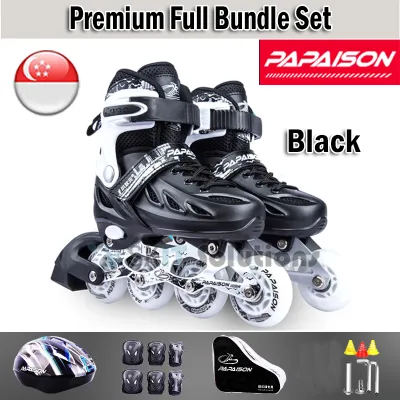
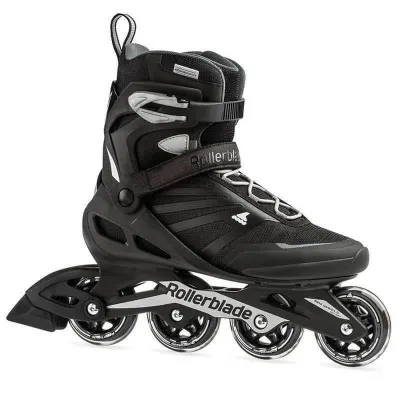
Prices are valid at publication and may change. Please refer to the product page for the latest price.

Boot Type and Construction The boot is the foundation of your skate, directly affecting ankle stability and power transfer. Soft boots feature a flexible fabric construction reinforced by an external plastic cuff. They are highly breathable, lightweight, and require virtually no break-in period, making them excellent for Singapore’s tropical climate. However, they offer less lateral support. Hard boots utilize a molded plastic shell with a removable padded liner. While they can feel warmer and require a short break-in period, they provide superior ankle support, protect your feet from impacts, and make it easier to maintain a proper upright skating posture without your ankles collapsing inward.
Wheel Size and Hardness For beginners, wheel specifications determine how easily you can balance and control your speed. Look for wheels with a diameter between 80mm and 84mm. This size range keeps your center of gravity low to the ground, offering excellent stability while still rolling smoothly over minor cracks. Wheel hardness is measured on the Durometer A scale. Beginners should seek wheels rated between 80A and 85A. Softer wheels (80A to 82A) provide more grip and absorb vibrations from textured park paths, though they wear down faster on hot asphalt. Harder wheels (83A to 85A) roll faster and last longer, but you will feel more road vibration.
Bearing Rating and Precision Bearings sit inside the wheels and control how smoothly they spin. They are commonly rated using the ABEC scale (1, 3, 5, 7, and 9) or brand-specific equivalents. For a beginner, ABEC 5 or ABEC 7 bearings are the optimal choice. They offer a smooth, controlled roll without letting the skates accelerate too quickly down gentle slopes. Avoid overpaying for ABEC 9 bearings initially; the high-speed precision they offer is designed for competitive racing and provides negligible benefits for recreational skaters learning basic balance.
Brake System and Safety Learning how to stop safely is the absolute first priority for any new skater. A reliable, pre-installed heel brake is essential for beginners. While advanced skaters often use alternative stopping methods like the T-stop or plow stop, these techniques require significant single-leg balance and wheel-edge control. A heel brake allows you to stop predictably by simply lifting your toes and applying friction to the pavement. Always ensure the brake pad is easily replaceable, as you will wear it down quickly during your first few weeks of practice.
Comparing Popular Roller Blade Brands for New Skaters
When shopping in Singapore, you will encounter several dominant global brands. Each brand designs its skates with a distinct philosophy, prioritizing different aspects of comfort, performance, and price.
K2 Skates: Prioritizing Comfort and Casual Fitness
K2 Skates is renowned for pioneering the soft-boot design, a major shift that brought athletic-shoe comfort to the inline skating world. If you dread the stiff, restrictive feel of molded plastic, K2 is often the most appealing option. Their boots conform quickly to the shape of your feet, reducing the risk of blisters and pressure points during long sessions. This immediate comfort makes them highly popular for casual fitness skaters who plan to spend their weekends cruising along smooth, dedicated recreational paths.
However, the soft-boot design presents specific trade-offs that beginners must consider. Because the upper portion of the boot is made of flexible fabric, it provides less lateral ankle support than a hard-shell skate. If you have weak ankles or struggle with pronation (ankles rolling inward), you may find it harder to maintain a perfectly vertical stance. When trying on K2 skates, pay close attention to the stiffness of the plastic upper cuff and the security of the ankle strap to ensure you feel sufficiently supported.
Rollerblade: The Standard for Support and Durability
As the brand that popularized the sport, Rollerblade offers a highly balanced lineup of hard-boot, soft-boot, and hybrid skates. For beginners who want a structured learning experience, Rollerblade’s molded hard-shell models are highly regarded. These skates feature a robust plastic outer shell that provides exceptional lateral ankle support, ensuring your feet stay aligned over the wheels. This structural rigidity makes it much easier to learn proper edge work, crossovers, and advanced stopping techniques.
The durability of Rollerblade components is another major advantage. Their frames, whether high-grade composite or extruded aluminum, are designed to withstand the physical abuse of learning, including frequent falls and scrapes. The primary trade-off is that hard boots can feel restrictive and warm, especially in humid conditions. To mitigate this, look for models with ventilated shells and moisture-wicking liners, and expect to spend a few sessions breaking in the padding before the skates feel perfectly contoured to your feet.
Powerslide: Value and Adjustable Options
Powerslide is an innovative German brand known for pushing technical boundaries, but they also offer highly competitive options for budget-conscious beginners and families. One of Powerslide’s major strengths is their range of adjustable skates, which are highly popular for growing children and teenagers. These skates allow you to expand the boot size across four distinct settings with the push of a button, ensuring the product lasts for multiple years as the user grows.
For adults, Powerslide offers highly versatile entry-level fitness and urban skates that deliver excellent value for money. They frequently utilize high-quality aluminum frames even on lower-priced models, providing better power transfer and durability than plastic frames. However, when purchasing entry-level Powerslide models, it is crucial to inspect the specific components. Ensure the bearings and wheel durometer match your intended skating surface, as some budget-focused models may compromise slightly on wheel quality to keep the initial price point low.
Micro: Urban Commuting and Hard-Boot Stability
Micro has established a strong reputation for producing rugged, highly maneuverable hard-shell skates. Originally designed with urban commuting and freestyle skating in mind, Micro skates are built to handle demanding environments. Their boots feature thick plastic shells that offer maximum protection against impacts, debris, and the frequent scrapes associated with skating on city streets. This makes them an exceptional choice for beginners who plan to use their skates for short commutes or navigate busy urban pavements.
The lateral support provided by Micro’s hard-shell design is outstanding, giving beginners immediate confidence in their stability. The skates also feature highly customizable closure systems, including micro-adjustable buckles that allow you to lock your heel securely into the back of the boot. The trade-off is that Micro skates tend to be slightly heavier than fabric soft boots, and the stiff shell is highly unforgiving of incorrect sizing. Ensuring an exact fit is vital; any empty space inside a hard boot can lead to friction, heel lift, and painful blisters.
Brand Characteristics and In-Store Verification Checklist
To help you synthesize these brand differences and make an informed decision, the following table summarizes the general characteristics of each brand’s beginner-focused offerings.
| Brand | Primary Boot Type | Best Suited For | Ankle Support Level | Key Maintenance Focus |
|---|---|---|---|---|
| K2 Skates | Soft-Boot | Casual fitness, smooth park paths | Moderate | Fabric cleaning, cuff strap tension |
| Rollerblade | Hard-Boot & Hybrid | Structured learning, skill progression | High | Liner washing, frame alignment |
| Powerslide | Hard-Boot & Adjustable | Budget-conscious users, growing feet | High to Moderate | Frame hardware, sizing mechanisms |
| Micro | Hard-Boot | Urban commuting, rougher pavements | High | Buckle replacement, liner airing |
Before finalizing your purchase, whether online or at a local physical store, use this verification checklist to ensure the specific model meets safety and performance standards:
- Check the Wheel Durometer: Look at the print on the side of the wheel. Ensure it reads between 80A and 85A to guarantee adequate grip and shock absorption on paved paths.
- Verify the Bearing Grade: Look for ABEC 5, ABEC 7, or brand-specific equivalents (such as SG7 or ILQ-7) printed on the bearing shields.
- Confirm Heel Brake Inclusion: Verify that a heel brake is included in the box. If it is not pre-installed, ensure the mounting hardware and instructions are present.
- Inspect the Frame Material: Feel the frame holding the wheels. Extruded aluminum frames are preferred for adult beginners due to their stiffness and durability, while high-grade composite (plastic) frames are acceptable for lightweight skaters or children.
- Test the Closure System: Ensure all buckles, laces, and velcro straps tighten smoothly and hold their position under tension without slipping.
Skating in Singapore: Local Paths and Climate Maintenance
Skating in Singapore offers a unique experience due to the island’s world-class infrastructure, but the tropical climate also introduces specific challenges that require careful gear maintenance.
Where to Skate Safely Singapore’s Park Connector Network (PCN) is a massive asset for beginner skaters, offering hundreds of kilometers of paved, continuous paths connecting parks across the island. Locations like East Coast Park, Bishan-Ang Mo Kio Park, and the Punggol Waterway offer wide, flat surfaces that are ideal for practicing basic strides and braking techniques. However, because these paths are shared with cyclists, runners, pedestrians, and active mobility devices, beginners must remain highly vigilant. Always stay to the left of the path, maintain a controllable speed, and use your heel brake early when approaching crowded areas.
Climate Impact and Maintenance Protocols The high heat, intense humidity, and sudden tropical downpours in Singapore can rapidly degrade your roller blades if they are not properly maintained. Moisture is the ultimate enemy of skate bearings. If you accidentally roll through puddles or skate on wet pavement, water will enter the bearings, washing away the protective lubricant and causing the steel balls inside to rust. This can seize the wheels entirely, creating a severe safety hazard.
To protect your equipment, establish a strict post-skate maintenance routine:
- Wipe down the exterior of the boots, frames, and wheels with a dry microfiber cloth immediately after every outdoor session.
- If the bearings have been exposed to moisture, remove the wheels and use a dry cloth to clean the bearing shields. If you are comfortable doing so, apply a drop of specialized skate bearing lubricant.
- Never store damp skates in a sealed plastic bag or a dark, unventilated cupboard, as this environment promotes rapid mold growth on the fabric liners. Instead, pull the liners out (if removable) and let them air dry in a well-ventilated, air-conditioned room or near a fan.
- Avoid exposing your skates to direct, intense sunlight for extended periods when drying, as extreme heat can warp plastic shells and degrade the adhesives used in soft boots.
The Non-Negotiable Role of Safety Gear Before taking your first stride on the PCN, you must equip yourself with high-quality safety gear. At a minimum, this includes a properly fitted helmet, wrist guards, elbow pads, and knee pads. Wrist guards are particularly critical for beginners, as the natural human instinct during a forward fall is to put your hands out, which can easily lead to wrist fractures without adequate protection. Ensure all guards fit snugly without sliding around, and replace any gear that has sustained a major impact during a fall.
Final Decision Framework: Which Brand Fits Your Goals?
To narrow down your choices and select the perfect pair of roller blades, align your purchasing decision with your primary skating objectives and physical needs.
- Choose K2 Skates if: Your primary goal is comfortable, low-impact fitness training. You plan to skate exclusively on smooth, predictable park paths, value immediate comfort without a break-in period, and do not require maximum lateral ankle support.
- Choose Rollerblade if: You want a highly durable, versatile skate that supports structured skill progression. You are willing to undergo a brief break-in period to achieve superior ankle support, precise control, and the ability to learn advanced skating techniques.
- Choose Powerslide if: You are shopping on a budget, buying for a growing child or teenager who needs an adjustable boot, or want a highly cost-effective entry point into the sport with durable aluminum frames.
- Choose Micro if: You plan to skate in diverse urban environments, require robust protection against rough pavements and physical impacts, and prioritize maximum structural stability and heel lock.
Regardless of which brand seems perfect on paper, physical compatibility is the ultimate deciding factor. Human feet vary widely in width, arch height, and heel shape, and skate manufacturers build their boots using different foot molds (known as “lasts”). A boot that is too narrow will cause painful pressure points, while a boot that is too wide will allow your foot to slide, leading to blisters and a loss of control. Visit local physical retail shops in Singapore, try on multiple models from different brands, and spend at least ten minutes standing in them in the store. Your feet will tell you which brand is the correct choice.
Community discussion
Share your experience or ask a question. Comments are reviewed before publication.