
To catch your first waves successfully, you must understand how a surfboard’s physical dimensions dictate its behavior in the water. For beginners, the single most critical specification is volume, measured in liters (L). Volume represents the total space inside the board, which directly determines its buoyancy. High-volume boards float higher, reducing drag when you paddle. This extra buoyancy makes it significantly easier to generate the paddling speed required to match a wave’s velocity, allowing you to catch waves earlier and with less physical exertion. Once on the wave, a buoyant board provides a stable platform that resists sinking or wobbling when you attempt to stand up.
The length and shape of the board are equally vital. Beginners should look for boards ranging from 7’0″ to 8’0″ or longer, typically categorized as mini-mals, funboards, or longboards. These shapes feature a wide nose and a broad, thick profile throughout the middle section. This generous surface area distributes your weight across a larger plane, offering superior lateral balance. When you shift your weight slightly off-center during a pop-up, a wide board forgives the error, whereas a narrow shortboard would immediately tip over.
Another design element to consider is the rocker, which is the bottom curve of the board from nose to tail. Beginner boards feature a flat or low rocker. A flatter board keeps more of its bottom surface in contact with the water, maximizing paddling speed and glide. In contrast, a high rocker is designed for steep, hollow waves and quick turns, which will only slow down a novice on small, gentle waves.
Products mentioned in this guide
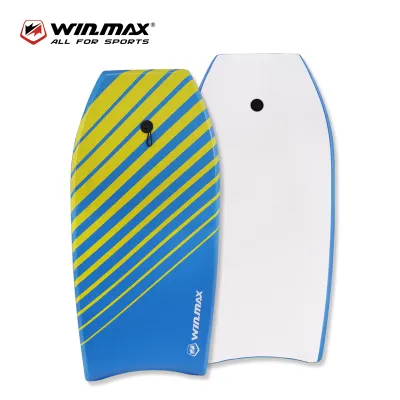
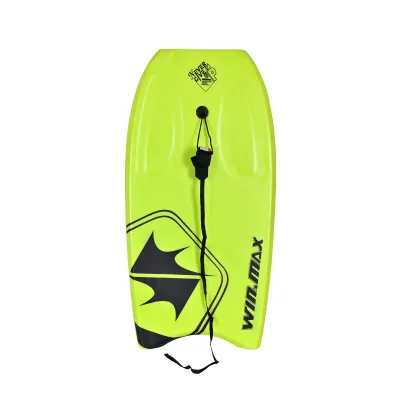
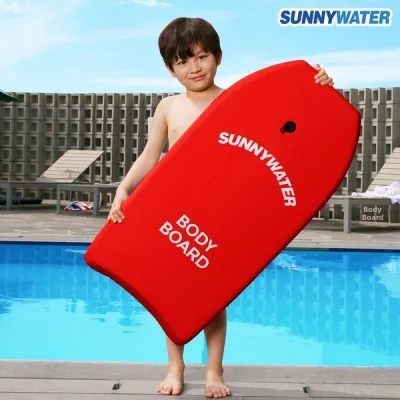
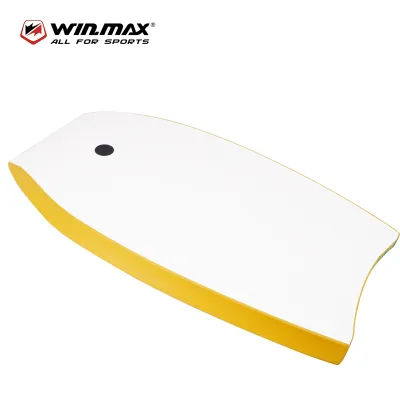
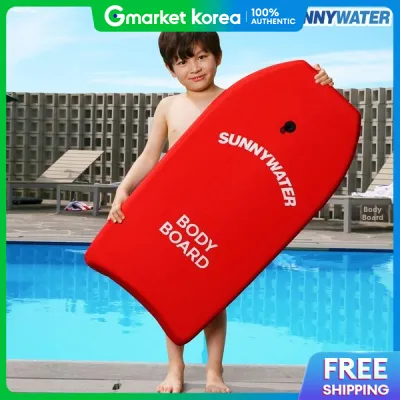
Prices are valid at publication and may change. Please refer to the product page for the latest price.
For the fin configuration, a standard thruster (three-fin) setup is highly recommended for beginners because it provides excellent tracking and stability, keeping the board moving in a straight line. Single fins offer a smooth, classic glide but require more precise foot placement.
When selecting a board, avoid relying on generic height rules like finding a board that is one foot taller than you. Instead, always consult the manufacturer’s official weight and volume charts. A heavier rider requires a board with more liters of volume to achieve the same relative buoyancy as a lighter rider, regardless of their respective heights.
Top Surfboard Brands for Beginners: Stability, Durability, and Value
Selecting a reliable brand ensures that your first board is engineered with the correct proportions and structural integrity to withstand the learning process. The following brands are highly regarded in the surfing community for producing boards that balance stability, durability, and value, making them excellent choices for entry-level riders.
Catch Surf
Catch Surf has earned a massive following for its high-performance soft-top surfboards, particularly through its Odysea and Beater series. These boards are constructed with a dual-composite core stiffened by dual maple-ply stringers, wrapped in a durable, impact-resistant outer skin. This soft-top construction makes the board exceptionally forgiving; if you lose your balance and collide with the board, the soft material minimizes the risk of injury.
One of the key safety features of Catch Surf boards is their use of soft, removable fins. This design is highly beneficial when practicing in shallow beach breaks where wipeouts are frequent and water depth is minimal. The removable fin system also makes the board much easier to pack and transport.
However, potential buyers should note that these high-volume foam boards can be relatively heavy to carry when wet. Additionally, because they lack the sharp, hard rails of traditional boards, they offer reduced performance and edge-hold in larger, steeper waves, making them less suitable as you progress to advanced carving maneuvers.
Tahe (Formerly BIC Sport)
Tahe, building on the legacy of BIC Sport, is a premier choice for riders seeking virtually indestructible hard surfboards. Utilizing a proprietary Dura-Tec construction process, these boards feature a highly durable, thermoformed outer polyethylene skin wrapped around a high-density polyurethane foam core. This design is exceptionally resistant to dings, rock impacts, and transport damage, making them ideal for beginners who may accidentally bump their boards against car doors or shallow reef bottoms.
The Tahe Malibu and Performer series are legendary for their user-friendly templates. They offer a stable, predictable platform that helps beginners transition smoothly from soft foam boards to hard-surface riding. The boards hold their speed well and provide a consistent feel underfoot, which is crucial for building muscle memory.
The trade-off for this extreme durability is weight and responsiveness. Tahe Dura-Tec boards are noticeably heavier than premium epoxy or fiberglass boards. This extra weight can make them more tiring to carry to the beach and slower to react to subtle foot inputs when trying to execute quick turns.
Olaian (Decathlon)
Olaian, the dedicated surfing brand from Decathlon, is widely recognized for making surfing accessible to budget-conscious beginners. They offer an extensive range of soft-top and entry-level epoxy boards designed specifically to provide maximum stability at a highly competitive price point. For surfers in Singapore, these boards are easily accessible through local retail outlets, eliminating the high shipping fees often associated with importing specialty surf gear.
Many Olaian beginner models are sold as complete packages that include essential accessories such as a high-quality leash and built-in traction pads. This convenience allows novices to head straight to the water without having to source individual components separately. The shapes are highly functional, featuring generous volume distributions that assist with early wave entry.
While Olaian boards are excellent for learning the basics, their long-term performance and resale value generally do not match those of specialized surf brands. As your skills progress and you require a board capable of sharper turns and faster line speeds, you may find yourself outgrowing the capabilities of an entry-level Olaian board faster than a premium model.
South Bay Board Co.
South Bay Board Co. specializes in high-volume, user-friendly soft-top longboards engineered to maximize your wave count. Their Guppy and Casper series are designed with an extra-wide nose, thick rails, and a flat rocker profile, creating an incredibly buoyant and stable platform. This high buoyancy allows beginners to catch even the smallest, weakest waves with minimal paddling effort.
The soft deck of these boards features a textured, wax-free skin that provides excellent grip without the need for traditional surf wax. This soft surface is highly comfortable for beginners, significantly reducing the risk of painful board rash on your chest and knees during long sessions of practicing pop-ups.
The primary challenge with South Bay Board Co. longboards is their physical size. An 8-foot or 9-foot high-volume board is highly cumbersome to transport and store, particularly if you live in a typical Singapore HDB flat or condominium with elevator size constraints. You will need to plan for adequate storage space and invest in a reliable roof rack system or transport arrangement to get these boards to your local surf spot or regional travel destination.
Soft-Top vs. Epoxy Boards: Choosing the Right Material for Your Skill Level
Understanding the differences between soft-top (foam) and epoxy (hard) surfboards is crucial for aligning your purchase with your current skill level, budget, and local surfing environment. Both materials offer distinct advantages and drawbacks that directly impact your learning curve.

Soft-top surfboards feature an expanded polystyrene (EPS) foam core wrapped in a soft, spongy outer layer, usually made of ethylene-vinyl acetate (EVA) or polyethylene. The primary advantage of a soft-top is safety. During a wipeout, a soft board is far less likely to cause injury to you or other surfers in a crowded lineup. They are also highly buoyant, making them exceptionally easy to paddle, and their ding-resistant construction means you do not have to worry about minor impacts. However, soft-tops are heavier, slower, and have thicker rails that make it difficult to grip the wave face, limiting your ability to perform sharp turns as you progress.
Epoxy surfboards consist of an EPS foam core wrapped in fiberglass cloth and sealed with epoxy resin. These boards are lightweight, highly rigid, and offer excellent structural responsiveness. They glide faster, turn more precisely, and allow for rapid skill progression. The main disadvantages are their vulnerability to damage; a hard impact against a rock or another board can crack the epoxy, requiring immediate repair to prevent waterlogging. They are also more expensive and pose a higher risk of injury during a collision.
Decision Guidelines:
- Choose a Soft-Top Board if: You are an absolute beginner prioritizing safety, surfing primarily in crowded beach breaks or shallow water, operating on a limited budget, or buying a board for recreational family use.
- Choose an Epoxy Board if: You have already mastered the basic pop-up, plan to surf reef or point breaks where precise tracking is required, want a lighter board that is easier to carry, or are committed to transitioning quickly to intermediate maneuvers.
Essential Surf Gear and Safety Checks for Your First Session
Before you head into the water, having the right gear and performing essential safety checks is vital for your protection and the safety of those around you. Surfing is an inherently dynamic sport, and proper preparation can prevent equipment failure and dangerous situations in the ocean.
Your leash is your primary safety lifeline, keeping your board attached to you after a wipeout. As a general rule, choose a leash that matches or slightly exceeds the length of your surfboard (e.g., an 8-foot leash for an 8-foot board). Before entering the water, inspect the leash thoroughly: check the velcro strap for wear, ensure the swivels rotate freely to prevent tangling, and look for any small cuts or cracks in the polyurethane cord.
Maintaining a secure grip on your board is essential for a successful pop-up. Hard epoxy boards require the application of surf wax to the deck area where your feet and hands will rest. For tropical waters typical of Southeast Asia, ensure you use a “tropical” grade wax formulated for water temperatures above 24°C, as cooler-water wax will melt quickly. Soft-top boards often feature textured decks that do not require wax, but some models benefit from a traction pad placed near the tail for extra foot security.
Proper apparel protects your skin from friction and environmental elements. In warm tropical waters, a UPF 50+ rash guard or a thin UV-protective swim shirt is highly recommended to prevent painful chest chafing against the board’s deck and to protect against intense sun exposure. If you are surfing in cooler climates, a properly fitted neoprene wetsuit is necessary to maintain core body temperature.
Finally, understand your physical limits and ocean safety boundaries. Before paddling out, spend at least ten minutes observing the water from the beach. Identify potential rip currents, which appear as calm, dark gaps in the breaking waves where water is rushing back out to sea. Avoid crowded lineups where you might lose control of your board and collide with others. Avoid shallow reef breaks, which can cause severe lacerations during a fall, and always prioritize surfing in designated, patrolled areas. Remember that high-quality equipment is an aid, but it can never replace professional instruction, ocean literacy, and personal physical fitness.
Frequently Asked Questions (FAQ)
What size surfboard should a beginner get?
While a traditional rule of thumb suggests choosing a longboard or funboard that is 12 to 24 inches taller than your height, the most accurate metric for beginner sizing is the board’s volume relative to your weight. An absolute beginner typically needs a board with a volume equivalent to 100% of their body weight in kilograms represented as liters (e.g., an 80kg rider should look for a board with approximately 80 liters of volume). Always consult the specific manufacturer’s volume-to-weight chart, as a heavier rider will require a significantly longer, wider, and thicker board to achieve the necessary buoyancy for stable paddling and riding.
Can I learn to surf on a shortboard?
Attempting to learn to surf on a shortboard is one of the most common mistakes made by novices and often leads to extreme frustration and slow progression. Shortboards are designed with low volume, narrow widths, and high rocker profiles, which require advanced paddling strength, precise balance, and steep waves to generate speed. For a beginner, a shortboard will sink too deep in the water, making it incredibly difficult to paddle fast enough to catch waves, and its unstable platform will make standing up nearly impossible. Starting on a high-volume funboard or longboard allows you to build the foundational muscle memory and wave-reading skills needed before transitioning to smaller boards.
Community discussion
Share your experience or ask a question. Comments are reviewed before publication.