
Quick Answer: Which Tecnifibre Ball Should a Beginner Choose?
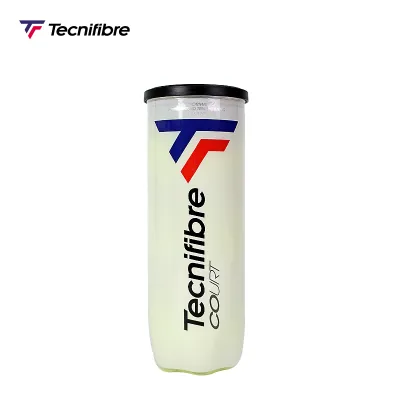
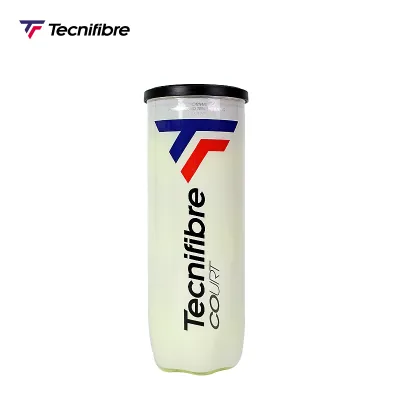
The best Tecnifibre tennis ball depends on your current physical strength, age, and training environment. For adult beginners who are learning the game on standard outdoor courts, standard pressurized training balls—such as the Tecnifibre Court or Club lines—offer the most realistic bounce and standard weight to help you build proper muscle memory. These balls are designed with durable felt to withstand repetitive hitting on hard court surfaces.
If you are an absolute novice, a junior player, or an adult working on slow-paced stroke mechanics, Tecnifibre’s ITF-approved transition balls (such as the Stage 2 Orange or Stage 1 Green dot balls) are the correct choice. Their lower internal compression slows down the flight of the ball and reduces the bounce height, giving you more time to prepare your swing. For high-volume practice, such as solo serve drills or ball machine sessions, durable pressureless balls like the Tecnifibre T-Rebound series provide excellent longevity. Always verify current local availability and specific model names with your local retailer before purchasing.
What Makes a Tennis Ball Suitable for Beginners?
Choosing the right tennis ball is not just a matter of picking a brand; it requires an understanding of how the ball’s internal structure and outer cover interact with your racket and the court. For a beginner, the wrong ball can lead to frustration, poor technique, or even physical discomfort.
Products mentioned in this guide
Prices are valid at publication and may change. Please refer to the product page for the latest price.

Pressure vs. Pressureless
Tennis balls are broadly categorized into pressurized and pressureless designs, each serving a distinct purpose in a player’s development.
Pressurized balls are filled with compressed air or nitrogen, creating an internal pressure of around 12 to 14 pounds per square inch (psi) greater than the atmospheric pressure. This internal gas makes the ball highly responsive, light, and lively off the racket stringbed. The main drawback for beginners is that pressurized balls begin losing their gas from the moment the can is unsealed. Even if left unused in an open bag, they will lose a significant amount of bounce within a few weeks. For casual players who practice infrequently, this means constantly replacing dead balls.
Pressureless balls, on the other hand, rely on a thicker, highly elastic rubber core to produce their bounce rather than internal gas pressure. Because there is no gas to escape, pressureless balls maintain their bounce height almost indefinitely. In fact, as the outer felt wears away over time, pressureless balls actually become slightly lighter and bounce higher. This makes them highly economical for repetitive drilling. However, the thicker rubber core makes them feel noticeably heavier and stiffer upon impact. For a beginner with undeveloped forearm strength or improper stroke mechanics, the increased shock transmitted through the racket can contribute to wrist or elbow strain.
Felt Type and Durability
The outer felt cover of a tennis ball plays a critical role in its aerodynamics and wear resistance. Felt is classified into two main types: woven and needle-punched.
Woven felt is crafted by weaving high-quality wool and synthetic nylon fibers together. This creates a uniform, elastic cover that fluffs up consistently during play. The fluffiness increases aerodynamic drag, slowing the ball down slightly in the air and allowing the racket strings to grip the ball for better spin control. Woven felt is typically found on premium tournament balls, but it is expensive and wears down quickly on rough surfaces.
Needle-punched felt is manufactured by mechanically interlocking synthetic fibers using a needle loom. While it is cheaper to produce and does not fluff up as consistently as woven felt, it is exceptionally durable and highly resistant to abrasion. For beginners playing on outdoor hard courts, which are the most common court surface in Singapore, “Extra Duty” felt is highly recommended. Extra Duty balls incorporate a higher percentage of synthetic fibers in their felt blend to prevent the ball from balding too quickly when subjected to the friction of concrete and acrylic court surfaces.
ITF Play and Stay Stages
To make tennis more accessible, the International Tennis Federation (ITF) introduced the Play & Stay campaign, which utilizes low-compression transition balls. These balls are designed to scale down the speed and bounce of the game, matching the physical capabilities of learning players.
- Stage 3 (Red): These are either oversized felt balls or foam balls. They are 75% slower than standard tennis balls and bounce very low. They are designed for young children (ages 5 to 8) or absolute adult beginners playing on a shortened court.
- Stage 2 (Orange): These standard-sized balls are 50% slower than standard balls and bounce to a medium height. They are ideal for players learning to move across a mid-sized court and develop consistent swing paths.
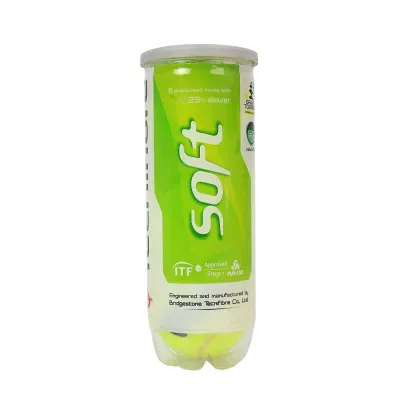
- Stage 1 (Green): Often marked with a green dot, these balls are 25% slower than standard balls and bounce slightly lower than a regular yellow ball. They serve as the final stepping stone, allowing players to practice full-court rallies with an extra fraction of a second to prepare their shots.
Using these stages prevents beginners from being overwhelmed by balls bouncing over their shoulders, allowing them to focus on correct footwork and a clean contact point.
Top Tecnifibre Tennis Ball Recommendations for Beginners
Tecnifibre offers a structured range of tennis balls designed to cater to different stages of player development and practice settings. Selecting the right model depends on your specific training goals.
Best Overall for Adult Beginners: Standard Training Balls (e.g., X-Tra Duty)
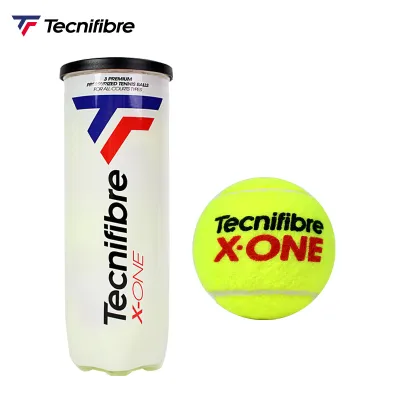
For adult beginners who have progressed past basic coordination drills and are ready to play on a standard full-sized court, a high-quality pressurized training ball is the optimal choice. Tecnifibre’s standard training lines, often featuring robust extra-duty felt, are engineered specifically for this transition.
These balls provide the standard weight, flight path, and bounce height that you will encounter as you progress in the sport. Learning with a standard ball is essential for developing an accurate sense of timing and distance. Because these training balls utilize a durable rubber core, they offer a highly predictable bounce that helps you build confidence during baseline rallies.
Furthermore, the extra-duty felt construction ensures that the balls can withstand the abrasive friction of outdoor hard courts without fraying prematurely. This makes them a practical bridge between slow transition balls and high-end professional match balls.
The primary limitation of these balls is their pressurized nature. Once the can is opened, they will gradually lose their bounce over a period of two to three weeks, regardless of how often they are used. If you play infrequently, you will need to replace them regularly to maintain a consistent training experience.
Best for High-Volume Practice: Durable or Pressureless Balls (e.g., T-Rebound)
If your training regimen involves high-volume repetition—such as practicing your serve with a basket of balls, working with a coach who feeds dozens of balls in rapid succession, or using an automatic ball machine—pressurized balls are highly impractical. For these scenarios, a durable pressureless ball like the Tecnifibre T-Rebound series is the most cost-effective solution.
Because these balls do not rely on internal gas pressure, they can be stored in a loose basket or bag for months without losing their bouncing capabilities. This long-term consistency ensures that every serve or groundstroke drill feels the same, session after session. The synthetic felt used on these models is highly resistant to wearing thin, meaning the balls will maintain their structural integrity through hundreds of hitting cycles.
However, the structural design of pressureless balls introduces some physical trade-offs. The thicker rubber wall required to produce the bounce makes the ball feel stiffer and heavier when it strikes your racket. This increased impact shock can cause muscle fatigue in your arm and shoulder during long practice sessions. To minimize the risk of discomfort, it is highly recommended to use a comfortable, shock-absorbing racket and avoid stringing your racket at excessively high tensions when practicing with pressureless balls.
Best for Juniors and Absolute Novices: Transition Balls (Play & Stay Stages)
For children just starting their tennis journey, as well as adult beginners who find the speed of standard yellow balls overwhelming, Tecnifibre’s Play & Stay transition balls are indispensable tools.
These low-compression balls are specifically engineered to travel slower through the air and bounce lower on the court. By reducing the speed of the game, transition balls eliminate the common beginner habit of rushing the stroke. Instead of frantically swinging at a fast-moving ball, you have the time to set your feet, rotate your hips, and execute a smooth, continuous swing. This slower pace is crucial for building a proper kinetic chain and preventing the development of bad habits, such as hitting the ball too close to your body.
Tecnifibre offers these transition balls in clearly marked stages, allowing you to gradually increase the difficulty as your skills improve. Starting with the slow, high-visibility orange balls and eventually moving up to the green dot balls ensures a smooth, frustration-free learning curve.
It is important to remember that transition balls are purely educational aids. They lack the range and speed required for standard competitive play, and they should be phased out once you can comfortably rally with proper form on a full-sized court.
Comparing Tecnifibre Beginner and Training Balls
To help you decide which category of Tecnifibre tennis ball best suits your current practice needs, the table below compares their key characteristics, ideal use cases, and limitations.
| Ball Category | Best For | Court Surface Suitability | Expected Durability | Key Limitation |
|---|---|---|---|---|
| Standard Training (e.g., Court / Club) | Adult beginners transitioning to standard full-court play | Outdoor hard courts, indoor courts | Moderate (loses internal pressure in 2–4 weeks once opened) | Limited shelf life once the can is unsealed |
| High-Volume / Pressureless (e.g., T-Rebound) | Solo serve practice, ball machines, and coaching baskets | All court surfaces, highly resistant to abrasive wear | High (bounce remains consistent; felt wears down slowly) | Stiffer feel and higher impact shock on the arm |
| Transition / Stage Balls (Red, Orange, Green) | Juniors, absolute novices, and stroke mechanic drills | Modified or full courts depending on the specific stage | Moderate to High (low pressure leads to minimal pressure loss) | Not suitable for standard competitive play or fast rallies |
How to Store and Maintain Your Tennis Balls
To get the maximum value and performance out of your Tecnifibre tennis balls, proper storage and maintenance are essential, especially when playing in a tropical climate like Singapore’s.
- Keep Pressurized Cans Sealed: Do not pull the metal ring on a pressurized can until you are on the court and ready to play. Once the airtight seal is broken, the pressurized gas inside the balls will begin to seep through the semi-porous rubber core, even if the balls are not being hit.
- Protect from Extreme Heat and Moisture: High ambient temperatures and humidity can rapidly degrade tennis balls. Avoid leaving your tennis bag or cans of balls in the trunk of a car, where temperatures can soar. Extreme heat causes the gas inside pressurized balls to expand and escape faster, while humidity can make the felt damp and heavy. Store your balls in a cool, dry, and dark place inside your home.
- Perform the Squeeze and Bounce Tests: To determine if a pressurized ball is ready to be retired, perform two simple checks. First, squeeze the ball firmly between your thumb and fingers; if it compresses easily with little resistance, the internal pressure is gone. Second, drop the ball from shoulder height (approximately 1.5 meters) onto a hard surface. A healthy ball should bounce up to about hip height. If it struggles to reach your mid-thigh, it is "dead" and should be replaced.
- Monitor Felt Wear: Inspect the outer felt regularly. If the felt has become completely bald, heavily frayed, or dirty and waterlogged from a damp court, the ball's flight path will become highly unpredictable. Playing with wet or bald balls can also alter the weight of the ball, increasing the risk of joint strain.
Frequently Asked Questions (FAQ)
Can beginners use professional tournament balls like the Tecnifibre ATP?
While beginners can physically play with professional tournament balls, it is generally not recommended or cost-effective. Tournament balls are engineered to provide maximum speed, spin response, and a crisp feel for advanced players who hit with heavy topspin. However, these high-performance characteristics degrade very quickly, often within a single intense match. For a beginner who is still mastering clean contact, the subtle performance advantages of a premium tournament ball will not be noticeable, whereas the rapid loss of pressure represents poor value for money. Dedicated training balls offer much better durability and consistent performance for the repetitive nature of beginner practice.
How often should a beginner replace their tennis balls?
There is no single timeline for replacing tennis balls, as it depends entirely on your play frequency, hitting power, and the court surface. For a beginner playing once a week for about 1.5 hours on an abrasive outdoor hard court, a can of pressurized training balls will typically maintain its optimal bounce for two to three sessions. After this point, even if the felt looks clean, the ball will have lost enough internal pressure to affect your timing. If you are using pressureless balls for practice, they can last for several months; you only need to replace them when the outer felt becomes excessively worn, thin, or dirty.
Community discussion
Share your experience or ask a question. Comments are reviewed before publication.