
Finding the right training cones for football drills in Singapore requires balancing performance, safety, and durability against a demanding tropical climate. Whether you are a coach running an academy at Kallang, a parent setting up drills at a local ActiveSG pitch, or a player refining your footwork on a neighborhood hard court, the right gear makes a significant difference. The ideal cones must withstand intense UV exposure, sudden monsoon downpours, and the abrasive nature of artificial turf while remaining highly visible under evening floodlights.
Using substandard or rigid cones can disrupt training sessions and even cause injuries. By understanding the specific material characteristics, design features, and configurations required for local pitches, you can select equipment that enhances your training sessions and lasts for years. This guide breaks down the essential buying criteria, compares the primary cone types, and provides practical advice on sourcing and maintaining your gear in Singapore.
How to Choose the Right Training Cones for Singapore's Pitches
Selecting training cones for use in Singapore requires careful attention to material composition. The local climate is characterized by high temperatures and intense ultraviolet (UV) radiation throughout the year. Standard plastics tend to degrade rapidly under these conditions, becoming brittle and prone to cracking. To ensure longevity, look for cones made from high-quality polyethylene (PE) or polypropylene (PP) blends. These materials offer the necessary flexibility to withstand being stepped on by players wearing molded studs or blades, immediately popping back into shape rather than shattering.
Products mentioned in this guide
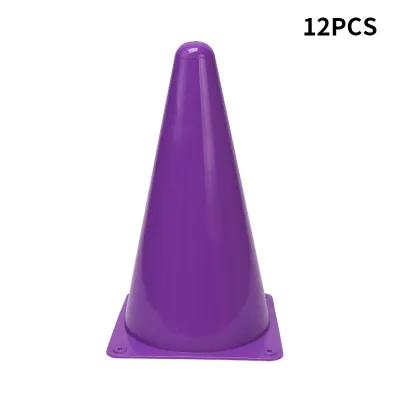
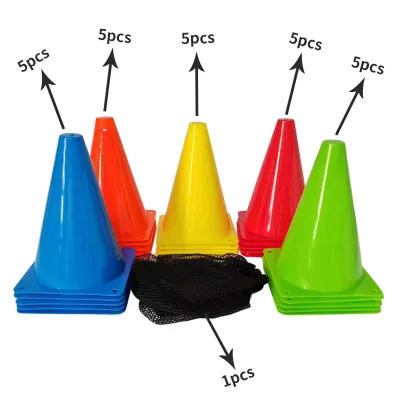
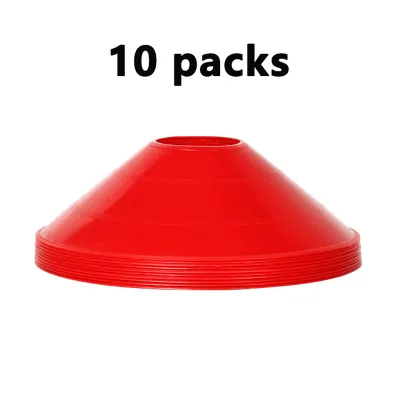
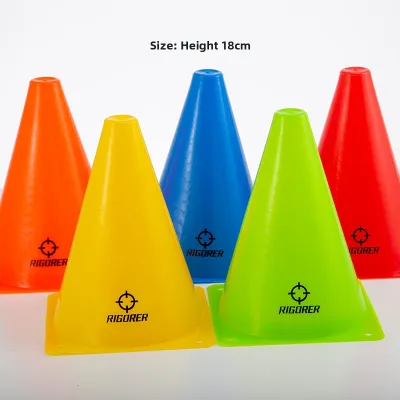
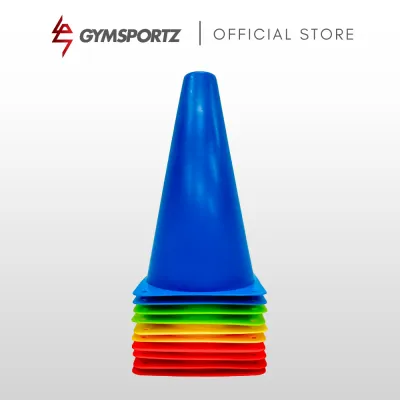
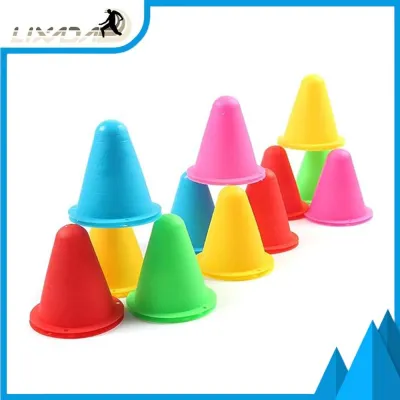
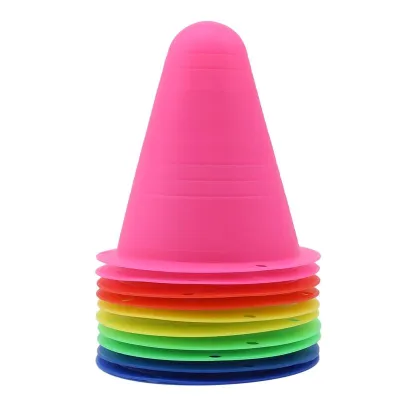
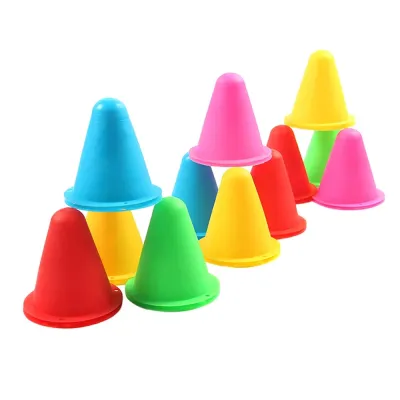
Prices are valid at publication and may change. Please refer to the product page for the latest price.
Surface compatibility is another critical factor. Most football sessions in Singapore take place on artificial turf or concrete hard courts, such as neighborhood futsal cages and void decks. These surfaces do not allow cones to be anchored into the ground. Therefore, the base design of the cone must provide sufficient grip and stability. Cones with textured undersides or slightly wider bases help prevent sliding when brushed by a passing ball or a player’s foot. On windy days, especially on open coastal pitches like those near East Coast Park, lightweight cones can easily blow away, making base stability even more vital.
Visibility is paramount for productive training, particularly during late afternoon or evening sessions. Due to the daytime heat, many local training sessions occur under artificial floodlights or during the overcast conditions that precede tropical downpours. High-visibility fluorescent colors—such as neon yellow, electric orange, and vibrant pink—provide the best contrast against both green synthetic turf and dark asphalt. These colors remain sharp and easily recognizable in low-light environments, helping players maintain spatial awareness and execute quick decisions during fast-paced drills.
Finally, prioritize crush-resistance and memory-shape recovery. During intense drills, players will inevitably step on or fall over the cones. A high-quality training cone should feature a flexible wall design that collapses under pressure to prevent ankle rolls or slips, and then immediately returns to its original form. Before purchasing, verify the manufacturer’s specifications regarding flexibility and impact resistance to ensure the cones can handle the physical demands of regular team training.
Top Low-Profile Disc Cones for Dribbling and Agility Drills
Low-profile saucer or disc cones, typically measuring between 2 to 3 inches in height, are the gold standard for technical development. Their minimal height makes them the safest option for close-ball control and rapid footwork drills, as they present a negligible tripping hazard. If a player accidentally steps on a disc cone during a high-speed dribbling sequence, the cone simply flattens underfoot, allowing the player to maintain their balance and continue the movement without risking a sprained ankle.

When evaluating disc cones, look for features that simplify transport and setup. Because space on Singapore’s public pitches is highly contested and training slots are strictly timed, quick setup and teardown are essential. Opt for cone sets that include a dedicated plastic spindle or a heavy-duty carry strap. These accessories keep the cones neatly stacked, preventing them from scattering in your gear bag and allowing you to deploy or collect dozens of cones in a matter of seconds. High-contrast, multi-color packs are also beneficial, enabling you to set up distinct zones within a single drill.
These low-profile markers are incredibly versatile. They are ideal for setting up Coerver coaching dribbling grids, where players must navigate tight spaces using different parts of the foot. They also serve as excellent markers for agility patterns, such as lateral shuffles, figure-eights, and quick change-of-direction exercises. Because they are easy to step over, they can even function as low-impact alternatives to agility ladders, allowing coaches to customize footwork patterns on the fly.
However, disc cones do have distinct limitations. Their low profile means they are easily obscured by longer natural grass or by other players standing in the line of sight. Consequently, they are not suitable for marking out large pitch boundaries, setting up long-distance passing targets, or establishing clear visual gates for tactical drills where players need to scan the field from 30 or 40 meters away. For those scenarios, taller markers are required.
Top Tall Marker Cones for Pitch Boundaries and Speed Work
Tall marker cones, generally ranging from 9 to 12 inches in height, serve a very different purpose than their low-profile counterparts. These cones are designed to provide clear, long-distance visual cues across the pitch. They are the ideal choice for defining the outer boundaries of small-sided games, marking out rondo grids, and establishing clear entry and exit gates for high-speed sprint work. Their height ensures that players can easily spot them while scanning the field, even during intense, chaotic match-play scenarios.
Because of their larger surface area, tall cones are highly susceptible to wind resistance. This is a common challenge on open-air pitches and coastal training grounds in Singapore, where sudden gusts can easily scatter lightweight equipment. To combat this, look for tall cones that feature a wide, stable base or a wind-resistant slotted design. Slotted cones have cut-outs in the body that allow air to flow through freely, significantly reducing the likelihood of the cone tipping over during a gust of wind.
From a tactical perspective, the visual height of these cones is invaluable. During transition drills, players must be able to lift their heads and instantly identify target zones or passing lanes. Tall cones stand out clearly above the turf, allowing players to practice long-range passing, switching the play, and spatial positioning with greater accuracy. They also act as excellent physical obstacles for defenders to shadow or for attackers to bend their runs around.
Despite their benefits, safety must remain a primary consideration when using tall cones. Avoid rigid, heavy-duty plastic cones, such as those designed for industrial or road use. If a player collides with a rigid cone at high speed, the impact can cause painful bruises, cuts, or joint injuries. Instead, choose tall sports cones made from lightweight, collapsible vinyl or soft plastic. These materials buckle safely upon impact, minimizing the risk of injury during high-speed collisions.
Disc Cones vs. Tall Marker Cones: Which Do You Need?
To optimize your training sessions, it is helpful to compare the distinct characteristics of disc cones and tall marker cones. Each type excels in specific scenarios, and understanding their trade-offs will help you allocate your budget effectively.
| Feature / Dimension | Low-Profile Disc Cones | Tall Marker Cones |
|---|---|---|
| Height Profile | 2 to 3 inches | 9 to 12 inches |
| Primary Use Case | Close-control dribbling, agility drills, footwork | Pitch boundaries, sprint gates, rondo grids |
| Tripping Hazard Risk | Extremely low (collapses flat underfoot) | Moderate (can cause trips if rigid or poorly placed) |
| Best Pitch Surface | Artificial turf, hard courts, flat grass | All surfaces (requires wind-resistant base on turf) |
| Portability | High (highly stackable, lightweight, compact) | Moderate (bulky, requires more storage space) |
| Visual Range | Short-range (best for localized drills) | Long-range (excellent for full-pitch scanning) |
For most players and coaches in Singapore, the most effective buying strategy is a hybrid approach. Purchasing a bulk set of 40 to 50 disc cones provides the foundation for individual technical work, close-control dribbling, and agility circuits. Supplementing this with a smaller set of 8 to 12 tall marker cones allows you to clearly define the boundaries of your training grid and set up visible sprint gates, providing a complete and professional training environment.
Best Multi-Piece Cone Sets for Team Training and Academies
For football academies, school teams, and club coaches operating in Singapore, purchasing cones in bulk multi-piece sets is the most practical and cost-effective solution. Complex team drills often require multiple stations running simultaneously, which demands a large volume of markers. Multi-color sets—typically containing 50 or more cones split across four or five distinct, vibrant colors—are highly recommended. This color variety allows coaches to organize multi-stage drills, differentiate between attacking and defending zones, or quickly divide players into teams during training matches.
Transporting a large volume of training gear across Singapore can be challenging, especially for coaches who rely on public transport or have to walk from distant car parks to the pitches. Therefore, the durability of the included storage solution is just as important as the cones themselves. Look for sets that come with heavy-duty mesh carrying bags or reinforced PVC racks. A strong mesh bag allows wet cones to breathe, preventing moisture buildup, while a sturdy rack keeps the cones organized and prevents them from warping during transit.
When investing in equipment for an academy or team, evaluate the cost-per-cone ratio alongside the durability of the plastic. While cheap, generic bulk sets may seem appealing initially, they often crack quickly under regular use, leading to frequent replacement costs. Investing in a slightly higher-priced set made from premium, UV-stabilized flexible plastic will save money in the long run. Additionally, check if the manufacturer offers replacement packs of individual colors, so you do not have to buy an entirely new set if a few cones go missing.
Many premium multi-piece sets also include auxiliary training tools, which add significant value to your coaching toolkit. These bundles often feature agility ladders, resistance bands, or adjustable hurdle attachments that clip directly onto the tall cones. Utilizing these integrated systems allows you to design comprehensive physical conditioning sessions alongside technical football drills, maximizing the efficiency of your limited pitch booking time.
Where to Buy Quality Football Cones in Singapore
When looking to purchase football training cones in Singapore, you have several reliable options depending on your urgency and budget. For immediate availability and the opportunity to physically inspect the gear, visiting large physical sporting goods stores is highly recommended. Outlets like Decathlon, which has multiple experience stores across the island, allow you to test the flexibility and thickness of the cones firsthand. Specialty football shops, particularly those located in Queensway Shopping Centre, also carry premium coaching brands and can offer expert advice tailored to your specific training level.
If you are purchasing bulk sets for a school, club, or academy, browsing official brand online stores or major online sports retailers is often the most efficient route. These platforms frequently offer bulk discounts, wider color selections, and specialized coaching packages that may not be fully stocked in physical retail stores. When shopping online, always verify that the seller is reputable and check customer reviews to ensure the product matches the advertised specifications.
Before finalizing an online purchase, verify the local stock availability and estimated delivery times. Opting for local sellers or regional distributors helps avoid prolonged international shipping delays, ensuring your gear arrives in time for the start of the season. It is also wise to review the retailer’s return policy, particularly regarding manufacturing defects, so you can easily exchange any cones that do not meet quality standards upon arrival.
Finally, look for bundled deals that include practical accessories. A set that comes packaged with a durable carry bag, a steel storage spindle, or marker rings offers much better value than buying these items separately. These accessories are not just convenient; they are essential for keeping your gear organized during your commute to and from Singapore’s various training grounds.
Maintenance Tips to Protect Cones from Humidity and UV Damage
Singapore’s tropical climate, characterized by high humidity and intense sun exposure, can accelerate the wear and tear on your training equipment. To maximize the lifespan of your football cones, establish a simple post-training maintenance routine. After sessions on artificial turf, cones often accumulate sweat, dirt, and black rubber infill pellets. These rubber pellets contain oils that can slowly degrade plastic over time. Simply rinsing your cones with clean water after use removes these contaminants and keeps the material clean.
After rinsing, it is crucial to dry the cones thoroughly. Stacking damp cones together in a sealed bag creates a high-humidity environment that encourages the growth of mold and mildew, which can cause unpleasant odors and degrade the plastic surface. Spread the cones out in a well-ventilated indoor area and allow them to air-dry completely before stacking them for long-term storage.
Proper storage is the most effective way to prevent UV damage and material brittleness. Never leave your training cones exposed to direct sunlight on a balcony or in the backyard when not in use. Similarly, avoid storing them permanently in the trunk of a car parked outdoors, as internal car temperatures in Singapore can easily exceed 60 degrees Celsius, causing the plastic to warp and lose its flexibility. Instead, store your cone sets in a cool, dry, and shaded location, such as a utility closet, to preserve their color and structural integrity for years to come.
Frequently Asked Questions (FAQ)
Can I use standard traffic cones for football training?
Using standard road traffic cones for football training is strongly discouraged due to significant safety risks. Traffic cones are designed for vehicular visibility and are constructed from heavy, rigid plastics or dense rubber bases. If a player accidentally steps on or collides with a rigid traffic cone during a fast-paced drill, the cone will not collapse. This poses a severe risk of ankle sprains, trips, and impact injuries. Furthermore, traffic cones lack the flexibility and lightweight design required for quick setup, easy transport, and responsive ball-control drills on the pitch.
How many cones do I need for a standard football drill setup?
The ideal number of cones depends on whether you are training individually or managing a team session. For individual players focusing on personal dribbling, agility, and fitness circuits, a set of 20 to 30 low-profile disc cones is generally sufficient to set up comprehensive slalom runs and agility grids. For coaches running team sessions or academies, a minimum of 50 multi-colored disc cones, combined with 8 to 12 tall marker cones, is recommended. This quantity allows you to clearly define pitch boundaries, set up multiple simultaneous drill stations, and organize structured small-sided games.
Community discussion
Share your experience or ask a question. Comments are reviewed before publication.