
Choosing the right adult swimming float depends on how you want to spend your time in the water, your swimming ability, and the specific environment where you plan to swim. Whether you are relaxing in a shared condominium pool, socializing at a beach club in Sentosa, or exercising in a public swimming complex, matching the float’s design to your physical needs and activity level ensures both comfort and safety. Recreational floats vary widely in buoyancy distribution, material durability, and ease of transport, making it essential to understand what each style offers before making a purchase.
While many people view swimming floats as simple leisure accessories, different designs serve distinct functional purposes. A float that is excellent for sunbathing on calm water may be highly impractical for active water exercise or crowded public spaces. By evaluating the structural differences, material specifications, and safety limitations of each category, you can select a float that aligns with your lifestyle and swimming environment.
Comparing the 4 Main Types of Adult Swimming Floats
Understanding the structural characteristics of the four primary float categories—loungers, rings, noodles, and rafts—helps you narrow down your options based on comfort, portability, and setup effort.
Products mentioned in this guide
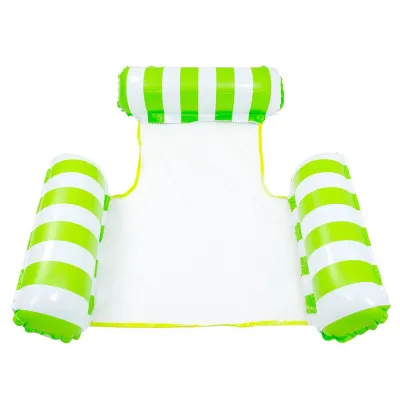
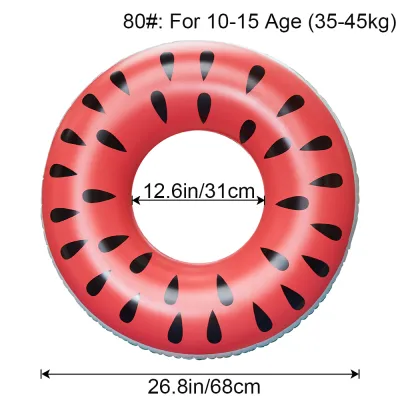
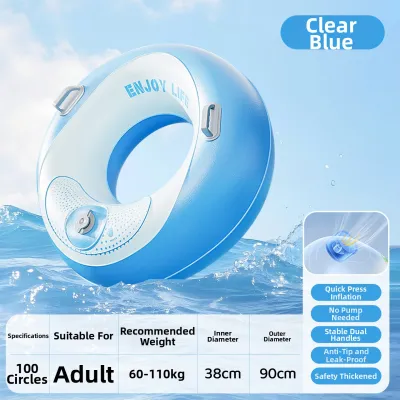
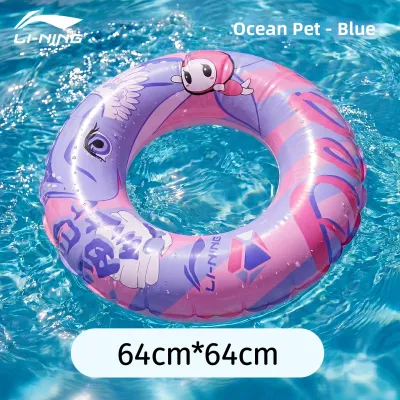
Prices are valid at publication and may change. Please refer to the product page for the latest price.
Loungers
Loungers are designed primarily for relaxation and reclining. They typically feature integrated backrests, armrests, and sometimes headrests or cup holders, mimicking the shape of an armchair or chaise lounge. The buoyancy in a lounger is concentrated around the upper body and head, keeping your torso elevated and mostly dry while allowing your lower legs to dangle or rest on a lower support. Many loungers incorporate a mesh bottom that allows a small amount of water to seep through, keeping you cool under the sun. Because of their complex shapes and multiple air chambers, loungers tend to be bulky, require a moderate amount of inflation time, and have a larger storage footprint when deflated.
Rings
Swimming rings, or swim tubes, feature a classic circular design with a hollow center. They support casual bobbing and upright or semi-reclined positioning. You can use a ring by sitting directly inside the center opening, draping your arms over the sides while your body remains submerged, or resting your torso across the tube. Buoyancy is evenly distributed along the circular chamber, providing excellent stability in calm water. Rings are highly portable when deflated, quick to inflate by mouth or pump, and easy to pack into a beach bag, making them a popular choice for spontaneous outings.
Noodles
Pool noodles are long, flexible cylinders made of solid or hollow foam. Unlike inflatables, they offer active support, meaning you must actively balance or position them under your arms, behind your back, or between your legs to stay afloat. They provide a minimal buoyancy footprint, keeping most of your body submerged in the water. The primary advantages of foam noodles are their zero-setup nature—they cannot pop, leak, or require inflation—and their extreme durability. While they do not fold down, they are lightweight and easy to carry, though their rigid length can make them awkward to transport on public transport or in small vehicles.
Rafts
Rafts, also known as floating mats or islands, are large, flat platforms designed for lying completely flat in a prone or supine position. They offer a massive buoyancy footprint and high stability on calm, open water, with some larger models designed to accommodate multiple adults simultaneously. Rafts keep your entire body out of the water, making them ideal for sunbathing. However, their large surface area makes them highly susceptible to wind and currents. They require a significant volume of air to inflate, take up substantial space in the water, and are heavy and bulky to transport and store.
How to Match Your Float Type to Your Water Activity
Selecting the right float requires matching its physical design to your intended activity, body position preference, and the spatial constraints of your swimming venue.

| Float Type | Primary Body Position | Ideal Water Activity | Best Venue | Portability Rating |
|---|---|---|---|---|
| Lounger | Reclined / Semi-upright | Sunbathing, reading, casual relaxing | Private/Condo pools, calm lakes | Moderate |
| Ring | Upright / Semi-reclined | Socializing, casual bobbing, wading | Public pools, beach clubs, calm sea | High |
| Noodle | Upright / Active vertical | Water aerobics, treading support, play | Public pools, fitness classes | High (but rigid) |
| Raft | Flat (Prone / Supine) | Sunbathing, group socializing | Open water, large private pools | Low |
| Mesh Hammock | Semi-submerged | Cooling off, light reclining | Any pool, travel destinations | Very High |
Body Position and Physical Comfort
Your preferred body position dictates which float structure will feel most comfortable. If you want to read a book or sip a drink without getting your hair wet, a structured lounger with a high backrest is the most suitable option. If you prefer to stay cool and fully submerged from the chest down while chatting with friends, a swimming ring allows you to dangle your legs and move your arms freely. For those who want to lie completely flat to sunbathe, a flat raft provides the necessary full-body support. If you are looking for active movement, water rehabilitation, or vertical treading support, a foam noodle allows for maximum range of motion.
Spatial Considerations and Venue Rules
In Singapore, public swimming complexes managed by ActiveSG and shared condominium pools often experience high usage, especially on weekends and public holidays. Large rafts or oversized multi-person loungers are frequently restricted in these shared spaces because they block lap lanes, obstruct the view of lifeguards, and limit space for other swimmers. For crowded pools, compact rings or foam noodles are much more appropriate and respectful of other users. Conversely, open water environments, such as the designated swimming zones at East Coast Park or Sentosa beaches, offer the physical space required for larger loungers and rafts. However, open water introduces currents and wind, which can easily drift a large, high-profile float away from the shore, requiring constant vigilance and strong swimming ability.
Key Features to Check Before Buying
To ensure your float is durable, safe, and easy to use, you should verify specific product specifications and material labels rather than relying on marketing descriptions.
Material Construction and Thickness
For inflatable floats, the thickness of the polyvinyl chloride (PVC) material is a primary indicator of puncture resistance and overall durability. Look for product specifications that state the material thickness, typically measured in millimeters (mm) or gauge. Standard, budget-friendly floats often use PVC that is 0.20mm to 0.25mm thick, which is suitable for light pool use but prone to punctures from rough surfaces or pool edges. Heavy-duty adult floats generally feature PVC thickness between 0.30mm and 0.45mm or higher. Additionally, check the seam construction; high-frequency (HF) welded seams are molecularly bonded and offer significantly higher resistance to splitting under pressure compared to simple heat-glued seams.
For foam floats, verify whether the product is made of standard extruded polyethylene (PE) foam or vinyl-coated closed-cell foam. PE foam noodles are inexpensive and lightweight but can degrade, flake, or absorb water over years of heavy use. Vinyl-coated closed-cell foam floats are highly durable, resistant to chlorine and saltwater, and do not absorb water, though they carry a higher price point.
Weight Capacity and Sizing
Never assume a float labeled “adult” will comfortably or safely support every user. Always check the manufacturer’s rated weight capacity printed on the packaging or the product itself. Standard adult rings and loungers typically support up to 80kg to 100kg. If you require higher weight support, look for heavy-duty models rated for 120kg to 150kg or more. Using a float above its rated capacity compromises its buoyancy, causing it to sit lower in the water, which increases water intake and reduces stability.
Valve Types and Inflation Mechanisms
Inflatable floats utilize different valve designs that affect how quickly you can set them up and pack them away.
- Pinch Valves: These are the traditional small plastic valves where you must squeeze the base to open an internal flap for inflation or deflation. They are common on smaller, budget-friendly floats but can be slow and tiring to inflate by mouth.
- Boston Valves / Quick-Release Valves: These are larger, two-way screw valves. Unscrewing the top cap allows for rapid inflation via a pump with a one-way check valve preventing air loss. Unscrewing the entire valve base opens a wide port for near-instant deflation. These are highly recommended for larger loungers and rafts.
Safety and Maintenance Essentials for Adult Floats
Proper usage and routine maintenance are critical to ensuring your swimming float remains safe to use and lasts for multiple seasons.
Recreational Floats Are Not Safety Devices
It is vital to understand that recreational swimming floats, loungers, and noodles are classified as water toys or relaxation aids. They are not certified personal flotation devices (PFDs), life jackets, or life-saving equipment. They do not prevent drowning and should never be used as a substitute for swimming competence or professional supervision. If you or anyone using the float is a non-swimmer or an inexperienced swimmer, you must remain in shallow water where you can easily stand, or wear a certified life jacket.
Pre-Use Visual Inspections
Before entering the water, especially in deep areas or open sea, perform a quick visual inspection of your float:
- Check for Leaks: Inflate the float fully and listen for escaping air. You can spray soapy water along the seams; if bubbles form, there is a leak.
- Examine Seams and Valves: Look for signs of stretching, thinning, or separation along the welded seams. Ensure the valve plug fits tightly and does not pop out under pressure.
- Inspect Foam Integrity: For foam noodles, check for deep cracks, crumbling sections, or signs of waterlogging that could reduce buoyancy.
Post-Use Care and Storage
Singapore’s tropical climate, characterized by high temperatures and intense UV radiation, can rapidly degrade both PVC and foam materials if they are not cared for properly. Chlorine in swimming pools and salt in seawater act as corrosive agents that weaken plastics over time.
- Rinse Thoroughly: Always rinse your float with clean, fresh tap water after every use to remove chlorine, salt, sand, and sunscreen oils.
- Dry in the Shade: Allow the float to dry completely in a shaded, well-ventilated area before folding or storing. Never leave a wet inflatable folded up, as this encourages mold and mildew growth.
- Avoid Direct Sunlight: Do not leave inflated floats baking in the sun on a balcony or pool deck. The heat will cause the air inside to expand, which can rupture the seams, while UV rays will make the PVC brittle.
- Store Safely: Store deflated or foam floats in a cool, dry indoor location away from sharp objects, household chemicals, and direct heat sources.
Frequently Asked Questions (FAQ)
Can I use a standard pool noodle for deep-water treading?
Yes, you can use a standard pool noodle to assist with treading water in deep areas, but only if you are already a competent swimmer. A pool noodle provides localized buoyancy when wrapped under your armpits or behind your back, reducing the physical effort required to keep your head above water. However, because it is not secured to your body, it can easily slip away if you lose your grip or balance. Always check the manufacturer’s guidelines to ensure the noodle’s buoyancy is rated to support your weight class, and never rely on a noodle as a safety device if you cannot swim confidently without it.
Do heavy-duty rafts require special inflation equipment?
Heavy-duty rafts and large multi-person loungers hold a very high volume of air, making manual inflation by mouth highly impractical. For these larger floats, it is highly recommended to use a compatible low-pressure electric pump or a double-action manual hand/foot pump. You should check the product manual to identify the correct nozzle adapter size for your float’s valves. Never use high-pressure air compressors, such as those found at petrol stations or used for inflating car tires, to inflate recreational floats. High-pressure equipment can easily over-inflate the chambers in a fraction of a second, permanently damaging the valves or rupturing the seams.
Community discussion
Share your experience or ask a question. Comments are reviewed before publication.