
Finding the right balance between space-saving design and quiet operation is the primary challenge when introducing home fitness equipment into a Singapore Housing & Development Board (HDB) flat. With typical BTO layouts prioritizing compact, efficient living spaces, a traditional, bulky treadmill is rarely a practical option. Instead, compact walking pads have emerged as the go-to solution for residents looking to maintain their daily step count without sacrificing valuable floor space. The best walking pad brands for HDB living—such as KingSmith (WalkingPad), select brands within the Xiaomi ecosystem, and specialized models from local Singapore fitness retailers—succeed by balancing three critical pillars: a minimal storage footprint, low acoustic output, and reliable local warranty support.
Understanding the Unique Constraints of HDB Flats for Fitness Gear
In Singapore’s urban landscape, HDB flats are designed with structural efficiency in mind, which presents distinct challenges for home cardio equipment. The most immediate constraint is physical space. Modern BTO flats, particularly three-room and four-room configurations, feature bedrooms and living areas where every square meter must be carefully allocated. Placing a permanent, non-folding fitness machine in these rooms can severely disrupt the flow of the household, blocking walkways and making the space feel cluttered.
Beyond physical dimensions, acoustic transmission is a major consideration in high-density vertical living. HDB flats are constructed with reinforced concrete slabs. While concrete is exceptionally durable, it is an excellent conductor of impact sound and low-frequency vibrations. When you walk or jog on a motorized belt, the downward force of your steps sends vibrations directly through the machine’s frame and into the floor. This structural noise can easily travel through the ceiling of the flat below, sounding like a rhythmic, heavy thumping to your downstairs neighbors.
Products mentioned in this guide
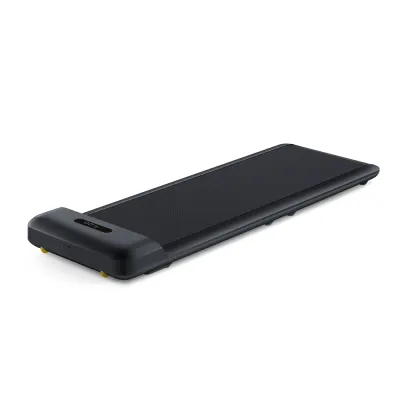
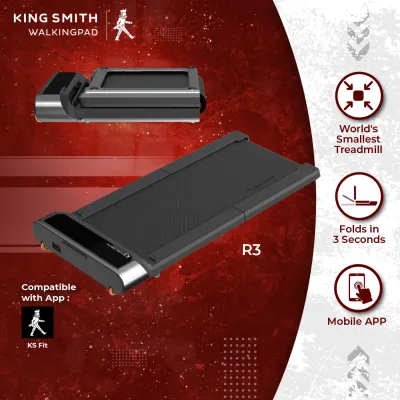
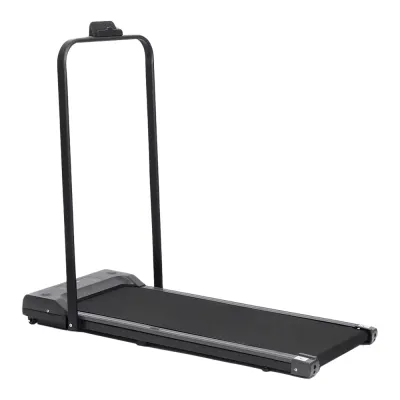
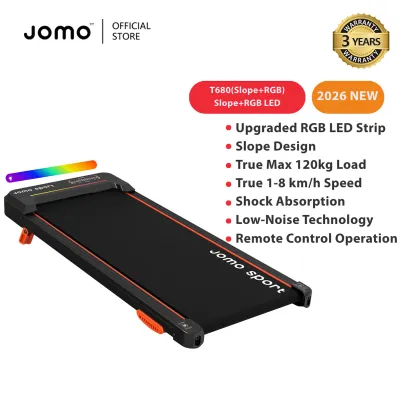
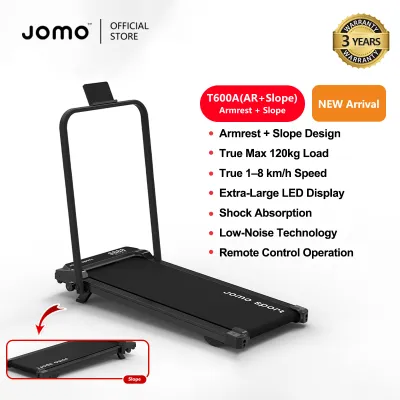
![[INSTOCK] Home Manual Treadmill / Belt Treadmill / Walking Pad](https://img.lazcdn.com/g/p/252e9cdd1aff5e5f5ac7bf3fc98134c9.png_400x400q80.png_.webp)
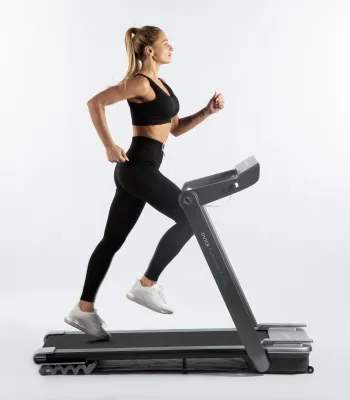
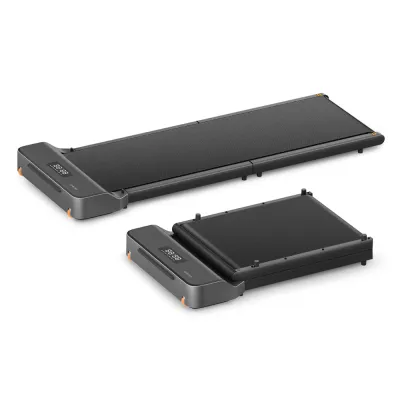
Prices are valid at publication and may change. Please refer to the product page for the latest price.
Consequently, any fitness equipment introduced into an HDB flat must be highly portable and exceptionally quiet. It needs to be a machine that can be quickly deployed for a lunchtime walk or an evening session, and then effortlessly rolled away under a sofa, bed, or into a utility closet when not in use. This requirement makes the design, weight, and folding mechanism of a walking pad far more important than its maximum top speed.
Essential Features to Verify for Compact and Quiet Operation
Before purchasing any walking pad, you must look past marketing slogans and carefully analyze the technical specifications. Understanding these details will help you avoid buying a machine that is either too loud for your neighbors or too bulky for your designated storage spot.

Motor Type and Noise Output
The motor is the heart of the walking pad and the primary source of continuous mechanical noise. When comparing models, always check whether the machine uses a brushed or brushless direct current (DC) motor. Brushless motors are highly recommended for HDB apartments. Because they do not rely on physical carbon brushes to transfer electricity, they generate significantly less friction, run cooler, and produce a lower-pitched, smoother hum compared to their brushed counterparts.
When reviewing product specifications, look for explicit decibel (dB) ratings provided by the manufacturer. A quiet walking pad typically operates between 45 dB and 55 dB under normal walking conditions. However, you must keep in mind that these ratings are often measured in controlled laboratory environments without a user on the belt. In practice, the actual noise output will increase based on your body weight and walking speed, as your footsteps introduce impact noise that combines with the motor’s hum.
Folding Mechanism and Storage Footprint
Storage efficiency varies greatly across different walking pad designs. The two main configurations available are 180-degree double-fold models and single-panel flat models. Double-fold designs, popularized by brands like KingSmith, allow the running deck to fold completely in half. This reduces the length of the stored unit by 50%, allowing it to stand vertically against a wall, fit into tight utility closets, or slide into narrow gaps beside wardrobes.
In contrast, flat under-desk models do not fold in half; they maintain their full length but feature a very low profile, typically under 15 cm in height. These are ideal if you plan to slide the unit directly under a raised sofa or bed frame. Before buying, you must physically measure your intended storage space. Take note of the clearance height under your furniture and compare it to the walking pad’s folded thickness, making sure to account for the height of the transport wheels and any folded handrails or consoles.
Shock Absorption and Deck Cushioning
The structural design of the walking deck determines how much impact energy is transferred into your joints and, consequently, into your HDB floor. A walking pad with a rigid, unyielding deck will produce a loud, sharp slapping sound with every step you take. To minimize this, look for models that feature multi-layer running belts and integrated suspension systems.
High-quality walking pads utilize a multi-layer belt structure that typically includes a wear-resistant surface layer, a noise-reduction cushion layer, and a high-density fiberboard base. This is often supported by silicone shock absorbers or rubber dampers positioned beneath the deck frame. Even with these built-in features, concrete HDB floors usually require an additional layer of protection. Placing a high-density, equipment-grade anti-vibration mat beneath the machine is highly recommended to absorb residual structural vibrations and protect your flooring from scratches.
Leading Walking Pad Brands Available in Singapore
Navigating the market in Singapore requires understanding the primary brand categories and their distribution networks. Choosing the right brand involves balancing innovative design features against the reliability of local after-sales support and warranty coverage.
KingSmith (WalkingPad) and Premium Foldables
KingSmith, often marketed under the “WalkingPad” brand, is widely recognized as the pioneer of the 180-degree folding fitness category. Their patented double-fold technology makes them highly attractive for HDB residents who face severe space limitations. Models like the KingSmith WalkingPad R1 Pro, R2, and X21 offer a robust build quality, sleek aesthetics, and smart integration with the KS Fit companion app, which tracks your workout metrics and allows for remote control via your smartphone.
When considering a KingSmith model, you must verify the maximum weight capacity of the specific unit. Some of their ultra-compact, entry-level models have a weight limit of 90 kg or 100 kg, which may not provide enough structural margin for heavier users. Furthermore, because KingSmith products are highly popular, many parallel-imported units are sold on online marketplaces. To protect your investment, you should verify if the seller is an authorized local distributor. Purchasing from an authorized local agent ensures you receive a valid Singapore warranty, access to genuine replacement parts, and local technician support if the motor controller or folding hinge requires servicing.
Xiaomi Ecosystem and Budget-Friendly Options
The Xiaomi ecosystem includes various sub-brands and partner companies, such as Urevo and Mobifitness, which offer streamlined, cost-effective walking pads. These brands typically focus on minimalist, non-folding flat designs that deliver reliable performance at a lower price point, often appealing to budget-conscious buyers or those testing out a work-from-home walking setup for the first time.
If you opt for a budget-friendly model from the Xiaomi ecosystem, there are several critical technical and logistical factors to verify. First, ensure the power plug and voltage specifications are fully compatible with Singapore’s electrical standards, which require a 230V, 50Hz power supply and a Type G (3-pin) plug. Many parallel-imported models come with flat two-pin plugs or require voltage step-down converters, which can pose safety hazards for high-draw motorized appliances. Additionally, verify the terms of the after-sales service. Budget models purchased directly from cross-border e-commerce platforms often require you to ship the heavy unit back to the overseas seller at your own expense for repairs, making local warranty verification a crucial step before finalizing your purchase.
Local Fitness Retailers and Specialized Brands
For many HDB residents, purchasing a walking pad from established brick-and-mortar fitness retailers in Singapore offers the greatest peace of mind. Local specialty brands and retailers curate equipment specifically tested for the local market and provide a level of customer service that online-only sellers cannot match.
The primary advantage of this route is the ability to visit a physical showroom. You can walk on the machine yourself, evaluate the sturdiness of the frame under your actual weight, and listen to the motor noise in person. Furthermore, local retailers typically handle the logistics of delivery and assembly, ensuring the machine is safely brought up HDB passenger lifts and set up correctly in your flat. They also offer reliable, on-site after-sales support. If your walking pad develops a squeak or requires belt alignment, a local technician can visit your home, saving you the hassle of packing and transporting a 30 kg machine. When purchasing, always ask the retailer about their maintenance packages, including professional belt lubrication and motor calibration services.
How to Compare and Select the Right Model for Your Space
To make an informed decision, you should establish a structured comparison framework based on your flat’s layout and your personal physical requirements. Do not rely solely on the simplified product descriptions found on third-party marketplace listings; instead, cross-reference the specifications with official manufacturer user manuals or authorized distributor documentation.
Use the following key dimensions and specifications to evaluate your options:
- Folded Dimensions (L x W x H): Measure your target storage spot (e.g., under the bed or inside a wardrobe) and ensure there is at least a 2 cm to 3 cm clearance margin around the folded machine.
- Unfolded Running Area: For a safe and natural walking stride, the belt width should be at least 40 cm, and the length should be at least 110 cm. Narrower belts increase the risk of stepping off the side during a workout.
- Motor Noise Rating: Look for models with a specified noise level under 55 dB. Remember to verify if this rating applies to brushless motor technology.
- Maximum User Weight Capacity: Select a model that offers a weight capacity at least 15% to 20% higher than your actual body weight to prevent overloading the motor and causing premature wear.
- Local Warranty Terms: Confirm whether the warranty covers both parts and labor locally in Singapore, and check if the servicing is performed on-site or requires carry-in.
Setup and Maintenance Tips to Keep Noise to a Minimum
Even the quietest walking pad can become a nuisance to your neighbors if it is set up incorrectly or neglected. Implementing a few practical, low-risk installation and maintenance steps will keep your machine running smoothly and quietly.
First, always place a high-density, equipment-grade anti-vibration mat directly under the walking pad. These mats are specifically designed to absorb low-frequency vibrations and prevent them from transferring into the concrete floor slab. Avoid using soft foam yoga mats, as they compress too easily and do not provide adequate structural dampening.
Second, consider the placement of the machine within your room. Position the walking pad away from shared partition walls, which can act as sounding boards and amplify noise. If possible, place the unit directly over or close to structural beams or load-bearing columns. The floor slab is stiffest near these structural elements, which significantly reduces the vertical deflection and vibration caused by your footsteps.
Finally, establish a routine maintenance schedule. Over time, the walking belt can stretch or shift off-center, causing it to rub against the side rails and generate a loud scraping noise. Check the belt alignment weekly and adjust the tension bolts at the rear of the machine according to the manufacturer’s instructions. Additionally, apply a manufacturer-approved 100% silicone lubricant beneath the belt every three to six months, or after every 100 kilometers of use. Proper lubrication reduces friction between the belt and the deck, lowering the strain on the motor and keeping operational noise to an absolute minimum.
Frequently Asked Questions (FAQ)
Do I need permission from HDB to use a walking pad?
No, you do not need special structural permission or permits from the Housing & Development Board (HDB) to own or operate a standard household walking pad. However, because you are living in a shared community environment, you are responsible for ensuring that your activities do not cause a noise nuisance to your neighbors. To maintain good neighborly relations, it is best to avoid using the walking pad during designated quiet hours, typically between 10:30 PM and 7:00 AM.
How do I protect HDB vinyl or parquet flooring from damage?
The continuous friction, localized weight, and high-frequency vibrations of a walking pad can easily cause indentations on vinyl flooring or scratches on natural timber parquet. To protect your floors, you should always place a heavy-duty, non-slip protective mat designed specifically for fitness equipment under the machine. This mat distributes the weight of the walking pad and the user across a larger surface area, preventing localized pressure damage and scuff marks.
Is an under-desk walking pad better than a foldable treadmill for HDBs?
The choice depends entirely on your primary usage scenario and space. Under-desk walking pads are flatter, lighter, and easier to slide completely out of sight, making them ideal for light, low-speed walking while working. However, they lack handrails and have lower speed limits (usually capped around 6 km/h). Foldable treadmills with handrails offer greater stability and safety for brisk walking or light jogging, but they have a larger folded footprint and are heavier to move around.
Community discussion
Share your experience or ask a question. Comments are reviewed before publication.