
Selecting the ideal waterbottle waist pouch for long-distance running requires balancing stable fluid storage with immediate, bounce-free access to your nutrition. During a marathon training cycle or a long run exceeding 90 minutes, managing your hydration and fuel intake becomes a precise science. The right waist pouch must secure a heavy, shifting water volume while keeping your energy gels organized and reachable without forcing you to break your stride. In hot and humid environments, such as Singapore, where sweat rates are high and skin friction is amplified, your choice of gear can mean the difference between a successful training session and an agonizing, chafe-ridden recovery.
A successful run relies on gear that works in harmony with your body’s natural biomechanics. A poorly designed pouch will bounce, shift, or sag, causing physical distraction and wasting valuable energy. By understanding the structural dynamics of waist pouches, you can select a system that distributes weight evenly across your hips, keeps your fluids cool, and ensures your energy gels are always positioned for rapid, one-handed access.
Core Needs for Long-Distance Running Waist Pouches
Carrying both water and energy gels introduces physical and logistical challenges that standard running apparel cannot adequately resolve. Water is heavy, weighing approximately one kilogram per liter, and when placed in a bottle on your waist, this shifting mass creates a persistent bounce that disrupts your running rhythm and increases the impact force on your lower back and hips. Over several hours, even minor movements of the belt can lead to severe chafing as the fabric repeatedly rubs against your skin or clothing.
Products mentioned in this guide
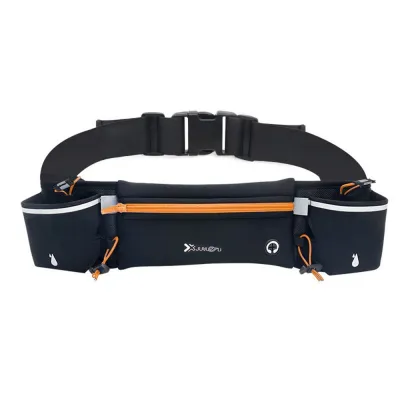
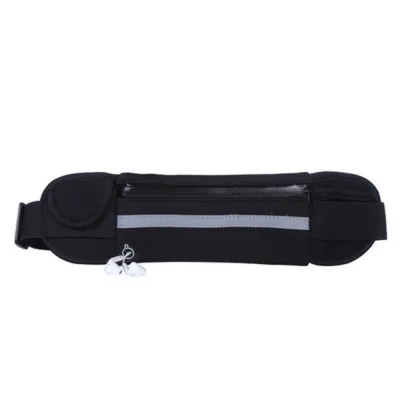
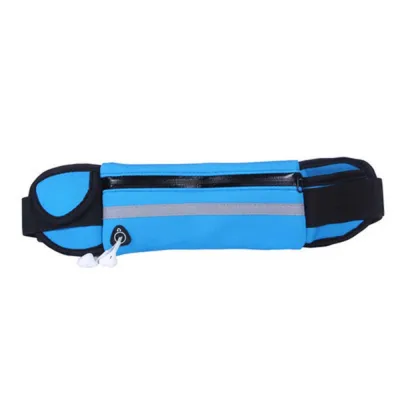
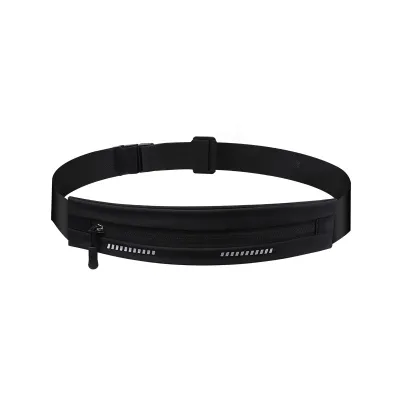
Prices are valid at publication and may change. Please refer to the product page for the latest price.
Logistically, your nutritional strategy requires consistent, timed access to carbohydrates, typically every 30 to 45 minutes during an extended effort. When running at a sustained pace, stopping or slowing down to find an energy gel disrupts your cardiovascular momentum and mental focus. You need a carrying system that allows you to instinctively reach down, extract a gel, and consume it with a single hand while maintaining your target stride rate. Dedicated external storage compartments solve this problem by isolating your nutrition from other gear.
While many modern running shorts feature built-in pockets, they rarely carry both a loaded water bottle and multiple energy gels simultaneously without excessive sagging. A dedicated waterbottle waist pouch provides a reinforced, adjustable platform specifically engineered to handle these loads, keeping your hydration and nutrition secure so you can focus entirely on your pacing and form.
Key Features to Look for in a Waterbottle Waist Pouch
Secure Bottle Holders and Weight Distribution
The orientation and security of the bottle holster are critical factors in determining how comfortable a waist pouch will feel over double-digit kilometers. Angled bottle holsters, typically set at a 45-degree angle, are highly favored by distance runners because they align with the natural diagonal reach of your arm. This design allows for rapid, blind extraction and re-insertion of the bottle while running, minimizing the amount of upper body rotation required. In contrast, straight vertical holsters can sometimes feel awkward to reach, requiring you to bend your wrist or elbow uncomfortably to pull the bottle free.

To prevent your water bottle from launching out of the holster when you pick up your pace or navigate uneven terrain, look for robust retention systems. High-quality pouches utilize adjustable bungee cord loops that slip over the neck of the bottle, or semi-rigid plastic sleeves that grip the bottle body through friction. Some designs incorporate secure elastic flaps that cover the top of the bottle, which provides excellent security but can make one-handed access slightly more challenging. The ideal system should allow you to release and re-secure the bottle with minimal manual dexterity, even when your fingers are sweaty or fatigued.
Weight distribution is the foundation of a bounce-free ride, and it requires the pouch to sit snugly against your skeletal frame rather than your soft abdomen. The belt must be designed to rest directly on the iliac crest—the upper ridge of your hip bones—which provides a stable, non-moving platform to support the load. Pouches that feature wide, flared hip wings help distribute the weight of the water bottle and gels over a larger surface area, preventing the belt from digging into your waist or pulling unevenly to one side.
Dedicated and Accessible Gel Storage
Energy gels require specialized storage that keeps them isolated from the rest of your gear and immediately accessible. Look for pouches that feature external mesh slip pockets or dedicated elastic loops sewn directly onto the exterior of the belt. These loops hold individual gel packets snugly against the band, preventing them from bouncing around or rubbing against one another. This external placement ensures that you can count your remaining nutrition at a glance and reach any specific flavor instantly without having to unzip a main compartment.
Storing energy gels inside a deep, zippered main pocket alongside your smartphone, keys, or salt tablets is a recipe for frustration and potential damage. The sharp, foil corners of gel packets can easily scratch your phone screen, or conversely, the pressure of your body heat and movement can cause a gel packet to rupture, coating your electronics in a sticky, hard-to-clean syrup. Furthermore, trying to fish a small gel packet out from the bottom of a dark, sweaty pocket while running at marathon pace is highly inefficient and increases the risk of dropping other essential items.
The positioning of your gels should also facilitate a seamless opening process while you are on the move. When gels are secured in external elastic loops, they should be oriented so that the tear-tab remains completely exposed and facing upward or outward. This allows you to grip the body of the gel with your fingers, use your teeth or your other hand to tear the tab, and consume the gel without ever having to fully remove the packaging from the belt if you prefer to minimize litter risk. Always ensure the loops are tight enough to hold the gels securely but flexible enough to release them with a firm, steady pull.
Breathability and Anti-Chafing Materials
In tropical climates where humidity levels are consistently high, breathability and material selection are paramount to preventing severe skin irritation. The back panel of the waist pouch—the section that makes contact with your lower back—should be constructed from a highly breathable 3D spacer mesh. This material creates a physical gap between your body and the pouch, allowing air to circulate and sweat to evaporate rather than pooling against your skin. Avoid solid nylon or plastic-lined backing materials, as they trap heat and moisture, leading to rapid chafing and heat rashes.
The edges of the belt and any adjustable straps must be finished with soft, friction-free bindings or seamless construction to protect your skin and technical running apparel. Coarse webbing straps or sharp nylon seams can quickly saw through delicate polyester running singlets and cause painful friction burns on your waistline. Look for belts that feature wide, elasticized waistbands with hook-and-loop closures or soft-touch buckles that distribute pressure evenly without digging into your stomach or lower back.
Top Waterbottle Waist Pouch Styles for Marathon Training
Tube-Style Running Belts with Bottle Holders
Tube-style running belts represent a minimalist, highly streamlined approach to carrying hydration and nutrition. These belts are typically constructed from a continuous loop of high-stretch, moisture-wicking fabric that pulls on over your feet or hips, fitting snugly around your waist like a second skin. Many modern tube belts incorporate specialized, low-profile horizontal sleeves designed to hold soft flasks or small, contoured plastic bottles flat against your lower back, alongside multiple external elastic loops or slot pockets specifically sized for energy gels.
Pros: The primary advantage of the tube-style belt is its exceptional stability; because the entire band is elasticized and fits tightly around your circumference, there are no pressure points, and bounce is virtually non-existent. The sleek profile sits flush under a running singlet, and the external gel loops allow you to carry several packets with zero movement.
Cons: However, these belts have limited fluid capacity, generally accommodating bottles only up to 10 ounces (approximately 300ml) before the weight begins to stretch the fabric excessively and cause sagging. Additionally, sliding a full water bottle back into a tight fabric sleeve while running can require significant practice and two hands.
Best suited for: This style is ideal for competitive runners and minimalists who prioritize speed, agility, and absolute stability, and who primarily require supplementary hydration between official race stations or on shorter long runs.
Traditional Fanny-Pack Style with Angled Bottles
Traditional fanny-pack style pouches offer a more structured, high-capacity solution for runners who need to carry substantial gear and fluids. These systems feature a semi-rigid back panel, a heavy-duty adjustable webbing strap with a secure buckle, and a dedicated, angled bottle holster positioned on the hip or lower back. They typically include a spacious, zippered main compartment alongside dedicated outer mesh pockets or elastic gear loops designed specifically for rapid gel deployment.
Pros: This style excels in storage capacity and versatility, easily accommodating larger water bottles up to 18 ounces (approximately 600ml) or more, which is essential for long, unsupported training runs. The zippered compartments provide ample, secure space for larger modern smartphones, car keys, medical supplies, and nutrition, keeping them organized and protected from sweat.
Cons: The increased capacity comes with a bulkier profile and a higher potential for bouncing if the waist strap is not adjusted correctly. The concentrated weight of a large, full water bottle can cause the belt to pull to one side or slide down if it is not tightened snugly against the pelvis.
Best suited for: This style is best for self-supported long runs, marathon runners who prefer to carry their own specific hydration and nutrition mixes, and those who need to carry personal essentials like phones and keys securely without the warmth of a full hydration vest.
How to Pack and Wear Your Pouch for Maximum Comfort
Achieving a comfortable, bounce-free ride with a waterbottle waist pouch depends heavily on how you position the belt on your body and how you distribute the weight of your gear. To prevent the pouch from sliding down or bouncing against your stomach, you must wear it high on your waist or resting firmly on the top of your hip bones (the iliac crest). Many runners make the mistake of wearing the belt too low around their glutes or pelvis, which causes the belt to ride up naturally as the legs move, loosening the fit and causing immediate instability.
When loading your pouch, always place the heaviest items in the center back, directly against your spine or the small of your back, to keep the center of gravity as close to your body as possible. Your smartphone, keys, and any heavy items should go into this central compartment, while your water bottle should be secured in its dedicated holster, and your energy gels should be distributed evenly across the side loops or outer mesh pockets. This balanced arrangement prevents the belt from pulling to one side, which can alter your running gait and lead to muscle strain over long distances.
For optimal efficiency on the run, orient your energy gels with the tear-tabs pointing upward and outward so you can easily locate them by touch. This setup allows you to grab a gel, tear the top off with your teeth, and consume it without having to look down or break your stride. If your pouch uses elastic loops, slide the gels in from the top down, leaving the top third of the packet exposed for an easy grip.
Before you take your first stride, adjust the tension of the waistband so that it is snug but does not restrict your breathing. The buckle or adjustment mechanism should ideally be positioned to the side or front of your body rather than directly over your spine, where it could cause pressure points or bruising over long miles. Keep in mind that as you drink from your water bottle, the overall weight of the pouch will decrease, and the belt may require a quick, slight tightening adjustment after the first 30 to 45 minutes of your run to maintain its secure fit.
Frequently Asked Questions (FAQ)
How many energy gels can a typical waist pouch hold?
The carrying capacity of a waterbottle waist pouch varies by design, but most models equipped with dedicated external loops or outer mesh pockets can comfortably accommodate between 3 to 6 standard energy gels. This capacity is generally sufficient to fuel a runner for a full marathon or a long training run lasting three to four hours, assuming a consumption rate of one gel every 30 to 45 minutes. If you require additional nutrition, look for pouches with expandable mesh compartments that can hold extra gels without adding bulk.
Is a waist pouch better than a hydration vest for long runs?
Choosing between a waist pouch and a hydration vest depends on your fluid requirements, gear needs, and personal comfort preferences. Waist pouches are lighter, less insulating, and ideal for road marathons and training runs up to three hours where regular water stations are available. Hydration vests, on the other hand, offer much larger fluid capacities (often 1.5 to 2 liters) and extra storage space, making them better suited for ultra-marathons, trail running, or self-supported runs in remote areas where carrying mandatory safety gear is required.
Community discussion
Share your experience or ask a question. Comments are reviewed before publication.