
Building a functional strength-training setup in a Singapore Housing & Development Board (HDB) flat requires balancing your fitness goals with spatial reality. With modern BTO flat sizes ranging from 65 square meters for a 3-room to 110 square meters for a 5-room, dedicating an entire room to workout gear is rarely practical. Most homeowners must carve out a workout corner in a bedroom, living room, or study.
The primary challenge is finding weights that offer enough resistance for progressive strength training without cluttering your living space. Fortunately, modern fitness equipment is increasingly designed with compact living in mind. By choosing highly versatile, multi-functional weight systems and understanding how to maximize your available footprint, you can build an effective strength-training setup that coexists harmoniously with your home life.
Assessing Your HDB Space Before Buying Weights
Before purchasing any strength equipment, you must accurately evaluate your physical environment. A common mistake is buying gear based on its storage dimensions while ignoring the space required to actually use it. Start by measuring your dedicated workout footprint. A standard 2-meter by 2-meter corner (about 4 square meters) is generally the minimum area required to perform free-weight exercises safely. Mark this boundary on your floor with masking tape to visualize how much space remains for daily movement.
Products mentioned in this guide
![(FITNET) [Bulky] Black Versatile Dumbbell Set 10kg / 15kg / 20kg / 25kg / 30kg / 40kg - Dumbbells / Weights / Gym / Fitness / Barbells / Strength Training / Body Building / sd](https://img.lazcdn.com/g/p/f9430429fa4b60f6faffce0d434b6a81.jpg_400x400q80.jpg_.webp)

Prices are valid at publication and may change. Please refer to the product page for the latest price.
Next, you must account for dynamic clearance, which is the space your body and the equipment occupy during motion. For example, while a pair of dumbbells takes up very little space on the floor, performing lateral raises requires a clearance width equal to your full arm-span plus the length of the weights. Similarly, overhead presses require vertical clearance. Standard HDB ceilings are typically 2.6 meters high. If you are tall or have low-hanging ceiling fans or light fixtures, pressing weights directly overhead can be highly dangerous. Always perform a dry run of your planned exercises with empty hands in your designated space to ensure you will not strike walls, furniture, or ceiling fixtures.
You must also consider the structural and social constraints of high-rise living. HDB floor slabs are designed to support a standard residential live load of 150 kg per square meter. While normal strength training will not exceed this structural limit, dropping heavy weights concentrates immense dynamic force onto a tiny area. This can easily crack homogenous or ceramic floor tiles and send loud acoustic vibrations through the concrete slab directly into your downstairs neighbor’s flat. To maintain good neighborly relations and protect your property, you must prioritize controlled movements and invest in high-density floor protection.
Top Space-Saving Weight Equipment for Small Flats
When selecting weights for a compact home gym, three core criteria should guide your decisions: a high weight-to-volume ratio, stackability, and multi-use functionality. You want equipment that provides a wide range of resistance levels but can be tucked away into a single corner or closet when your workout is finished.

Different equipment types serve distinct training styles. If your primary goal is muscle hypertrophy, you will need highly adjustable systems that allow for precise, incremental increases in resistance. If you prefer functional conditioning, cardiovascular endurance, or ballistic movements, single-unit weights that allow for dynamic handling are more appropriate. Understanding these distinctions ensures you do not waste money or space on gear that does not align with your fitness objectives.
Adjustable Dumbbells
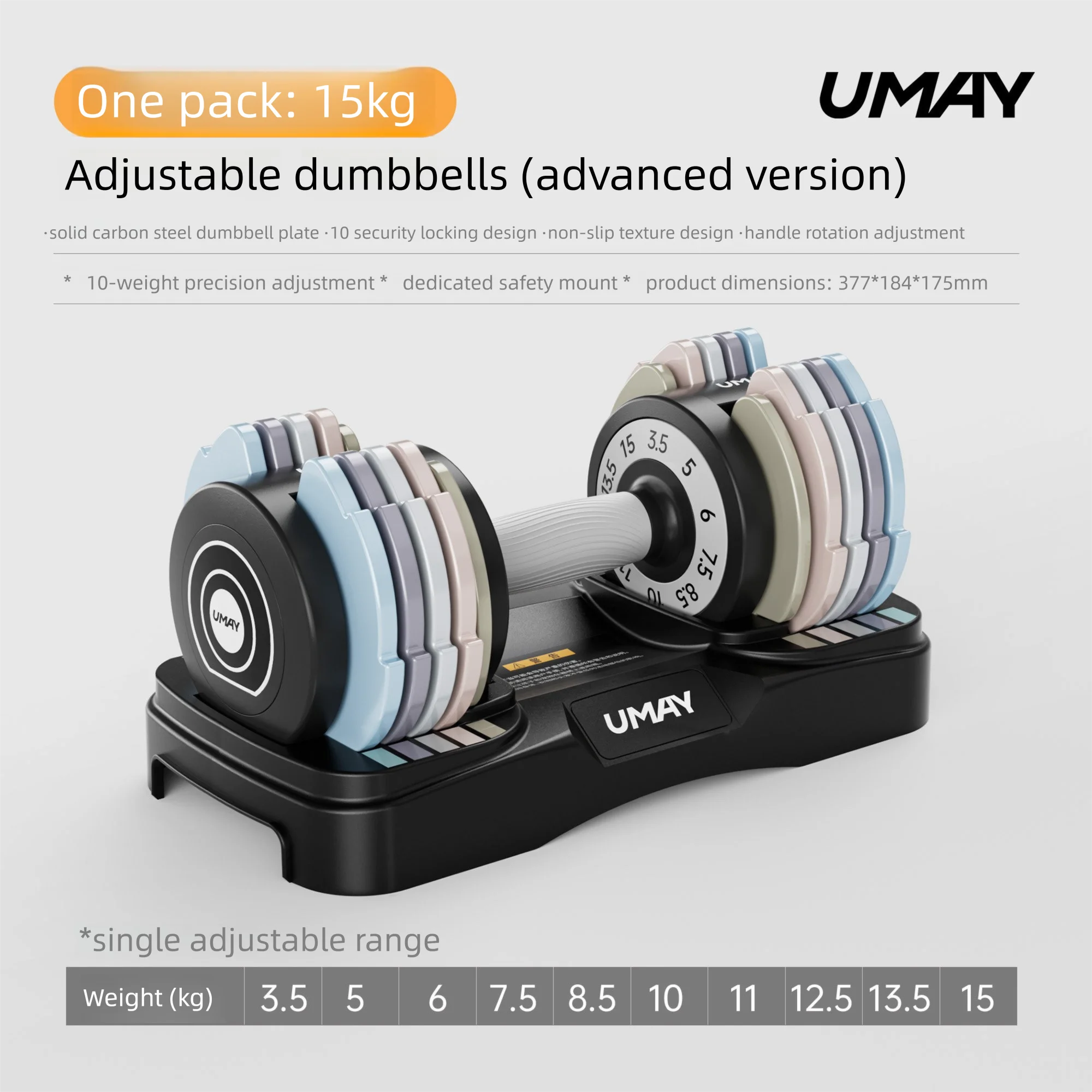
Adjustable dumbbells are the premier space-saving solution for home strength training. A single pair of these dumbbells can replace an entire rack of 10 to 15 pairs of traditional fixed dumbbells, saving an immense amount of floor space while offering a wide range of resistance options. This makes them exceptionally cost-effective when you calculate the cost and space requirements of equivalent individual weights.
When choosing adjustable dumbbells, you will generally encounter two primary adjustment mechanisms: dial-select systems and selector-pin blocks. Dial systems allow you to change weights rapidly by turning a dial on either end of the handle, but they often feature wider plastic housings that remain long even when set to lighter weights. Selector-pin blocks use a U-shaped pin to select weight plates; they are typically more compact and highly durable, though changing the weight can take slightly longer. Always check the manufacturer’s instructions regarding weight limits and mechanism maintenance to ensure the locking pins remain secure over time.
Because adjustable dumbbells contain complex mechanical parts, they must be handled with care. They should never be dropped on the floor, as severe impacts can damage the internal locking mechanisms and render the weights unsafe. Additionally, store them on a sturdy, compact stand or a designated flat surface to prevent them from rolling and creating a tripping hazard in narrow walkways.
Kettlebells
Kettlebells are highly efficient tools for dynamic, full-body workouts that require minimal lateral space. Unlike barbells, which require a wide path of movement, kettlebell exercises like swings, cleans, snatches, and goblet squats are performed primarily within your own body’s footprint. This makes them ideal for tight HDB living rooms or bedrooms.
Instead of purchasing a complete set of kettlebells, start with one or two versatile sizes. For general strength and conditioning, a single moderate-weight kettlebell is often sufficient to target almost every major muscle group. If budget and space allow, consider competition-style kettlebells. These are made of steel and maintain the exact same external dimensions and handle diameter regardless of their weight. This consistency allows you to maintain identical lifting mechanics as you progress to heavier loads.
To protect your floor tiles from scratches and minor impacts, always store your kettlebells on a dedicated rubber mat or a compact, low-profile rack. When performing ballistic exercises like swings, ensure you have a firm grip and clear any nearby furniture or television consoles to prevent accidental damage.
Resistance Bands and Tube Sets
For homes with virtually zero floor space, heavy-duty resistance bands and tube sets offer an excellent alternative or supplement to traditional iron weights. These lightweight tools can be easily rolled up and stored in a small drawer, wardrobe, or under-bed bin, making them completely invisible when not in use.
By utilizing door anchors, loop bands, and resistance tubes with handles, you can replicate almost any exercise typically performed on a bulky cable machine or pulley system. You can perform chest presses, lat pulldowns, rows, and bicep curls simply by securing the anchor to a sturdy bedroom door. Resistance bands are also completely silent and pose zero risk of damaging your floors, making them the perfect choice for early-morning or late-night workouts in high-density HDB blocks.
However, resistance bands do have clear limitations. Tracking progressive overload is more difficult because the resistance level changes depending on how far the band is stretched. They also do not provide constant tension throughout the entire range of motion, and they lack the heavy, tactile feel of free weights. For long-term safety, always inspect your bands for micro-tears or discoloration before use, and follow the manufacturer’s guidelines to prevent painful snaps.
Compact Weight Plates and Foldable Benches
If you are committed to heavy barbell lifting but want to avoid dedicating an entire room to a power rack, a compact plate-loaded setup is a viable alternative. This approach requires careful selection of plates, bars, and benches to keep the footprint manageable.
When choosing weight plates, you must weigh the trade-offs between bumper plates and thin iron plates. Bumper plates are coated in thick, dense rubber, which helps absorb impact and reduce noise if they contact the floor. However, they are highly bulky and require significant storage space. Thin iron or steel plates are highly compact and allow you to fit more weight onto a shorter bar, but they clank loudly and can easily crack floor tiles if set down too hard. Tri-grip rubber-coated plates offer a practical middle ground, providing a slim profile with a protective outer layer.
To complement your plates, choose a foldable utility bench that can be stored vertically in a closet or slid flat under a standard bed frame when not in use. Pair this with a short barbell, such as a 1.5-meter or 1.8-meter bar, or an EZ-curl bar. These shorter bars fit comfortably within the width of a standard HDB bedroom, preventing you from accidentally striking walls or wardrobe doors during your lifts.
Smart Storage and Layout Solutions for HDB Corners
Organizing your equipment efficiently is key to maintaining a clean, clutter-free home environment. When your workout gear is neatly stored, your flat remains a relaxing living space rather than looking like a commercial gym.
- Utilize Hidden Storage: Look for opportunities to hide your gear in plain sight. Flat resistance bands, yoga mats, and light accessories can be stored in shallow plastic bins that slide easily under your bed or sofa. Alternatively, invest in a storage ottoman for your living room; these double as comfortable seating and hidden chests for kettlebells or light dumbbells.
- Explore Vertical Storage: Wall-mounted racks and pegboards are excellent for hanging resistance bands, jump ropes, and light weight plates, keeping your floor completely clear. However, you must observe strict safety rules regarding HDB walls. Drilling is strictly prohibited on the reinforced concrete walls of your household shelter (bomb shelter) as it compromises its structural protective integrity. Always check your flat's architectural layout plan and use heavy-duty wall anchors only on non-structural brick or drywall partitions.
- Integrate Multi-Functional Furniture: Consider furniture that serves a dual purpose. A sturdy, flat wooden chest or storage bench can serve as a functional bench for dumbbell presses during your workout and a stylish seating option or storage chest during the rest of the day.
- Use Portable Flooring: Instead of permanently covering your beautiful tiles with dark rubber gym flooring, use interlocking high-density EVA foam or rubber tiles. These can be quickly assembled before your workout to protect your floors and dampen noise, then stacked neatly in a closet or corner once you are finished.
Common Space and Sizing Mistakes to Avoid
To ensure your home gym setup is safe, functional, and enjoyable to use, avoid these common purchasing and layout errors:
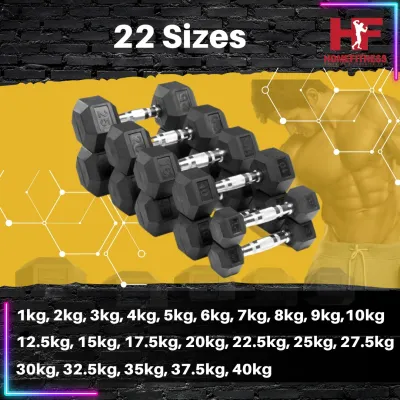
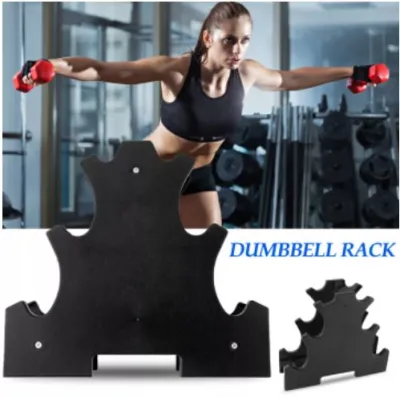
- Buying Fixed-Weight Dumbbell Sets: Purchasing a full set of individual fixed dumbbells is highly impractical for small flats. They require a long, horizontal rack that consumes massive amounts of valuable floor space and creates significant visual clutter.
- Ignoring the Swing Radius: Never buy equipment based solely on its static storage size. Always calculate the "swing radius" of dynamic movements. Ensure that when you perform a kettlebell swing or an overhead press, you have ample clearance from ceiling fans, light fixtures, and wall-mounted televisions.
- Overlooking Noise and Vibration: Dropping heavy iron weights in a high-rise HDB flat will inevitably lead to neighbor complaints and potential floor damage. Avoid any training style that relies on dropping weights from height. If you must perform heavy lifts, focus on slow, controlled eccentric lowering and use thick, high-density crash pads to absorb the impact.
- Forgetting to Measure Entryways: Before ordering large or heavy items like foldable benches, plate trees, or half-racks, always measure your flat's main door, bedroom doors, and the dimensions of your HDB lift. If the delivery drivers cannot fit the equipment through the lift doors or your narrow entryway, you may face costly return fees.
Frequently Asked Questions (FAQ)
Can I drop weights on the floor in an HDB flat?
No, you should never drop iron or hard rubber weights onto the floor of an HDB flat. The impact can easily crack ceramic or homogenous floor tiles, damage the concrete subfloor, and transmit loud, disruptive vibrations through the building’s structural concrete slab to your neighbors. Always lower your weights with control, use high-density rubber mats to protect your floors, or substitute high-impact movements with resistance bands.
Are adjustable dumbbells worth the investment for a small home gym?
Yes, adjustable dumbbells are highly worth the investment for a small home gym. While the upfront cost is higher than a single pair of fixed dumbbells, they are incredibly cost-effective because they replace up to 15 individual pairs of weights. By consolidating an entire dumbbell rack into a single compact pair, they drastically reduce visual clutter and save massive amounts of floor space in your flat.
Community discussion
Share your experience or ask a question. Comments are reviewed before publication.