
Selecting the right tennis ball is one of the most overlooked aspects of learning how to play tennis. For a beginner, the choice of ball directly impacts how quickly you develop consistent stroke mechanics, control your shots, and build confidence on the court. If you are practicing in Singapore, where abrasive outdoor hard courts and high humidity are the norms, choosing the wrong ball can lead to rapid wear, inconsistent bounces, and unnecessary physical strain. For most adult beginners, the Wilson Championship Extra Duty is the best overall choice for a classic, forgiving feel at an affordable price, while the Wilson Triniti offers unmatched longevity for players who want a durable ball that does not go flat between weekly practice sessions.
What Beginners Should Look for in a Practice Tennis Ball
When you are first learning to play tennis, consistency is your ultimate goal. The characteristics of the ball you use play a massive role in how easily you can establish a rhythm. Beginners need a ball that offers a predictable bounce and a slightly softer feel upon impact. This softer feel, often referred to as “dwell time,” means the ball stays on your racket strings for a fraction of a millisecond longer. This brief contact gives you more sensory feedback, allowing you to develop a better sense of control and learn how to direct your shots without feeling like you have to over-hit the ball to get it over the net.
Another critical decision is choosing between traditional pressurized balls and specialty core or pressureless options. Pressurized tennis balls are filled with compressed gas that gives them a lively, responsive bounce. However, because the rubber core is semi-permeable, this gas slowly leaks out over time, causing the balls to go flat within a few weeks even if they are not used. Specialty core balls, like the Wilson Triniti, utilize an innovative plastomer material that does not rely on pressurized gas. While these balls maintain their bounce height almost indefinitely, they tend to have a slightly heavier, firmer feel on impact, which requires a brief adjustment period for new players.
Products mentioned in this guide
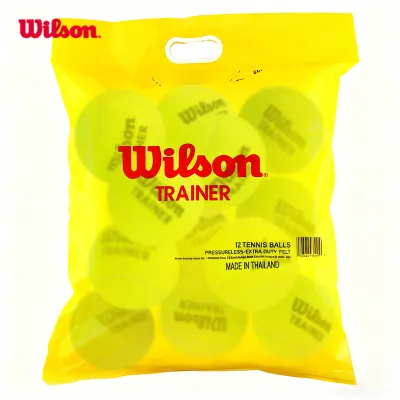
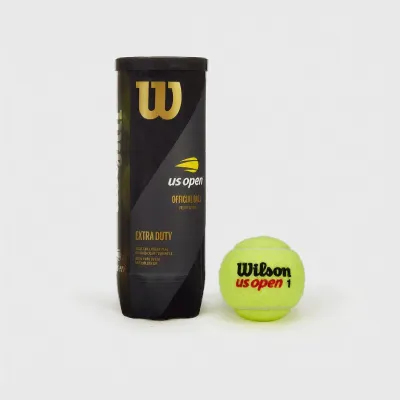
Prices are valid at publication and may change. Please refer to the product page for the latest price.
Court surface compatibility is another vital factor, especially in Singapore where the vast majority of public ActiveSG facilities, condominium courts, and school facilities are outdoor hard courts. These surfaces are constructed from concrete or asphalt coated with a textured acrylic resin, which acts like sandpaper on tennis ball felt. To prevent your balls from wearing bald within a single session, you must look for “Extra Duty” felt on the packaging. Extra Duty felt is woven slightly thicker and looser to withstand the abrasive friction of hard courts, whereas “Regular Duty” felt is designed for softer clay or indoor courts and will disintegrate rapidly on hard concrete.
Finally, pay close attention to the quality of the felt itself. High-quality tennis balls use woven felt, which is made by weaving wool and synthetic fibers together in an interlocking pattern. As woven felt wears down, it fluffs up evenly. This fluffing is actually beneficial for beginners because it increases aerodynamic drag, slowing the ball down slightly in the air and giving you more time to prepare your strokes. In contrast, cheaper practice balls often use non-woven or needle-punch felt, which wears out unevenly, splits along the seams, and leads to an erratic, unpredictable flight path that can frustrate a learning player.
Top Wilson Tennis Balls for Beginners and Learners
Wilson Championship: Best Overall for Adult Beginners
The Wilson Championship Extra Duty tennis ball is widely regarded as the ultimate workhorse for recreational players and adult beginners. Positioned in a highly accessible price bracket, this ball features a traditional pressurized design wrapped in a high-quality woven felt cover. The primary benefit for beginners is its absolute predictability. When you are drilling from the baseline or practicing your footwork, you need to know exactly how high and fast the ball will bounce. The Championship ball delivers a highly consistent, standard response that serves as the perfect benchmark for developing clean stroke mechanics.

Because it is a pressurized ball, the Championship model offers a wonderfully soft, comfortable feel on impact. This cushioning effect is highly forgiving on a beginner’s wrist and elbow, especially when you occasionally mishit the ball near the frame of your racket. The woven felt is remarkably durable, resisting premature splitting and maintaining its structural integrity through hours of intense drilling. It is the ideal ball for high-volume practice, whether you are working with a coach, utilizing a ball machine, or practicing basket drills with a partner.
The primary trade-off with the Wilson Championship is its lifespan. Because it relies on internal gas pressure, the ball will naturally lose its liveliness over time. For a beginner playing once or twice a week, a can of Championship balls will typically provide peak performance for about two weeks before the bounce begins to degrade. While the felt may still look perfectly intact, the loss of internal pressure will make the ball feel “heavy” and sluggish off the court surface. For regular players, this means you will need to budget for regular replacements to keep your practice sessions productive.
Wilson Triniti: Best for Long-Lasting Practice and Durability
For beginners who want to maximize the lifespan of their practice balls without constantly opening new cans, the Wilson Triniti is an exceptional innovation. The core of the Triniti ball is constructed from a unique plastomer material called the Engage Core. Unlike traditional rubber cores that require pressurized gas to achieve a standard bounce, the Engage Core is highly flexible and resilient on its own. This means the ball maintains its bounce height and lively performance long after a standard pressurized ball has gone completely flat.
To complement this unique core, Wilson wraps the Triniti in STR Felt, which is significantly more flexible than standard tennis ball felt. This flexibility allows the felt to compress easily against the racket strings, providing better spin control and a more responsive feel. Because the Triniti does not rely on pressurized gas, it is sold in a fully recyclable paper sleeve rather than a pressurized plastic can. This makes it an incredibly eco-friendly and cost-effective choice for frequent learners who want to build a large basket of practice balls that will remain bouncy for months.
However, beginners should be aware of a few distinct characteristics before choosing the Triniti. Because the core is made of a solid plastomer rather than compressed air, the ball has a slightly firmer, more solid feel on impact. Some players describe this as a slightly “wooden” sensation when hitting, which can take a few sessions to get used to. If you have a history of joint discomfort or are using an exceptionally stiff racket, you may want to ease into using these balls. Nevertheless, for solo drilling, serving practice, and casual hitting sessions, the sheer durability of the Triniti makes it one of the smartest investments a beginner can make.
Wilson US Open: Best for Hard Courts and Transitioning to Matches
The Wilson US Open is legendary in the tennis world as the official ball of one of the sport’s most demanding Grand Slam tournaments. While it is designed as a premium match ball, it is also a highly effective practice ball for advanced beginners who are preparing to transition into local club leagues or competitive ladder play. The standout feature of this ball is its premium woven felt, which is treated with OptiVis technology. This high-visibility dye makes the ball incredibly easy to track visually, which is a massive advantage when practicing under the bright floodlights of Singapore’s outdoor courts during cooler evening hours.
The US Open ball is engineered specifically to withstand the extreme friction of abrasive hard courts. The Extra Duty version of this ball features an incredibly robust felt weave that resists balding and tearing, ensuring that the ball maintains its aerodynamic stability even after hours of aggressive play on rough concrete. For beginners who find that standard practice balls wear down to the rubber core too quickly on their local courts, upgrading to the US Open ball provides a noticeable boost in durability and consistency.
The main consideration for beginners is that the Wilson US Open is a fast, lively ball. It bounces higher and travels through the air quicker than the Championship model, which means you will have slightly less time to prepare your strokes. This firmer, faster response is excellent for learning how to generate your own power and control depth, but it can be challenging for absolute beginners who are still struggling to sustain a basic three-shot rally. If you choose this ball, focus on keeping your backswing short and compact to manage the extra pace.
Wilson Starter (Play & Stay): Best for Absolute Beginners and Kids
If you are stepping onto a tennis court for the very first time, or if you are introducing young children to the sport, standard yellow tennis balls can actually hinder your progress. Because standard balls bounce high and travel fast, new players often spend more time chasing balls than actually hitting them. To solve this, the International Tennis Federation developed the Play & Stay program, and the Wilson Starter series is designed specifically to align with this methodology. These transition balls feature reduced compression, making them slower, lower-bouncing, and infinitely more forgiving.
The Wilson Starter series is divided into three distinct stages, but for adult beginners and older children, the Wilson Starter Green (Stage 1 / Green Dot) is the most appropriate choice. The Green Dot ball is the same physical size as a standard yellow tennis ball, but it is engineered to be 25% slower. When hit, it travels on a gentler trajectory and bounces lower, staying within a beginner’s comfortable strike zone (between the waist and chest) much longer. This extra time allows you to focus on the fundamentals of your swing, from preparing your racket early to executing a clean, balanced follow-through.
Using transition balls like the Wilson Starter Green significantly reduces the frustration that often causes beginners to give up early in their tennis journey. It allows you to sustain longer, more realistic rallies with a coach or practice partner, which accelerates your muscle memory and spatial awareness. Once you can comfortably control the direction and depth of the Green Dot ball and sustain a ten-stroke rally, you can confidently graduate to standard pressurized balls like the Wilson Championship.
Adapting to Hard Courts and Singapore's Tropical Climate
Playing tennis in Singapore presents unique environmental challenges that directly affect how your equipment performs. The dominance of outdoor hard courts across the island means that your tennis balls are subjected to intense friction and heat. Every time a ball bounces on a hot acrylic surface, the friction generates localized heat that can accelerate the degradation of the rubber core. To combat this, always verify that you are purchasing balls labeled “Extra Duty.” Using “Regular Duty” balls on these abrasive surfaces is highly inefficient, as the felt will wear away rapidly, leaving you with a bald, unpredictable ball that slides low off the court.
Furthermore, Singapore’s intense tropical humidity, which frequently hovers above 80%, has a dramatic impact on the physical properties of tennis ball felt. The wool fibers in the felt are highly hygroscopic, meaning they readily absorb moisture from the humid air and from court surfaces that may still be damp from a recent tropical shower. As a ball absorbs moisture, it becomes physically heavier and more aerodynamic drag is created as the wet felt fluffs up. This “waterlogged” ball will bounce significantly lower and feel incredibly heavy on your racket strings. Hitting a heavy, moisture-laden ball requires much more physical effort, which can quickly lead to wrist strain or tennis elbow for a beginner whose muscles are not yet conditioned.
To protect your investment and maintain consistent practice conditions, proper storage and maintenance are essential. Never leave your tennis balls in your car trunk or in a hot outdoor locker; the extreme heat of Singapore’s climate will cause the air inside pressurized balls to expand and escape through the rubber core at an accelerated rate, flattening them prematurely. Always store your tennis gear in a cool, dry, air-conditioned indoor environment. If you are using pressurized balls, consider using a pressurized storage container to maintain their bounce. If you are using specialty core balls like the Wilson Triniti, keeping a silica gel desiccant pack in your tennis bag can help absorb excess moisture from the air, keeping the felt dry and responsive between your practice sessions.
How to Maximize Your Practice Sessions with the Right Ball
To get the most out of your tennis journey, you do not always need to use brand-new, freshly opened balls for every single drill. Managing your tennis balls systematically can save you money while keeping your practice highly effective. For repetitive, closed-loop drills where you are focusing on a single mechanical movement, older balls are perfectly acceptable. For example, if you are practicing your serve toss and contact point, the height of the ball’s bounce off the court is secondary to your hand-eye coordination and racket alignment. Similarly, if you are practicing baseline groundstrokes against a concrete rebound wall, older, slightly depressurized balls are actually easier to control in a confined space.
However, you must be able to recognize when a ball has reached the end of its useful life and is beginning to actively hinder your development. A dead ball will force you to alter your swing mechanics in an unhealthy way, such as over-swinging to generate depth, which can ruin your muscle memory. You can easily evaluate your balls using three simple checks:
- The Squeeze Test: Press your thumb firmly into the center of the ball. If the rubber wall yields easily with minimal resistance, the ball has lost its internal pressure and should be retired from active rallying.
- The Bounce Test: Drop the ball from shoulder height onto a hard court surface. A healthy pressurized ball should bounce back up to approximately chest height. If it barely reaches your waist, it lacks the energy required for realistic practice.
- The Visual Check: Inspect the felt cover. If the felt is bald, has split seams, or has fluffed up to twice its original size due to moisture absorption, the ball will no longer fly straight or bounce predictably.
To optimize your training, organize your tennis bag into two distinct categories. Keep a dedicated mesh bag or basket of older, slightly worn balls for high-volume drills, such as basket feeding, serving practice, or target hitting where you are hitting dozens of balls in rapid succession. Keep a separate, sealed can of fresh Wilson Championship or US Open balls reserved strictly for live rallying, point play, or match-play simulations. This structured approach ensures that you always have the right ball for the right drill, helping you build realistic depth control, pace management, and shot consistency without wasting money on premature replacements.
Frequently Asked Questions (FAQ)
How long do pressurized tennis balls last once opened?
For recreational practice and learning, a standard pressurized tennis ball like the Wilson Championship will typically last between 2 to 6 hours of active play, which generally equates to 1 to 3 sessions on the court. However, the lifespan of a pressurized ball is determined by time as much as it is by physical use. The moment you pop the seal on a pressurized can, the compressed gas inside the balls begins to slowly diffuse through the semi-permeable rubber core.
Even if the balls sit completely unused in your tennis bag, they will lose a significant amount of their internal pressure within 2 to 3 weeks of opening. You will notice they feel softer to the touch and produce a lower, more sluggish bounce. For beginners, it is highly recommended to replace pressurized practice balls at least every two to three weeks to ensure you are practicing with a consistent, realistic bounce that helps you develop accurate spatial awareness and timing.
Are pressureless or specialty core balls better for beginners?
The choice between pressureless specialty core balls, like the Wilson Triniti, and standard pressurized balls depends entirely on your practice frequency and physical comfort. Specialty core balls are highly advantageous for casual beginners who only play occasionally, such as once every two weeks. Because they do not rely on pressurized gas, they will not go flat while sitting in your tennis bag, ensuring they are always ready to play whenever you are. This makes them incredibly cost-effective and convenient.
However, because specialty core balls rely on a thicker, more flexible plastomer core to generate their bounce, they have a slightly firmer, heavier feel on impact compared to pressurized balls. For beginners who are still developing their forearm strength, or those who are prone to joint discomfort like tennis elbow, this firmer impact can transmit more vibration up the arm. If physical comfort is your primary concern, standard pressurized balls like the Wilson Championship are generally better because their cushioned, softer feel is much gentler on your joints.
Can beginners use premium match balls like the Wilson US Open?
While beginners can certainly use premium match balls like the Wilson US Open, it is rarely the most practical or cost-effective choice for someone still learning the basics. Premium match balls are engineered for high-performance tournament play, meaning they are designed to be fast, lively, and highly responsive. For a beginner who is still working on racket face control and swing paths, the extra speed and high bounce of a premium ball can make it much harder to control your shots and sustain long, consistent rallies.
Furthermore, premium match balls carry a higher price tag. During the early stages of learning, you are more likely to lose balls over fences or wear them down through frequent mishits, making the extra cost hard to justify. It is generally far more sensible to start with a highly forgiving, economical option like the Wilson Championship, or a highly durable option like the Wilson Triniti. Once your stroke mechanics are consistent and you are ready to transition into competitive match play, upgrading to the premium Wilson US Open will allow you to fully appreciate and utilize its high-performance characteristics.
Community discussion
Share your experience or ask a question. Comments are reviewed before publication.