
Selecting the right yoga brick 2-piece set depends heavily on your current practice level, body mechanics, and where you plan to use them. For beginners, a set of yoga bricks acts as an extension of the arms, bringing the floor closer to support proper alignment and prevent overstretching. Advanced practitioners, on the other hand, rely on these tools to deepen stretches, add resistance, and provide a rock-solid foundation for challenging inversions and arm balances. Choosing a matching pair—often sold as a yoga brick 2pcs set—is the most reliable way to ensure bilateral symmetry, allowing you to maintain equal height and stability on both sides of your body during practice.
In Singapore’s warm and humid climate, where sweat can quickly compromise your grip during a vigorous Vinyasa flow, the material and texture of your blocks become even more critical. Whether you are commuting to a boutique studio in the Downtown Core or setting up a compact home practice space in an HDB flat, selecting the right density and weight will directly impact your safety and comfort. By matching your blocks to your specific skill level and practice environment, you can prevent joint strain and build a more confident, consistent yoga routine.
How Practice Level Changes Your Yoga Brick Needs
Your relationship with yoga blocks evolves as your practice deepens, shifting from a need for accessible support to a demand for high-performance stability. For beginners, the primary challenge of yoga is often flexibility and balance. When muscles and joints are still adapting to new ranges of motion, forcing your body into poses like Triangle (Trikonasana) or Half Moon (Ardha Chandrasana) can lead to rounded spines, collapsed shoulders, and muscle strain. A yoga brick acts as a supportive bridge, elevating the ground to meet your hands so you can maintain a straight, healthy spine while building foundational strength.
Products mentioned in this guide
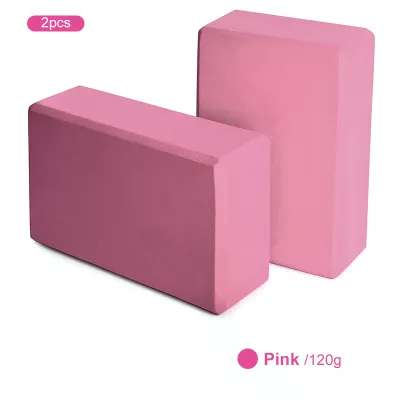
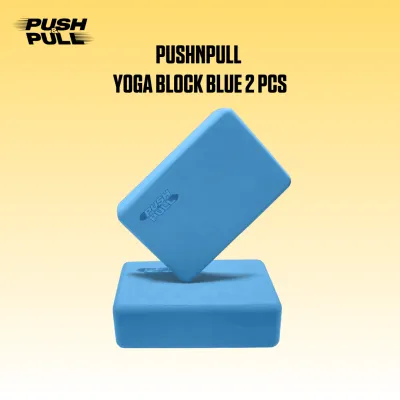
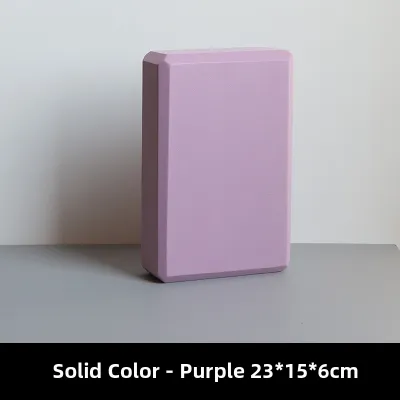
Prices are valid at publication and may change. Please refer to the product page for the latest price.
As you transition into advanced territory, the role of the yoga brick shifts from a passive support tool to an active alignment and strength-training aid. Advanced yogis use blocks to create deficit stretches, such as placing the blocks under the feet during a standing forward fold to increase the hamstring stretch. They also use them as essential props for weight-bearing postures, including arm balances like Crow Pose (Bakasana) or Peacock Pose (Mayurasana), and challenging inversions like forearm stands. In these scenarios, the blocks must withstand your full body weight without compressing, shifting, or sliding.
Regardless of your experience level, investing in a matching 2-piece set is highly recommended over purchasing single blocks. Many classical yoga poses require bilateral support to keep the pelvis, shoulders, and spine properly aligned. For instance, in Camel Pose (Ustrasana) or Bridge Pose (Setu Bandha Sarvangasana), having a block under each hand or foot ensures that both sides of your body receive identical elevation. Using mismatched blocks with different heights, densities, or wear patterns can introduce subtle structural imbalances, potentially leading to uneven joint loading and repetitive strain injuries over time.
Core Dimensions to Compare in a 2-Piece Yoga Brick Set
When shopping for a yoga brick 2pcs set, it is easy to assume that all blocks are virtually identical. However, subtle variations in physical properties can dramatically alter how a block performs under pressure and how comfortable it feels against your skin.

Density and Firmness
The density of a yoga block directly dictates its stability and how much cushioning it provides to your joints. High-density blocks offer a firm, unyielding surface that can support heavy loads without buckling, which is essential for balance and weight-bearing exercises. Low-density blocks, by contrast, have more “give” and compress easily under pressure, offering comfortable cushioning but less overall stability.
For restorative practices or Yin yoga, where you might rest your head, sacrum, or knees directly on the block for several minutes, a medium-density block prevents painful pressure points. Conversely, if you attempt an arm balance on a low-density block, the material will compress unevenly, causing your wrists to tilt and increasing the risk of a sprain. Understanding how much weight you will place on the blocks helps you determine the correct density for your needs.
Material Options and Grip
Yoga bricks are primarily manufactured from three materials, each offering distinct tactile properties, weights, and durability levels:
- EVA Foam: Extremely lightweight, affordable, and widely available. High-quality, closed-cell EVA foam is moisture-resistant and easy to wipe clean, though budget-grade foam can feel squishy and may lose its shape over time.
- Cork: A natural, sustainable material that is heavier than foam. Cork blocks offer a unique, slightly textured grip that actually improves when exposed to moisture, making them an excellent choice for sweaty practices in humid climates.
- Wood: Traditionally made from bamboo, pine, or maple, wooden blocks are incredibly rigid, highly durable, and offer zero compression. They provide an exceptionally stable foundation but are heavy to carry and offer no cushioning for sensitive joints.
When evaluating materials, always check the manufacturer’s description for specific details regarding surface texture and sweat resistance. Do not assume that all cork or foam blocks perform the same; look for terms like “closed-cell construction” for foam or “fine-grain textured finish” for cork to ensure the surface will not slip when your hands get sweaty.
Size, Weight, and Edge Design
The standard size for a yoga block is approximately 9 x 6 x 4 inches (23 x 15 x 10 cm). This classic dimension is highly versatile because it offers three distinct heights depending on how you orient the block. Some brands offer smaller “travel” sizes, which are lighter and easier to pack but provide a smaller surface area, reducing stability for standing balances.
Weight is another crucial factor, especially if you regularly travel to classes. Foam blocks typically weigh between 100 to 300 grams per pair, making them virtually effortless to carry. Cork blocks are significantly heavier, often weighing between 600 to 900 grams per block, while solid wood blocks can easily exceed 1 kilogram each.
Finally, pay close attention to the edge design. High-quality yoga bricks feature deeply beveled or rounded edges rather than sharp, 90-degree corners. Beveled edges distribute pressure more evenly across your palms and fingers, preventing the block from cutting into your hands during weight-bearing poses and reducing wrist strain.
What to Look for in a Beginner 2-Piece Set
As a beginner, your primary goals are to build confidence, establish proper alignment, and protect your joints as your flexibility develops. To achieve this, look for a standard-sized, medium-density EVA foam or cork 2-piece set. These materials offer a balanced combination of reliable support and comfortable forgiveness, helping you ease into poses without feeling like you are resting on solid concrete.
If you plan to commute to local yoga studios or practice outdoors in parks, portability should be a key consideration. A lightweight, 2-piece EVA foam set is incredibly easy to toss into a tote bag or backpack without adding noticeable weight to your daily commute. This convenience encourages you to bring your own clean, familiar props to every class rather than relying on shared studio blocks that may have worn-down edges or lingering moisture.
To ensure safety during standing balances like Warrior III or Half Moon Pose, prioritize blocks with a textured, non-slip surface. Look for manufacturer descriptions that highlight “slip-resistant matte finishes” or “textured grip surfaces.” This feature is particularly important in Singapore’s humid environment, where even a air-conditioned room can quickly become warm during an active practice, causing hands and feet to slide on smooth plastic surfaces.
When browsing product specifications, search for terms that indicate a “supportive yet comfortable” level of firmness. Avoid ultra-rigid hardwood blocks or extremely dense, heavy cork at this stage. If a block is too hard, you may find it uncomfortable to rest your head on it during Child’s Pose (Balasana) or under your hips in Supported Bridge Pose, which can distract you from your breathing and relaxation.
What to Look for in an Advanced 2-Piece Set
For advanced practitioners, the priority shifts entirely toward absolute stability, structural integrity, and zero compression under heavy loads. If you are practicing advanced transitions, handstands, or deep backbends, any wobbling or sinking in your support system can lead to a sudden loss of balance. Therefore, you should look for high-density EVA foam, solid cork, or premium wooden blocks designed specifically for high-load applications.
Advanced asanas require precise, consistent dimensions to ensure your alignment cues are executed perfectly. When performing a lift-up or transition, even a minor variance of a few millimeters between your left and right block can throw off your shoulder alignment, placing uneven stress on your rotator cuffs. High-density cork and wood blocks are manufactured to incredibly tight tolerances, ensuring they maintain their exact shape and height year after year.
If your practice includes inversions, arm balances, and deep hip openers, a heavier 2-piece set—such as solid cork—is highly advantageous. The physical weight of a cork block (often around 1 kilogram per pair) provides a grounded, anchor-like feel. When you place your weight onto a heavy cork block, it acts as an extension of the floor itself, giving you the confidence to press up into forearm balances or handstands without fear of the block tipping over.
At this stage of your journey, you should prioritize structural integrity and edge durability over lightweight portability. Advanced poses place intense, concentrated pressure on the edges of your blocks. Budget foam blocks will quickly dent, peel, or lose their structure under this kind of stress. Investing in a premium, dense 2-piece set ensures that the edges remain crisp and supportive, providing the precise feedback your hands and wrists need to balance safely.
How to Verify Set Quality and Brand Claims Before Buying
With countless yoga brick sets available online, distinguishing a high-quality product from a subpar imitation requires a careful, systematic approach. Use this practical verification checklist before finalizing your purchase:
- Verify Dimensional and Weight Consistency: Mismatched blocks are a common quality control issue with budget brands. Check user reviews or Q&A sections to confirm that both blocks in the 2pcs set are identical in height, width, and weight. If one block is slightly taller or softer than the other, it will compromise your bilateral alignment.
- Check Material Safety Certifications: Because your skin will be in direct, sweaty contact with the blocks, material safety is paramount. Look for manufacturer specifications indicating that the blocks are non-toxic, latex-free, and free from harmful plasticizers like phthalates. For foam blocks, check if they are made from eco-friendly, non-toxic EVA. Upon receiving your blocks, verify that they do not emit a strong, harsh chemical odor, which can indicate low-grade manufacturing materials.
- Analyze Durability and Wear Reviews: Search user feedback specifically for mentions of "edge wear," "crumbling," or "permanent compression." For cork blocks, verify that users do not report crumbling or shedding after a few months of use. For foam blocks, look for complaints about the material retaining permanent dents from fingernails or heavy weights.
- Evaluate Grip and Cleaning Performance: Check if the surface grip degrades after repeated cleaning. Yoga blocks accumulate sweat, oils, and dirt, requiring regular wiping down. Ensure the manufacturer's care instructions align with your routine (e.g., simple soap and water) and that users confirm the blocks remain slip-resistant even after multiple washes.
- Cross-Reference with Your Practice Space: Compare the block's physical dimensions and weight with your home storage and transport habits. If you live in a compact apartment, verify that the blocks can be neatly stacked on your shelves. If you commute regularly, ensure the weight of the set aligns with what you are comfortable carrying in your gear bag.
Frequently Asked Questions (FAQ)
Can beginners use high-density or wooden yoga bricks?
While beginners can technically use high-density or wooden yoga bricks, it is generally not recommended for a well-rounded practice. The primary drawback of exceptionally firm materials is the lack of comfort during restorative, yin, or passive poses. Resting your head, knees, spine, or sacrum directly onto a solid wooden block can cause bruising, discomfort, and joint pain, which defeats the purpose of using a prop to relax.
For maximum versatility, beginners should start with a medium-density foam or a high-quality cork set. These materials provide enough structural support for standing balances while remaining gentle enough to cushion your body during restorative postures. As your practice evolves and you begin focusing more on advanced arm balances, you can then upgrade to firmer, high-density materials.
Should I buy a matching 2-piece set or two individual blocks?
You should always purchase a matching 2-piece set rather than two individual blocks. Manufacturers produce 2-piece sets from the same production batch, which guarantees that both blocks share the exact same density, dimensions, weight, and color. This consistency is vital for maintaining bilateral symmetry in your poses, ensuring that both sides of your body receive identical support.
Buying two individual blocks—even from the same brand—increases the risk of receiving blocks from different manufacturing runs. Slight variations in density or minor dimensional discrepancies of just a few millimeters can create an uneven foundation. Over time, practicing on mismatched blocks can lead to subtle alignment issues, muscle imbalances, and joint strain.
Community discussion
Share your experience or ask a question. Comments are reviewed before publication.