
Yoga is an excellent way to build strength, flexibility, and mindfulness, but the repetitive weight-bearing angles can place significant stress on your joints. For many practitioners, poses like Downward-Facing Dog, Upward-Facing Dog, and deep squats cause discomfort or pinching in the wrists and ankles. A high-quality yoga wedge solves this problem by modifying the angle of your hands or feet, reducing joint hyperextension and distributing your body weight more evenly. By elevating the heels or raising the palms, you can maintain proper alignment and deepen your practice without straining vulnerable connective tissues.
In Singapore, where home practices are highly popular due to the convenience of working out in residential spaces, finding the right yoga wedge requires balancing personal physical needs with the local environment. Factors such as high tropical humidity, the type of flooring in your home, and limited storage space in modern apartments all play a critical role in your decision. Choosing a wedge that offers reliable grip, durable materials, and easy maintenance ensures your home routine remains both safe and consistent.
Quick Picks: Best Yoga Wedges for Home Practice
To help you find the right support quickly, here is a summary of the top yoga wedge categories designed to meet different home practice preferences:
Products mentioned in this guide
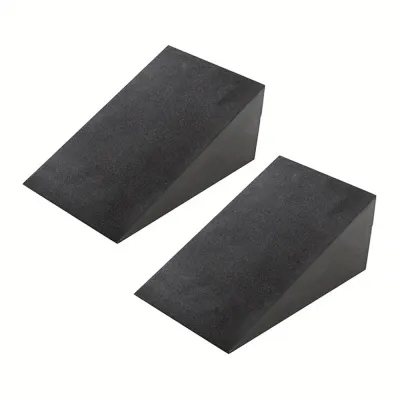
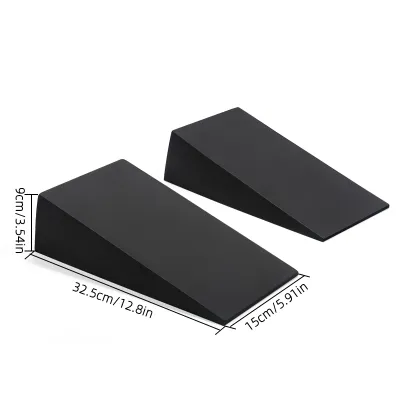
Prices are valid at publication and may change. Please refer to the product page for the latest price.
- Best High-Density Foam: Hugger Mugger Foam Yoga Wedge. This lightweight option offers firm yet comfortable cushioning, making it ideal for practitioners seeking gentle joint relief during restorative or slow-flow sessions.
- Best Natural Cork: Yoloha Cork Yoga Wedge. Crafted from sustainable cork, this heavy-duty wedge provides exceptional stability and a slip-resistant grip that actually improves when exposed to moisture, making it perfect for humid environments.
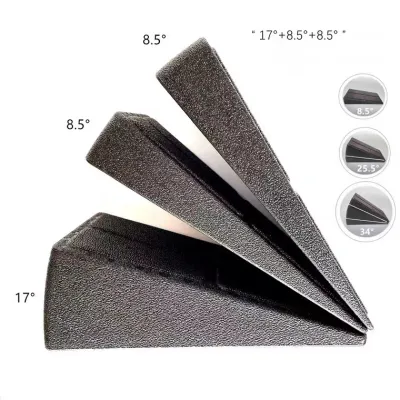
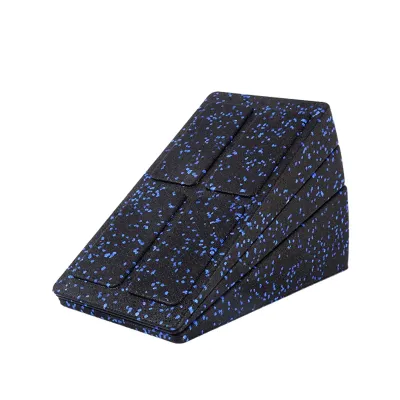
- Best Multi-Angle/Adjustable: StrongTek Foam Squat and Yoga Wedge. Featuring a stackable, modular design, this versatile tool allows you to adjust the incline angle progressively as your flexibility and joint strength improve.
- Best Compact Foam: Gaiam Foam Yoga Wedge. With its streamlined footprint, this space-saving wedge is easy to store in compact apartments and is highly portable for those who occasionally transition between home and local studios.
How to Choose the Right Yoga Wedge for Home Practice
Selecting a yoga wedge involves evaluating several design elements to ensure the prop supports your body safely while fitting seamlessly into your living space. Because a wedge directly alters the bio-mechanics of your poses, understanding the differences in materials, angles, and textures will help you make an informed choice.

Material Selection: Foam vs. Cork
The two most common materials used for yoga wedges are high-density ethylene-vinyl acetate (EVA) foam and natural cork. Each material has distinct physical properties that perform differently under various conditions.
High-density EVA foam is lightweight, soft to the touch, and provides a slight yield under pressure. This cushioning effect is highly beneficial for individuals with sensitive joints or those recovering from minor wrist or ankle strains. However, foam can compress over time if subjected to heavy weight, and cheap, low-density variants may bottom out completely, defeating the purpose of the wedge. When shopping for foam, check the manufacturer’s specifications for density ratings and look for non-toxic certifications, such as OEKO-TEX or SGS compliance, to ensure the material is free from harmful chemicals.
Natural cork is a denser, firmer, and heavier material. It does not compress under body weight, offering a solid, grounding foundation that closely mimics the feel of a wooden floor. Cork contains a natural substance called suberin, which makes it highly slip-resistant. Remarkably, cork becomes even grippier when wet, which is a massive advantage in Singapore’s humid climate where sweat can quickly make synthetic surfaces slippery. Cork is also naturally antimicrobial and resistant to mold and mildew, though it requires a higher initial investment and is significantly heavier to transport.
Incline Angle and Physical Dimensions
The slope of a yoga wedge determines how much stress is redirected away from your joints. Most standard wedges feature an incline angle ranging from 15 to 30 degrees.
A gentle 15-degree incline is generally sufficient for reducing wrist strain in poses like Plank or Downward-Facing Dog. It subtly shifts your weight back toward your legs and core without making you feel off-balance. A steeper 30-degree incline is better suited for deep squatting modifications (such as Malasana), calf stretching, or severe ankle mobility limitations.
When evaluating dimensions, ensure the wedge is wide enough to accommodate both of your hands or feet simultaneously if you plan to use a single long wedge. Alternatively, using a pair of smaller, individual wedges allows you to adjust the distance between your hands or feet to match your shoulder or hip width precisely.
Surface Texture and Grip on Residential Flooring
Residential flooring in Singapore typically consists of polished marble, ceramic tiles, engineered vinyl, or parquet wood. These smooth surfaces can cause fitness props to slide during dynamic movements, presenting a safety hazard.
To prevent sliding, look for wedges with textured bottom surfaces, such as ribbed patterns, cross-hatch embossing, or high-friction coatings. A high-quality wedge should remain firmly anchored to your yoga mat or directly on the floor when you apply downward and forward pressure. If you practice on highly polished floors, placing a thin, sticky yoga mat underneath your wedge can provide an extra layer of stability.
Space and Storage in Compact Homes
With space at a premium in many Singaporean apartments, the physical footprint of your yoga gear is a practical consideration. A single, long wedge can be awkward to store in standard drawers or shallow closets.
If you have limited storage space, consider compact, individual wedges or modular designs that can be stacked neatly. Some lightweight foam wedges also feature integrated hanging loops or are small enough to slide vertically into book shelves or under bed frames, keeping your living area clutter-free when you are not practicing.
Top Yoga Wedge Recommendations for Your Home Routine
To help you find a reliable prop, we have analyzed the top yoga wedges available on the market, focusing on their build quality, material performance, and suitability for home environments.
Best High-Density EVA Foam Wedge for Joint Relief
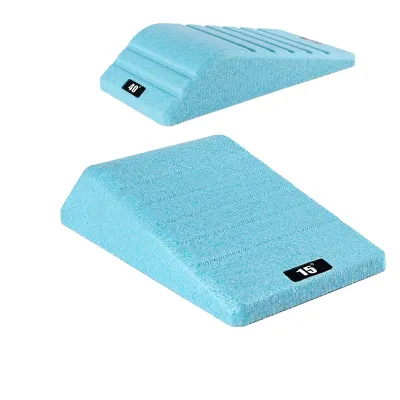
The Hugger Mugger Foam Yoga Wedge is a highly regarded choice for practitioners who prioritize joint cushioning and lightweight design. Made from premium, high-density EVA foam, this wedge offers a supportive incline that does not flatten out under typical body weight, providing a reliable buffer for your wrists and ankles.
- Material: High-density EVA foam (closed-cell)
- Dimensions: Approximately 51 cm x 15 cm x 5 cm (20" x 6" x 2")
- Weight: Approximately 200 grams
This wedge is ideal for beginners, older adults, or anyone dealing with chronic joint sensitivity. The generous 51 cm width is spacious enough to place both hands on the incline during weight-bearing postures, promoting symmetrical alignment. Its closed-cell construction prevents sweat from absorbing into the core of the foam, which helps maintain hygiene.
One limitation of foam is that it can become slightly slick if you sweat heavily. If you tend to perspire during your practice, we recommend using this wedge on top of a high-grip yoga mat or placing a microfiber yoga towel over the wedge to maintain traction. Always inspect the foam periodically for any deep indentations or signs of wear that could compromise its structural support.
Best Natural Cork Wedge for Eco-Conscious Practitioners
For those seeking maximum stability, sustainability, and natural slip resistance, the Yoloha Cork Yoga Wedge is an outstanding option. Crafted from sustainably harvested, fine-grain natural cork, this wedge provides a rock-solid platform that assists with balance and alignment.
- Material: 100% natural fine-grain cork
- Dimensions: Approximately 50 cm x 15 cm x 5 cm (19.7" x 6" x 2")
- Weight: Approximately 1.1 kilograms
This cork wedge is perfect for advanced practitioners, hot yoga enthusiasts, and eco-conscious buyers. Because cork is naturally heavy, this wedge stays firmly in place on your mat, resisting sliding even during active, dynamic transitions. The natural texture of cork offers an earthy, tactile feel under your hands and feet, and its moisture-wicking properties ensure your grip remains secure even in humid tropical weather.
Because cork is incredibly firm, it does not offer the soft cushioning of foam. If you have highly sensitive bones or thin skin on your palms, the rigid surface of cork may feel uncomfortable initially. Additionally, at over one kilogram, this wedge is less convenient to carry around, making it best suited as a permanent fixture in your home studio setup.
Best Multi-Angle or Adjustable Wedge for Versatility
If you want a prop that can adapt to different exercises and flexibility levels, the StrongTek Foam Squat and Yoga Wedge is a highly versatile choice. This set consists of modular, interlocking foam blocks that can be stacked or separated to create various angles of elevation.
- Material: High-density, eco-friendly EPP (Expanded Polypropylene) foam
- Dimensions: Approximately 31 cm x 16 cm x 12 cm (when fully stacked as a pair)
- Weight: Approximately 350 grams per pair
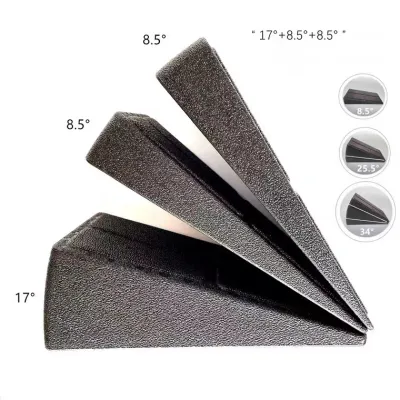
This adjustable system is ideal for multi-user households, individuals undergoing physical therapy, or athletes who want to transition between gentle yoga and deep calf stretching or squatting routines. By stacking the pieces, you can choose between a mild incline (around 8.5 degrees), a moderate incline (17 degrees), or a steep incline (34 degrees). This modularity allows you to gradually decrease the angle of support as your joint mobility improves over time.
Because this product consists of multiple interlocking parts, it has a slightly larger storage footprint than a single flat wedge. You must also ensure that the interlocking joints are clean and free of dust or hair to maintain a secure connection between the layers. Always verify that the pieces are fully locked together before stepping or leaning your full weight onto them.
Best Compact Foam Wedge for Small Spaces
For those living in cozy apartments where every square centimeter of storage counts, the Gaiam Foam Yoga Wedge offers a streamlined, space-saving design without sacrificing joint support.
- Material: High-density, closed-cell EVA foam
- Dimensions: Approximately 30 cm x 12 cm x 5 cm (12" x 4.7" x 2")
- Weight: Approximately 150 grams
This compact model is designed for targeted, single-limb support. Its smaller width makes it incredibly easy to tuck away into a drawer, slide onto a bookshelf, or pack into a gym bag. It is an excellent choice for practitioners who only need elevation for one foot during lunges, or who prefer to use two separate, smaller blocks that can be positioned at custom angles to match their natural shoulder alignment.
Because of its reduced width, you cannot comfortably place both hands on a single wedge if you have a broad shoulder frame. If you require simultaneous support for both wrists in poses like Downward Dog, you will need to purchase two of these compact wedges. However, the flexibility of using two independent blocks often results in a more customized and comfortable setup.
How to Use and Care for Your Yoga Wedge
To get the most out of your yoga wedge and ensure it lasts for years, it is important to understand how to integrate it correctly into your poses and maintain it properly in a humid climate.
Common Applications in Your Practice
Integrating a wedge into your daily routine is straightforward. Here are three common ways to use your wedge to protect your joints:
- Wrist Relief in Downward-Facing Dog (Adho Mukha Svanasana): Place the thick edge of the wedge facing toward the front of your mat. Rest the heels of your hands on the thickest part of the incline, allowing your fingers to point down the slope. This reduces the angle of wrist extension, shifting the load away from your carpal tunnel and into your arms and shoulders.
- Ankle Support in Garland Pose (Malasana): If your heels lift off the floor when you squat, place the thick edge of the wedge behind you. Step onto the wedge so your heels are elevated on the slope while your toes rest on the floor. This provides a stable base, allowing you to relax your hips and lower back without straining your Achilles tendons.
- Calf and Hamstring Stretching: Stand on the wedge with your toes pointing up the incline and your heels on the floor. Gently lean your torso forward to experience a deep, controlled stretch along the back of your legs.
Cleaning Routines
Sweat, body oils, and dust can accumulate on your wedge, making it slippery and unhygienic. Always check the manufacturer’s care label before cleaning your prop.
For foam wedges, wipe the surface down after each practice using a soft cloth dampened with warm water and a drop of mild dish soap. Avoid using harsh chemical cleaners, bleach, or abrasive scrubs, as these can break down the synthetic foam structure and cause it to flake or lose its grip.
For cork wedges, avoid soaking them in water, as cork is porous and can become waterlogged, leading to internal rotting. Instead, wipe the surface with a barely damp cloth. You can also use a specialized cork cleaning spray or a DIY solution of equal parts water and white vinegar to sanitize the surface naturally.
Storage and Drying in a Humid Climate
Singapore’s high humidity creates an ideal environment for mold and mildew to grow on fitness equipment. After cleaning your wedge—or after a particularly sweaty session—always allow it to air-dry completely in a well-ventilated room before storing it.
Avoid placing your wedge in direct, intense sunlight for extended periods. Prolonged UV exposure can cause EVA foam to become brittle and warp, and it can dry out natural cork, leading to cracking and crumbling. Store your dry wedge in a cool, shaded area, and avoid keeping it in airtight plastic bags or unventilated storage boxes where moisture can become trapped.
Frequently Asked Questions (FAQ)
Can I use a regular yoga block instead of a yoga wedge?
While a standard rectangular yoga block is excellent for adding height and support, it lacks the gradual incline of a wedge. Placing your hands or feet on a flat block still requires a 90-degree joint angle, which does not alleviate wrist or ankle hyperextension. A yoga wedge is specifically engineered with a sloped profile to reduce this joint angle, offering targeted ergonomic relief that a flat block cannot replicate.
Are cork yoga wedges too heavy for home use?
Although cork wedges are heavier than foam alternatives, this extra weight is actually highly beneficial for home practice. The weight acts as a natural anchor, keeping the wedge firmly planted on your floor or mat so it does not slide during transitions. Since you do not need to commute with your home gear daily, the added stability of cork far outweighs any minor inconvenience caused by its weight.
How do I prevent my foam yoga wedge from smelling in a humid climate?
To prevent odors, always wipe down your foam wedge immediately after use to remove sweat and oils. Ensure the wedge is completely dry before placing it in any storage area. Avoid storing your props in dark, unventilated closets or airtight containers; instead, keep them in an open, well-ventilated space where air can circulate freely around the material.
Community discussion
Share your experience or ask a question. Comments are reviewed before publication.