
Protecting a bicycle in Singapore requires a cover that handles intense equatorial sun, sudden tropical downpours, and year-round high humidity. The most critical specifications to look for on product labels are a mid-to-high denier (210D to 420D) Oxford or polyester fabric, a polyurethane (PU) waterproof inner coating, UV-resistant treatments, and built-in ventilation panels. Features designed for extreme cold, such as heavy fleece linings or freeze-resistant materials, are entirely unnecessary in Singapore’s warm climate and only add useless weight. Ultimately, the primary challenge is balancing robust rain protection with adequate moisture escape to prevent trapped humidity from damaging your components.
Fabric Weight and Material: Decoding Denier and Weave
To understand how well a bicycle cover resists tearing and weathering, you must look at its fabric weight, measured in “Denier” (D). Denier indicates the thickness of the individual fibers used in the weave, directly impacting the cover’s overall weight and durability.
A low rating like 190D produces a lightweight, highly packable cover, but it is highly susceptible to tearing on sharp brake levers, pedals, or basket edges during daily handling. For daily outdoor storage, fabrics between 210D and 420D represent the practical sweet spot; they offer excellent tear resistance while remaining light enough to fold and store quickly. While heavy-duty fabrics rated at 600D or higher provide maximum durability against physical wear, they are often too stiff, heavy, and cumbersome to handle on a daily basis.
Products mentioned in this guide
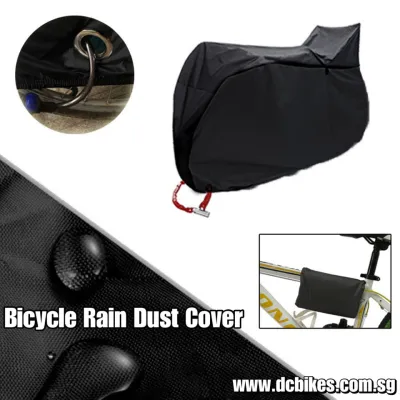
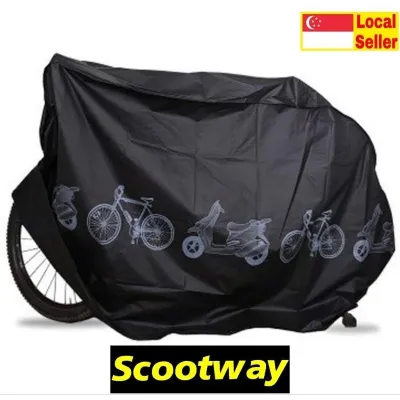
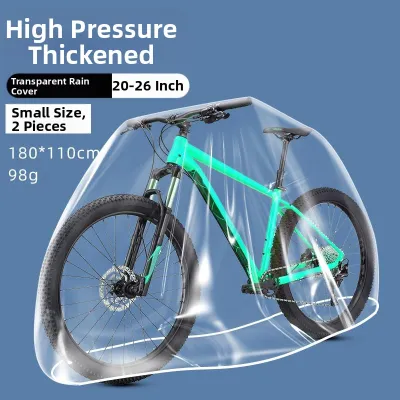
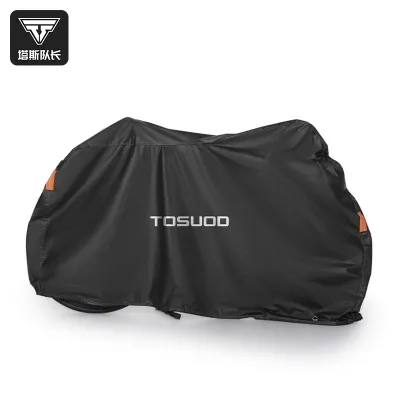
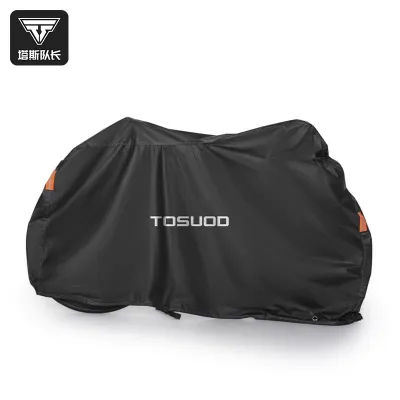
![[✅SG Ready Stock] Waterproof Cover Bike bicycle Motorbike Motorcycle Protective Cover E-scooter Rain Weather Resistant](https://img.lazcdn.com/g/p/1658cdb6891923aca9f5789bdf368231.jpg_400x400q80.jpg_.webp)
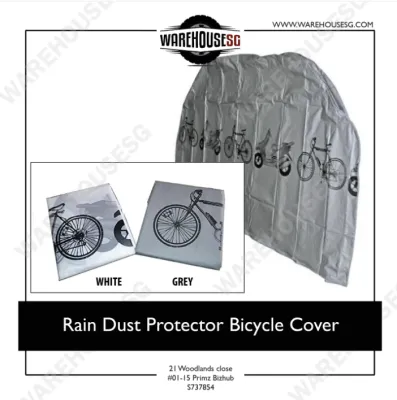
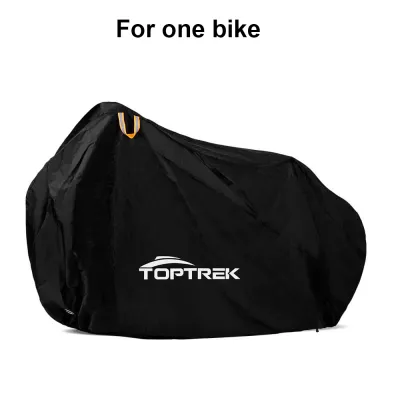
Prices are valid at publication and may change. Please refer to the product page for the latest price.
Beyond weight, the weave style plays a major role in longevity. Standard polyester is smooth but can run easily if punctured, whereas Oxford cloth utilizes a basket-weave structure that significantly improves abrasion resistance. When shopping, verify these material claims by checking the physical product tags or the manufacturer’s official specifications rather than relying on vague marketing terms. Avoid covers advertised with thermal insulation or fleece linings. These features are designed for sub-zero winter climates to prevent frost, but in Singapore, they simply trap heat, add bulk, and increase costs without providing any functional benefit for your bicycle.
Waterproofing vs. Breathability: Managing High Humidity
Singapore’s tropical downpours can dump massive amounts of water in minutes, making excellent waterproofing a baseline requirement. Waterproofing capacity is often measured as a hydrostatic head rating in millimeters (mm), representing the water pressure a fabric can withstand before leaking. For reliable protection against sudden, heavy tropical storms, look for a rating of at least 2000mm to 3000mm; anything lower may only withstand a light drizzle and will eventually seep through during a prolonged monsoon rain.

To ensure this water resistance is effective, check for a polyurethane (PU) inner coating and heat-sealed or taped seams. Water easily penetrates standard needle holes along stitching lines, so taped seams are essential to prevent slow leaks from dripping directly onto your handlebars, shifters, and saddle. Before covering a damp bicycle, always check your bicycle manufacturer’s care instructions, as trapping water directly against sensitive electronic shifters or steel frames can accelerate damage.
Keeping rain out is only half the battle; you must also manage Singapore’s high relative humidity, which regularly exceeds 80%. A completely sealed, impermeable plastic cover creates a “greenhouse effect” by trapping evaporating ground moisture and rising heat inside. This trapped moisture condenses on the bicycle’s metal surfaces, accelerating chain rust, degrading brake pads, and encouraging mold growth on foam saddles and handlebar grips.
To prevent this, high-quality bicycle covers feature built-in ventilation panels, typically mesh-lined vents positioned near the handlebars or the rear wheel. These vents allow a continuous cross-breeze to carry away rising moisture without letting overhead rain penetrate the cover. Before purchasing, check the placement of these vents to ensure they align well with your specific bike’s geometry, allowing air to flow freely without being blocked by large baskets or wide handlebars.
UV Resistance and Heat Reflection: Shielding Against the Sun
The intense, year-round equatorial sun in Singapore can degrade outdoor materials surprisingly quickly. Unprotected fabrics suffer from UV degradation, a process where ultraviolet rays break down the polymer chains within the synthetic fibers. This degradation causes the cover to fade, become brittle, and eventually tear like paper under the slightest tension. Look for covers explicitly treated with a UV-resistant coating (often labeled as UV 30+ or UV 50+) to prolong the lifespan of the fabric.
Color and reflective properties also dictate how much heat transfers to your bicycle. Dark-colored covers absorb solar radiation, significantly raising the temperature underneath the fabric. This extreme heat can accelerate the degradation of sensitive bicycle components, causing rubber tires to dry rot, hydraulic fluid in brake lines to expand, and plastic grips or saddles to become sticky and break down. Covers featuring a silver or reflective outer layer are highly effective because they bounce sunlight away, keeping the air beneath the cover noticeably cooler.
Keep in mind that UV protection is not permanent; these coatings gradually wear off over months of continuous exposure, so check the manufacturer’s documentation for expected lifespan estimates or UV-specific warranties. If you park your bicycle in a fully shaded area, such as an enclosed HDB multi-storey car park or a covered void deck, UV resistance becomes a lower priority, allowing you to focus primarily on dust protection and breathability.
Structural Design Features: Fit and Security in Local Spaces
A cover’s material is only as good as its physical fit and security features, especially when facing strong winds or communal parking challenges. Singapore’s coastal breezes and high-rise corridor wind tunnels can easily turn a loose cover into a sail, blowing it away or knocking your bicycle over. To prevent this, look for covers with elasticized front and rear hems that hug the tires, combined with adjustable drawstrings and heavy-duty buckle straps that secure underneath the frame.
Security is another major consideration in shared public spaces, such as HDB corridor racks or MRT station parking. High-quality covers include reinforced lock holes—typically rust-resistant metal grommets or heavy-duty fabric loops—near the front or bottom edge. These holes allow you to thread a robust cable lock or U-lock through both the cover and the bicycle frame, securing them together to a fixed rack to deter opportunistic theft.
Additionally, look for integrated reflective strips or bright warning panels. These design elements ensure your covered bike remains highly visible to other residents, delivery riders, and maintenance staff in dimly lit communal parking areas at night. Finally, always measure your bicycle’s physical dimensions—including handlebar width, baskets, mudguards, or bulky e-bike batteries—and compare them against the cover’s specifications to ensure a complete, snug fit that reaches the ground without dragging.
Frequently Asked Questions (FAQ)
How often should I replace my bicycle cover in a tropical climate?
In Singapore’s harsh sun and rain, a bicycle cover exposed to the elements daily typically lasts between one and two years before requiring replacement. You should inspect your cover regularly for clear signs of degradation, such as severe color fading, a peeling or flaking inner polyurethane (PU) coating, and fabric that feels brittle to the touch. Another obvious indicator is loss of water repellency; if rainwater begins soaking directly into the fabric rather than beading and rolling off, the protective barrier has failed. Covers used in fully shaded areas, like HDB multi-storey car parks, will naturally last significantly longer than those subjected to direct, unshaded equatorial sunlight.
Can I use a motorcycle cover for my bicycle?
While it may seem like a convenient alternative, using a motorcycle cover on a bicycle is generally impractical and counterproductive. Motorcycle covers are constructed from much heavier, thicker materials designed to withstand hot exhaust pipes and engines, which adds unnecessary weight and makes daily handling highly frustrating for a cyclist. Furthermore, the oversized cut of a motorcycle cover will drape loosely over a bicycle, creating excess fabric that sags onto the ground, collects dirt, and easily catches wind. This loose, heavy fit also restricts airflow, trapping more heat and humidity around your bicycle’s delicate components and increasing the risk of rust.
Community discussion
Share your experience or ask a question. Comments are reviewed before publication.