
Quick Answer: Do You Need Lights, Reflectors, or Both?
For cycling on Singapore’s Park Connector Network (PCN), you need both active bike lights and passive reflectors if you ride during low-light hours, while daytime riders can often manage with reflectors alone. Relying solely on reflectors when the sun goes down is a significant safety risk. Shared paths are bustling ecosystems where you share space with joggers, families, pets, and other cyclists, making proactive visibility essential.
During bright daylight hours, a set of clean, well-positioned reflectors serves as a reliable baseline to help others spot your bicycle from various angles. But as dusk approaches, or when heavy tropical downpours suddenly darken the sky, passive reflectors lose their effectiveness because they require an external light source to bounce back.
To navigate the PCN safely and responsibly during the night, dawn, or dusk, you must equip your bicycle with active front and rear lights. This combination ensures you can see the path ahead while remaining visible to pedestrians and oncoming riders who may not have headlights of their own to trigger your reflectors.
Products mentioned in this guide
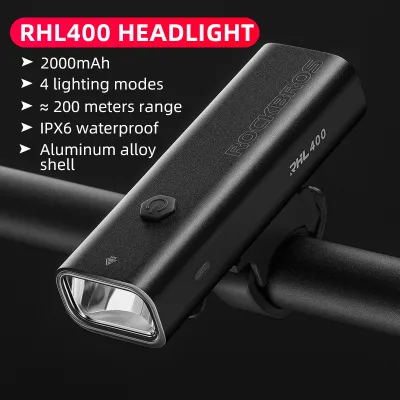
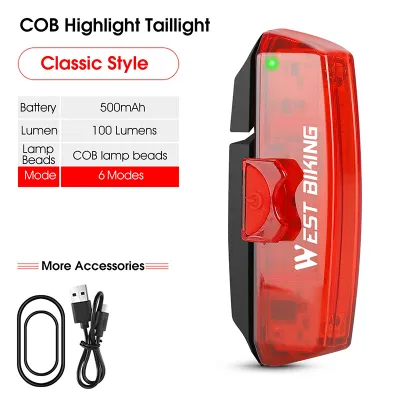
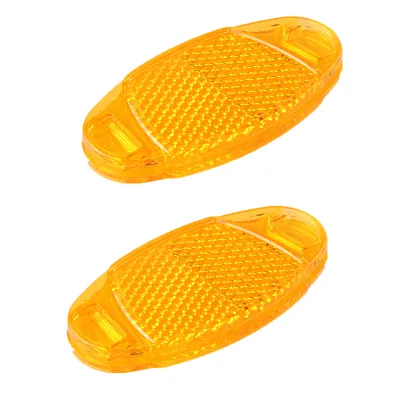
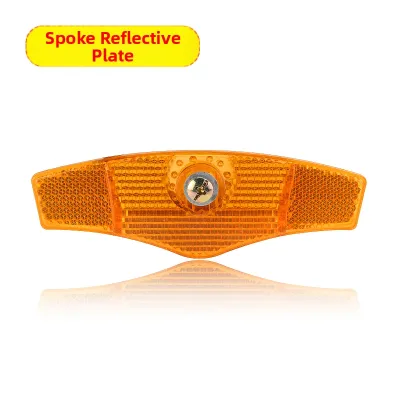
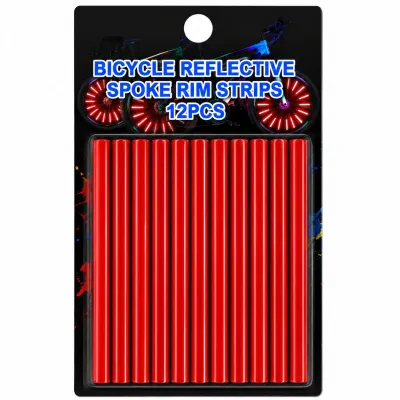
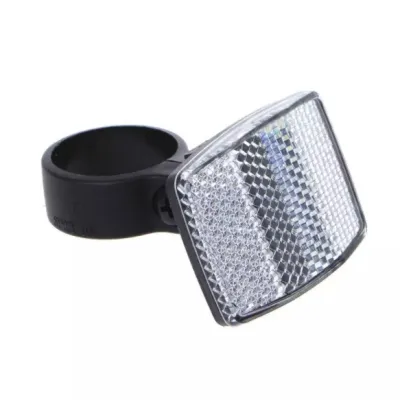
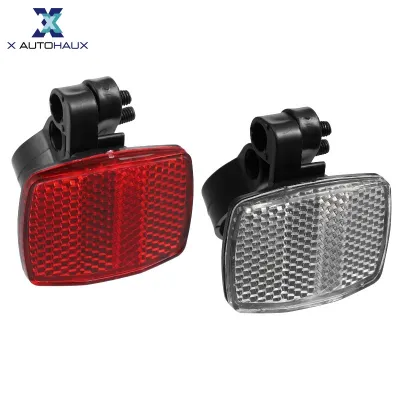
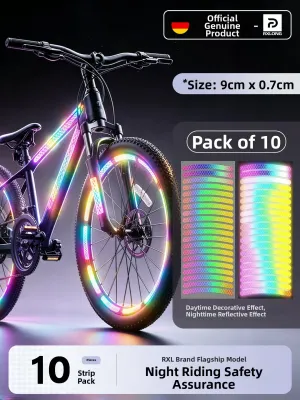
Prices are valid at publication and may change. Please refer to the product page for the latest price.
Active Lights vs. Passive Reflectors: How They Work on Shared Paths
Understanding the physical differences between active illumination and passive reflection is key to planning your setup. Active bike lights generate their own light using internal batteries. A front light projects a beam forward to illuminate obstacles, path markings, and sudden turns, while a rear light emits a steady or flashing signal to alert those approaching from behind. These devices do not rely on external light sources to make you visible.

In contrast, passive reflectors are optical devices designed to bounce light back directly to its source. When a car headlight or another cyclist’s front light shines on a reflector, the micro-prisms inside redirect that light back to the sender. If there is no direct light source pointing at your reflector, it remains dark and virtually invisible to those around you.
This distinction becomes critical on the PCN. Unlike open roads where car headlights are constant, PCN paths are populated by pedestrians who do not carry headlights. If you rely solely on reflectors, a jogger walking toward you in a dark section will not see you until you are dangerously close, because they have no light source to activate your reflectors.
Furthermore, the PCN landscape features unique environmental challenges. Many stretches wind through lush green corridors, under dense tree canopies, or along coastal paths. These areas often have variable lighting, where bright streetlights suddenly give way to deep shadows. Sharp curves and sudden bends can also prevent light from hitting your reflectors in time, making active lights the only reliable way to signal your presence around corners.
Assess Your PCN Cycling Routine to Determine Your Needs
To build the right setup, you must evaluate your typical riding habits, starting with the time of day and local weather patterns. Singapore’s tropical climate means a clear afternoon can rapidly transition into a heavy, overcast thunderstorm that severely reduces visibility. If your routine includes early morning commutes before sunrise or evening leisure rides, active lights are non-negotiable. Even daytime riders should consider the sudden darkness of a monsoon downpour when deciding whether to mount lights.
Next, analyze the specific geography of your regular routes. The PCN is highly diverse; some sections run through brightly lit residential estates where ambient light is abundant, while other stretches, such as coastal loops or nature park connectors, have minimal or no artificial lighting. If your route transitions from a well-lit urban path into a dark, rustic trail, your equipment must be capable of handling both environments. A setup that feels adequate under bright streetlights can leave you completely in the dark on a coastal path.
Your average riding speed also dictates your visibility requirements. Faster riders, including those using permitted personal mobility devices or electric bicycles, cover ground quickly and require longer stopping distances. If you travel at higher speeds, you need a front light with a longer throw to spot hazards like wet leaves, debris, or uneven pavement in time to react.
Conversely, slower riders and pedestrians need more time to notice you and step aside. A proactive front light alerts others of your approach from a distance, preventing sudden, startled movements on shared paths. By matching your equipment to your speed and route, you ensure that your reaction times—and those of the people around you—remain safe and manageable.
Checking Safety Rules and Equipment Compliance in Singapore
Before heading out, it is essential to verify that your bicycle meets local safety regulations and equipment standards. In Singapore, public path usage is governed by specific rules to ensure the safety of all path users. Cyclists should consult the latest guidelines from the Land Transport Authority (LTA) and the Active Mobility Act to confirm the exact legal requirements for riding on shared paths and roads.
Generally, standard safety conventions require a white light on the front of the bicycle and a red light or red reflector at the rear during hours of darkness. When checking your equipment, verify that your front light projects a clear white beam and your rear light or reflector is distinctly red. Some riders prefer flashing modes to attract attention, but you should check local regulations to ensure your flashing frequency is compliant and not blinding to oncoming path users.
Compliance is not just about having the gear mounted; it is about ensuring it functions correctly before every single ride. Make it a habit to perform a quick pre-ride inspection. Check that your light batteries are sufficiently charged, especially if you use rechargeable units that lose capacity over time. Ensure that all brackets are securely tightened so your lights do not shift or point downward when you ride over bumps or tactile paving.
Do not overlook your passive reflectors during these checks. Inspect the plastic casings for cracks, dirt, or mud accumulation, as a dirty or damaged reflector cannot bounce light effectively. Replacing a cracked reflector or wiping down a dusty lens takes only a moment but significantly improves your passive safety profile on the path.
Building a Reliable Visibility Setup for Your Bike
The most effective way to stay safe on the PCN is to build a redundant visibility setup that combines both active and passive equipment. Redundancy means that if one system fails—such as a front light battery dying mid-ride—you still have passive reflectors to provide a baseline of safety until you can safely stop. A balanced setup includes a reliable front white light, a rear red light, wheel reflectors, and pedal reflectors.
Proper placement is critical to ensuring your gear actually works when you are on the move. When mounting your front light, angle the beam slightly downward toward the path rather than straight ahead into the eyes of oncoming pedestrians and cyclists. Ensure that your rear light and reflector are positioned high enough to be seen clearly, taking care that loose clothing, saddlebags, or mudguards do not block them from view.
If you frequently carry a backpack or panniers, verify that these items do not drape over your rear safety gear. You can also add reflective elements directly to your wheels or pedals; the rotational movement of wheel and pedal reflectors creates a distinct visual pattern that helps other path users instantly identify you as a cyclist from the side.
Finally, establish a proactive power management routine. If you use USB-rechargeable lights, charge them regularly and consider carrying a compact power bank for longer journeys. For battery-operated lights, keep a spare set of batteries in your saddlebag. By treating your visibility setup as an integrated system of active power and passive backup, you can ride the PCN with confidence, regardless of the time or weather.
Frequently Asked Questions (FAQ)
Can I rely on PCN streetlights instead of using my own bike lights?
No, you should not rely solely on PCN streetlights. While many urban sections of the Park Connector Network are well-lit, streetlight spacing can be inconsistent, and overhanging trees often cast deep, dark shadows across the path. More importantly, streetlights are designed to help you see the ground, but they do not make you sufficiently visible to other path users. A dedicated front bike light projects a focused beam that alerts oncoming pedestrians and cyclists to your presence long before they can see your silhouette under a streetlight.
Are reflective stickers on my helmet and bag enough to replace bike reflectors?
Reflective stickers on your helmet, shoes, or backpack are excellent additions to your safety gear, but they should not replace standard bike-mounted reflectors. Bike-mounted reflectors are positioned at specific heights and angles to catch the light beams of other path users and vehicles effectively. Wearable reflective items can shift as you move your body or change your riding posture, which can temporarily hide them from view. Use wearable reflective gear to enhance your overall visibility profile, but maintain your bicycle’s dedicated front, rear, and wheel reflectors to ensure consistent, predictable safety.
Community discussion
Share your experience or ask a question. Comments are reviewed before publication.