
Quick Answer: How to Match Straps to Your Insulated Bottle
No single bottle holder strap is universally compatible with all insulated sports water bottles. Because insulated bottles feature double-wall vacuum construction, they are significantly heavier and wider than single-walled plastic alternatives, meaning a carrying accessory must support substantial weight while gripping a rigid surface. Compatibility depends primarily on the bottle’s physical shape (straight-walled versus tapered), neck diameter, and lid design.
To find the right fit, follow this general rule: silicone sleeves require an exact diameter match and work best on straight-walled bottles; adjustable webbing or paracord loops suit tapered necks or wide bases; and brand-specific attachments offer the most secure fit but limit cross-brand use. Before purchasing any carrying accessory, always check your bottle’s exact dimensions and the manufacturer’s accessory guidelines to ensure a safe and secure fit.
Understanding Strap Attachment Mechanisms
To select a compatible bottle holder strap, you must first understand how different attachment mechanisms physically interact with your bottle’s structure. Because a filled insulated bottle can easily weigh between 1 and 2 kilograms, the strap must distribute this weight without slipping, tearing, or damaging the bottle’s exterior finish.
Products mentioned in this guide
![[SG STOCK] Adjustable Leather Cup Sleeve Cover Portable Bottle Sleeve Cover Coffee Cup Holder Double Layer Leather Strap](https://img.lazcdn.com/g/p/6a8d0fa7bb12ea625f1b9fa9db581574.jpg_400x400q80.jpg_.webp)
Prices are valid at publication and may change. Please refer to the product page for the latest price.

Silicone Sleeves with Integrated Straps
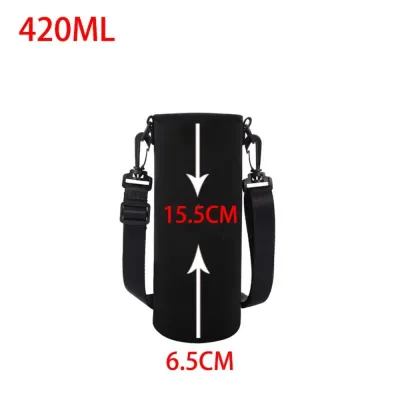
Silicone carrier sleeves rely on a tight friction fit around the base or body of the bottle. High-quality food-grade silicone possesses natural elasticity and grip, allowing it to cling securely to stainless steel or powder-coated surfaces. However, because silicone has limited stretch, these carriers require a precise diameter match.
If the bottle’s diameter is even a few millimeters smaller than the sleeve’s minimum rating, the carrier will slip off under the weight of a full bottle. Conversely, if the bottle is too wide, forcing the silicone over the base creates excessive tension, making the material highly susceptible to tearing when bumped against sharp objects. When sized correctly, silicone sleeves offer the added benefit of drop protection and scratch prevention for the bottle’s base, acting as a shock absorber during daily use.
Adjustable Webbing and Paracord Neck Loops
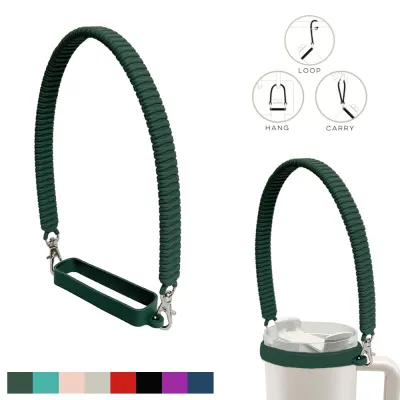
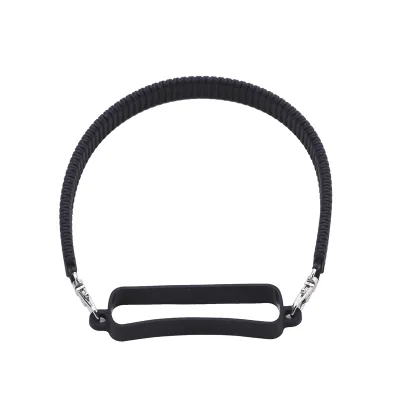
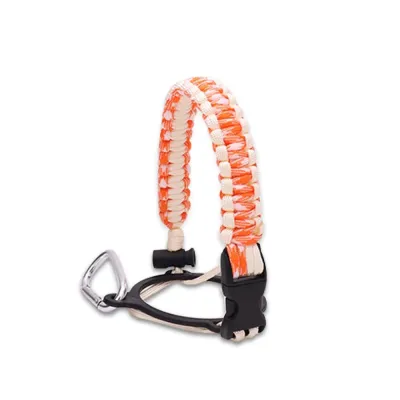
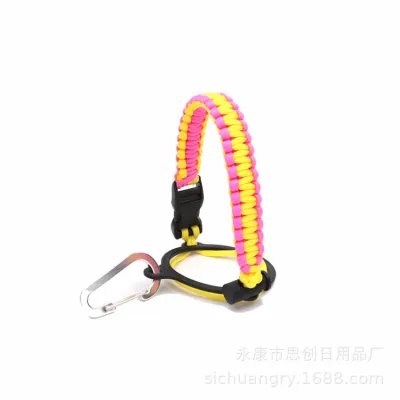
Adjustable webbing and paracord neck loops anchor around the narrowing section of the bottle just below the lid collar or thread directly through the lid’s built-in hinge. These straps typically feature a sliding plastic cord lock, a metal tensioner, or a cinching knot that allows you to tighten the loop securely around the bottle’s neck.
This design is highly advantageous for bottles with tapered shapes, hourglass contours, or exceptionally wide bases where a bottom-up silicone sleeve would fail to slide on. Because the strap holds the bottle from the top, the security of the carry depends entirely on the distinctness of the bottle’s ‘shoulder’ or neck taper. If the neck slopes too gradually without a defined ridge or lip, a tension loop can slide upward and slip off when the bottle is tilted or jarred during activity.
Brand-Specific Lid Attachments and Carabiners
Many premium insulated bottle manufacturers design proprietary lid systems that feature integrated accessory loops, pivoting handles, or dedicated attachment points. Brand-specific straps are designed to clip directly into these proprietary hinges, replace the entire cap with a strap-integrated lid, or utilize specialized carabiners engineered to fit the exact geometry of the brand’s molded loops.
While these proprietary systems offer the highest level of security and eliminate any risk of the bottle slipping out of a sleeve, they lock you into a single brand’s accessory ecosystem. Because thread pitches, cap diameters, and hinge widths vary widely across manufacturers, a brand-specific strap or lid attachment will rarely fit a competitor’s bottle. If you own multiple bottles from different brands, these specialized straps cannot be shared among them.
Matching Straps to Common Insulated Bottle Shapes
Insulated sports bottles are engineered in several distinct profiles. Identifying the physical silhouette of your bottle is the most reliable way to narrow down your strap options without relying on trial-and-error purchases.
Standard Straight-Walled Cylinders
Standard straight-walled cylinders maintain a consistent outer diameter from the base all the way up to a distinct, sharp shoulder where the neck narrows. This classic shape is highly compatible with a wide variety of third-party accessories.
For this profile, silicone boot straps or full-body silicone sleeves are highly recommended. The uniform cylindrical walls provide a continuous contact surface, maximizing friction and preventing the sleeve from sliding down or shifting during movement. Additionally, neck-loop webbing and paracord straps work exceptionally well on straight-walled bottles because the sharp shoulder at the top acts as a physical barrier, preventing the cinched loop from sliding off even under heavy loads.
Tapered Necks and Wide-Base Designs
Many modern high-capacity or ergonomic sports bottles feature a wide base that gradually tapers inward toward the neck, or a body that flares outward at the bottom to lower the center of gravity and prevent tipping.
Standard silicone sleeves often fail on these shapes. Attempting to pull a narrow sleeve over a wide base can stretch the silicone to its breaking point, while a wider sleeve will fail to grip the narrower sections of the bottle, causing it to slide off. For tapered and wide-base designs, choose adjustable webbing straps that cinch tightly around the narrowest part of the neck, or heavy-duty paracord handles that tie securely below the lid threads. Avoid rigid, non-adjustable carriers or molded plastic rings that cannot accommodate the wider base during installation.
Contoured and Narrow-Neck Bottles
Contoured bottles feature specialized shapes, such as hourglass curves, integrated finger grips, or highly narrow neck openings designed for easy pouring. These fashion-forward and specialized sports bottles present the greatest challenge for universal strap compatibility.
Because of the irregular curves, standard cylindrical sleeves will leave air gaps, reducing friction and causing the bottle to slip out easily. If you own a heavily contoured bottle, your best option is to rely on brand-specific lid attachments or custom-molded silicone carriers designed explicitly for that exact model. Alternatively, flexible paracord net carriers—which wrap the entire bottle in a flexible, woven mesh—can conform to irregular shapes, providing a secure hold regardless of the bottle’s contours. Always verify your bottle’s exact model number before purchasing a custom-molded accessory.
Comparing Strap Types for Sports and Daily Use
Selecting the right bottle holder strap requires balancing the physical shape of your bottle with your daily activities. The table below outlines how the three primary strap types compare across key performance dimensions.
| Strap Type | Best Bottle Shape | Security Level | Drop Protection | Potential Drawbacks |
|---|---|---|---|---|
| Silicone Sleeves | Straight-walled cylinders | Moderate to High | Excellent (covers base) | Can tear on sharp objects; traps moisture |
| Adjustable Webbing / Paracord | Tapered necks and wide bases | High (when cinched) | Minimal (protects neck only) | Can scratch powder-coat finish; requires manual adjustment |
| Brand-Specific Attachments | Proprietary brand models | Very High | None (unless paired with boot) | Zero cross-brand compatibility; higher cost |
Hiking and Trail Running
When navigating uneven terrain, such as the steep, humid trails of Singapore’s Bukit Timah Nature Reserve or the rustic paths of MacRitchie Reservoir, bottle security is paramount. A dropped bottle can dent, losing its vacuum insulation, or roll down a slope out of reach.
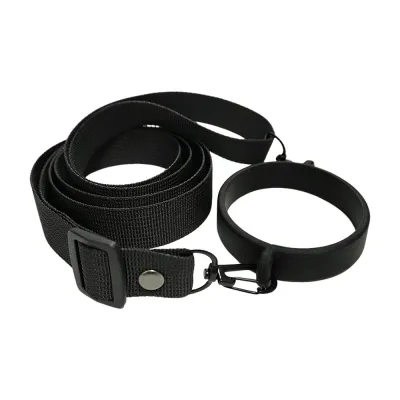
For hiking and trail running, prioritize highly secure, non-slip attachments like brand-specific lid straps or heavy-duty adjustable webbing. A cross-body webbing strap keeps your hands free for balance and trekking poles. Ensure the strap features a secondary stabilizer or fits snugly against your body to prevent the heavy bottle from swinging and throwing off your center of gravity.
Gym and Daily Commute
For daily commuting on transit systems like the MRT or working out at local fitness centers, your primary goal is protecting your bottle from impact and ensuring convenience. Bottles are frequently placed on hard tiled floors, concrete, or metal gym equipment, which can easily scratch or dent the base.
Silicone sleeves are ideal for these urban environments. They provide excellent bottom-up cushioning, reducing the metallic clang when you set the bottle down and preventing dents that can compromise the vacuum seal. They are also easy to slide off when you need to wash the bottle after a workout.
Kids' Bottles
Children’s sports bottles undergo rough handling on school playgrounds and weekend outings. Straps for kids’ bottles must be highly durable, easy to clean, and simple to operate.
Choose carrying straps made from thick, tear-resistant silicone or heavy-duty nylon webbing with reinforced stitching. Avoid complex paracord knots that can trap dirt and food particles, or delicate plastic clips that can snap when dropped. Ensure the attachment mechanism is secure enough that the bottle will not detach when swung or dropped onto hard playground surfaces.
Decision Framework: Choosing the Right Strap for Your Needs
To finalize your purchase, use this condition-based framework to match your bottle type and lifestyle to the ideal strap configuration.
- Choose Silicone Sleeves if: You own a standard straight-walled cylindrical bottle, prioritize protecting the bottom of your bottle from dents and scratches, and prefer a clean, streamlined look for daily office commutes or gym sessions.
- Choose Adjustable Webbing or Paracord if: Your bottle has a tapered neck, a flared wide base, or an irregular shape. This is also the best choice if you want a lightweight, highly adjustable, and removable carrying option that can be shared among multiple bottles in your collection.
- Choose Brand-Specific Attachments if: You engage in high-intensity outdoor sports, require absolute security against drops, and do not mind investing in a proprietary accessory ecosystem that cannot be used on other bottle brands.
- Verify First if: Your bottle has a highly unique contour, a proprietary lid mechanism, or a delicate hand-painted finish. In these cases, generic third-party straps may cause slippage or surface damage.
Ultimately, the best bottle holder strap is one that matches the precise physical dimensions of your bottle while aligning with the physical demands of your carrying environment.
Verifying Fit and Protecting Your Bottle's Finish
Before taking your bottle out on a strenuous activity, perform these practical verification and maintenance steps to ensure your equipment performs reliably and your bottle remains undamaged.
- Measuring Your Bottle: Do not rely on liquid capacity (such as 32 oz or 1 liter) to determine strap compatibility, as different brands use different heights and widths for the same volume. Use a flexible sewing measuring tape to record the bottle's maximum base diameter, the neck circumference directly below the collar, and the vertical distance from the base to the shoulder. Compare these exact measurements against the strap manufacturer's specifications.
- Protecting the Finish: Tight nylon webbing or paracord loops can trap abrasive dirt, dust, and sand against the bottle's surface. As you walk, the minor movement of the strap acts like sandpaper, gradually grinding away powder-coated or painted finishes. Regularly check the attachment area, wipe down the bottle neck, and wash the strap to remove trapped debris.
- Moisture Management: In humid climates, moisture from washing, rain, or hand sweat can easily become trapped between a silicone sleeve and the stainless steel bottle. If left unaddressed, this dark, damp space becomes a breeding ground for mold, mildew, and unpleasant odors. Remove the silicone sleeve at least once every two weeks, wash both surfaces with mild soapy water, and allow them to air-dry completely before reassembly.
- Warranty Considerations: Premium insulated bottle manufacturers often provide lifetime warranties covering the vacuum insulation. However, these warranties typically exclude cosmetic wear and tear or damage caused by third-party accessories. If a tight, non-approved strap dents the neck or causes structural damage to the lid collar, the manufacturer may void your warranty coverage. Always read the warranty terms before applying high-tension third-party straps.
Frequently Asked Questions (FAQ)
Can I use a tight strap on a powder-coated bottle?
Yes, but you must take precautions. While powder coating is highly durable, continuous friction from tight nylon webbing or paracord—especially when combined with trapped grit or sweat—can wear down the finish over time. To prevent cosmetic damage, choose straps with soft inner linings, ensure the bottle neck is clean before securing the strap, and avoid over-tightening tension locks directly against the painted surface.
Do universal paracord straps fit all wide-mouth bottles?
No. While universal paracord straps are designed to stretch and fit a wide range of standard neck diameters, they frequently fail on bottles with very short necks, flush-fitting lids, or proprietary hinge designs. If there is less than 5 millimeters of vertical clearance below the lid collar, the paracord ring may slide off. Always check the strap manufacturer’s minimum neck-height requirements.
How do I prevent mold under a silicone bottle sleeve?
To prevent mold and mildew, remove the silicone sleeve immediately after the bottle is exposed to heavy rain, outdoor workouts, or washing. Clean both the bottle’s exterior and the inside of the sleeve using mild dish soap and warm water. Ensure both components are completely dry to the touch before sliding the sleeve back onto the bottle.
Community discussion
Share your experience or ask a question. Comments are reviewed before publication.