
Quick Answer: Are Bowflex Dumbbells Right for Your HDB Space?
Adjustable dumbbells are highly practical for small HDB home gyms, offering a space-saving alternative to traditional weight racks. A single pair of these dumbbells can replace up to fifteen individual pairs of weights, consolidating an entire strength training setup into a compact footprint that easily fits into a bedroom corner or living room alcove.
However, their practicality in a Singapore apartment depends on several spatial and structural factors. You must verify that you have a level surface to store the heavy cradles, sufficient clearance to safely adjust the weight dials, and adequate floor protection to prevent damage to typical HDB flooring materials.
If your training style relies on high-impact movements where weights are frequently dropped, or if your workout area is extremely cramped, alternative equipment may be more suitable. For most apartment dwellers looking for a versatile strength training solution, these dumbbells offer an excellent balance of utility and space efficiency when paired with the right floor protection.
Products mentioned in this guide
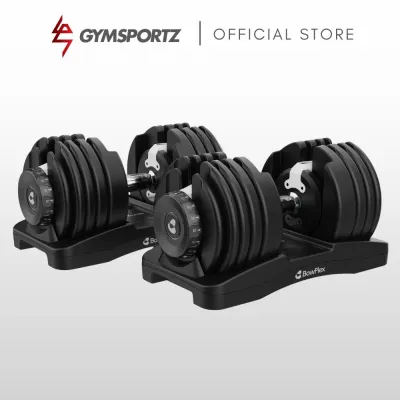
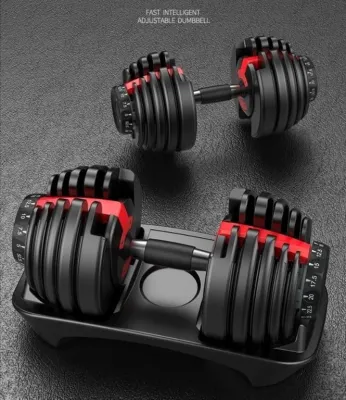
Prices are valid at publication and may change. Please refer to the product page for the latest price.
Evaluating the Physical Footprint and Clearance Requirements
Before purchasing adjustable dumbbells, it is essential to measure your available floor space against the physical dimensions of the equipment. While the storage cradles themselves occupy a relatively small footprint—typically around 45 centimeters in length and 25 centimeters in width per cradle—the actual space required for safe operation is significantly larger.

One common oversight is failing to account for the fixed length of the dumbbell bar. Unlike standard dumbbells that become shorter at lighter weights, adjustable dumbbells maintain their maximum length regardless of the weight selected. This means that even when lifting a light load, you will be handling a wide bar that requires extra lateral clearance to avoid hitting your body, walls, or nearby furniture during exercises like chest presses or bicep curls.
To ensure smooth operation, you must also allow sufficient clearance around the dial mechanisms. Placing the cradles flush against a wall or wardrobe makes it difficult to reach the selection dials on either end and can prevent you from aligning the plates correctly when re-racking the weights.
Ideally, you should maintain at least 30 to 50 centimeters of clear space around the storage trays, and at least 1 meter of unobstructed space in front of your workout station. This buffer zone prevents accidental collisions with bed frames, study desks, or glass sliding doors during dynamic movements.
Floor Loading, Weight Distribution, and HDB Constraints
While HDB floor slabs are engineered to support standard residential loads, concentrated point loads from heavy fitness equipment require careful consideration. A fully loaded set of adjustable dumbbells, especially when stored on a dedicated metal stand, concentrates a significant amount of static weight onto a very small surface area.
Most modern HDB flats feature flooring materials such as vinyl tiles, laminate wood, or ceramic tiles. Heavy, static loads left in one spot for extended periods can cause permanent indentations in vinyl, warping in laminate, or hairline cracks in ceramic tiles if there are minor voids in the adhesive underneath.
Additionally, the structural noise and vibration caused by setting heavy weights down on bare floors can easily travel through the concrete slab to the unit below. This can lead to noise complaints from downstairs neighbors, particularly during early morning or late-night training sessions.
To protect your flooring and maintain good neighborly relations, always place your equipment on a high-density protective mat. Avoid soft EVA foam play mats, which compress too easily under heavy loads and offer minimal structural protection. Instead, opt for high-density vulcanized rubber mats of at least 10mm to 15mm thickness to distribute the weight evenly and absorb impact vibrations.
Daily Usability, Storage, and Environmental Factors
Maintaining your equipment in a compact, multi-purpose room requires disciplined storage habits. Always return the dumbbells to their designated cradles immediately after use. Leaving them loose on the floor creates a serious tripping hazard in tight HDB layouts and exposes the delicate plate-locking tabs to accidental impacts that can damage the selection mechanism.
Singapore’s high relative humidity presents a constant challenge for home gym equipment. Moisture in the air can settle on metal plates and selector pins, leading to surface rust and mechanical stiffness over time. Sweat, which contains corrosive salts, accelerates this degradation if left unaddressed.
To preserve the lifespan of your dumbbells, make it a habit to wipe down the handles, plates, and dials with a dry microfiber cloth after every workout. Avoid using harsh chemical solvents or heavy oils on the dial mechanisms, as these can degrade the plastic components or attract dust, leading to mechanical jamming.
Proper ventilation is also key to managing humidity and keeping your workout space comfortable. Position your home gym setup near a window or directly under a ceiling fan to promote airflow, which helps dry out ambient moisture and prevents stuffiness in small rooms.
When to Consider Alternative Space-Saving Equipment
Adjustable dumbbells may not be the ideal choice for every HDB home gym. If your available floor space is so limited that you cannot maintain a safe lifting clearance, or if you live in a shared room where permanent equipment storage is impractical, other space-saving alternatives should be evaluated.
For ultra-compact spaces, high-quality resistance bands offer a highly versatile, zero-footprint solution that can be easily stored in a drawer when not in use. Alternatively, a single kettlebell provides a dynamic, full-body workout with a much smaller physical footprint and no complex mechanical parts to maintain.
To help you decide which equipment best fits your living situation, consider how different options balance space requirements, floor impact, and versatility:
| Equipment Type | Space Required | Floor Impact Risk | Versatility | Noise Level |
|---|---|---|---|---|
| Adjustable Dumbbells | Moderate (requires cradle space) | Moderate to High (requires mats) | High (wide weight range) | Low to Moderate |
| Resistance Bands | Minimal (fits in a drawer) | None | Moderate (variable tension) | Silent |
| Single Kettlebell | Low (small footprint) | Moderate (requires careful handling) | High (ballistic movements) | Low to Moderate |
Frequently Asked Questions (FAQ)
Can I drop adjustable dumbbells on my HDB floor?
No, you should never drop adjustable dumbbells. Unlike solid iron or rubber-coated hex dumbbells, adjustable models contain intricate internal dial mechanisms, plastic selector teeth, and interlocking plates. Dropping them from any height can crack these components, making the dumbbells unsafe to lift as plates may slip out of the housing during use. Additionally, dropping heavy weights can easily shatter ceramic tiles or permanently dent vinyl flooring in your HDB flat. Always practice controlled lowering to the floor or directly back into the cradles.
Do adjustable dumbbells require special maintenance in a humid climate?
Yes, Singapore’s humid tropical climate requires proactive maintenance to prevent rust and mechanical jamming. Wipe down the metal plates and handles with a dry cloth after every session to remove sweat. Store the dumbbells in a dry, shaded area away from direct sunlight, which can warp or degrade the plastic dials over time. Avoid storing them near open balconies or directly under air-conditioning units where condensation might drip onto the mechanisms.
Community discussion
Share your experience or ask a question. Comments are reviewed before publication.