
Selecting the right buoyancy rating for your life jacket is one of the most critical safety decisions you will make before heading out on Singapore’s waters. The correct level of flotation depends directly on where you plan to paddle, your swimming ability, and the specific physical demands of your sport. While a lower-buoyancy device offers excellent mobility and comfort in calm inland waters, open coastal routes demand a higher level of protection to keep you safe in challenging conditions.
Equipment cannot replace personal water competence, proper training, and sound environmental judgment. Before launching your kayak or stand-up paddleboard (SUP), you must evaluate the water conditions, understand local safety regulations, and verify that your flotation device is fully functional. Matching your gear to your specific paddling environment ensures you remain both safe and compliant.
Understanding Buoyancy Ratings: Standard PFDs vs. High Buoyancy Life Jackets
Buoyancy ratings for personal flotation devices (PFDs) are typically measured in Newtons (N), which represent the metric unit of upward force. For reference, 10 Newtons of buoyancy equals approximately 1 kilogram (or 2.2 pounds) of lift in the water. Because the human body is naturally semi-buoyant, a life jacket does not need to support your entire body weight; instead, it only needs to provide enough additional lift to keep your head and airway clear of the water.
Products mentioned in this guide
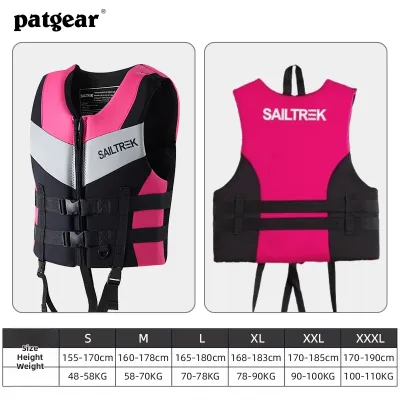
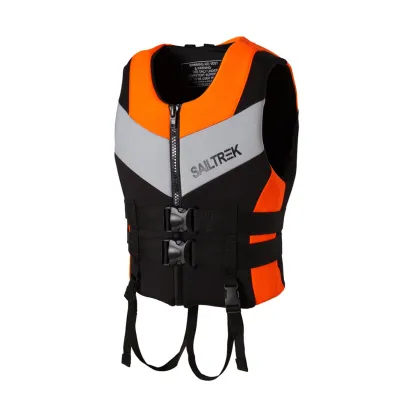
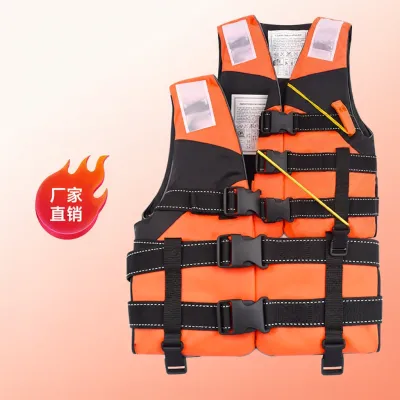
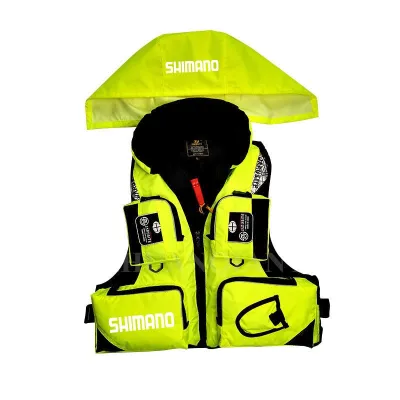
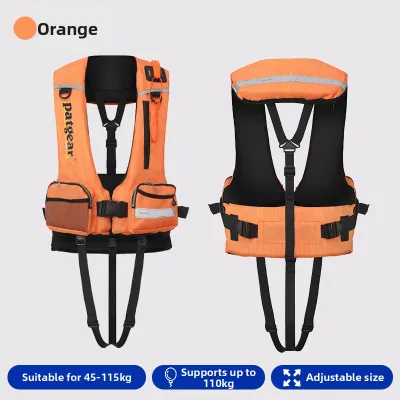
Prices are valid at publication and may change. Please refer to the product page for the latest price.
Standard buoyancy aids, rated at 50N (approximately 11.2 pounds of lift), are designed primarily for competent swimmers in sheltered waters where rescue is close at hand. These devices help keep a conscious person afloat but do not have sufficient turning force to roll an unconscious person onto their back. They are lightweight, low-profile, and designed to allow maximum physical movement during active water sports.
In contrast, a high buoyancy adult life jacket is rated at 100N, 150N, or even higher. A 100N jacket provides basic face-up turning capability in relatively calm waters, while a 150N device is engineered to reliably turn an unconscious person into a safe, face-up floating position, even in rough coastal waters. This advanced level of protection is essential when paddling far from shore or in areas with active boat traffic.
The primary trade-off when choosing higher buoyancy is physical bulk. Traditional foam life jackets with high buoyancy ratings require thick, substantial foam panels around the chest and neck to achieve their safety ratings. This added material can restrict your shoulder rotation, increase thermal insulation in hot climates, and make self-rescue maneuvers significantly more difficult.
Matching Buoyancy to Your Paddling Environment in Singapore
Singapore offers a diverse range of paddling environments, from tranquil, landlocked reservoirs to dynamic coastal passages. Your choice of buoyancy rating must reflect the specific risk profile of your chosen paddling location.

Sheltered Reservoirs and Calm Bays
Inland freshwater bodies such as MacRitchie Reservoir, Bedok Reservoir, and Pandan Reservoir are highly controlled, enclosed environments. These locations feature minimal wind, negligible wave action, and no commercial shipping traffic, with rescue resources or shorelines always within close reach.
For these calm, supervised waters, a standard 50N buoyancy aid is typically the most practical choice. Singapore’s tropical climate brings high temperatures and humidity, making heat exhaustion a genuine concern during physical exertion. A compact 50N device features open sides, low-profile foam, and breathable mesh panels, allowing you to stay cool and paddle with full shoulder mobility.
While a 50N device does not offer face-up turning capabilities, the low-risk nature of these reservoirs means that a conscious, swimming paddler can easily stay afloat while retrieving a capsized craft. However, you must always verify that you meet the swimming proficiency requirements set by local water sports centers before launching.
Open Coastal Waters and Offshore Routes
Paddling along East Coast Park, exploring the Southern Islands, or navigating coastal routes near Changi Beach exposes you to a much higher level of environmental risk. These open-water areas are subject to strong tidal currents, wake from large commercial vessels, and sudden tropical squalls, commonly known as Sumatra squalls, which can bring intense wind gusts and rapid drops in visibility.
In these open coastal environments, a high buoyancy adult life jacket rated at 100N or 150N is highly recommended. If you capsize in deep water during a sudden squall, strong currents can quickly separate you from your kayak or paddleboard. Fatigue sets in rapidly when swimming against a current, and a high-buoyancy device ensures you float high enough in the water to keep your airway clear of choppy waves.
Furthermore, the increased flotation of a 100N+ jacket helps keep you visible to passing vessels and rescue teams in low-visibility rainstorms. When paddling in these high-risk zones, prioritizing maximum flotation over absolute mobility is a necessary safety compromise.
Balancing Safety and Mobility: Foam vs. Inflatable Designs
Active paddle sports require continuous upper-body movement, making the design of your flotation device just as important as its buoyancy rating. Traditional foam and modern inflatable designs offer different solutions to the balance between safety and physical mobility.
Traditional foam high buoyancy life jackets rely on thick, closed-cell foam panels. While highly reliable because they cannot puncture and require no activation, their bulk can severely hinder your paddling technique. In a kayak, thick chest panels can rub against your inner arms, causing painful chafing over long distances. On a stand-up paddleboard, a bulky front panel shifts your center of gravity and makes it incredibly difficult to slide your torso back onto the deck of the board after a fall.
Inflatable PFDs provide an excellent alternative for paddlers who need high buoyancy without the physical restriction. These devices remain completely flat and low-profile while worn, only expanding to their full 100N or 150N rating when inflated. They are available in two primary configurations:
- Belt Packs: Worn around the waist like a small pack, these offer total upper-body freedom and are highly popular among stand-up paddleboarders. Upon inflation, you must pull the bladder over your head, which requires you to remain calm and conscious in the water.
- Yoke Styles: Worn over the shoulders like a collar, these sit comfortably out of the way of your paddling stroke and inflate around your neck and chest, providing immediate head support.
When choosing an inflatable PFD, you must select between manual and automatic inflation mechanisms. Manual systems require you to pull a cord to release the CO2 gas, making them ideal for paddleboarders who expect to fall into the water occasionally and want to avoid accidental inflation. Automatic systems inflate upon immersion in water, which is highly beneficial if you are thrown from a kayak unexpectedly, but they are impractical for casual paddleboarding where regular falling is part of the sport.
Essential Gear Checks and Local Water Safety Compliance
Your flotation device can only save your life if it is properly maintained and functioning correctly. Establishing a routine pre-trip inspection is essential for both foam and inflatable models.
Before every launch, perform a thorough inspection of your gear:
- For Foam PFDs: Squeeze the foam panels to ensure they have not suffered permanent compression or become hard and brittle. Inspect the outer fabric for fading or tears caused by intense UV exposure, and verify that all buckles, zippers, and adjustment straps are intact and secure.
- For Inflatable PFDs: Unscrew the CO2 cylinder to check for corrosion on the threads, and verify that the cylinder has not been pierced. Check that the green indicator tab on the firing mechanism is intact, and inspect the manual pull-cord to ensure it is easily accessible.
- For Safety Accessories: Ensure a marine-grade safety whistle is firmly attached to your jacket, as sound carries much further than a human voice over open water. Check that any retroreflective tape panels are clean and highly visible.
In Singapore, water safety rules are managed by various authorities, including the Public Utilities Board (PUB) for reservoirs and the Maritime and Port Authority (MPA) for coastal port waters. Always check the specific safety guidelines, color requirements, and buoyancy rules with local authorities or licensed rental operators before launching your own craft.
Finally, remember that no flotation device can replace basic swimming skills, situational awareness, and safety preparation. Always check the local weather forecasts for lightning and rain warnings before heading out, and always make the conservative decision to stay off the water if weather conditions begin to deteriorate.
Frequently Asked Questions (FAQ)
Is a high buoyancy adult life jacket too bulky for stand-up paddleboarding?
Traditional foam life jackets rated at 100N or higher are generally too bulky for stand-up paddleboarding, as they restrict your arm movement and make it difficult to climb back onto your board from deep water. For paddleboarders operating in open coastal waters where high buoyancy is required, an inflatable belt-pack PFD rated at 100N or 150N is the ideal solution. It sits comfortably around your waist without restricting your upper body, and can be manually deployed if you experience an emergency.
How often should I replace my kayaking life jacket?
There is no universal expiration date for a life jacket, as its lifespan depends on how often it is used, stored, and maintained. In Singapore’s tropical climate, intense UV rays and saltwater exposure can accelerate the degradation of fabrics and foam. You should replace your life jacket immediately if you notice faded or brittle outer fabric, frayed straps, cracked buckles, or foam that no longer springs back when squeezed. For inflatable models, the bladder should be pressure-tested annually by inflating it orally and leaving it overnight to check for leaks.
Community discussion
Share your experience or ask a question. Comments are reviewed before publication.