
When comparing Butterfly ALC (Arylate-Carbon) blades, the primary differences in speed, control, and feel depend on where the composite layer is placed. Outer ALC blades, featuring the carbon layer directly beneath the outer wood veneer, offer higher speed, a crisper feel, and immediate rebound. This configuration is highly suited for close-to-the-table counter-looping and aggressive blocking. Conversely, Inner ALC blades place the carbon layer deeper, adjacent to the center core, prioritizing control, dwell time, and a softer wood-like touch that excels in mid-distance looping and heavy spin generation.
Selecting the right blade requires understanding how these structural differences interact with your personal stroke mechanics and rubber selection. Rather than searching for a single “best” blade, players must evaluate their tactical positioning, physical strength, and technical consistency. Because Butterfly ALC blades represent a significant financial investment, choosing a model that aligns with your natural playstyle will yield the best long-term results on the table.
Quick Decision Guide: Which Butterfly ALC Profile Fits You?
To simplify your selection process, it helps to categorize your tactical needs into distinct profiles. The placement of the Arylate-Carbon layer fundamentally changes how the racket reacts under different impact forces, making certain models far more suitable for specific styles of play.
Products mentioned in this guide
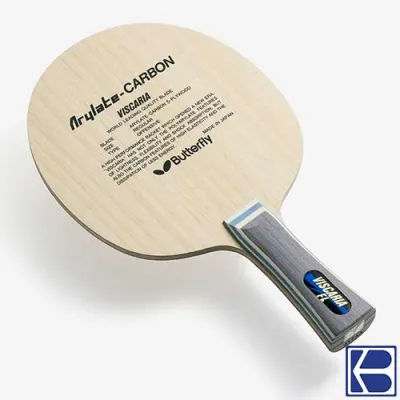
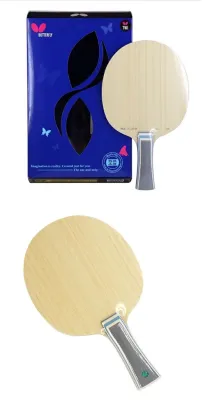
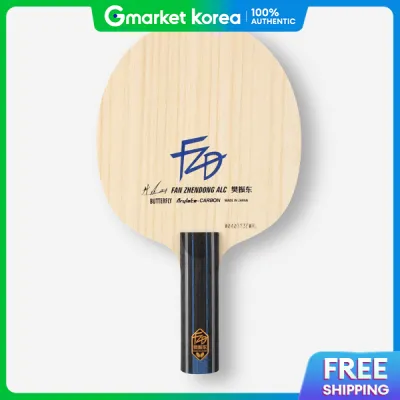
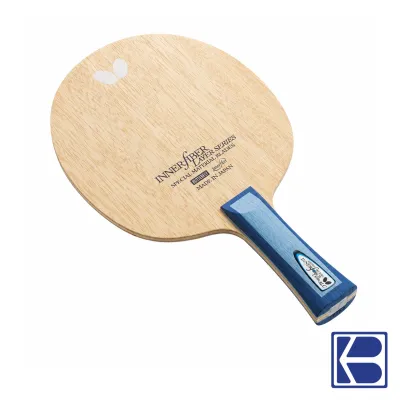
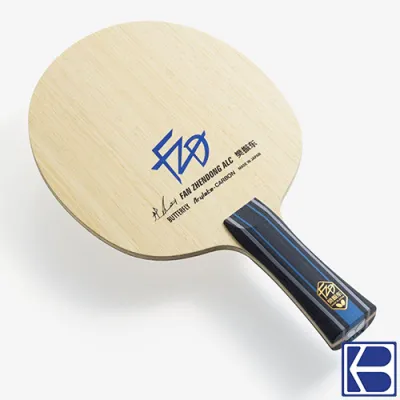
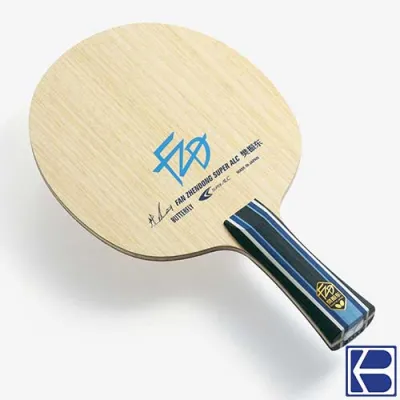
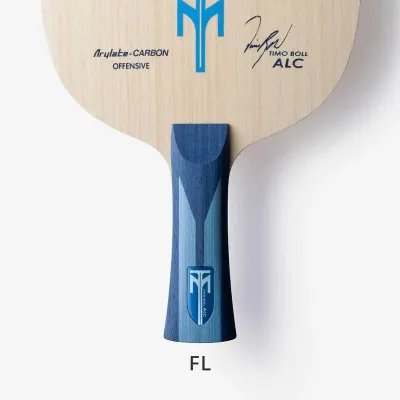
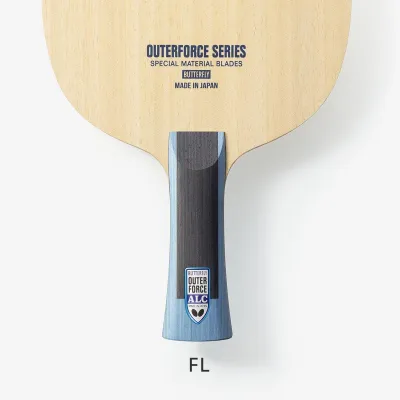
Prices are valid at publication and may change. Please refer to the product page for the latest price.
Choose an Outer ALC profile (such as the Viscaria, Timo Boll ALC, or Fan Zhendong ALC) if:
- Your primary strategy revolves around close-to-the-table counter-attacks, quick off-the-bounce looping, and active blocking.
- You prefer a direct, crisp, and stiff sensation on impact, with minimal energy loss when redirecting your opponent's power.
- You have developed short, compact stroke mechanics that do not require a highly flexible blade to generate speed.
Choose an Inner ALC profile (such as the Innerforce Layer ALC or Harimoto Tomokazu Innerforce ALC) if:
- Your game is built on heavy topspin loops, opening loops against backspin, and consistent mid-distance rallies.
- You value a soft, wood-like initial touch for short pushes, service returns, and delicate touch shots.
- You rely on high dwell time to create a high, safe arc over the net, ensuring maximum consistency on aggressive strokes.
Verify first if your physical conditioning and rubber choices align with these profiles: Before finalizing any purchase, verify how your current rubber setup will interact with your chosen blade. Stiff outer ALC blades often require softer or more control-oriented rubbers to prevent the ball from flying long, whereas flexible inner ALC blades can be paired with harder, high-tension rubbers to compensate for the softer blade feel. Additionally, consider your physical strength and wrist health, as heavier blades can increase swing weight and fatigue during long training sessions in warm, humid climates like Singapore.
How ALC Construction Dictates Speed, Control, and Feel
To understand why these blades perform so differently, it is essential to look at the materials and engineering behind Butterfly’s Arylate-Carbon technology. Arylate-Carbon is a composite material woven from yellow Arylate fibers and blue Carbon fibers. The carbon component provides high speed, stiffness, and structural stability, which significantly expands the sweet spot of the blade. The Arylate component acts as a dampening agent, absorbing harsh vibrations and softening the overall feel of the impact. This combination delivers a unique balance of wood-like feedback and composite power.

The critical differentiator among these blades is the depth at which this ALC layer is integrated into the wood plies. In an Outer ALC construction, the composite layer is placed immediately beneath the outer wood veneer (which is typically Koto or Limba). When the ball makes contact with the racket, it immediately compresses the thin outer wood ply and engages the stiff ALC layer. This direct contact results in an immediate rebound, high linear speed, and a very clear, crisp vibration feedback to the player’s hand.
In contrast, Inner ALC construction—often referred to by Butterfly as Innerfiber technology—places the ALC layers deeper inside the blade. The composite material is sandwiched directly against the center core ply, covered by two layers of wood on each side. On light touches, such as short pushes, drop shots, or slow blocks, the ball only engages the outer wood plies, making the racket behave almost exactly like an all-wood blade. On hard, powerful strokes, the ball sinks deeper into the wood structure, engaging the inner ALC layer to provide the necessary speed, stability, and power.
This structural variation creates two distinct performance curves. Outer ALC provides a highly linear response where the ball exits the racket face quickly regardless of stroke power, offering excellent efficiency for fast exchanges. Inner ALC provides a non-linear response, offering maximum control and safety on soft shots, while unlocking higher speed and spin potential only when the player accelerates their arm and engages the inner core.
Comparing the Core Butterfly ALC Lineups
Butterfly’s catalog features several distinct families of ALC blades, each designed to cater to specific tactical preferences. By analyzing these lineups based on their design philosophy and structural characteristics, you can identify which series matches your developmental goals.
Outer ALC Standards (Viscaria and Timo Boll Profiles)
The standard outer ALC layout is epitomized by the legendary Viscaria blade, which has served as the benchmark for composite blades for decades. The Viscaria features a 5-ply wood and 2-ply carbon construction, utilizing a Koto outer ply, followed by the ALC layer, an Ayous support ply, and a Kiri wood core. The Timo Boll ALC shares an almost identical composition but features minor differences in head balance and handle shape, resulting in a slightly different weight distribution.
This classic outer ALC structure is celebrated for its highly responsive, crisp, and direct feel. Because the carbon layer is positioned so close to the surface, energy loss during impact is minimized. This makes the blade exceptionally effective for flat hits, active blocks, and quick counter-looping. When an opponent attacks with heavy topspin, an outer ALC blade allows you to redirect that energy with a short, compact stroke, keeping the ball low and fast over the net.
However, this direct feedback comes with a distinct trade-off in terms of ease of use. The stiffness of the outer ALC structure reduces the dwell time—the physical duration the ball remains in contact with the racket face. To generate heavy spin on slow, brushing strokes, the player must possess excellent timing, quick wrist acceleration, and precise contact. For developing players whose stroke mechanics are not yet fully consolidated, this low dwell time can lead to unforced errors, as the ball may bounce off the racket before the desired spin or trajectory is established.
Innerforce ALC Series (Inner Fiber for Dwell and Control)
The Innerforce Layer ALC series represents a complete shift in design philosophy, prioritizing maximum control, spin generation, and safety. By moving the ALC layer adjacent to the center core and utilizing a Limba outer ply, Butterfly created a blade that emphasizes the “holding the ball” sensation. Limba is a softer wood than Koto, which further enhances the soft, absorbing feel of the blade on initial contact.
This inner fiber structure is highly advantageous for loopers who rely on heavy topspin arcs to control the table. When executing an opening loop against heavy backspin, the increased flexibility of the Innerforce structure allows the blade to flex and grip the ball. This high dwell time gives the player more window to brush the ball upward, creating a high, safe trajectory that clears the net with significant topspin. In mid-distance rallies, the Innerforce ALC provides a highly forgiving feel, allowing you to maintain consistency even when caught out of position.
The primary trade-off of the Innerforce ALC series is felt during passive play and flat hitting. Because the carbon layer is buried deep within the wood plies, passive blocks can sometimes feel slightly dead or slow, requiring the player to actively push forward to keep the ball deep. Additionally, flat smashes and direct hits lack the immediate, explosive speed of outer ALC blades, meaning you must rely more on your physical body rotation and arm speed to finish points with raw power.
Player-Specific and Tweaked ALC Variants
In addition to the standard Viscaria and Innerforce models, Butterfly offers a wide array of player-branded ALC blades, including the Fan Zhendong ALC, Lin Gaoyuan ALC, Harimoto Tomokazu Innerforce ALC, and Zhang Jike ALC. It is a common misconception that these signature models utilize entirely new composite technologies; in reality, most of them are subtle variations of the core Outer or Inner ALC formulas.
These player-specific models alter performance by introducing minor adjustments to physical specifications. For instance, the Harimoto Tomokazu Innerforce ALC features a slightly larger head size than the standard Innerforce Layer ALC, which shifts the balance forward and increases the sweet spot, albeit at the cost of a slightly heavier swing weight. Other variants may tweak the thickness of the core ply, the density of the wood selection, or the dimensions of the handle.
When evaluating these options, it is highly recommended to look past the marketing descriptions and focus on the measurable physical specifications listed by the manufacturer. A difference of just 0.2mm in overall blade thickness or a 5g variance in average weight can dramatically alter how the blade behaves. A thicker blade will generally feel stiffer and faster, while a heavier blade provides more stability against heavy incoming balls but requires greater physical strength to swing consistently. Focus on finding a weight and handle shape that feels comfortable and balanced in your hand.
Pairing Your ALC Blade with Rubbers and Playstyle
Selecting the correct blade is only half of the equation; the final performance of your racket depends entirely on how the blade interacts with your chosen rubbers. Because the blade acts as the engine of the racket and the rubbers act as the tires, pairing them correctly is vital to achieving the desired balance of speed, spin, and control.
For stiff Outer ALC blades, general pairing principles suggest using medium-hard to medium-soft rubbers (typically between 42 and 47 degrees on the shore scale). Because the outer ALC structure is inherently fast and stiff, a slightly softer or more elastic rubber sponge helps to restore a comfortable level of dwell time. This combination allows the ball to sink into the rubber sponge before hitting the stiff carbon layer, providing a more controllable trajectory and making it easier to execute delicate touch shots over the table. Advanced players with highly developed stroke speed may still opt for harder rubbers, but this requires exceptional physical preparation and precise timing.
For flexible Inner ALC blades, pairing them with harder, high-tension rubbers (such as 48 to 52 degrees, or tacky Chinese-style rubbers) often yields excellent results. The natural flexibility and high dwell time of the Innerforce structure compensate for the stiffness of a hard rubber sponge. When playing soft touch shots, the outer wood plies keep the ball controlled, while hard, aggressive strokes engage both the hard rubber sponge and the inner ALC layer, resulting in explosive speed and heavy spin. This combination is highly favored by modern loopers who want the safety of an inner carbon blade without sacrificing finishing power.
Beyond rubber hardness, the overall weight of the assembled racket is a critical factor to verify. A standard ALC blade typically weighs between 85g and 90g. When you add two modern max-thickness attacking rubbers, the total weight of the racket can easily reach 185g to 195g. In Singapore’s humid climate, moisture can accumulate on the rubber surface, slightly reducing grip and requiring more physical effort to generate spin. A racket that is too heavy can strain the wrist and elbow joints, leading to fatigue or chronic injury. If you are transitioning from a lighter all-wood blade, look for an ALC blade on the lighter side of the spectrum (around 83g to 85g) to maintain maneuverability.
Ultimately, your primary playing distance should serve as the final deciding factor when choosing between these two families. If you find yourself playing close to the table, relying on quick blocks, counter-attacks, and short strokes, the Outer ALC family will give you the sharp, immediate response you need to pressure your opponent. If you prefer to step back, engage in long counter-looping rallies, and construct points through variation in spin and placement, the Inner ALC family will provide the consistency, safety, and feel required to sustain long, high-quality rallies.
Frequently Asked Questions (FAQ)
Is ALC better than ZLC or Super ALC for amateur players?
Yes, Arylate-Carbon (ALC) is widely considered the most balanced and forgiving composite material for amateur and developing players. While Zylon Carbon (ZLC) and Super ALC offer a larger sweet spot and significantly higher speed, their extreme stiffness and high rebound make them highly unforgiving. Without highly refined stroke mechanics, amateur players will struggle to control the ball’s trajectory, particularly during short play, service returns, and passive blocking. ALC provides a softer touch and longer dwell time, allowing players to feel the ball clearly and develop proper stroke habits while still offering ample speed for competitive play.
Does the handle shape change the speed or control of an ALC blade?
No, the shape of the handle—whether Flared (FL), Straight (ST), or Anatomic (AN)—does not alter the physical composition, wood plies, or carbon placement of the blade, meaning the inherent speed and control properties remain identical. However, the handle shape directly influences how you grip the racket, your wrist mobility, and the perceived weight distribution (swing weight). A flared handle sits securely in the palm, making it highly popular for players who prefer a fixed grip for consistent looping. A straight handle allows for easier grip adjustments, which is beneficial for players who frequently transition their hand position between forehand and backhand strokes.
Community discussion
Share your experience or ask a question. Comments are reviewed before publication.