
Selecting a table tennis blade is one of the most critical decisions a player can make, directly influencing stroke mechanics, ball control, and overall tactical execution. In the sport of table tennis, Butterfly is widely recognized as a premier manufacturer, offering an extensive lineup of blades that cater to every level of play, from absolute beginners to Olympic athletes. However, the sheer variety of composite materials, wood plies, and handle designs can make choosing the right model highly challenging.
To find the ideal blade, you must look beyond brand prestige or the choices of professional players. A blade that is too fast for your current skill level will hinder your technique development, while one that is too slow can limit your offensive potential. By understanding how different wood compositions, synthetic fibers, and blade structures interact with your physical strokes, you can select a setup that naturally complements your playing style.
In Singapore’s tropical climate, where high humidity can soften rubber sponges and affect the moisture content of natural wood, selecting a blade with the right structural stability is even more critical. Whether you train in air-conditioned sports halls or local community centers, matching your blade to your physical mechanics and environmental conditions is the first step toward consistent performance.
Products mentioned in this guide
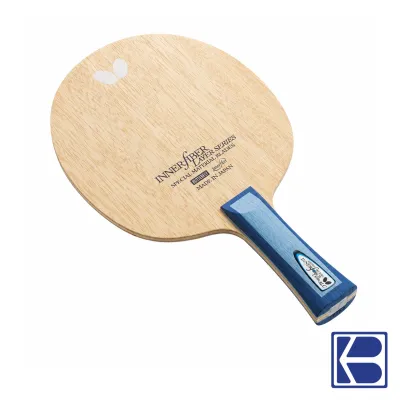
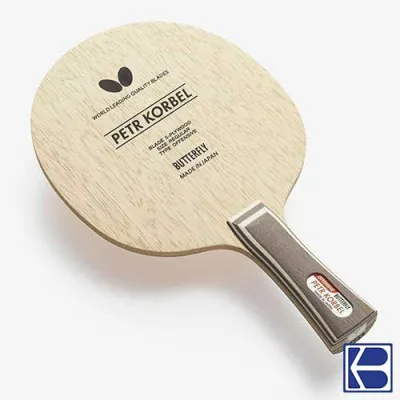
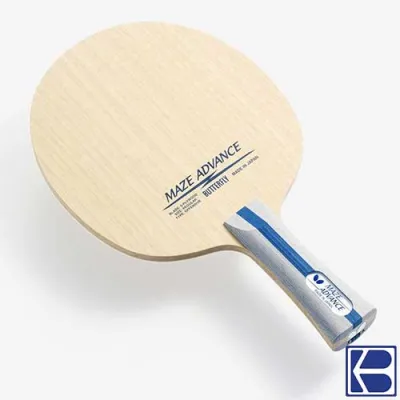
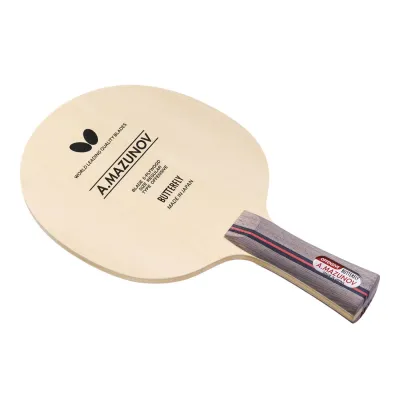
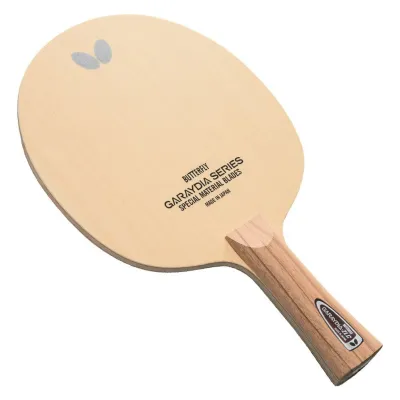
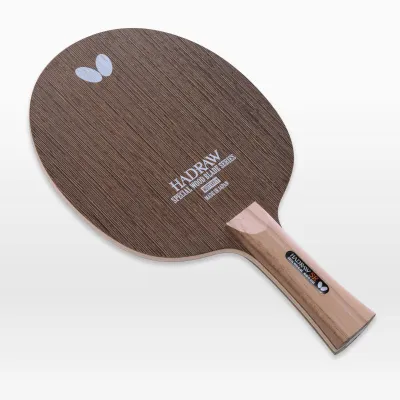
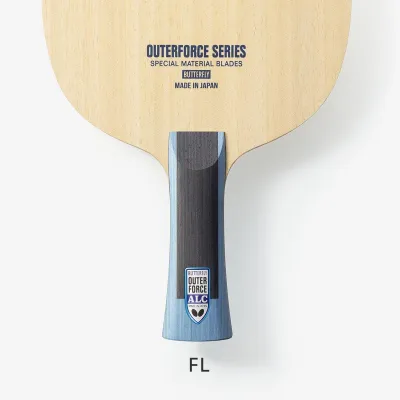
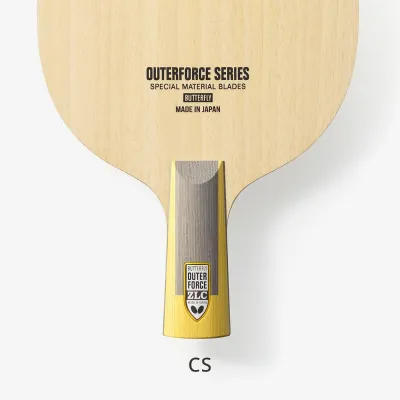
Prices are valid at publication and may change. Please refer to the product page for the latest price.
How to Match a Butterfly Blade to Your Playing Style
Every table tennis blade is a complex combination of natural wood and, in many modern designs, synthetic composite fibers. The specific arrangement of these materials dictates the blade’s speed, control, vibration feedback, and dwell time—the split second the ball remains in contact with the racket face during a stroke.
Pure wood blades, typically consisting of five or seven plies, are highly regarded for their organic feedback and linear power delivery. When you hit the ball softly, a wood blade responds with low speed; when you hit harder, the speed increases proportionally. This predictable behavior makes pure wood excellent for developing precise ball feel and mastering foundational strokes. The vibration feedback from wood allows you to feel exactly where the ball made contact on the racket face, helping you correct errors in real time.
Composite blades introduce synthetic layers such as Arylate-Carbon (ALC) or Zylon-Carbon (ZLC) to alter these playing characteristics. Arylate-Carbon dampens vibrations, providing a softer touch and a highly forgiving sweet spot, which is ideal for players who rely on heavy spin and controlled loops. Zylon-Carbon is significantly stiffer and more elastic, resulting in a massive sweet spot, minimal vibration, and explosive rebound speed. This construction is designed for direct power hitters who want to dominate points with sheer velocity.
Your tactical style dictates the level of stiffness and flexibility you need. Offensive players who play close to the table generally prefer stiffer blades that offer immediate rebound and high speed to pressure opponents. All-round players require a balance of flexibility for spin generation and stability for blocking. Defensive players, such as choppers, rely on highly flexible, softer blades that maximize dwell time, allowing them to absorb the energy of incoming loops and return heavy backspin.
Finally, a blade must never be selected in isolation; it must complement your chosen rubbers and physical swing speed. Paired with hard-sponge rubbers, an ultra-stiff carbon blade can feel uncontrollable and stiff, whereas a highly flexible wood blade might lack the finishing power required for mid-distance rallies. Investing in the most expensive professional-grade carbon blade will not automatically improve your game if your physical mechanics are not yet developed enough to control its speed.
Best Butterfly Series for Offensive and Aggressive Play
For attackers who prioritize high-speed loops, aggressive counter-attacks, and fast transitions, Butterfly offers some of the most famous offensive blade series in table tennis history. These series are engineered to maximize energy transfer while maintaining the necessary precision for modern offensive play.

Viscaria Series
The Viscaria is arguably the most famous carbon blade in the world, serving as the blueprint for modern offensive table tennis. It features an outer-carbon construction, placing Arylate-Carbon directly underneath the outer Koto wood plies. This design provides an immediate, crisp rebound on high-impact shots, while the Arylate fibers absorb harsh vibrations, preserving an exceptional level of feel and dwell time.
The Viscaria excels in close-to-the-table counter-looping, rapid backhand banana flicks, and quick transition play. Because the carbon layer is close to the surface, the blade provides consistent speed even on off-center hits. However, players must verify the weight of the specific blade before purchase, as Viscaria models typically range from 85 to 90 grams. Players should ensure their physical strength and wrist mobility can support this weight when paired with heavy, modern offensive rubbers.
Timo Boll Series
Developed in close collaboration with the German table tennis legend, the Timo Boll series is optimized for high-precision, heavy-spin looping from both close and mid-distance. The flagship Timo Boll ALC shares a similar structural composition to the Viscaria but features a slightly different head shape and handle ergonomics, resulting in a slightly crisper, more direct feedback loop.
Within this series, Butterfly offers several composite variations to match different power outputs. The Timo Boll ZLC utilizes stiff Zylon-Carbon to provide incredible speed and a high-trajectory arc, making it highly effective for players who loop from mid-distance. For players seeking a more controlled entry into composite blades, the Timo Boll CAF incorporates Control Assist Fiber, an organic material that delivers a softer feel and a more forgiving rebound. Always check the manufacturer’s material label to align the composite type with your exact physical control requirements.
Best Butterfly Series for All-Round and Developing Play
Intermediate, developing, and versatile players require equipment that assists in technique development rather than overwhelming them with excessive speed. Butterfly offers classic series designed to provide maximum control, high feedback, and a balanced speed profile.
Primorac Series
The Primorac is a legendary five-ply pure wood blade that has served as the gold standard for developing players for decades. Constructed primarily with African mahogany and Ayous wood plies, it is highly forgiving and prioritizes ball feel over raw velocity.
Because there are no synthetic carbon layers to artificially accelerate the ball, the Primorac forces you to develop proper stroke mechanics, body rotation, and paddle acceleration. The ball will only go as fast as your physical swing, which is essential for building consistent muscle memory and mastering short-game touch. It is an exceptional choice for beginners and intermediate all-round players who focus on placement, consistency, and controlled spin variations.
Innerforce Series
The Innerforce series is designed specifically for players transitioning from pure wood to composite blades. It features Butterfly’s proprietary “inner fiber” construction, where the carbon layers (such as ALC or ZLC) are placed directly adjacent to the center core wood ply, rather than directly beneath the outer veneer.
This unique architecture means that on soft touches, such as serves, short pushes, and passive blocks, the blade behaves like a pure wood blade, offering high control and a soft, damp feel. However, when you execute a powerful loop or drive, your stroke engages the deeper layers of the blade, activating the carbon to provide explosive speed. The Innerforce Layer ALC is highly recommended for intermediate players who want the safety of wood in the short game but need the extra power of carbon for mid-distance rallies.
Best Butterfly Series for Defensive and Control Play
Defensive table tennis, including classic chopping, active blocking, and modern defensive counter-attacks, demands specialized blade characteristics. Players in this category require maximum dwell time, high vibration absorption, and extreme precision to control fast incoming loops.
Defensive blades, such as those in the Hadraw series or specialized Butterfly Defensive models, typically utilize five-ply pure wood structures. These blades often incorporate softer wood species, such as willow or soft pine, which act as natural shock absorbers. The flexible nature of these wood plies allows the blade to bend slightly upon impact, cushioning the ball and maximizing the contact time.
This extended dwell time is essential for generating heavy backspin on defensive chops and executing precise drop shots. By absorbing the kinetic energy of an opponent’s aggressive loop, a defensive blade allows you to return the ball low over the net with high consistency. Stiff carbon blades are generally unsuitable for this style of play, as their quick rebound makes it incredibly difficult to control heavy incoming spin.
Before purchasing a defensive blade, always verify the thickness and head size specifications on the manufacturer’s label. Defensive blades often feature an oversized head compared to standard offensive models. While the larger surface area increases the sweet spot and provides better defensive coverage, it also increases air resistance and makes the racket head-heavy once defensive rubbers are applied. Ensuring your wrist strength can handle this balance is crucial for avoiding repetitive strain injuries.
Quick Comparison of Key Butterfly Blade Series
To help you narrow down your choices, the following table summarizes the primary characteristics, material compositions, and target player profiles of the main Butterfly blade series. Use this comparison as a starting point to align with your personal playing style.
| Series Name | Primary Playing Style | Typical Composition | Key Characteristic | Ideal Skill Level |
|---|---|---|---|---|
| Viscaria | Offensive / Fast Attack | Outer Arylate-Carbon (ALC) | High speed, crisp feel, excellent counter-looping | Advanced to Professional |
| Timo Boll | Offensive / Mid-Distance | ALC, ZLC, or CAF Carbon | High-arc spin, precision placement, crisp feedback | Intermediate to Professional |
| Innerforce | All-Round / Offensive | Inner Carbon (ALC or ZLC) | Wood feel on soft shots, carbon power on hard hits | Intermediate to Advanced |
| Primorac | All-Round / Developing | 5-Ply Pure Wood | Exceptional control, high feedback, forgiving | Beginner to Intermediate |
| Hadraw / Defensive | Defensive / Chopping | 5-Ply Soft Pure Wood | Maximum vibration dampening, extreme dwell time | Intermediate to Advanced |
Note: This table represents standard series characteristics. Always cross-reference these guidelines with your specific rubber selection, as a very hard or very soft rubber will significantly alter the final playing feel of your racket.
What to Verify Before Buying Your Blade
Once you have identified the right series for your playing style, there are several practical physical specifications you must verify to ensure the blade is comfortable and safe to use over long training sessions.
- Handle Shape: Butterfly blades are generally available in three handle shapes: Flared (FL), Straight (ST), and Anatomic (AN). Flared is the most popular, as it is wider at the base, preventing the racket from slipping out of your hand during high-speed swings. Straight handles allow for easy grip adjustments and are favored by defensive players who frequently flip their rackets to use different rubber types. Anatomic handles conform to the natural curves of the palm, providing a highly secure, locked-in feel.
- Weight and Thickness: Natural wood is organic and sensitive to environmental changes. In high-humidity climates like Singapore, wood can absorb ambient moisture, which slightly increases the blade's weight and dampens its speed. Always check the manufacturer's listed weight range (typically between 80g and 90g for offensive blades). A variance of just 3 to 4 grams can alter the balance of your racket, so storing your blade in a thermal-lined case with silica gel packets is highly recommended to maintain its original specifications.
- Total Racket Balance: Remember that the blade is only half of the equation. Modern offensive rubbers with thick, dense sponges can add substantial weight to your setup. A blade that feels perfectly balanced on its own can become head-heavy once rubbers and edge tape are applied. If you prefer a lighter overall setup to prevent wrist fatigue during long rallies, look for a blade on the lighter end of the series spectrum (around 82 to 85 grams) to offset the weight of your rubbers.
Frequently Asked Questions (FAQ)
Are Butterfly blades good for beginners?
Yes, but only if you select the correct series. While Butterfly is famous for high-end professional carbon blades, these advanced models are too fast and unforgiving for beginners. Instead, new players should look to the Primorac series or other pure wood five-ply blades. These models provide the necessary ball feedback and control required to learn proper stroke mechanics and build a solid technical foundation.
What is the difference between ALC and ZLC in Butterfly blades?
Arylate-Carbon (ALC) combines carbon fibers with shock-absorbing Arylate fibers, resulting in a softer feel, lower vibration, and excellent dwell time, making it highly suited for spin-oriented looping. Zylon-Carbon (ZLC) uses stiffer Zylon fibers alongside carbon, providing higher elasticity, faster rebound speed, and a larger sweet spot. ZLC is designed for direct, power-oriented attackers, while ALC is favored by players who prioritize spin and control. Always verify the composite type on the manufacturer’s product label to ensure it matches your tactical needs.
Community discussion
Share your experience or ask a question. Comments are reviewed before publication.