
The Butterfly Nakama series represents a popular line of pre-assembled table tennis rackets designed to bridge the gap between casual play and structured training. Selecting the right model requires a close look at its technical specifications, including blade construction, rubber properties, and handle ergonomics. By understanding how these components interact, you can determine whether a Nakama racket matches your current skill level, physical comfort, and developing playing style.
Blade Composition and Construction
The core of any table tennis racket is its blade, which dictates how the ball feels upon impact and how much energy transfers from your swing. The Butterfly Nakama series features several models, ranging from all-wood configurations to composite designs with carbon fiber layers. All-wood blades, typically consisting of five plies, offer high vibration feedback and a longer dwell time (the brief moment the ball remains on the racket). This feedback is essential for developing players who need to feel the ball to refine their stroke mechanics and control.
In contrast, Nakama models with composite carbon layers offer a stiffer construction. Carbon plies increase speed by reducing energy loss during impact, resulting in a larger sweet spot. However, this added stiffness reduces the vibration feedback transmitted to your hand, making fine control more challenging for beginners. When choosing a blade, verify whether the model is labeled with a speed or control bias to ensure it matches your current technical abilities.
Products mentioned in this guide

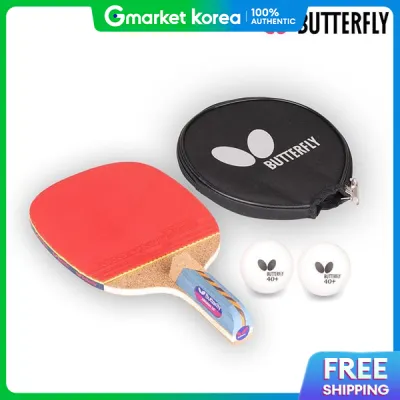
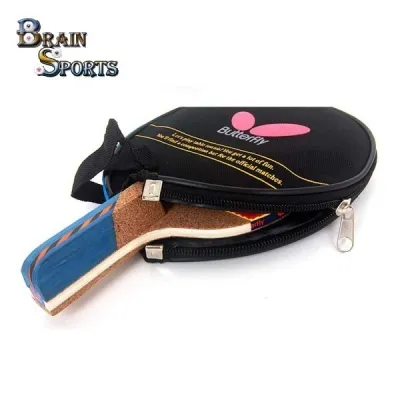
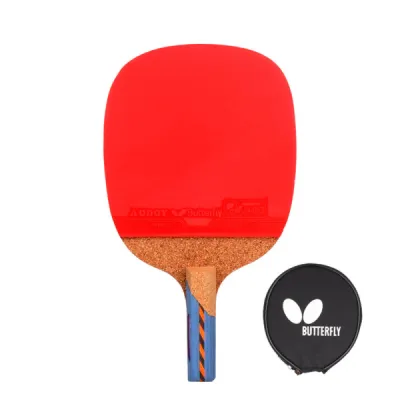

Prices are valid at publication and may change. Please refer to the product page for the latest price.
Rubber Specifications and Performance Characteristics
The rubbers and underlying sponges attached to the Nakama blade dictate how much spin and speed you can generate. Pre-assembled rackets in the Nakama line typically feature factory-applied Butterfly rubbers, such as the Wakaba or Flextra series, paired with varying sponge thicknesses. A thicker sponge, often around 1.8mm to 2.1mm, allows the ball to sink deeper into the racket, generating more speed and spin when you swing with force. A thinner sponge provides a more direct feel of the wood blade, offering greater control over short pushes and blocks but limiting your maximum offensive power.

The top sheet of the rubber also plays a critical role. Butterfly rubbers on the Nakama series are generally designed to be grippy rather than highly tacky. A grippy surface relies on mechanical friction to grip the ball during a stroke, which is highly effective for executing modern topspin loops and active blocks. Additionally, you should verify if the rubbers carry the International Table Tennis Federation (ITTF) logo printed on the rubber surface. If you plan to play in sanctioned local leagues or tournaments in Singapore, having an ITTF-approved rubber is a strict requirement.
Handle Shape, Weight, and Balance Dynamics
Ergonomics and physical comfort are vital to preventing wrist strain and maintaining quick reaction times during fast rallies. The Nakama series predominantly features a flared handle shape, which is wider at the base to prevent the racket from slipping out of your hand during vigorous swings. This shape is highly popular among shakehand grip players because it allows for a relaxed grip while maintaining stability. When holding the racket, ensure that the handle fits comfortably in your palm without forcing your wrist into an unnatural angle.
Racket weight and balance are equally important physical dimensions to verify. Pre-assembled rackets vary in weight depending on the density of the wood plies and the thickness of the rubbers. A heavier racket can generate more power behind your shots, but it also increases the physical demand on your forearm and can slow down your transition from forehand to backhand. Conversely, a lighter racket enhances maneuverability and quick reactions at the table. Pay attention to the balance point of the racket; a head-heavy balance favors offensive looping, while a handle-heavy balance provides a lighter feel and quicker response times for close-to-the-table blocking.
Evaluating the Nakama for Your Skill Level and Playstyle
To decide if a Butterfly Nakama racket is the right choice, you must match its performance profile with your current developmental stage. For beginners and early intermediate players, a pre-assembled racket like the Nakama offers a reliable, predictable response that helps build muscle memory. The factory-matched blade and rubber combination ensures you do not have to navigate the complex process of buying separate components and gluing them yourself. It provides a balanced platform to master basic strokes, such as the drive, push, and serve, without the overwhelming speed of professional-grade equipment.
However, every pre-assembled racket has a technical ceiling. As your strokes become faster and your opponents generate heavier spin, you may find that the factory rubbers lack the extreme spin potential or speed required for advanced play. You will know you have outgrown your Nakama when you can consistently execute full strokes but find the ball lacks the depth or spin necessary to win points, or when the factory rubbers begin to lose their grip after extensive use. At that stage, transitioning to a custom blade and rubber combination becomes the logical next step in your progression.
Frequently Asked Questions (FAQ)
Is the Butterfly Nakama suitable for competitive tournaments?
Yes, provided the specific Nakama model you choose features rubbers with the official ITTF logo printed on the top sheet. Most rackets in the Nakama series use ITTF-approved rubbers, making them legal for sanctioned competitive play. Always inspect the base of the rubber sheet for the ITTF emblem before entering a tournament to ensure compliance with local and international competition rules.
Can I replace the rubbers on the Nakama later?
While it is technically possible to peel off the factory-applied rubbers, the Nakama is designed as a pre-assembled racket, meaning the industrial glue used at the factory can be difficult to remove without damaging the wooden plies of the blade. If you wish to upgrade your rubbers, it is generally recommended to purchase a dedicated custom blade designed for regular rubber replacement, rather than attempting to scrape and reglue rubbers on a pre-assembled frame.
How should I maintain the Nakama to preserve its grip and blade integrity?
To maintain the grip of your rubbers, gently wipe the surface with a damp, lint-free cloth or a specialized table tennis rubber cleaner after each playing session to remove dust, sweat, and oils. Allow the surface to air dry completely before applying protective plastic sheets and storing the racket in a padded case. Keep the racket away from extreme heat, direct sunlight, and high humidity to protect the wooden blade from warping and to prevent the rubber from degrading prematurely.
Community discussion
Share your experience or ask a question. Comments are reviewed before publication.