
The choice between the Butterfly Viscaria and the Timo Boll ALC is one of the most debated decisions among competitive table tennis players. Both blades utilize Butterfly’s signature Arylate-Carbon (ALC) composite technology, which has set the standard for modern offensive play. However, despite sharing a similar ply construction on paper, these two blades offer distinct playing characteristics that cater to different physical mechanics, tactical preferences, and stroke styles. Choosing the wrong one can lead to a mismatch in your game, resulting in lost control or a lack of power during critical rallies.
To make an informed purchase, you must look beyond the marketing hype and understand how subtle differences in head geometry, handle design, and weight distribution alter the physical feedback of each blade. In humid playing environments, such as community sports halls in Singapore, these physical differences become even more pronounced. High humidity can make the ball feel heavy and the rubber surface slippery, making the crisp, reliable feedback of an outer-carbon blade highly desirable. This guide provides a detailed, objective comparison of the Viscaria and Timo Boll ALC to help you determine which setup will elevate your performance on the table.
Core Structural and Feel Differences
To understand why these two blades perform differently, we must first examine their structural composition. Both the Viscaria and the Timo Boll ALC are classified as outer-carbon blades, meaning the composite ALC layer is placed directly beneath the outer wood ply. This outer ply is made of Koto wood, which is known for its crisp, hard feel and rapid energy transfer. Beneath the Koto ply lies the Arylate-Carbon weave, followed by a thin Ayous medial ply, and a thick Kiri wood core. This 5+2 structure is designed to maximize speed and enlarge the sweet spot while maintaining a relatively lightweight profile.
Products mentioned in this guide
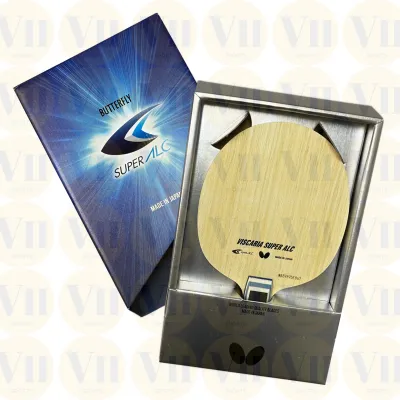
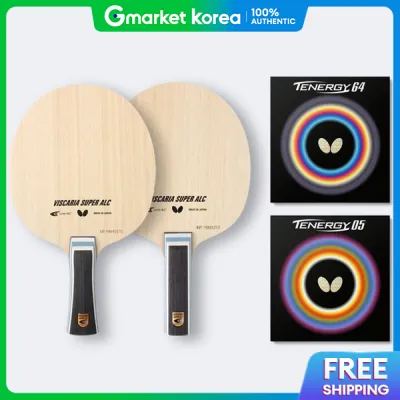
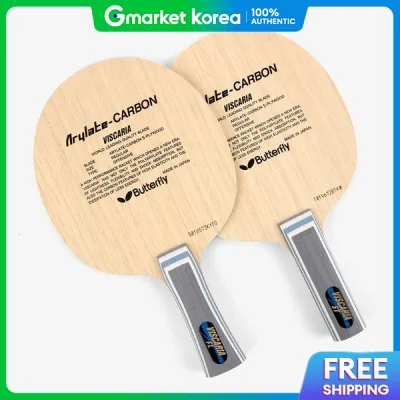
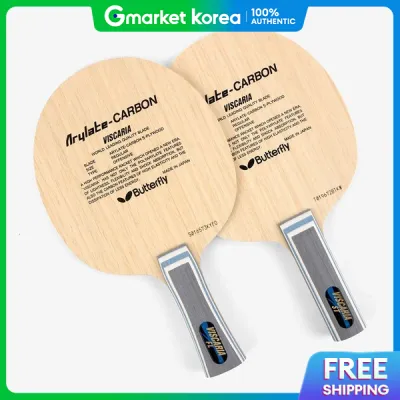
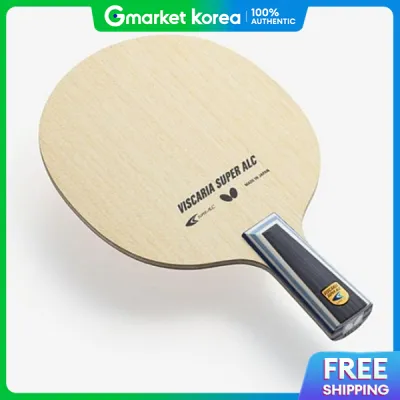
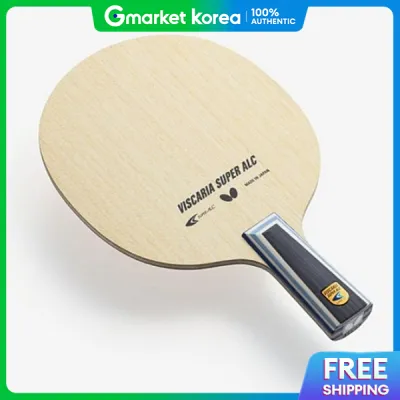
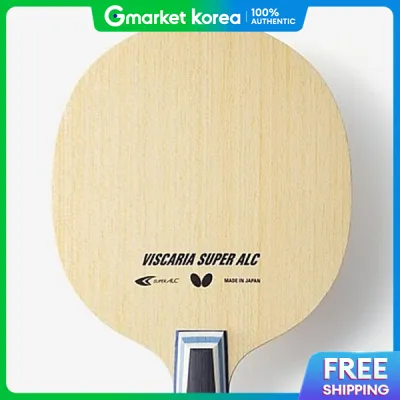
Prices are valid at publication and may change. Please refer to the product page for the latest price.
However, the physical execution of this structure differs in ways that significantly affect how the blade vibrates in your hand. The Viscaria features a slightly wider head shape and a thicker, more rounded handle profile. This design shifts the overall balance point of the blade closer to the handle, resulting in a lower swing weight. When you swing the Viscaria, it feels highly maneuverable and balanced, allowing for rapid recovery and quick transitions between forehand and backhand strokes. The vibration feedback is slightly dampened by the wider handle, giving the blade a softer, more forgiving feel on touch shots.
In contrast, the Timo Boll ALC is designed with a slightly more compact head shape and a slimmer, more angular handle. This structural choice shifts the center of gravity slightly toward the tip of the blade, increasing its head-heavy bias. This head-heavy balance provides more leverage during high-speed swings, allowing you to generate more rotational force and whip. However, it also means the blade feels slightly stiffer and more direct. The slimmer handle transmits more raw vibration to your palm, offering immediate feedback that tells you exactly where the ball made contact on the racket face. This direct feedback is highly valued by players who rely on precise timing, but it can feel harsh to those accustomed to softer, all-wood setups.
Matching the Blade to Your Tactical Style
Your tactical approach to the game should be the primary driver behind your blade selection. The Viscaria is widely regarded as the ultimate weapon for close-to-the-table counter-attackers. Its balanced weight distribution and slightly longer dwell time make it exceptionally well-suited for rapid-fire blocking and active counter-driving. If your strategy relies on taking the ball early on the rise, using your opponent’s speed against them, and dominating rallies with quick backhand banana flicks, the Viscaria provides the stability and control you need. The wider handle allows for a relaxed grip, which is essential for executing loose-wristed backhand openings and maintaining a neutral racket angle during fast transitions.

The Timo Boll ALC, on the other hand, is built for players who dominate with powerful, spin-heavy forehand loops from mid-distance. The head-heavy balance of the blade assists in generating maximum angular velocity, which translates into higher spin rates and a more aggressive ball trajectory. If your game involves stepping back from the table to engage in counter-looping duels, the Timo Boll ALC offers the extra propulsion needed to carry the ball deep into the opponent’s court. The slimmer handle allows your fingers to wrap more tightly around the grip, facilitating a quick wrist snap at the moment of contact to brush the ball aggressively.
Rubber pairing is another critical factor that interacts with each blade’s inherent characteristics. Because both blades are fast and stiff, pairing them with the wrong rubber can make your setup uncontrollable. If you choose the Viscaria, pairing it with hard, tacky Chinese-style rubbers on the forehand and a medium-hard tensor rubber on the backhand is a highly popular combination. The Viscaria’s slight flex helps activate the hard sponge of tacky rubbers, allowing for devastating spin on brush loops without sacrificing close-to-table control. If you opt for the Timo Boll ALC, you must be cautious with rubber hardness. Pairing a stiff blade with extremely hard tensor rubbers can result in an incredibly low dwell time, making short pushes and service returns highly difficult. Opting for medium-soft to medium-hard rubbers on the Timo Boll ALC can help restore the necessary touch and control for short play, especially in humid conditions where ball slippage is a concern.
Skill Level and Power Requirements
Before purchasing either of these high-performance blades, you must honestly assess your current skill level and physical power. Outer-carbon blades are not designed for beginners or lower-intermediate players. They require a highly developed stroke technique and consistent footwork to be used effectively.
To unlock the performance benefits of the ALC layer, you must strike the ball with enough force to compress the outer Koto wood ply and engage the composite fiber beneath. This is known as the “activation threshold.” If your strokes are passive, short, or rely solely on pushing the racket forward without proper body rotation, the blade will feel stiff, dead, and lacking in dwell time. This often leads to unforced errors, as the ball will bounce off the racket before you can guide its trajectory.
Furthermore, while the outer-carbon construction provides a larger sweet spot compared to pure wood blades, it is far less forgiving of poor technique. If you hit the ball off-center with an all-wood blade, the natural flex of the wood absorbs some of the energy, often keeping the ball on the table. With the Viscaria or Timo Boll ALC, an off-center hit will still propel the ball forward with significant speed, but without the correct spin or angle, the ball is highly likely to fly off the table.
If you are transitioning from a 5-ply all-wood blade or a slower inner-carbon setup, you should expect an adjustment period of several weeks. You will need to focus on shortening your stroke path, closing your racket angle slightly to compensate for the higher launch angle, and ensuring that every stroke is executed with active wrist acceleration. If you find yourself holding back your swings out of fear of the ball going long, it is a clear sign that the blade is too fast for your current skill level.
Pre-Purchase Specification Checklist
When you are ready to purchase, there are several physical specifications and quality checks you should perform to ensure you receive a genuine product that matches your preferences.
First, carefully select your handle shape. The Flared (FL) handle is the most popular choice, but the dimensions differ significantly between the two models. The Viscaria FL handle is relatively wide and flat, which fills the hand and prevents the racket from twisting during heavy blocks. The Timo Boll ALC FL handle is slimmer and has a more pronounced flare at the bottom, which is ideal for players with smaller hands or those who prefer a looser grip for active wrist movement. If you prefer a consistent grip thickness from top to bottom, the Straight (ST) handle is an excellent alternative that allows you to easily adjust your grip during play.
Second, verify the weight of the blade before purchasing. Butterfly blades can vary in weight from approximately 82 grams to over 92 grams due to natural variations in wood density. A lighter blade (83-86g) offers faster swing speeds and reduces wrist fatigue, but it may feel slightly hollow and vibrate more. A heavier blade (88-92g) provides more power, stability against heavy incoming balls, and a more solid feel, but it requires greater forearm strength. If possible, ask your local retailer to weigh several blades of the same model so you can select one that matches your preferred balance.
Finally, protect yourself against counterfeit products. Because of their high demand, both the Viscaria and Timo Boll ALC are frequently counterfeited. Always purchase from authorized local dealers or reputable specialty table tennis shops in Singapore. When you receive the blade, check for the following authenticity markers:
- A high-quality metal tag embedded perfectly flat into the bottom of the handle.
- A crisp, laser-engraved serial code on the face of the blade.
- A holographic security sticker on the original packaging.
- Clean, splinter-free wood plies along the edge of the blade, with a consistent thickness of approximately 5.7mm to 5.8mm.
You can verify the laser-engraved serial code on Butterfly’s official registration portal to confirm its authenticity before applying any glue or rubbers.
Decision Framework: Which Blade Should You Choose?
To help you make your final decision, use the following conditional framework to match your playing style and physical preferences to the correct blade:
Choose the Butterfly Viscaria if:
- Your tactical game is centered on close-to-the-table counter-attacks, rapid blocking, and quick transitions.
- You rely heavily on your backhand wing to open up rallies and dominate fast-paced exchanges.
- You prefer a fuller, wider flared handle that stabilizes your wrist and provides a secure grip.
- You plan to pair the blade with hard, tacky rubbers or medium-hard tensor rubbers to maximize control.
Choose the Timo Boll ALC if:
- Your primary weapon is a powerful, spin-heavy forehand loop executed from mid-distance.
- You want a slightly stiffer, crisper feel on contact with immediate vibration feedback.
- You have smaller hands or prefer a slimmer handle that allows for maximum wrist mobility and snap.
- You are willing to invest time in adjusting your touch play to accommodate a more direct rebound.
Avoid both blades if:
- You are a beginner or lower-intermediate player still developing basic stroke mechanics and footwork. A 5-ply all-wood blade will serve you much better by providing the necessary feedback and forgiveness.
- You strictly prefer a soft, flexible blade with maximum dwell time for defensive play or slow, high-spin opening loops.
Frequently Asked Questions (FAQ)
Is the Butterfly Viscaria too fast for an intermediate player?
The Butterfly Viscaria can be challenging for intermediate players, especially if paired with thick, high-speed rubbers. If your basic strokes are not yet consistent, the blade’s speed and stiffness can cause you to shorten your swings out of fear of hitting the ball long, which hinders your technical development. However, if you are an intermediate player transitioning to carbon, you can manage the Viscaria’s speed by selecting thinner rubber sponges (e.g., 1.9mm or 2.0mm) or choosing softer, more controllable rubbers. If you find yourself struggling to keep the ball on the table during simple drills, it is highly recommended to downgrade to a slower, more forgiving all-wood or inner-carbon blade.
Can I use the same rubbers on both blades?
Yes, you can physically use the same rubbers on both blades, but they will feel and perform differently due to the structural differences of each blade. Because the Timo Boll ALC is slightly stiffer and has a more head-heavy balance, a hard-sponge rubber will feel even harder and faster, requiring precise timing and a complete stroke to control. The same rubber on the Viscaria will feel slightly softer and more forgiving due to the blade’s minor flex and handle-biased balance. If you are transitioning from one blade to the other, you may need to adjust your rubber’s sponge hardness by a few degrees—such as opting for a slightly softer sponge on the Timo Boll ALC—to maintain your preferred level of touch and control.
Community discussion
Share your experience or ask a question. Comments are reviewed before publication.