
Quick Answer: Matching Brands to Playstyles
Choosing the right pingpong paddle depends on your playing style, skill level, and how much effort you want to put into maintaining your equipment. Butterfly, Stiga, and DHS represent three distinct philosophies in table tennis, each catering to different tactical preferences on the table.
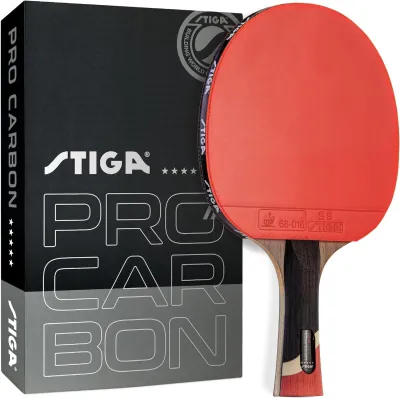
Butterfly is the benchmark for premium precision and custom setups, favored by players who want highly consistent, high-technology gear. Stiga focuses on classic wood craftsmanship, offering excellent speed and power, making it a go-to for both traditional offensive players and beginners seeking reliable pre-assembled rackets. DHS (Double Happiness) is the undisputed king of spin and tackiness, utilizing sticky top-sheets that excel in aggressive loop-drives, though they require precise physical technique and regular upkeep.
If you are a beginner, a pre-assembled racket from Stiga or Butterfly offers an easy entry point. Intermediate and advanced players will benefit more from custom setups where they select the blade and rubbers separately to match their specific tactical needs.
Products mentioned in this guide
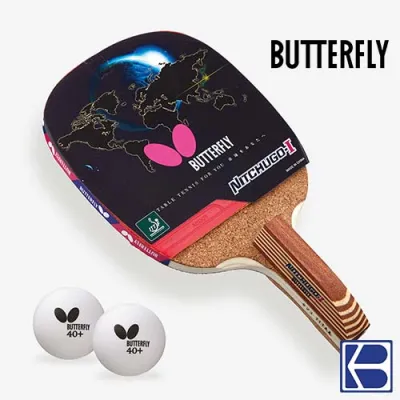
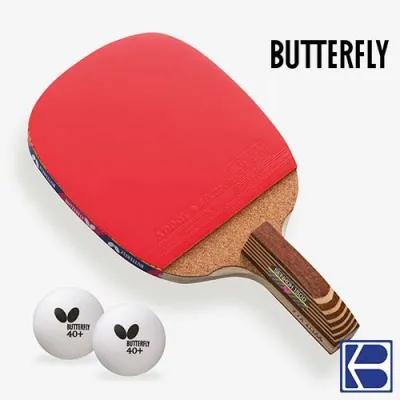
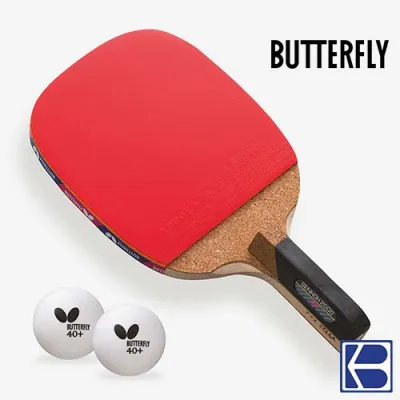
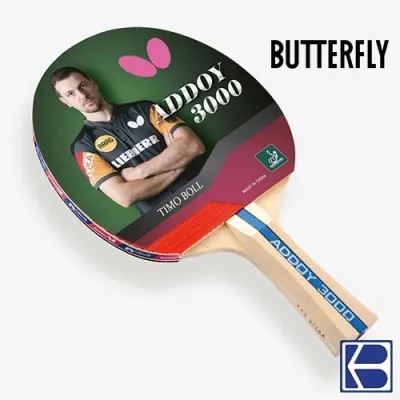
Prices are valid at publication and may change. Please refer to the product page for the latest price.
Brand Characteristics and Target Player Profiles
Butterfly: Precision, Control, and Customization
Butterfly has built its reputation on high-end engineering and consistent quality control. Their design philosophy centers on giving players precise feedback. When the ball strikes the paddle, the vibrations are engineered to tell you exactly where contact was made, allowing for micro-adjustments in your stroke.

While they offer entry-level pre-assembled paddles, their true strength lies in their custom blades and rubbers. Many intermediate and advanced players choose Butterfly when transitioning to custom setups because of the predictable trajectory and high manufacturing standards. The brand is particularly famous for incorporating synthetic fibers like Arylate-Carbon, which is designed to absorb vibration while maintaining a large sweet spot.
When selecting a Butterfly blade, players should carefully inspect the manufacturer’s specification sheet. Look at the ply composition—all-wood blades offer superior control and feel, while carbon-reinforced blades provide a larger sweet spot and higher speed. This brand is best suited for players who value technical precision, structured training, and consistent ball placement.
Stiga: Speed, Power, and Accessible Performance
Stiga, a Swedish heritage brand, is synonymous with raw power and classic wood-processing technology. Their blades are designed to maximize energy transfer, allowing offensive players to generate high-velocity shots from mid-distance. Stiga is highly popular among players who prefer a direct, aggressive style of play without sacrificing the natural feel of wood.
Stiga’s manufacturing often highlights specialized wood treatments, such as heat-treating the wood plies to increase stability without adding weight. This appeals to players who love the organic, crisp sound of a pure wood blade. The brand is also a dominant force in the pre-assembled market, offering ready-to-play rackets that are widely available in local sports shops.
Before purchasing, check the product label for the sponge thickness and pimple structure. A thicker sponge (typically 2.0mm or more) increases speed but reduces control, which is ideal for offensive players but challenging for defensive beginners. Stiga is an excellent choice for players who want a fast, powerful game and prefer a reliable, high-performance racket straight out of the box.
DHS: Spin, Tackiness, and the Chinese Playstyle
DHS (Double Happiness) is deeply rooted in the dominant Chinese style of play, which prioritizes heavy topspin and close-to-the-table counter-attacks. Unlike European rubbers that rely on mechanical grip—where the ball sinks into the rubber and sponge—DHS is famous for its tacky (sticky) top-sheets.
This stickiness allows players to grip the ball intensely, producing extreme spin on serves and loops. However, this style requires a physical, forward-brushing stroke. If your technique is passive, the ball may die in the sponge and fail to clear the net. DHS’s hard Chinese sponges act as a geared system: at low swing speeds, the ball doesn’t bounce much, giving excellent control for short push shots, while at high swing speeds, the sponge fully compresses to release massive speed and spin.
Additionally, the humid climate of Singapore presents a unique challenge for DHS rubbers. High humidity can cause moisture to condense on the sticky surface, temporarily neutralizing its tackiness. Players must be prepared to clean and dry their paddles frequently during play. DHS is best suited for spin-oriented players who are willing to execute active, physical strokes and commit to regular rubber maintenance.
Key Comparison Dimensions for Your Decision
To move beyond brand names, you must understand the technical specifications that define how a pingpong paddle performs. Comparing these dimensions will help you find the right balance for your game.
- Blade Composition: The core of any paddle is its blade, usually made of multiple wood plies, sometimes reinforced with carbon fiber. Wood plies (typically 5 or 7 layers) offer a softer feel and longer "dwell time"—the fraction of a second the ball remains on the paddle. Carbon fiber layers stiffen the blade, reducing dwell time but dramatically increasing speed and expanding the sweet spot.
- Rubber Surface: Rubbers are categorized as either tacky or grippy. Tacky rubbers (characteristic of DHS) physically stick to the ball, allowing for devastating spin at slow speeds but requiring active physical strokes. Grippy rubbers (common in Butterfly and Stiga) use friction and sponge elasticity to grip the ball, offering a more forgiving response and higher speed on passive blocks.
- Sponge Thickness and Hardness: The sponge beneath the rubber acts as the engine. Harder sponges require faster swing speeds to compress the sponge and unleash power, making them suitable for advanced players. Softer sponges compress easily, offering better control and a higher arc, which helps intermediate players keep the ball on the table. Thickness also matters: thinner sponges (under 1.8mm) offer maximum control, while thicker sponges (2.0mm to max) prioritize speed.
- Pre-assembled vs. Custom: Beginners should generally start with a pre-assembled paddle. These are cost-effective, balanced, and ready to use. However, as your strokes become more consistent, upgrading to a custom setup—where you buy a blade and glue on separate rubbers—allows you to tailor the paddle to your evolving style. Custom setups also allow you to replace worn-out rubbers without buying a new blade, saving money in the long run.
Decision Framework: Which Brand Should You Choose?
To finalize your decision, assess your current skill level, physical playstyle, and budget. Use this checklist to guide your purchase:
- Choose Butterfly if: You want premium, highly consistent equipment, prioritize precise ball placement, and are ready to invest in a custom setup. It is ideal for players who value technical precision and structured training.
- Choose Stiga if: You favor an aggressive, speed-oriented game, prefer the natural feel of wood blades, or want a high-quality pre-assembled paddle that performs exceptionally well without customization.
- Choose DHS if: Your strategy revolves around heavy spin, aggressive loops, and serving variations. You must also be willing to execute active, physical strokes and commit to regular rubber maintenance.
- Verify first if: You are certain of your grip style. Table tennis paddles come in shakehand (long handle) and penhold (short handle) configurations. Additionally, check the handle shape—flared handles are wider at the bottom and popular for shakehand players, while straight handles allow for quick grip adjustments during play. Ensure the specifications match your physical comfort before ordering.
Where to Buy and What to Verify Before Purchase
Because table tennis equipment is highly specialized, purchasing from the right source is crucial to ensure you receive genuine products.
We recommend buying from official brand stores, authorized physical sporting goods retailers, or reputable specialized table tennis online shops. Be highly cautious of unusually low prices on general online marketplaces or ecommerce platforms. Counterfeit blades and rubbers are common, often mimicking the appearance of premium brands like Butterfly but using cheap, low-performance materials.
When your paddle or rubber arrives, inspect the packaging for authenticity holograms, serial numbers, and the ITTF approval code. Genuine rubbers will have a distinct, clean rubber smell and uniform sponge texture. Always verify the seller’s return policy and warranty terms before finalizing your purchase.
Frequently Asked Questions (FAQ)
Can I mix a Butterfly blade with DHS or Stiga rubbers?
Yes, table tennis blades and rubbers are fully cross-compatible across different brands. Many advanced players custom-build their rackets this way, often pairing a high-control Butterfly blade with a tacky DHS rubber on the forehand for spin, and a fast Stiga rubber on the backhand for speed.
The final performance of your racket will depend on how the stiffness of the blade interacts with the hardness of the rubber sponges. If you plan to play in sanctioned tournaments, always check the ITTF (International Table Tennis Federation) approval stamp on the rubber surface to ensure it is legal for competition.
How do I maintain the tackiness of DHS rubbers compared to European brands?
Tacky rubbers like DHS require diligent maintenance because their sticky surfaces act like magnets for dust, dirt, and sweat. After every playing session, gently wipe the rubber surface with a damp, lint-free sponge using distilled water or a specialized table tennis rubber cleaner.
Once the rubber air-dries completely, immediately apply a non-adhesive protective plastic sheet over the surface to seal out air and dust. Store the paddle in a padded racket case away from direct sunlight and extreme heat. Standard grippy rubbers from European brands like Stiga or Butterfly also benefit from regular cleaning, but they do not require protective sheets to maintain their grip, making them slightly lower maintenance.
Community discussion
Share your experience or ask a question. Comments are reviewed before publication.