
Resistance bands offer a highly efficient, space-saving alternative to bulky gym accessories and cable machines, making them particularly suited for the compact layout of modern Singapore apartments. While they cannot fully replicate the constant, heavy load of iron plates or the rigid structural support of a weightlifting belt, they excel at providing variable resistance that fits inside a single drawer. Deciding whether to transition fully to bands or maintain a hybrid setup depends on your specific training phase, joint health, and the structural realities of your living space.
Evaluating Space and Storage Constraints in Compact Homes
Living in a typical Housing & Development Board (HDB) flat or a private condominium requires careful spatial planning. Traditional strength equipment, such as power racks, cable crossovers, or adjustable benches, demands several square meters of dedicated floor space and sufficient ceiling clearance. These large metal frames are often impractical for multi-functional living areas where rooms must serve as home offices, bedrooms, and recreational spaces.
Resistance bands, by contrast, require virtually zero permanent floor space. A complete set of loop bands, tube bands with handles, and door anchors can be rolled up and stored in a small pouch, easily fitting into a wardrobe shelf or under a bed. This keeps your living area clutter-free and protects your home aesthetic when you are not exercising.
Products mentioned in this guide

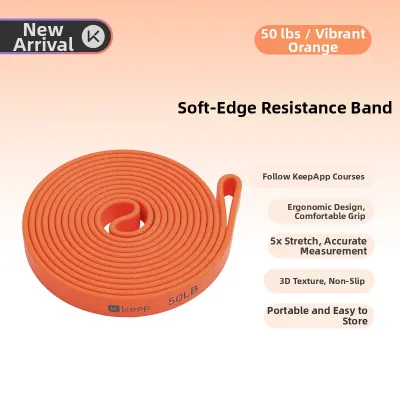
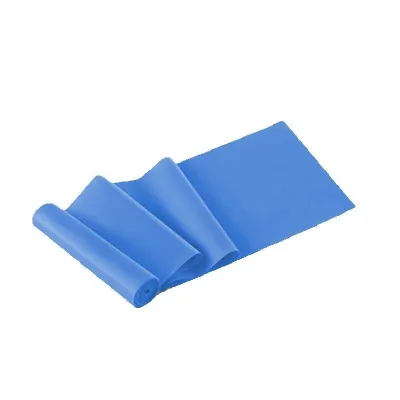
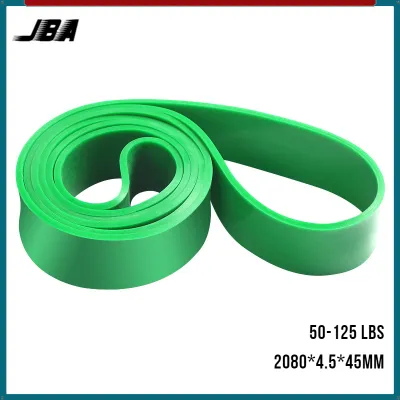
![[Ships From SG] Resistance Band Power Stretch Band Sports Fitness Recovery Warm-Up Muscle Strength Pull Up Gym Yoga](https://img.lazcdn.com/g/p/41f91314a296be8807bf5f66c3355de4.jpg_400x400q80.jpg_.webp)
![[RECEIVE IN 3 DAYS] Looped Resistance Exercise Yoga Bands](https://img.lazcdn.com/g/p/478c71011ff76f1dc2636e7c42012a8d.jpg_400x400q80.jpg_.webp)
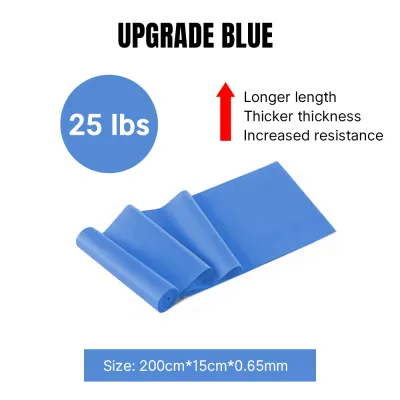
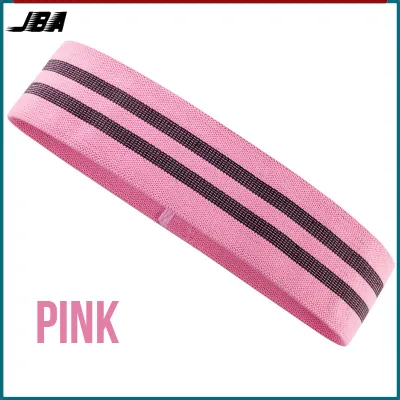
Prices are valid at publication and may change. Please refer to the product page for the latest price.
Furthermore, mounting fixed cable machines in modern apartments presents significant structural challenges. Many internal walls in newer HDB flats are non-structural partition walls made of lightweight concrete or drywall, which cannot safely support the dynamic pulling forces of a heavy cable system. Drilling into structural columns or household shelters is also strictly regulated. Resistance bands bypass these structural limitations entirely, allowing you to perform multi-angle pulling movements without drilling holes or risking structural damage to your home.
Matching Resistance Bands to Specific Training Goals
To determine if resistance bands can replace traditional gym accessories, you must understand how they deliver load. Bands utilize linear variable resistance, meaning the tension increases as the band stretches. This profile differs significantly from cable machines, which provide constant tension throughout the entire range of motion. While variable resistance is excellent for joint rehabilitation and matching the natural strength curve of many human movements, it makes tracking precise progressive overload more challenging than simply moving a pin on a weight stack.

For lifters focused on maximal strength or powerlifting, certain traditional accessories remain irreplaceable. A thick leather weightlifting belt, for example, provides a rigid wall for intra-abdominal pressure, offering spinal support during heavy squats or deadlifts that a flexible band cannot replicate. If your training goal involves moving loads near or exceeding your body weight, relying solely on bands may limit your absolute strength development.
The performance boundary of resistance bands becomes apparent when you attempt to overload compound movements. While you can stack multiple bands to increase tension, the setup can become unstable and awkward to hold, potentially compromising your form. For general fitness, muscle toning, and hypertrophy, bands are highly effective; however, if your goal is competitive strength sports, bands are best used as supplementary tools alongside traditional free weights and supportive gear.
Adapting Cable Machine Exercises for Limited Spaces
Many popular gym exercises that typically require a cable machine can be adapted for home workouts using resistance bands. Movements that involve horizontal or diagonal pulling, such as face pulls, chest flies, and standing rows, translate exceptionally well to band setups. These exercises rely on a stable anchor point rather than vertical gravity, making the band an ideal substitute in a confined room.
To transition these movements safely, you must establish a secure anchoring system. Always inspect the door and frame you plan to use; solid-core doors, such as main entrance doors or heavy timber bedroom doors, are far safer than hollow-core internal doors or sliding toilet doors. Place the door anchor on the hinge side of the door whenever possible, and ensure the door closes toward you so that your pulling force pulls the door shut against the frame rather than pulling it open.
Before starting any exercise, perform a quick safety check. Ensure the anchor is fully wedged and the door is latched shut, or ideally locked, to prevent family members from opening it mid-set. If you experience any sudden slipping of the anchor, notice the band creeping out of its attachment, or feel joint strain from an awkward pulling angle, stop the exercise immediately. Never anchor bands to lightweight furniture, clothing racks, or window grilles, as these structures can easily topple or break under tension.
Safety and Equipment Longevity Checks
Because resistance bands store potential energy under high tension, a sudden snap can cause painful welts or serious eye injuries. Regular maintenance and pre-workout inspections are essential safety protocols for home training. Before every session, run your fingers along the entire length of the band to check for micro-tears, small nicks, peeling edges, or discoloration. Even a tiny pinhole in a latex band can rapidly expand into a complete tear under load.
Singapore’s warm, humid climate can accelerate the degradation of natural latex and synthetic rubber. To maximize the lifespan of your bands, store them in a cool, dry place away from direct sunlight, which can dry out the material and cause it to become brittle. Avoid storing them in damp areas like balconies or bathrooms, and keep them away from sharp metal edges, zippers, or rough concrete surfaces that can scratch the surface.
If your bands become dirty or sweaty, clean them gently with a damp cloth and mild soap, then let them air dry completely indoors. Never use harsh chemical solvents or place them near direct heat sources. You should proactively retire and replace any band that shows visible thinning, loss of elasticity, permanent deformation, or sticky surfaces, as these are clear indicators that the material integrity has been compromised.
Building a Hybrid Setup for Compact Living
For many apartment dwellers, the most practical solution is not an all-or-nothing choice, but rather a smart hybrid setup. While resistance bands can replace cable machines and bulky dumbbells, they cannot replicate the utility of small, specialized accessories. Items like lifting straps, chalk, and wrist wraps take up almost no space but are invaluable for maintaining grip and joint stability during heavy pulling or pushing movements.
A well-planned hybrid home gym can easily fit into a single storage bin. You might combine a high-quality set of resistance bands with a pair of adjustable dumbbells and a set of gymnastic rings or a doorway pull-up bar. This combination allows you to perform heavy compound movements while using the bands for accessory work, isolation exercises, and mobility routines, all within a budget of a few hundred S$ and a footprint of less than one square meter.
To guide your training, use a simple decision matrix based on your current fitness phase. During high-volume hypertrophy or travel phases, a band-only routine keeps joint stress low and maximizes convenience. When transitioning to a strength-focused phase, integrate your compact free weights and supportive accessories to handle heavier absolute loads safely. This flexible approach ensures you can continue making progress without overcrowding your living space.
Frequently Asked Questions (FAQ)
Can resistance bands build muscle as effectively as heavy free weights?
Yes, resistance bands can effectively stimulate muscle hypertrophy by providing mechanical tension, which is the primary driver of muscle growth. However, because bands have a variable resistance profile—feeling lightest at the start of the movement and heaviest at full extension—you must adjust your training volume and focus on controlling the eccentric (lowering) phase of each repetition. For advanced lifters, combining bands with high-repetition sets or using them to add accommodating resistance to free weights is often necessary to achieve the same level of muscle fatigue as heavy iron plates.
Are door anchors safe for typical apartment doors?
Door anchors are generally safe for home use, provided you verify the structural integrity of both the door and the frame before anchoring. Solid wood doors and heavy-duty metal frames can easily withstand the pulling forces of standard resistance bands. Always position the anchor on the hinge side of the door, ensuring the door swings away from you so that the frame itself acts as a physical stop. Avoid using hollow-core doors, plastic frames, or sliding doors, as these materials can crack or warp under concentrated tension.
Community discussion
Share your experience or ask a question. Comments are reviewed before publication.