
Quick Answer: Which Kettlebell Type Should You Choose?
Selecting the right kettlebell depends on your specific training style, space constraints, and long-term fitness goals. Because the kettlebell is a highly dynamic tool that places unique demands on your grip, joints, and coordination, choosing the wrong type can hinder your technique or even lead to injury.
Use this direct decision framework to identify the best option for your home gym:
- Choose Cast Iron if: You focus on general strength, foundational movements (such as two-handed swings, deadlifts, and goblet squats), and want a highly durable, cost-effective tool that will last a lifetime.
- Choose Competition if: You practice technical, single-arm lifts (such as snatches, cleans, and jerks), require identical dimensions as you progress to heavier weights, and prioritize wrist comfort in the rack position.
- Choose Adjustable if: Your home gym space is severely limited, you want to utilize micro-loading for gradual progressive overload, and you prefer the cost-efficiency of buying one modular tool over a full rack of individual weights.
Before making your purchase, verify your training environment and safety limits. If you plan to perform high-impact dynamic movements or train on delicate flooring, you must assess the structural limits of the equipment and invest in appropriate floor protection. Kettlebell training requires strict adherence to proper form; if your grip begins to fail or your technique degrades, stop the exercise immediately to prevent injury.
Products mentioned in this guide
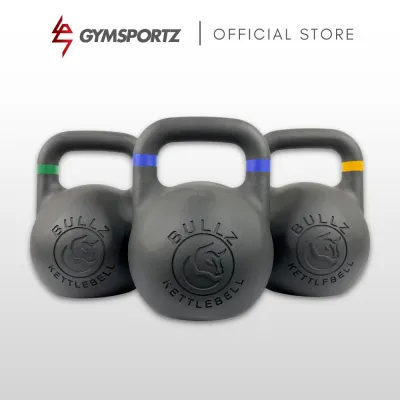
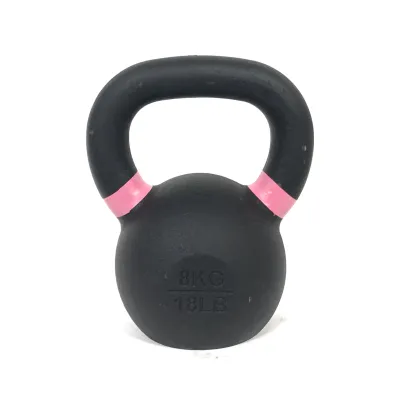
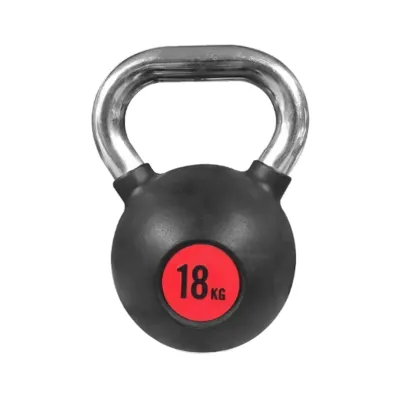
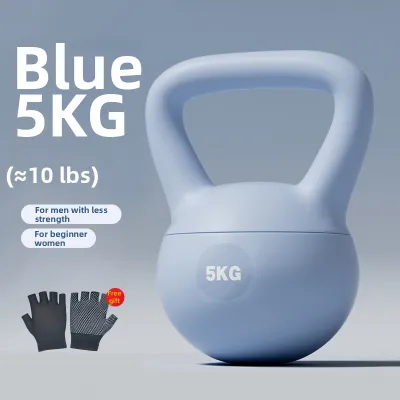
![[SG Ready Stock]Soft Kettlebell Women Fitness Home Software 2-12kg Kettlebell Squat Exercise Hip Strength Training Sand Kettlebell](https://img.lazcdn.com/g/p/3e3fbdc634aa1bfc744da1b89128eb82.jpg_400x400q80.jpg_.webp)
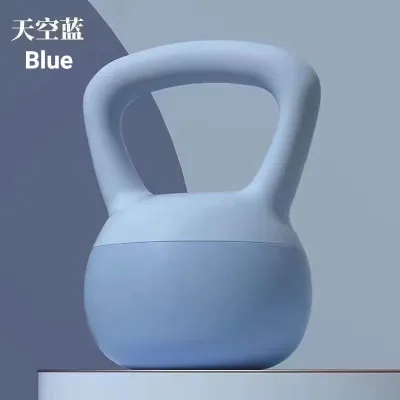
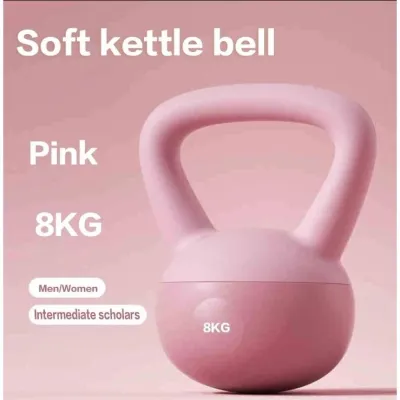
Prices are valid at publication and may change. Please refer to the product page for the latest price.
Core Differences: Cast Iron, Competition, and Adjustable Kettlebells
To understand which kettlebell fits your routine, you must first understand how they differ in construction, material, and design philosophy. These physical characteristics directly dictate how the bell moves through space and how it interacts with your hands and forearms.

| Feature | Cast Iron Kettlebells | Competition Kettlebells | Adjustable Kettlebells |
|---|---|---|---|
| Primary Material | Solid cast iron (single-piece) | Steel shell with solid or hollow core | Steel or plastic shell with internal iron plates |
| Handle Diameter | Increases with weight (approx. 30mm to 40mm) | Standardized (typically 33mm to 35mm) | Varies by brand (typically 33mm to 35mm) |
| Size Consistency | Grows larger as weight increases | Uniform size across all weight increments | Uniform size; internal weight changes |
| Weight Options | Fixed weights (usually 4kg increments) | Fixed weights (usually 2kg to 4kg increments) | Modular (variable increments from 1kg to 2kg) |
| Best Suited For | Two-handed swings, general strength, beginners | High-rep snatches, clean & jerks, sport style | Space-saving home gyms, progressive strength work |
Cast Iron Kettlebells
Traditional cast iron kettlebells are cast from a single pour of molten iron, creating a solid, incredibly robust piece of equipment. The defining characteristic of cast iron is that the physical dimensions of the bell scale with its weight. A lighter bell (such as an 8kg or 12kg) is physically small with a thinner handle, whereas a heavy bell (such as a 24kg or 32kg) is substantially larger with a much thicker grip. This scaling requires your hands and forearms to adapt to different structural geometries as you get stronger.
Competition Kettlebells
Competition kettlebells are designed for Girevoy Sport (kettlebell lifting competitions) and are engineered to strict international standards. Regardless of whether the bell weighs 8kg or 36kg, its external dimensions—including the bell diameter, height, and handle dimensions—remain completely identical. This standardization is achieved by using a hollow steel shell and adjusting the internal ballast. To differentiate weights quickly, competition bells are color-coded according to international standards (for example, yellow for 16kg, purple for 20kg, and green for 24kg).
Adjustable Kettlebells
Adjustable kettlebells are modular systems designed to consolidate an entire rack of weights into a single unit. They typically feature a standardized outer shell (often matching competition dimensions) that can be opened to add or remove internal steel or iron plates. These plates are secured using an internal locking screw, pin, or dial mechanism. This design allows you to adjust the weight in small, precise increments, making them highly versatile for home training where floor space is at a premium.
How Your Training Goals Dictate the Best Kettlebell
Your training style is the single most important factor when choosing a kettlebell. Different exercises interact with the shape, handle geometry, and center of mass of the bell in distinct ways.
General Strength, Power, and Basic Swings
If your routine centers on foundational, bilateral movements like heavy two-handed swings, goblet squats, deadlifts, and farmer’s carries, the traditional cast iron kettlebell is the ideal choice. The handle geometry of a cast iron bell is specifically designed with a wide, curved arch. This wide window allows you to comfortably place both hands side-by-side on the handle without pinching your fingers or forcing your shoulders into an unnatural, internally rotated position.
However, this design has distinct limitations when transitioning to single-arm, high-repetition exercises. As cast iron kettlebells increase in weight, the handle diameter thickens significantly. While a thicker handle is excellent for building raw grip strength, it can cause rapid forearm fatigue during high-volume training. Additionally, because the physical size of the bell changes with weight, the point where the bell rests against your forearm in the rack position will shift, which can lead to localized bruising or discomfort as you transition to heavier weights.
Technical Lifts, Snatches, and High-Rep Endurance
For those focusing on high-velocity, single-arm technical lifts like the snatch, clean, and jerk, the competition kettlebell is highly superior. Because a competition bell maintains the exact same physical dimensions regardless of weight, your lifting mechanics remain perfectly consistent. When you transition from a 16kg bell to a 20kg bell, you do not have to adjust your trajectory, timing, or insert angle; the bell will land in the exact same spot on your forearm every single time.
Furthermore, competition handles are narrower, flatter, and feature a boxier shape compared to cast iron. This design prevents your hand from sliding laterally inside the handle, reducing friction and minimizing the risk of tearing calluses during high-rep snatches. The flat, standardized surface of the steel bell also distributes the weight evenly across your forearm when held in the rack position, significantly reducing joint stress and pressure-point pain during long endurance sets.
Progressive Overload and Space-Constrained Workouts
If your primary goal is systematic muscle building and strength progression through micro-loading, the adjustable kettlebell is an exceptional tool. Traditional kettlebells typically force you to jump in 4kg increments, which can represent a massive 25% to 33% increase in load. An adjustable kettlebell allows you to make precise jumps of 1kg or 2kg, which is highly beneficial for upper-body movements like overhead presses and Turkish get-ups where large weight jumps often lead to plateauing or shoulder strain.
Despite this versatility, adjustable models present physical trade-offs. Because they consist of multiple internal components, the center of mass can shift slightly depending on how the internal plates are distributed and locked in place. This shifting can make the bell feel less balanced during fast, ballistic movements. Additionally, the mechanical nature of adjustable systems means they require careful handling; they are excellent for controlled strength work but are not suited for workouts where the bell might be dropped or subjected to extreme rotational forces.
Home Gym Setup: Space, Flooring, and Budget Considerations
Setting up a home gym requires balancing physical constraints against financial investment. In Singapore, where residential spaces like HDB flats and condominiums often have limited floor areas and shared walls, these environmental factors are critical.
Space Constraints
Storing a complete set of fixed-weight kettlebells requires a dedicated rack or a substantial amount of floor space. If you require a range of weights from 12kg to 24kg in 4kg increments, you will need to store four separate pieces of equipment. For space-constrained homes, a single adjustable kettlebell is highly efficient, occupying only the footprint of one standard competition bell while replacing up to ten individual weights. This allows you to easily tuck your equipment away in a closet or corner when not in use.
Flooring and Noise Mitigation
Solid steel competition bells and heavy cast iron kettlebells can easily damage unprotected home flooring. Dropping a heavy bell on laminate, vinyl, or tile can crack the underlying concrete screed and generate significant structural noise that travels through walls to neighboring units. If you choose solid metal kettlebells, you must invest in high-density rubber gym tiles (at least 15mm thickness) to absorb impact.
For adjustable kettlebells, flooring protection is even more critical. While a solid cast iron bell is virtually indestructible, dropping an adjustable kettlebell can bend the internal threaded shaft, strip the locking dials, or crack the outer casing, rendering the adjustment mechanism useless. If you cannot guarantee a soft landing surface, look for kettlebells coated in impact-resistant rubber or polyurethane, or stick to solid cast iron used strictly over heavy-duty rubber mats.
Budget Strategy
When planning your purchase in Singapore Dollars (SGD), consider both the immediate entry cost and the long-term cost of progressive training:
- Cast Iron: Offers the lowest initial barrier to entry. A single light-to-moderate cast iron bell is highly affordable. However, if you plan to progress in strength, buying subsequent heavier bells over time will eventually exceed the cost of a single premium adjustable unit.
- Competition: Represents a premium investment. Because of their precise steel construction and calibration, individual competition bells are more expensive than cast iron. Purchasing a full set of competition bells requires a significant upfront financial commitment.
- Adjustable: Features a high initial upfront cost. However, because one high-quality adjustable kettlebell replaces multiple individual weights, it represents the most cost-effective long-term purchase for lifters who intend to progress through a wide range of weights.
Key Features to Verify Before You Buy
To ensure your kettlebell is safe, comfortable, and suited to your training environment, perform these physical checks and specification verifications before finalizing your purchase.
Handle Clearance (The Window)
Measure or verify the handle clearance, which is the vertical and horizontal space between the underside of the handle and the body of the bell. If the window is too small, your wrist will be forced into hyperextension when holding the bell in the rack position, leading to joint strain. For two-handed swings, ensure the horizontal width of the handle allows both of your hands to grip the bar fully without your pinky fingers slipping off the curved edges.
Base Flatness
Inspect the bottom of the kettlebell to ensure it is completely flat and free of casting imperfections. Many budget cast iron bells have uneven seams or protruding metal spurs on the base. A perfectly flat, machined base is essential for stability during ground-based exercises like renegade rows, push-ups on the bells, and floor presses. An uneven base can cause the kettlebell to tip over unexpectedly under load, risking wrist sprains or floor damage.
Coating and Finish for Humidity Resistance
Singapore’s tropical, high-humidity climate makes rust prevention a primary concern for any home gym equipment. The finish of your kettlebell affects both its durability and your grip:
- Powder Coating: This is highly recommended for home use. It provides a textured, matte finish that holds gym chalk exceptionally well, offers excellent natural grip even when hands are sweaty, and provides superior protection against rust.
- Enamel Coating: This finish is smooth and shiny, but it can become incredibly slippery when exposed to sweat. Enamel is also prone to chipping when bells bump together, exposing the raw iron beneath to humid air, which quickly leads to rust.
- Bare Steel or Chrome: Often found on competition handles. While it offers a very smooth glide in the hand during high-rep snatches, bare steel requires regular maintenance, including wiping down after workouts and occasional light oiling, to prevent surface rust from developing.
Locking Mechanisms for Adjustable Models
If you decide on an adjustable kettlebell, carefully inspect the locking mechanism. High-quality models use heavy-duty steel threaded pins, internal locking plates, or robust dial systems. Avoid cheap plastic dials or friction-fit mechanisms that can wear down over time. Always verify the manufacturer’s maximum weight limits and safety ratings, and ensure the internal plates lock tightly with zero rattling, as any internal movement during a swing can destabilize your shoulder joint.
Frequently Asked Questions (FAQ)
Can I use a competition kettlebell for basic two-handed swings?
Yes, you can physically perform two-handed swings with a competition kettlebell, but it is not ergonomically optimal. Competition handles are designed specifically for single-handed use and are narrower and flatter than cast iron handles. If you have average-to-large hands, you will likely find it difficult to fit both hands side-by-side on a competition handle. This restriction can force you to grip the bell with only your index and middle fingers of each hand, or force your shoulders into an uncomfortable, tight position that limits power production.
Are adjustable kettlebells safe for dynamic movements like snatches?
Adjustable kettlebells are safe for dynamic movements only if they are specifically rated for ballistic exercises by the manufacturer and you strictly follow their assembly instructions. Premium adjustable models that utilize internal steel plates secured by a heavy-duty threaded locking screw can withstand the rotational forces of snatches and cleans. However, you must inspect the locking mechanism before every single set to ensure no internal parts have loosened. If you plan to perform high-velocity, high-impact training on a daily basis, a solid, single-piece cast iron or steel competition kettlebell is inherently safer because it has zero moving parts that could fail under dynamic stress.
Community discussion
Share your experience or ask a question. Comments are reviewed before publication.