
Selecting the right 15kg dumbbell for a home workout in a Housing & Development Board (HDB) flat requires balancing training goals with the realities of compact living. A 15kg dumbbell is a highly versatile weight, serving as a challenging load for upper-body movements like shoulder presses and rows, or a manageable starting point for lower-body exercises like lunges and goblet squats. However, the physical design of the dumbbell—whether it is an adjustable system, a classic fixed-weight model, or a rubberized hex dumbbell—fundamentally changes how you store, use, and maintain your equipment. There is no single option that suits every household; instead, the ideal choice depends on your specific floor plan, your training style, and how much space you can dedicate to fitness gear. By evaluating your apartment’s layout and your exercise habits, you can select a dumbbell type that enhances your workouts without cluttering your living space.
Assessing Your HDB Space and Storage Constraints
HDB flats, particularly modern Build-To-Order (BTO) units, are designed with highly optimized layouts where every square meter counts. Before purchasing a 15kg dumbbell, you must measure both your active workout area and your intended storage zone. For dynamic movements like lateral raises, lunges, or overhead presses, you need a clear floor area of at least two meters by two meters. This safety clearance ensures you do not accidentally strike walls, television consoles, or low-hanging light fixtures during a workout.
Storage is another critical factor. Unlike a dedicated commercial gym, a home gym in an HDB flat often requires equipment to be tucked away when not in use. You should identify potential storage spots, such as the space under a bed frame, inside a household shelter, or within a wardrobe corner. Measure the height clearance of these spaces; for example, many standard bed frames only offer 15 to 20 centimeters of vertical clearance, which may rule out bulkier dumbbell designs.
Products mentioned in this guide
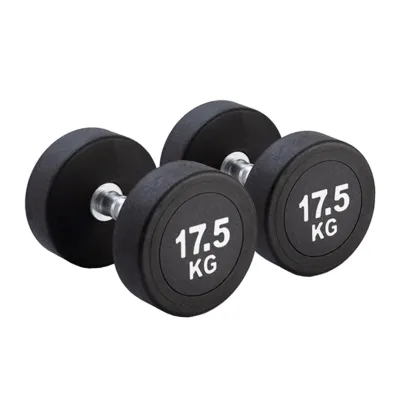
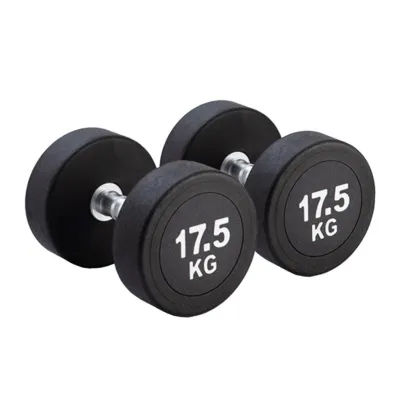
![[Instock] Hare Fitness Hexagon Dumbbell (2.5KG ~ 15KG)](https://img.lazcdn.com/g/p/989b91ab754e02525f88611bfa25790a.jpg_400x400q80.jpg_.webp)
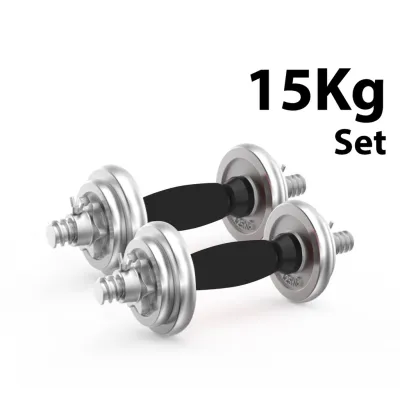
![(FITNET) [Bulky] Adjustable Chrome Dumbbell Sets 15kg / 20kg / 30kg / 50kg Dumbbells / Weights / Gym / Fitness / Barbells / Strength Training / Body Building / sd](https://img.lazcdn.com/g/p/c0e4fda432031e980da16816b4622902.jpg_400x400q80.jpg_.webp)
Prices are valid at publication and may change. Please refer to the product page for the latest price.
You must also weigh the daily trade-off between convenience and aesthetics. Keeping your dumbbells permanently visible in the living room can serve as a visual reminder to exercise, but it can also disrupt the home’s decor and create tripping hazards. Conversely, packing heavy weights away into a deep closet after every session requires physical effort and may discourage quick workouts. Choosing a dumbbell type that aligns with your storage habits is essential for maintaining a clutter-free and functional home.
Adjustable 15kg Dumbbells: Space Efficiency and Mechanical Care
Adjustable dumbbells are highly favored for compact apartments because they consolidate multiple weight increments into a single pair. Instead of buying separate pairs of 2.5kg, 5kg, 7.5kg, 10kg, 12.5kg, and 15kg weights, an adjustable system allows you to select these increments using a single handle. This design dramatically reduces the physical footprint of your home gym, requiring only the space of a single dumbbell tray rather than a multi-tier storage rack.

However, this space efficiency comes with a need for careful handling and mechanical maintenance. Adjustable dumbbells rely on intricate internal mechanisms, such as rotating dials, selector pins, or twist-lock handles, to secure the weight plates to the central bar. These moving parts are susceptible to wear and tear. If an adjustable dumbbell is dropped or struck against another object, the internal locking tabs can bend or crack, rendering the selector mechanism useless or, worse, causing plates to slip off during an exercise.
When considering an adjustable 15kg dumbbell, you must factor in the long-term financial and spatial value. While the initial investment in S$ for a high-quality adjustable pair is typically higher than a single pair of fixed weights, it eliminates the need to purchase additional dumbbells as your strength progresses. To protect this investment, you must commit to controlled movements and avoid dropping the weights on the floor, ensuring the locking mechanisms remain secure and functional over years of use.
Fixed and Hex 15kg Dumbbells: Durability and Footprint
Traditional fixed dumbbells and rubber-encased hex dumbbells offer a straightforward, highly durable alternative to adjustable systems. Because they are cast from solid metal or encased in thick rubber with no moving parts, these dumbbells are virtually indestructible. They require zero maintenance and can withstand heavy, repeated use without any risk of mechanical failure. For lifters who prefer a rugged, worry-free workout experience, fixed weights provide peace of mind.
Hexagonal dumbbells, in particular, feature flat sides that prevent them from rolling across the floor. In an HDB flat, where floors may have slight slopes or where a rolling weight could damage skirting boards and furniture, this non-rolling design is a significant safety advantage. It also allows you to use the dumbbells as stable platforms for floor-based exercises like renegade rows or push-ups, without the risk of the handles slipping out from under you.
The primary drawback of fixed and hex dumbbells is their cumulative footprint. While a single pair of 15kg hex dumbbells takes up relatively little space, progressing your strength requires purchasing entirely new pairs of different weights. Accumulating multiple pairs of fixed dumbbells quickly leads to storage challenges, requiring a dedicated A-frame or horizontal rack that occupies valuable floor space. If your workout routine relies on a wide variety of weights, a collection of fixed dumbbells can easily overwhelm a small living room or bedroom.
Matching the Dumbbell Type to Your Training Routine
Your choice of dumbbell should directly support the structure of your daily workouts. Adjustable dumbbells are exceptionally well-suited for traditional strength training programs that utilize progressive overload. If your routine involves tracking gradual strength increases or performing drop sets—where you quickly reduce the weight to continue an exercise past temporary muscle failure—the ability to turn a dial and change weights in seconds is incredibly valuable.
On the other hand, fixed or hex dumbbells are better suited for high-intensity interval training (HIIT), metabolic conditioning, and rapid circuit workouts. In these fast-paced routines, stopping to adjust a dial or align plates can disrupt your heart rate and flow. Fixed dumbbells allow for seamless transitions; you can drop one pair and immediately grab another without pausing. Furthermore, the solid construction of hex dumbbells makes them the safer choice for dynamic, explosive movements like dumbbell snatches or cleans, where the risk of accidental impact is higher.
Grip ergonomics and physical dimensions also play a role in your decision. Adjustable dumbbells often have a fixed, maximum length regardless of the weight selected, which can feel unwieldy during close-grip movements or two-handed exercises like overhead tricep extensions. Fixed 15kg dumbbells are typically more compact than their adjustable counterparts at the same weight, offering better physical clearance and a more natural balance. You should verify the handle diameter and knurling texture to ensure a secure, comfortable grip that matches your hand size.
Pre-Purchase Checklist for Compact Home Gyms
Before finalizing your purchase on an online marketplace or at a local sporting goods store, use this checklist to verify that the dumbbells fit your home and training needs:
- Physical Dimensions: Measure the total length, width, and height of the dumbbells. Verify that they can fit comfortably within your designated storage spot, such as under your bed or inside a closet.
- Grip and Handle Diameter: Check the handle specifications. Ensure the grip diameter (typically between 28mm and 35mm) is comfortable for your hand size, and verify if the knurling is aggressive enough for a secure hold.
- Weight Increments (for Adjustable Models): Confirm the specific weight steps available. Ensure the system offers small, manageable increments (such as 1kg or 2kg steps) to allow for smooth strength progression up to the 15kg limit.
- Locking Mechanism Security: For adjustable models, inspect the locking mechanism type (e.g., dial, pin, or collar). Verify that the plates lock tightly with no noticeable rattling or play when shaken.
- Return Policy and Warranty: Review the retailer's terms. Ensure there is a clear warranty covering mechanical components, especially for adjustable models, and check the return policy in case the dumbbells arrive with manufacturing defects.
Frequently Asked Questions (FAQ)
Can I use hex dumbbells on standard apartment tiles without a mat?
Using hex dumbbells directly on standard HDB floor tiles, such as ceramic, homogenous, or vinyl tiles, is not recommended. Even though the flat edges of hex dumbbells prevent them from rolling, placing a heavy 15kg weight directly onto hard tiles can cause chipping, cracking, or scratching over time. Additionally, the impact of setting the weights down can transmit noise and vibrations through the concrete slab to your neighbors downstairs. To protect your flooring and maintain good neighborly relations, always check your flooring manufacturer’s care guidelines and use a high-density, shock-absorbing rubber mat or gym flooring tiles during your workouts.
Are adjustable dumbbells safe for dropping during heavy lifts?
Adjustable dumbbells are not designed to be dropped from any height. The internal dial, pin-lock, or gear mechanisms that hold the weight plates in place are made of precision components that can easily bend, crack, or misalign under sudden impact. Dropping them can permanently damage the locking system, making the dumbbells unsafe to use. For heavy lifts where failure is a possibility, you should practice controlled lowering techniques or use a spotter. Always consult the specific product manual for exact impact tolerances and safety instructions regarding weight handling.
Community discussion
Share your experience or ask a question. Comments are reviewed before publication.