
To choose the right agility ladder for football training, you need to focus on rung adjustability, material durability for outdoor pitches, and secure anchoring mechanisms. Football footwork demands rapid, high-impact directional changes that will quickly shift or damage a flimsy ladder. Selecting a model with heavy-duty flat plastic rungs and adjustable nylon straps ensures the equipment can withstand stray boot studs and adapt to different drill patterns.
In Singapore’s tropical climate, training sessions often take place on damp natural grass or hot artificial turf. These varied environments require gear that resists moisture, mud, and intense sun exposure. A ladder that is easy to clean, quick to dry, and highly visible against green turf is essential for consistent development. By evaluating key physical specifications, you can find a training tool that stays flat, resists tangling, and supports your technical progression.
Key Specifications for Football Agility Ladders
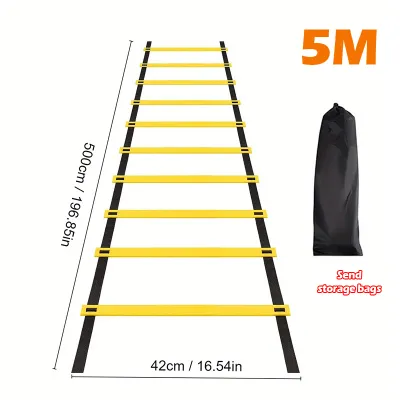
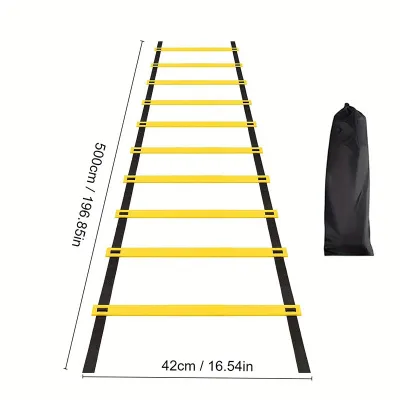
Standard agility ladders typically feature rungs spaced about 38 to 40 centimeters apart. However, football players of different ages and stride lengths require flexibility. Adjustable nylon straps allow you to slide the rungs closer together for rapid, short-contact footwork drills, or further apart to simulate longer strides and transition phases. Look for straps with clear, integrated measurement markings or secure snap-lock mechanisms that prevent the rungs from sliding out of place during high-speed runs.
Products mentioned in this guide
![[SG] Nylon Strap Agility Ladder Speed Training Football Fitness Flexibility Plyometric Workout Equipment](https://img.lazcdn.com/g/p/f631eecb7b6fe53488efffcb083d2930.jpg_400x400q80.jpg_.webp)
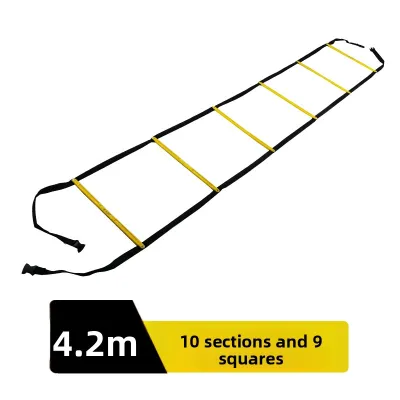
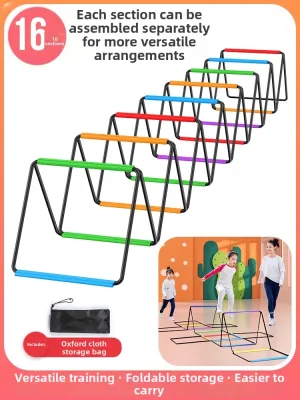
Prices are valid at publication and may change. Please refer to the product page for the latest price.
The materials used in the rungs and straps determine how well the ladder survives regular contact with football boots. Rigid, round plastic rungs can roll underfoot, presenting a slip hazard on wet grass, and are prone to cracking if stepped on by hard-ground or firm-ground studs. Flat, heavy-duty plastic rungs lie flush with the ground, reducing the risk of tripping and surviving direct impacts from molded or metal studs. The side straps should consist of thick, tightly woven nylon or polyester webbing that resists fraying when dragged across abrasive artificial turf.
Transporting training gear to and from the pitch can become a hassle if the ladder constantly tangles into a knot. Look for models that include a dedicated storage handle, a plastic organizer clip, or a specialized gathering ring that keeps the rungs stacked in order. A breathable mesh carrying bag is highly beneficial for Singapore’s humid climate, as it allows trapped moisture from damp grass to evaporate, preventing mold and unpleasant odors from developing on the nylon straps during transit.
Visibility is another crucial specification that is often overlooked. Football training frequently occurs during late afternoon or under floodlights at night. Brightly colored rungs, such as neon yellow, orange, or high-visibility green, contrast sharply against both natural grass and dark artificial turf. This high contrast helps players maintain peripheral awareness of the ladder boundaries without constantly looking straight down, allowing them to keep their heads up as they would during a real match.
Aligning Ladder Dimensions with Football Drills
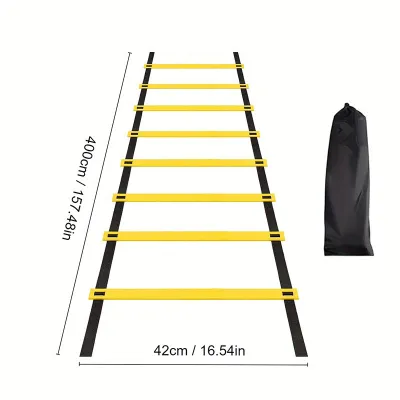
The overall length of the ladder dictates the focus of your training session. A shorter ladder of about 4 meters is ideal for explosive, high-intensity acceleration drills and quick lateral shuffles where fatigue should not compromise form. For endurance-focused footwork, complex multi-directional patterns, or continuous team drills, a longer ladder of 6 to 8 meters provides the necessary runway to establish a rhythm and challenge cardiovascular capacity.

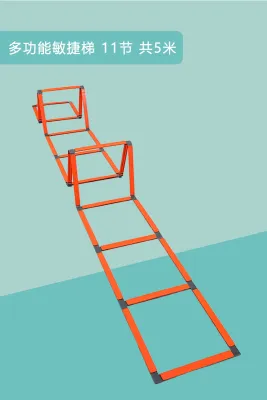
If you train with a team or want to create complex grid systems, modular agility ladders offer significant advantages. These models feature plastic snap buckles or heavy-duty hook-and-loop fasteners at the ends of the nylon straps, allowing you to connect multiple ladders together. This modularity lets you transition seamlessly from a single linear speed track to a long endurance run, or even set up parallel tracks for competitive side-by-side racing drills during team practices.
The type of pitch you train on influences how the ladder behaves underfoot. On natural grass, the ground is often uneven, and soft soil can cause lightweight ladders to shift easily with the wind or slight foot contact. On artificial turf, the flat, uniform surface allows the ladder to lie completely straight, but the lack of soil means you cannot use traditional metal ground pegs to anchor it. For turf training, look for ladders with slightly heavier rungs or rubberized backing that grips the synthetic fibers to prevent sliding without the need for physical pegs.
Furthermore, consider the width of the ladder. Most standard ladders are around 50 centimeters wide, which accommodates average foot sizes and standard lateral movements. However, if you are focusing on wide-step lateral cuts or training larger players, a slightly wider ladder can prevent players from constantly stepping on the outer nylon straps. This extra width ensures that players can execute wide-stance agility movements with proper biomechanical form.
Pitch Setup, Safety, and Equipment Maintenance
Keeping the ladder taut and stationary is critical for maintaining safety and drill consistency. When training on natural grass, use low-profile metal or plastic ground pegs inserted through the metal eyelets at the corners of the ladder to pin it securely to the turf. On artificial turf or indoor sports halls where pegs cannot penetrate the surface, you can weigh down the ends using small, flat sandbags, rubber disc cones, or specialized weighted end-caps to prevent the straps from bunching up when stepped on.
Before starting any high-speed footwork drills, perform a quick visual inspection of the training area and the ladder itself. Ensure the ladder is laid out completely flat with no twists in the nylon straps, as twisted straps raise the rungs off the ground and create immediate trip hazards. Check that all rungs are spaced evenly according to your drill requirements, and clear any small stones, twigs, or debris from the immediate path to prevent slips and ankle rolls.
Outdoor football pitches in Singapore often subject training gear to mud, wet grass clippings, and red clay. After a damp training session, wipe down the plastic rungs with a moist cloth to remove dirt and grit that can degrade the plastic over time. Hang the ladder in a well-ventilated, shaded indoor area to dry completely before packing it into its carrying bag; storing a wet nylon ladder in a sealed bag promotes mildew growth and weakens the stitching on the straps.
Avoid exposing the ladder to direct, intense sunlight for extended periods when not in use. While high-quality ladders feature UV-resistant materials, leaving them baked on hot concrete or synthetic turf during midday heat can accelerate the degradation of both the plastic rungs and the nylon straps. Developing a quick routine of packing up the ladder immediately after training preserves its structural integrity and ensures it remains flexible and crack-resistant.
Building Your Shortlist: Decision Checklist
When comparing options on online marketplaces, look closely at the product specifications for UV-resistant coatings on the plastic rungs. Singapore’s intense tropical sunlight can make cheap plastics brittle and prone to snapping within a few months of outdoor use. Additionally, verify that the connection points between the rungs and the nylon straps feature reinforced, heavy-duty double stitching rather than simple glue, ensuring the ladder can withstand being pulled taut and stepped on repeatedly.
Quick adjustments are essential when you want to switch from a narrow-spaced quick-feet drill to a wider-spaced stride drill during a limited training session. Check if the ladder uses slide-and-lock rungs or pre-fixed slots. Slide-and-lock designs offer infinite customization but require a bit more setup time, whereas ladders with pre-marked strap indicators allow you to reset standard distances rapidly without guessing.
Agility ladders are generally affordable training tools, with prices on local ecommerce platforms typically ranging from S$15 for basic entry-level models to S$50 or more for professional-grade, heavy-duty systems. While a budget ladder may suffice for occasional backyard use, investing a bit more in a model with thick flat rungs, rust-resistant metal eyelets, and a durable carrying bag will save you money in the long run by avoiding frequent replacements after intense pitch sessions.
Finally, check the weight of the entire package. A ladder that is too light will shift constantly with the slightest breeze or foot contact, while one that is excessively heavy can be a chore to carry alongside footballs, cones, and water bottles. A total weight of around 1 to 1.5 kilograms strikes an excellent balance, providing enough heft to lie flat on the ground while remaining highly portable for daily commutes to the training ground.
Frequently Asked Questions (FAQ)
Can I use a standard indoor agility ladder on outdoor grass pitches?
Yes, you can use an indoor agility ladder outdoors, but you must take extra precautions regarding stability and wind. Indoor ladders are often lightweight and lack anchoring eyelets or ground pegs, meaning a gust of wind or a slight clip from a football boot can easily displace them on uneven grass. If you use an indoor model outside, ensure you lay it on a flat patch of grass and use flat training cones or small weights to secure the corners so it remains flat and safe to use.
Additionally, indoor ladders may feature smoother plastic rungs designed for polished wooden floors. When placed on damp grass, these rungs can become exceptionally slippery if stepped on directly. If you must use an indoor ladder on an outdoor pitch, advise players to wear molded rubber studs rather than metal-tipped boots, and perform frequent checks to ensure the rungs have not collected moisture or mud that could compromise traction.
How many agility ladders do I need for team football training?
For effective team training, a good rule of thumb is to have one agility ladder for every five to six players to minimize waiting times and keep heart rates elevated. Having multiple ladders allows you to set up parallel stations for competitive relay races or create multi-directional grid patterns that mimic real match scenarios. If budget or storage space is limited, purchasing two modular 4-meter ladders that can be buckled together provides an excellent balance of individual focus and team-wide versatility.
Using multiple ladders also allows coaches to differentiate training based on player skill levels or positions. For example, midfielders can work on rapid lateral transitions on one ladder, while wingers focus on explosive linear acceleration on another. This setup maximizes pitch space efficiency and ensures that every player receives high-quality, position-specific footwork practice without standing idle in long lines.
Community discussion
Share your experience or ask a question. Comments are reviewed before publication.