
To find a foldable treadmill that fits seamlessly into a Singapore Housing & Development Board (HDB) flat, you must balance a compact footprint with safe running clearance. A typical HDB layout requires a machine that can be easily stowed away when not in use without obstructing daily foot traffic. Generally, a treadmill with a setup footprint of around 150 to 170 centimeters in length and 70 to 80 centimeters in width fits well in a spare bedroom or living room corner. When folded, a vertical footprint of less than 80 by 80 centimeters, or a flat-folding profile under 20 centimeters in height, ensures the machine can be stored unobtrusively. Key features like shock absorption, quiet motors, and transport wheels are essential to keep workouts safe, convenient, and neighbor-friendly.
Measuring Your Available Space
To find a foldable treadmill that fits your home, start with precise measurements of your designated workout zone. HDB rooms, especially in newer flats, often have compact layouts where every square centimeter counts. Begin by measuring the maximum length and width of the floor space where you plan to run. It is a common mistake to only measure the physical footprint of the machine itself; you must also account for safety clearance. Manufacturers generally recommend leaving at least 1 to 2 meters of clear, unobstructed space behind the running deck and at least 0.5 meters on either side. This safety buffer is crucial to prevent injury if you lose your balance or need to dismount quickly during a workout.
Next, evaluate your ceiling height against the treadmill’s deck height and your own height. When you run, your body rises slightly with each stride, and if your treadmill has an incline feature, the deck will elevate even further. To calculate the necessary clearance, add your height to the maximum deck height of the treadmill (usually 15 to 25 centimeters from the floor), then add an extra 15 to 20 centimeters of head clearance. Ensure this total height is well below your ceiling, taking care to avoid low-hanging ceiling fans, light fixtures, or structural beams.
Products mentioned in this guide
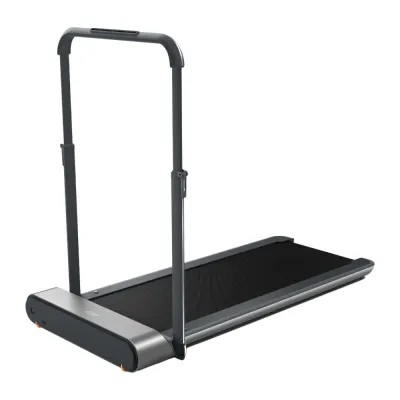
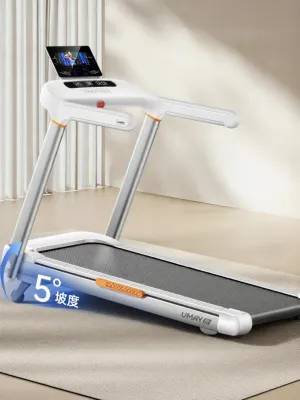

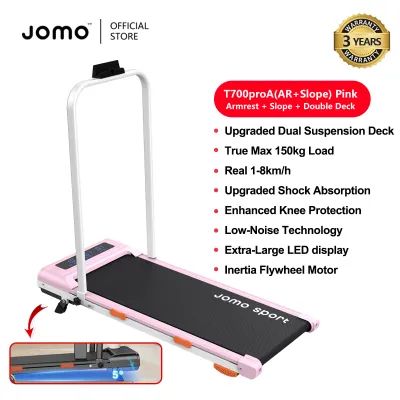
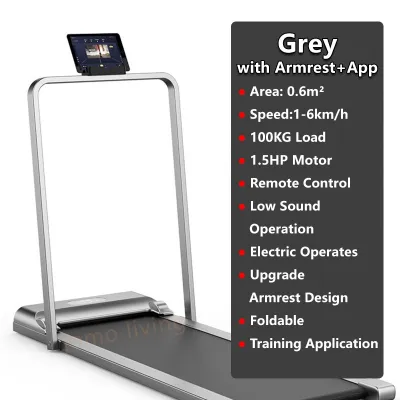
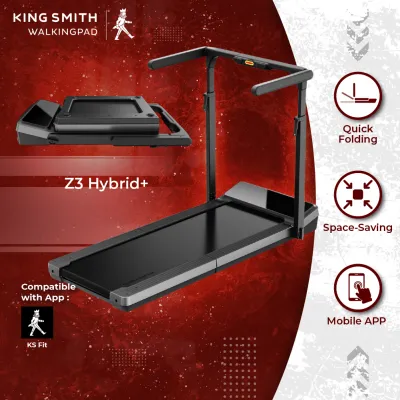
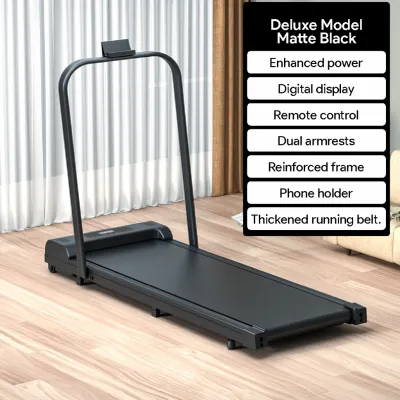
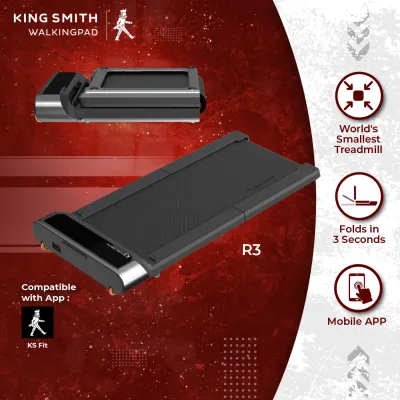
Prices are valid at publication and may change. Please refer to the product page for the latest price.
Finally, map out the delivery route from the lift lobby to your apartment. Measure the width and height of your main door, hallway corners, and bedroom doors. Many foldable treadmills are delivered partially or fully assembled in large, heavy boxes. If your doorway or hallway is too narrow, you may struggle to maneuver the box into your home, or you might be forced to unbox the unit in a common corridor, which can be inconvenient and disruptive to neighbors.
Evaluating Treadmill Dimensions and Folded Footprint
Understanding how a treadmill folds is just as important as knowing its setup dimensions. Foldable treadmills generally fall into two categories: vertical-folding models, where the running deck folds upward toward the console, and flat-folding models, where the console and handrails fold down flat against the deck. Vertical-folding models typically have a smaller floor footprint when folded but stand quite tall, making them ideal for placing in a corner or closet. Flat-folding models, on the other hand, have a larger floor footprint when laid flat but feature a very low profile, allowing them to be slid under a bed or sofa. Compare these folding mechanisms against your intended storage area to determine which style matches your home layout.

The dimensions of the running belt itself directly impact your safety and comfort. While a shorter and narrower belt saves space, it also limits your stride. For walking or light jogging, a running surface of 110 to 120 centimeters in length and 40 centimeters in width is generally sufficient. However, if you plan to run at faster speeds, you will need a belt length of at least 130 to 140 centimeters and a width of 45 to 50 centimeters to accommodate your natural stride without the risk of stepping off the side of the belt. Balance your space constraints against your physical height and running style to find a safe compromise.
Additionally, consider the overall weight of the machine and its maximum weight capacity. A sturdy treadmill built for running is naturally heavier, often weighing between 50 and 90 kilograms. While a heavier machine offers better stability and less wobble during high-speed runs, it is also more challenging to move around. Ensure that your flooring can support the dynamic load of the treadmill combined with your body weight during high-impact running. Checking the manufacturer’s specifications for both the machine’s net weight and its maximum user weight capacity is a vital step before making a purchase.
Must-Have Features for Compact HDB Living
Living in close proximity to neighbors in an HDB estate means that noise and vibration management should be top priorities when choosing a foldable treadmill. Look for models equipped with high-quality shock absorption systems, such as rubber elastomers or air-cushioned decks. These systems absorb the impact of your footstrikes, protecting your joints while significantly reducing the thudding noise that travels through the concrete floor to the unit below. Pair this with a quiet, high-torque motor—ideally a brushless motor or one rated below 60 decibels—to ensure your early morning or late-night workouts do not disturb your family or neighbors.
Portability features are equally essential for a machine that needs to be stowed away after every use. Look for treadmills that feature multi-directional transport wheels. Standard wheels only allow you to roll the machine forward and backward, which can make maneuvering around tight bedroom corners difficult. Four-wheel transport systems or 360-degree casters allow you to glide the treadmill sideways, making storage much less strenuous. Additionally, a hydraulic or soft-drop folding mechanism is a valuable safety feature. This system uses gas shocks to slowly lower the heavy deck to the floor automatically, preventing accidental drops that could damage your flooring or cause injury.
For those with extremely limited space, look for treadmills with integrated, minimalist consoles or foldable handrails. Some modern designs feature a console that folds completely flat, allowing the entire unit to achieve a height of under 20 centimeters. Others offer smart connectivity, allowing you to control the treadmill via a remote control or a smartphone app, eliminating the need for a bulky physical console altogether. These space-saving designs make it much easier to integrate fitness equipment into a multi-functional living space.
Common Space and Setup Mistakes to Avoid
One of the most frequent mistakes treadmill owners make is ignoring the proximity of power outlets during setup. Treadmills draw a high amount of electrical current, especially during startup and high-speed runs. Plugging a treadmill into a low-capacity extension cord or a multi-way adapter is a serious electrical hazard that can lead to overheating and short circuits. Always plan to place your treadmill close enough to a dedicated wall outlet so that the power cord can reach directly without tension.
Another common oversight is failing to account for heat dissipation around the motor housing. The motor is typically located at the front of the treadmill deck and relies on open vents to stay cool. If you position the front of the treadmill flush against a wall, heavy curtains, or inside a tight closet while in use, you block the airflow. This lack of ventilation causes the motor to overheat, which can lead to premature motor failure or trigger safety shut-offs mid-workout. Always leave at least 10 to 15 centimeters of open space around the motor cover to allow heat to escape.
Lastly, do not rely solely on product labels that describe a treadmill as “ultra-compact” or “space-saving” without verifying the actual measurements. Marketing terms are subjective, and a machine labeled as compact might still be too large for your specific room layout. Always consult the user manual or the manufacturer’s official specification sheet to confirm the exact setup dimensions, folded dimensions, and required safety clearances before finalizing your purchase.
Frequently Asked Questions (FAQ)
Can I keep a foldable treadmill permanently folded under my bed?
You can store a flat-folding treadmill under your bed, provided there is sufficient clearance between the floor and the bed frame. Before doing so, measure the folded height of the treadmill—including any protruding knobs, wheels, or levers—and compare it to the height of your bed frame. Avoid forcing the machine under a tight space, as constant pressure can damage the console, handrails, or plastic casings. Additionally, because dust accumulates quickly under beds, you should use a fitted protective cover to shield the running belt and motor vents. Accumulated dust can increase friction on the belt, leading to motor strain and premature wear.
Do foldable treadmills require special floor mats in an HDB flat?
While not strictly mandatory, using a high-density rubber or PVC equipment mat under your treadmill is highly recommended for HDB apartments. A specialized mat serves several critical functions: it dampens the vibrations and impact noise transmitted through the concrete floor, protects your vinyl, laminate, or tiled flooring from scratches and heavy pressure marks, and catches sweat to prevent moisture damage. Furthermore, a textured mat provides extra grip, preventing the treadmill from slowly shifting or sliding across smooth floors during high-intensity workouts.
Community discussion
Share your experience or ask a question. Comments are reviewed before publication.