
Quick Answer: Key Criteria for HDB Treadmills
Finding the right foldable treadmill for a Housing & Development Board (HDB) flat in Singapore requires balancing space constraints, noise mitigation, structural safety, and electrical compatibility. Because HDB apartments feature shared walls and concrete floors that easily transmit vibrations, a standard commercial treadmill is rarely suitable. Instead, the ideal home machine must fold down to a compact footprint that fits into tight storage spaces like household shelters or under-bed gaps.
It must also feature robust shock absorption to keep peace with downstairs neighbors, and operate safely within domestic electrical limits. Prioritizing these non-negotiable factors ensures your home workouts remain consistent without causing household clutter or neighborhood disputes.
Space and Storage: Measuring Your HDB Layout
Before purchasing any fitness equipment, you must accurately measure both your active workout zone and your intended storage area. The active footprint of a treadmill extends far beyond the physical dimensions of the running deck itself. For safety reasons, you should maintain a clearance of at least 1 to 2 meters behind the treadmill to prevent injury in the event of a fall, along with at least 0.5 meters of open space on either side. Marking these boundaries on your floor with masking tape can help you visualize whether a room can safely accommodate the machine during use.
Products mentioned in this guide
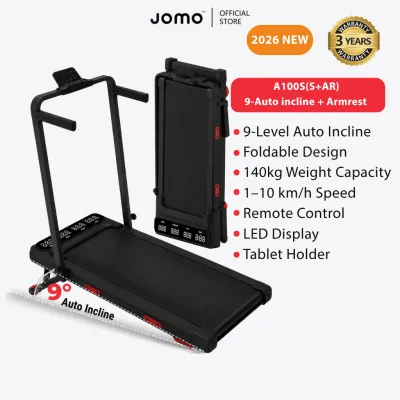
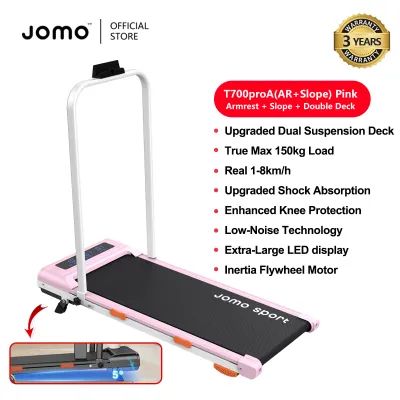
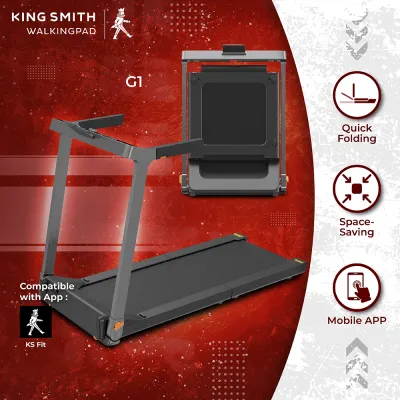
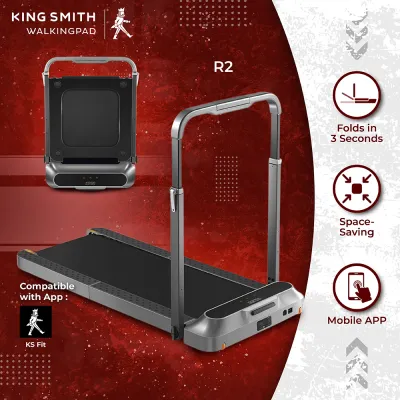
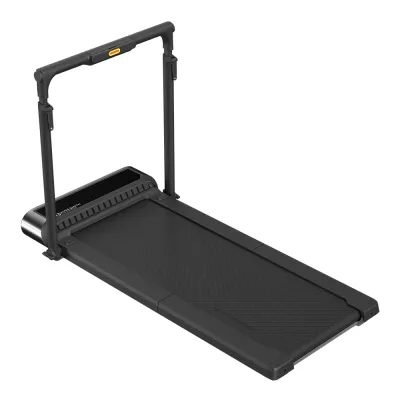
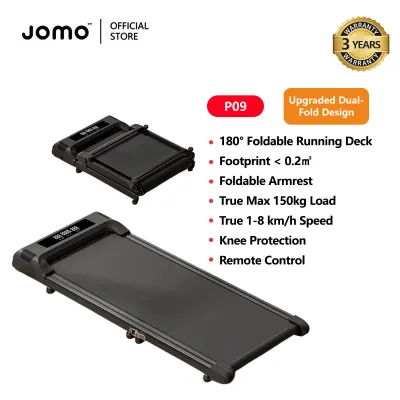
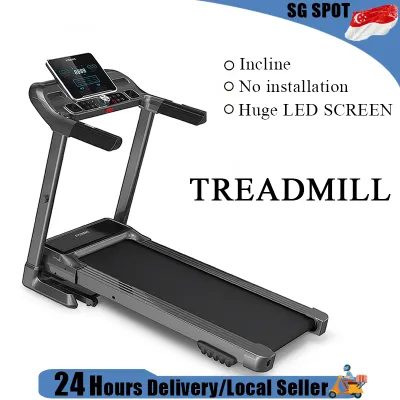
Prices are valid at publication and may change. Please refer to the product page for the latest price.

Once folded, the treadmill’s dimensions must align with your storage strategy. If you plan to store the machine in your HDB household shelter, measure the doorway width carefully, as these reinforced doors can be narrower than standard bedroom entryways. For under-bed storage, look for ultra-flat models that fold down to a height of 15 centimeters or less. If you intend to store the treadmill vertically against a wall, ensure the model features a reliable, heavy-duty locking pin or latch system to prevent the frame from accidentally tipping over.
Do not overlook the logistics of getting the treadmill into your home. Measure your HDB lift entrance, the interior cabin space, and any tight turns in your corridor or entryway. Many heavy-duty foldable treadmills are delivered semi-assembled in large, bulky boxes that can be difficult to maneuver through narrow BTO flat layouts.
Finally, evaluate the folding mechanism itself. Hydraulic soft-drop systems are highly recommended for home use. These mechanisms use gas shocks to slowly lower the deck to the floor when unfolded, reducing physical strain on your back and preventing the heavy deck from slamming down onto your flooring.
Noise, Vibration, and Downstairs Neighbors
Living in a multi-story HDB flat means your floor is your neighbor’s ceiling. The structural design of these buildings makes them highly susceptible to impact noise, which can quickly lead to friction with those living below you. Understanding the difference between motor noise and impact vibration is key to selecting the right machine and setup.
While the continuous hum of a treadmill motor can be muffled by closed doors, the low-frequency thud of your feet striking the deck travels directly through the concrete slab. To minimize this, check manufacturer specifications for advanced deck cushioning systems. Look for models that incorporate high-grade elastomers, rubber dampers, or spring-loaded shock absorbers designed to disperse the force of each footstrike horizontally rather than vertically.
Regardless of how advanced a treadmill’s built-in cushioning is, using a high-density anti-vibration mat underneath the machine is essential. These mats should be made of dense rubber or specialized EVA foam, with a thickness of at least 6mm to 10mm. Avoid cheap, soft yoga mats, which compress completely under the weight of the treadmill and offer virtually no vibration dampening.
Beyond hardware solutions, practicing good neighbor etiquette is the most effective way to prevent disputes. Establish reasonable workout hours, generally avoiding high-impact running before 8:00 AM and after 10:00 PM. If possible, have a friendly conversation with your downstairs neighbors to find out if they have specific quiet hours, such as a child’s naptime, so you can schedule your runs accordingly.
Power, Weight Capacity, and Structural Limits
To ensure your treadmill operates safely and reliably, you must verify its electrical and structural requirements against your home’s capacity. Start by looking at the motor’s horsepower ratings. Manufacturers often list both Continuous Horsepower (CHP) and Peak Horsepower (PHP). For running, focus exclusively on the CHP rating; a motor with at least 1.75 to 2.5 CHP is necessary to sustain running speeds without overheating. Walking pads or light jogging machines can operate on lower ratings, but running demands sustained power.
Next, compare your body weight against the treadmill’s maximum weight capacity. Always allow a safety margin of at least 15% to 20%. For example, if you weigh 80 kg, look for a machine rated for at least 100 kg. The dynamic force exerted while running is significantly higher than your static standing weight, and operating a treadmill near its absolute limit accelerates wear on the motor and belt.
Consider the physical weight of the machine itself in relation to HDB floor loading guidelines. While modern HDB flats are engineered to support standard domestic loads, older blocks require extra caution when introducing heavy, concentrated loads. Most foldable treadmills designed for home use weigh between 40 kg and 80 kg, which is perfectly safe for HDB floors. However, avoid commercial-grade, non-folding machines that can exceed 150 kg, as they place unnecessary localized stress on your flooring.
Electrical safety is another critical factor. Treadmills are high-draw appliances that pull significant current during startup and acceleration. Always plug your treadmill directly into a grounded wall socket. Avoid using extension cords, multi-way adapters, or daisy-chained power strips, as these can overheat, melt, or trip your home’s circuit breakers.
How to Evaluate Brands and Product Specifications
When shopping for a foldable treadmill in Singapore, focus on verifiable specifications and local support rather than generic marketing claims. Because we cannot rely on unverified performance promises, a structured evaluation checklist is your best tool for making a safe purchase.
First, scrutinize the warranty terms and the availability of local after-sales service. A treadmill is a complex mechanical and electronic device that will eventually require maintenance. Look for brands that offer a clear local warranty—ideally a minimum of 5 to 10 years on the frame, 2 to 5 years on the motor, and at least 1 year on parts and labor. Ensure the brand has an established local distributor or service center in Singapore that stocks spare parts. Purchasing parallel imports or unbranded models from overseas sellers often leaves you without recourse if a component fails.
Second, check the physical specifications of the running belt. For safe running, the belt width should be at least 40 cm, and the length should be at least 120 cm. If you are taller or have a longer running stride, look for a deck length of 130 cm or more to prevent your feet from slipping off the back of the machine. Additionally, verify that the machine has a prominent, easily accessible emergency stop button and a safety clip that attaches to your clothing to stop the belt instantly if you fall.
Third, look for recognized safety certifications. In Singapore, electrical appliances should ideally carry safety marks or comply with international standards such as CE, UL, or IEC. These certifications guarantee that the electrical components have been tested for fire and shock hazards.
Finally, when browsing online marketplaces, filter the reviews to look for verified local feedback. Pay close attention to comments regarding the delivery process, ease of assembly in HDB flats, and how responsive the seller is to warranty claims. Compare the total cost in S$ against the warranty period to determine the true value of the investment.
Setup, Safety, and Daily Maintenance
Proper installation and routine maintenance are essential to keep your foldable treadmill running smoothly and to protect your HDB flat’s interior. When assembling the machine, choose a flat, level surface away from direct sunlight and moisture. Lay down a protective mat before assembly to prevent heavy metal frames from scratching or denting your vinyl, laminate, or parquet flooring.
Daily and weekly maintenance will extend the lifespan of your machine and ensure safe operation:
- Belt Alignment: Regularly check if the running belt is centered on the deck. If it drifts to one side, use the adjustment bolts at the rear of the roller to realign it according to the manual's instructions.
- Deck Lubrication: Friction is the primary enemy of treadmill motors. Apply 100% silicone lubricant under the running belt every 3 to 6 months, or after every 100 hours of use, depending on the manufacturer's guidelines.
- Dust and Debris Removal: Dust and pet hair can accumulate quickly in small rooms. Vacuum around the treadmill weekly, and periodically vacuum the motor compartment (after unplugging the machine) to keep the cooling vents clear.
Always stop using the treadmill immediately if you observe warning signs such as a slipping belt, unusual grinding noises, a burning smell, or error codes on the console. In these situations, disconnect the power and contact the manufacturer or a qualified local technician before attempting to use the machine again.
Frequently Asked Questions (FAQ)
Can I keep my foldable treadmill on the balcony?
Storing or using a foldable treadmill on an HDB balcony is highly discouraged. Singapore’s tropical climate brings high humidity, intense direct sunlight, and frequent driving rain, all of which can rapidly damage sensitive electronic consoles, rust the steel frame, and degrade the rubber running belt. Furthermore, HDB guidelines require balconies to remain clear of hazards, and exposing electrical appliances to outdoor elements poses a significant risk of short circuits or electrical fires. To protect your investment and ensure safety, always store and operate your treadmill in a fully enclosed, well-ventilated indoor room.
Do I need a special power socket for a home treadmill?
You do not need a specialized industrial power socket, as most home foldable treadmills are designed to run on standard Singapore 13-amp wall sockets. However, you must plug the machine directly into a dedicated wall outlet rather than sharing a double socket or using an extension cord with other high-power appliances like portable air conditioners or vacuum cleaners. To safeguard the treadmill’s sensitive control board from power surges or voltage fluctuations, consider using a high-quality surge protector rated for heavy appliances.
Community discussion
Share your experience or ask a question. Comments are reviewed before publication.