
Finding space for fitness equipment in a typical Singapore Housing & Development Board (HDB) flat requires careful spatial planning. With modern BTO (Build-To-Order) flats featuring compact living rooms and bedrooms, every square meter of floor area must be utilized efficiently. A foldable walking pad offers a practical way to maintain an active lifestyle at home, but its footprint must align with your available space.
The primary challenge lies in balancing the walking belt’s dimensions with the machine’s folded footprint. A wider and longer belt provides a more comfortable stride, yet it demands significantly more floor space when unfolded and requires a larger storage area. Conversely, an ultra-compact walking pad might fit easily under a sofa but could restrict your natural walking gait.
When evaluating these machines, you must also consider weight capacity and motor power. A standard walking pad typically supports users up to 90 kg or 100 kg, powered by a motor designed for walking speeds rather than high-speed running. Choosing a motor that matches your weight and usage frequency ensures the machine operates efficiently without drawing excessive power or overheating in Singapore’s warm, humid climate.
Products mentioned in this guide
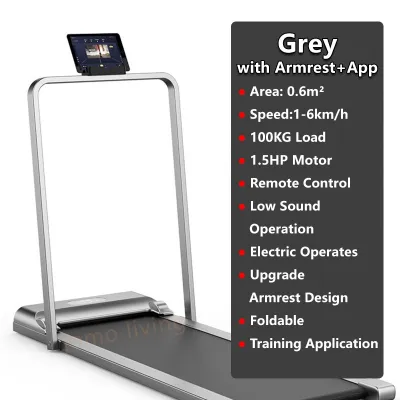
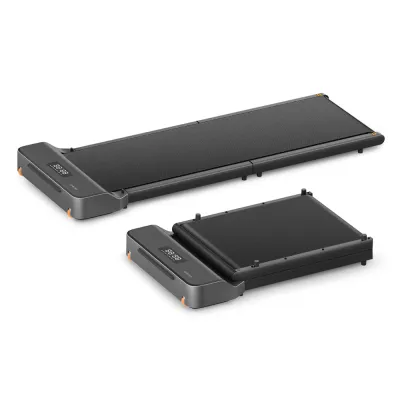
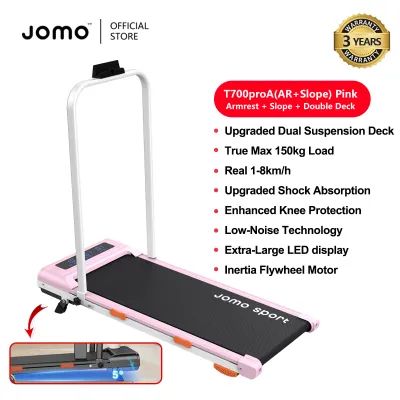
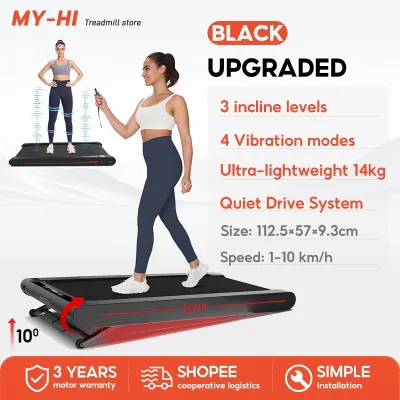
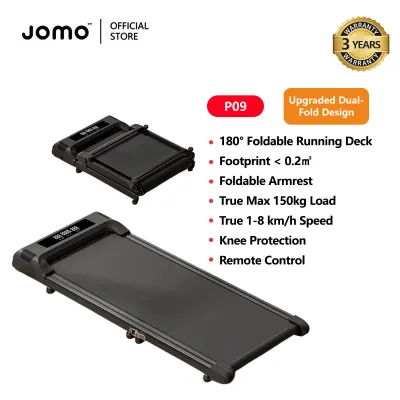
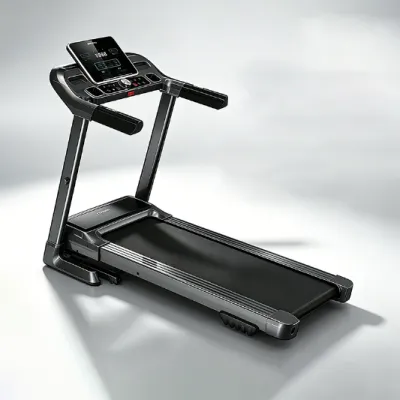
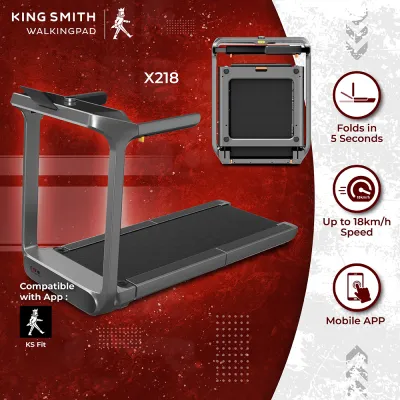
Prices are valid at publication and may change. Please refer to the product page for the latest price.
Core Selection Criteria for Compact Apartments
Living in a high-rise apartment means that physical boundaries dictate your equipment choices. Before browsing online marketplaces, you must establish your non-negotiable requirements based on who will use the machine and where it will be stored. A walking pad that is too large will quickly become an obstacle, while one that is too small may feel unstable during use.
The dimensions of the walking belt directly affect your exercise experience. For a natural walking stride, taller users generally require a longer belt, while a wider belt offers more lateral safety. However, every additional centimeter of belt width increases the overall width of the machine, making it harder to store in tight gaps between wardrobes or under low bed frames.
Motor performance is another critical factor that must be balanced against the machine’s physical size. Walking pads designed for light activity typically feature smaller, less powerful motors that keep the overall weight of the machine down. If you plan to use the machine daily or have multiple users in the household, look for a motor with a continuous duty rating that can handle sustained use without overheating.
Space Planning and Measurement Guide
Before purchasing any fitness equipment, you must measure both your active workout zone and your intended storage area. When a walking pad is unfolded, it requires more than just its physical dimensions to operate safely. You must account for clearance zones: ideally, leave at least 0.5 meters of open space on both sides of the machine and at least 1 to 1.5 meters of clear space directly behind the belt. This rear clearance is a critical safety margin in case you lose your balance or slip during a session.

Next, identify where the machine will live when it is not in use. If you plan to slide the walking pad under a platform bed or a sofa, measure the vertical clearance of the furniture frame. Many compact models range from 10 cm to 15 cm in thickness when folded flat, but even a minor discrepancy can prevent the unit from sliding underneath. If you prefer upright storage behind a door or inside a wardrobe, verify the folded height and ensure the unit has a stable self-standing mechanism or can be securely anchored to prevent tipping.
Finally, consider the flow of your household. The walking pad must never block main walkways, bedroom doors, or emergency exit routes. While HDB floor load limits are generally robust enough to handle standard domestic fitness equipment, placing heavy machinery near delicate partition walls or on uneven surfaces can cause stability issues. Ensure your chosen spot has a flat, level floor and allows you to move the machine in and out of storage without straining your back.
Key Features to Evaluate for Compact Living
To find a walking pad that integrates well into a high-rise apartment, you need to look closely at specific design features. The folding mechanism is a critical factor. Some models feature a 180-degree double-fold design, where the walking deck itself folds in half, drastically reducing the storage length. Other models only allow the handrail or console to fold flat against the deck. While double-fold models are incredibly compact, they often have a visible seam in the middle of the belt, which some users can feel underfoot. Single-fold or flat models are longer but offer a completely seamless walking surface.
Portability is another essential consideration for daily use. If a walking pad is too heavy or awkward to move, it will likely end up permanently unfolded, defeating its purpose. Look for models equipped with built-in transport wheels at the front base. These wheels allow you to lift the rear end and roll the machine across the floor like a suitcase. Pay attention to the total weight of the unit; machines weighing under 30 kg are generally manageable for a single adult to maneuver, whereas heavier models might require two people to lift safely.
Living in close proximity to neighbors in an HDB block means noise and vibration management cannot be overlooked. The sound of footsteps on a walking belt can easily transmit through concrete floors, creating a disturbing thudding noise for the residents below. Look for walking pads equipped with brushless motors, which operate much more quietly than traditional brushed motors. Additionally, prioritize decks with built-in shock absorption layers or rubber cushioning pads underneath the frame to dampen the impact of each step.
Building Your Shortlist Based on Space and Usage Needs
To narrow down your options, it helps to match your specific household layout and fitness goals to a clear equipment profile. Different living arrangements in Singapore call for distinct design priorities.
Scenario A: Ultra-Small Spaces and Under-Bed Storage If you live in a cozy studio or a highly furnished bedroom, floor space is at an absolute premium. A practical option is an ultra-thin, handle-less walking pad. These models typically measure under 12 cm in thickness and can easily slide under low-profile bed frames or sofas. Because they lack a vertical handrail, they are designed strictly for low-speed walking (usually up to 6 km/h) and are controlled entirely via a remote control or a mobile app.
Scenario B: Multi-Use Living Rooms with Daily Setup For those who plan to use the walking pad in the living room while watching television and then pack it away immediately after, ease of setup is paramount. Focus on lightweight models (under 25 kg) that feature dual transport wheels and a quick-folding mechanism. A model with a simple fold-down handrail allows you to transition from storage to active use in less than a minute without complex locking pins.
Scenario C: Heavier Users or Light Jogging Needs If you require a higher weight capacity or want the option to transition from a casual walk to a light jog, you will need a more robust machine. These models feature reinforced steel frames, wider walking belts (at least 45 cm), and folding handrails for stability at higher speeds (up to 10 km/h or 12 km/h). While these units have a larger folded footprint and are heavier to move, they offer the necessary structural integrity and safety features for more intense workouts.
Pre-Purchase Verification Checklist Before finalizing your purchase on any online marketplace or local fitness store, verify the following specifications directly with the manufacturer’s product sheet:
- Folded Dimensions: Measure your intended storage gap and compare it to the machine's folded height, width, and length.
- Maximum Weight Limit: Ensure your body weight falls safely within the manufacturer's recommended limit, leaving a buffer of at least 10 kg for optimal motor performance.
- Folding Mechanism Type: Confirm whether the deck itself folds or if only the handrail folds flat.
- Power Cord Length: Check the length of the power cable to ensure it can reach your wall outlet without stretching or requiring hazardous extension cords.
Setup, Safety, and Maintenance in Small Spaces
Once your walking pad arrives, proper setup and maintenance are crucial to ensure a safe workout environment and prolong the lifespan of your machine. The first step is to place a high-density, anti-vibration rubber mat underneath the walking pad. This mat serves a dual purpose: it protects your HDB flooring from scratches and pressure marks, and it significantly dampens the low-frequency vibrations that travel through the concrete floor to the apartment below.
Positioning the machine safely requires looking both down and up. Ensure the walking pad is placed on a completely flat surface, away from sharp furniture corners, glass coffee tables, or low-hanging decorative items. If your model has a folding handrail that raises your hands higher, check the clearance of your ceiling fans to prevent accidental contact during use. Always keep the area behind the walking belt completely clear of obstacles.
Maintenance in a compact home requires regular attention, especially since dust can accumulate quickly in enclosed spaces. Every few weeks, check the alignment of the walking belt; if it drifts to one side, use the included Allen key to adjust the tension bolts according to the user manual. Keep the motor housing free of dust by gently vacuuming the vents, and apply silicone lubricant under the belt at the intervals recommended by the manufacturer to prevent friction and motor strain.
Frequently Asked Questions (FAQ)
Can I use a walking pad on HDB vinyl or laminate flooring without damaging it?
Yes, but you should take precautions. The concentrated weight of the walking pad combined with the impact of your steps can cause indentation marks, scratches, or discoloration on vinyl and laminate floors over time. To prevent this, always place a thick, non-slip equipment mat under the machine. Regularly inspect the rubber feet on the base of the walking pad to ensure they have not worn down or accumulated grit that could scratch the floor when the machine is moved.
Do I need to inform my neighbors or town council before using a walking pad?
You do not need official permission from the town council to use a walking pad, as it is standard domestic fitness equipment. However, maintaining good relations with your neighbors is highly recommended. To minimize disturbance, avoid using the walking pad during designated quiet hours, typically between 10:30 PM and 7:00 AM. Using an anti-vibration mat and placing the machine in a carpeted or well-insulated area of your home will also help keep noise levels to a minimum.
How do I manage power cables safely in a compact living room?
In a small living room, loose power cables pose a significant tripping hazard. Position your walking pad as close to a wall outlet as possible to avoid stretching the cord across walkways. Use low-profile floor cord covers or adhesive cable clips to secure the wire along the baseboards. When folding or unfolding the machine, always check that the power cable is not pinched, bent at a sharp angle, or caught in the folding hinge, as this can damage the internal wiring over time.
Community discussion
Share your experience or ask a question. Comments are reviewed before publication.