
Fitting a treadmill into a typical Housing & Development Board (HDB) flat requires balancing your fitness goals with the physical realities of compact high-density living. While having a dedicated cardio machine at home offers unparalleled convenience, a treadmill that is too large can quickly turn a living room or spare bedroom into an unusable, cramped space. To find the right fit, you must look beyond the machine’s running belt and evaluate its total footprint, folding dimensions, safety clearances, and even the path it must take to get inside your home.
By matching the equipment’s physical specifications to your specific flat layout, you can establish a safe, functional, and sustainable home workout routine. Taking the time to measure your space and understand the structural demands of the machine will prevent costly delivery mistakes and ensure your equipment remains a valuable asset rather than an obstructive hazard.
Measuring Your Available Space and Delivery Path
Before browsing online marketplaces or visiting showrooms, you must measure your intended workout area with high precision. A common mistake is measuring only the static footprint of the treadmill and assuming it will fit. In reality, safety guidelines require a substantial clearance zone around the machine to prevent injury in the event of a slip or fall. You should aim for a clear, unobstructed space of at least two meters behind the treadmill and at least half a meter on both sides. This safety buffer ensures that if you lose your footing, you are not thrown directly into a wall, window, or piece of furniture.
Products mentioned in this guide
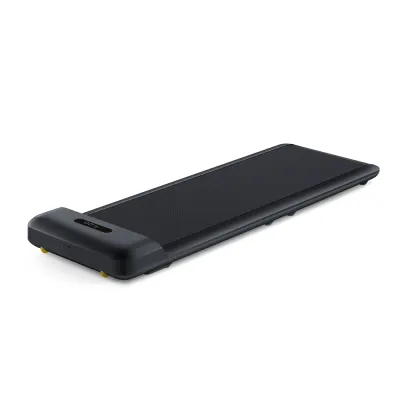
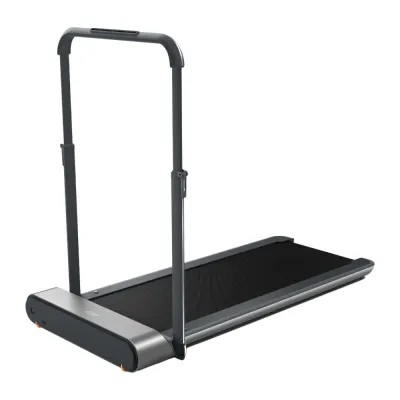
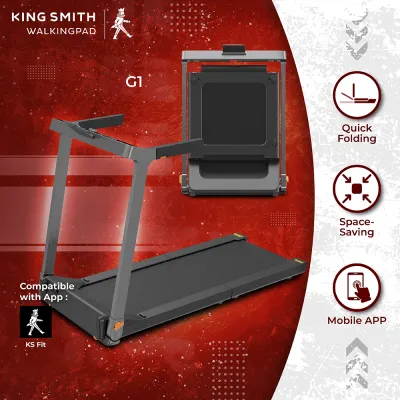
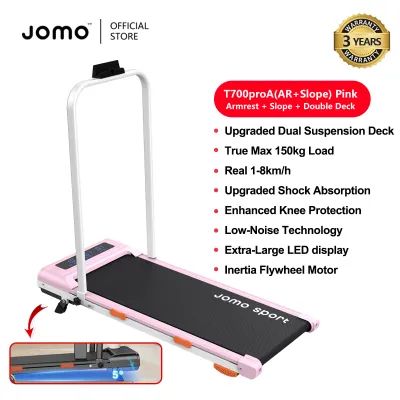
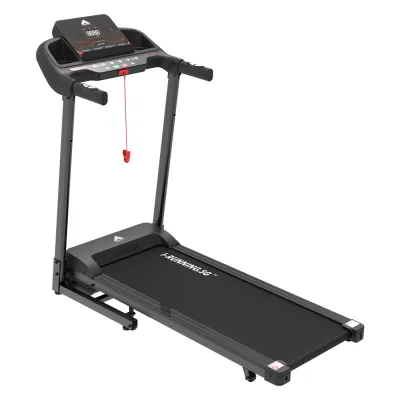
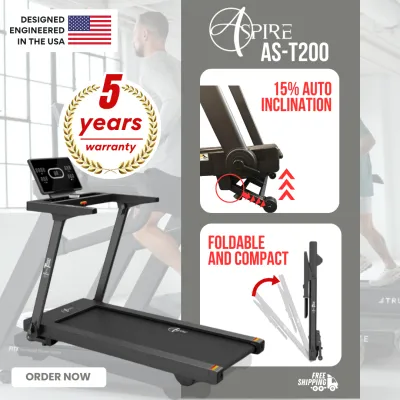
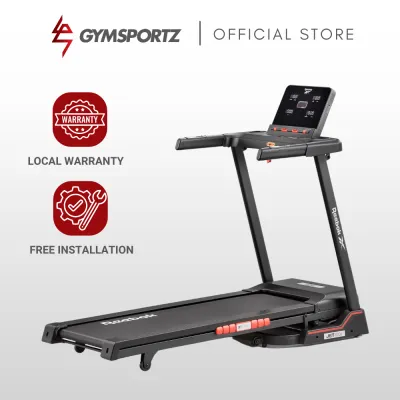
Prices are valid at publication and may change. Please refer to the product page for the latest price.
Vertical space is another critical factor that is easily overlooked in HDB flats, where ceiling heights typically range from 2.6 to 2.8 meters. To calculate your required vertical clearance, add the height of the tallest user to the step-up height of the treadmill deck. If you plan to purchase a machine with an incline feature, you must also add the maximum height the deck reaches at its highest incline setting. Leaving at least 30 to 40 centimeters of clearance between the user’s head and the ceiling is a prudent step to prevent accidental contact during high-intensity runs.
Finally, map out the entire delivery route from the building’s drop-off point to the final room in your flat. Measure the width and height of your main door, hallway turns, and the doorway of the room where the treadmill will live. Do not forget to check the dimensions of your HDB block’s service lift or passenger lift, as well as any tight turns in the common corridors. Many heavy-duty treadmills are delivered in large, heavy boxes that cannot easily navigate narrow stairwells or small lift cabins, making it essential to verify these entry points before finalizing your purchase.
Evaluating Treadmill Footprint and Running Deck Size
When evaluating treadmill dimensions, you must distinguish between the machine’s overall footprint and the actual size of the running deck. The overall footprint is the total floor space the frame occupies when fully assembled, while the running deck is the moving belt area where you actually walk or run. A compact machine might save floor space, but if the running deck is too narrow or short, it can compromise your safety and natural running gait.

The ideal deck size depends heavily on your height, stride length, and intended activity level. For walking or light jogging, a deck length of 120 centimeters and a width of 40 centimeters is generally sufficient for most users. However, if you plan to run at higher speeds, your stride naturally lengthens, requiring a deck length of at least 140 to 150 centimeters and a width of 50 centimeters to prevent your feet from slipping off the front or back. Taller users should pay extra attention to these dimensions, as a deck that is too short will force an unnatural, shortened stride that can lead to joint strain over time.
Structural stability and weight capacity are also closely tied to the machine’s overall size and frame design. Before purchasing, verify the manufacturer’s specified maximum weight limit and ensure it comfortably exceeds the weight of the heaviest user in your household. A heavier, sturdier frame typically offers better stability and less frame flex during high-impact running, but it also results in a larger static footprint. If you are tight on space, you will need to find a balance between a frame heavy enough to handle your running impact and a footprint that fits your room.
Space-Saving Features and Alternative Designs
For most HDB dwellers, space-saving features are not just optional upgrades but absolute necessities. Folding treadmills are the most popular solution, allowing you to reclaim valuable floor space when the machine is not in use. When comparing folding mechanisms, look for systems equipped with hydraulic assist or soft-drop technology. These systems use gas shocks to slowly lower the deck to the floor, reducing the physical effort required to unfold the machine and preventing the heavy deck from slamming down onto your flooring.
Always verify the exact folded dimensions of the machine, as some models fold almost completely flat to be stored vertically against a wall or horizontally under a bed, while others fold at an angle and still occupy a significant amount of floor space. If you plan to move the treadmill frequently, check for the presence of built-in transport wheels. Moving a heavy piece of fitness equipment across a room can be physically demanding and risks scratching your flooring, so multi-directional wheels and a manageable unit weight are crucial for daily storage transitions.
If your fitness goals are focused primarily on low-impact activity, such as walking while working or light daily movement, compact walking pads or under-desk models offer an excellent alternative to traditional treadmills. These units are typically much lighter, lack a bulky console, and can easily slide under a sofa or standing desk when not in use. While they lack the high speeds, incline options, and robust shock absorption of standard running treadmills, their minimal footprint makes them highly compatible with the tightest HDB layouts.
Common Sizing and Placement Mistakes to Avoid
One of the most common mistakes when setting up a home treadmill is placing the machine flush against a wall or in a tight corner to save space. This placement not only violates safety clearance recommendations but can also restrict the airflow around the motor housing, leading to overheating and premature motor failure. Additionally, tight placement can make it incredibly difficult to access the folding latch or safely maneuver the machine when you need to clean the floor underneath.
Another critical oversight is ignoring the structural and acoustic impact of the machine on your flooring. While HDB floors are designed to support standard household loads, the concentrated, repetitive impact of running can transmit significant noise and vibration through the concrete slab to the flat below. Failing to use a high-density equipment mat can result in damaged tiles or vinyl flooring, as well as noise complaints from neighbors. A thick, specialized rubber mat is essential to absorb vibrations and protect your home’s surfaces.
Lastly, avoid the temptation to buy a treadmill based solely on its room compatibility without confirming delivery logistics. A treadmill that fits beautifully in your spare bedroom is of no use if the delivery team cannot maneuver the boxed unit through your front door or around a tight hallway corner. Always request the packaged dimensions from the retailer and compare them against your delivery path measurements to ensure a smooth, hassle-free installation.
Frequently Asked Questions (FAQ)
Can I place a treadmill on an HDB balcony?
Placing a treadmill on an HDB balcony is generally not recommended due to environmental exposure and structural weight limits. High humidity, direct sunlight, and rain can quickly damage the electronic console, rust the steel frame, and degrade the running belt. Additionally, you must verify the specific weight limits of your balcony structure and consult your town council or building management guidelines before placing heavy fitness equipment in semi-outdoor areas.
How do I reduce treadmill noise for downstairs neighbors?
To minimize noise and vibration transmission in a multi-story HDB block, place a high-density, anti-vibration rubber mat directly under the treadmill. Regularly lubricating the running belt and tightening loose bolts will also prevent mechanical squeaks and rattles. Finally, consider scheduling your high-impact running sessions during daytime hours to remain considerate of your neighbors living directly below.
Community discussion
Share your experience or ask a question. Comments are reviewed before publication.