
Selecting the right knee guard for men requires a clear understanding of your physical demands, joint condition, and environmental factors. Rather than searching for a single, universally perfect model, the key is matching the specific structural features of a guard to your daily routines or athletic pursuits. A well-chosen knee guard provides targeted compression, improves joint awareness, and helps manage minor discomfort, allowing you to remain active and mobile.
Identifying Your Support Requirements and Activity Context
Mild compression is typically delivered by elastic or knit sleeves. These sleeves work by applying gentle, uniform pressure around the joint, which increases local blood circulation and enhances proprioception—the body’s natural ability to sense joint position and movement. This level of support is ideal for managing minor stiffness during low-impact activities or long hours of sitting.
For high-impact sports or post-injury recovery, rigid stabilization is often necessary. Braces with built-in hinges or heavy-duty stays physically limit lateral movement, protecting the ligaments from unnatural twisting or hyperextension. These are designed for scenarios where the knee is subjected to high forces or unpredictable changes in direction, helping to prevent further joint strain.
Products mentioned in this guide
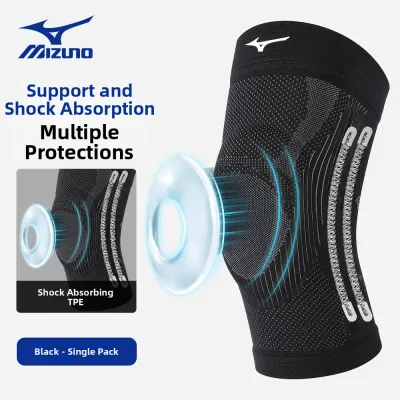
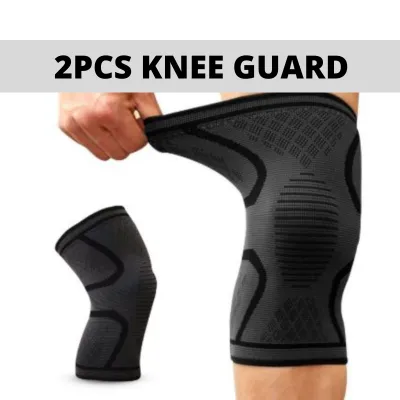
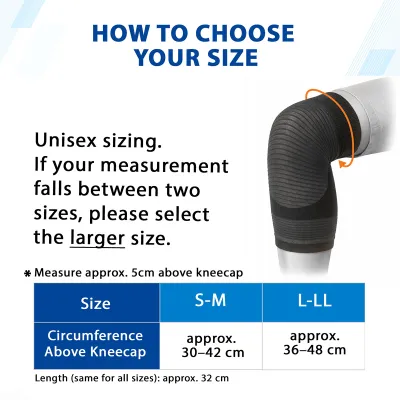
![[BUNDLE OF 2] TAKAMIZU - Orthocare Knee Support](https://img.lazcdn.com/g/p/358694f2fd4b2405e4e66b4a4bf8105e.jpg_400x400q80.jpg_.webp)
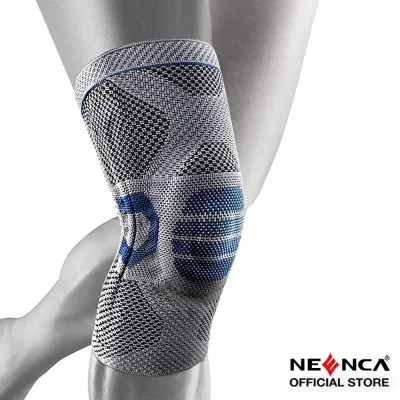
![NEENCA [2 Pack] Knee Brace Knee Compression Sleeve Support with Patella Gel Pad & Side Spring Stabilizers Top Grade Knee Protector for Running Meniscus Tear Arthritis Joint Pain Relief Sport](https://img.lazcdn.com/g/p/35990d04ad7d0b506e3b40e00e2edb4b.jpg_400x400q80.jpg_.webp)
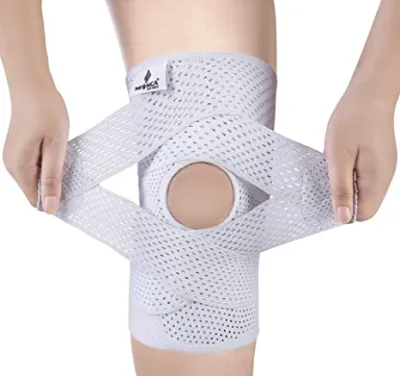
Prices are valid at publication and may change. Please refer to the product page for the latest price.
Recognizing when to seek professional medical advice is crucial before purchasing any protective gear. If you experience sharp, sudden pain, joint locking, audible popping sounds at the moment of injury, or persistent swelling that does not improve with rest, these are clear indicators of a potentially serious structural issue. A knee guard cannot replace a proper medical diagnosis, and attempting to self-treat severe joint instability can lead to long-term damage.
Your specific movement patterns dictate the required range of motion and joint restriction. Linear activities, such as running, cycling, or walking on flat concrete pavements, require a guard that allows free flexion and extension while providing mild tracking support for the kneecap. Multi-directional sports, such as football, basketball, or badminton, involve rapid pivoting and lateral cutting, which demand a guard that restricts side-to-side movement without completely immobilizing the leg.
Core Design Features and Material Considerations
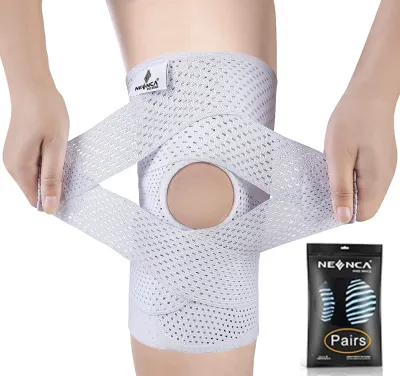
Knee guards generally fall into three design categories: sleeves, wraps, and hinged braces. Sleeves are pull-on garments that offer a streamlined, low-profile fit, making them easy to wear under clothing. Wraps feature an open design with adjustable hook-and-loop straps, allowing you to customize the compression level and easily put the guard on without removing your shoes. Hinged braces incorporate rigid side joints to provide maximum mechanical support against lateral forces.

Material selection is particularly important in hot and humid climates. Traditional neoprene is highly durable and retains therapeutic heat, which can soothe stiff joints, but it also traps sweat and moisture close to the skin. For prolonged wear in tropical weather, look for guards made from breathable 3D knit fabrics, perforated neoprene, or moisture-wicking synthetic blends. These materials facilitate airflow, reduce sweat accumulation, and minimize the risk of skin chafing, heat rash, or bacterial growth.
Structural elements within the guard play a vital role in pressure distribution and joint alignment. An open-patella design, often featuring a circular silicone or gel pad, surrounds the kneecap to keep it tracking correctly during movement while relieving direct pressure on the patellar tendon. This is especially beneficial for individuals experiencing discomfort behind or around the kneecap during repetitive bending.
Side stabilizers and adjustable straps add customized reinforcement to the guard’s structure. Flexible spring steel stays embedded along the sides of a sleeve offer moderate lateral support, helping the guard maintain its shape and prevent it from bunching up behind the knee. Adjustable straps allow you to secure the guard firmly above and below the joint, ensuring it remains in place during vigorous physical activity and does not slide down the leg.
Matching Guard Types to Specific Athletic and Daily Scenarios
Aligning the type of knee guard with your specific activity ensures optimal performance and safety. For high-impact court sports like badminton or basketball, which involve sudden stops, jumps, and rapid lateral shifts, a guard with dual side stabilizers and an open-patella gel pad is highly effective. This design helps absorb impact forces and stabilizes the joint against sudden lateral twisting on the court.
Endurance running and cycling present different physical demands, characterized by repetitive, linear joint movement over long periods. Overuse issues, such as runner’s knee or mild patellar tendonitis, are common in these sports. A lightweight, highly breathable compression sleeve with light lateral stays is ideal here, as it supports natural joint tracking and promotes circulation without adding unnecessary weight or bulk that could alter your stride.
Heavy lifting, including squats, deadlifts, and functional fitness training, subjects the knees to extreme axial loads. Powerlifters and weightlifters typically benefit from thick neoprene sleeves, often 5mm to 7mm in thickness. These sleeves provide maximum joint warmth and heavy compression, which helps stabilize the knee under heavy weights. However, because of their thickness and heat retention, they should be removed between training sets or immediately after lifting to allow the skin to cool and breathe.
For daily office work, commuting, or light household chores, a low-profile, seamless knit sleeve is the most practical option. Whether you are climbing stairs, walking to the transit station, or sitting in an air-conditioned office, a thin sleeve fits comfortably under trousers. It provides subtle warmth and mild compression to prevent joint stiffness during long periods of inactivity without restricting your natural movement.
It is important to recognize the limitations of general-purpose knee guards when used in specialized or extreme conditions. Standard sports guards are not designed for water-based activities, as chlorine and saltwater can rapidly degrade the elastic fibers and adhesive bonds. Additionally, wearing a heavy, water-logged guard while swimming poses a safety hazard by restricting leg movement and increasing drag. Always verify if a product is specifically rated for aquatic use before wearing it in the water.
Evaluating Brand Reliability and Model Durability
When shopping for a knee guard, it is essential to evaluate manufacturer claims critically rather than relying on vague marketing terms like “maximum medical support” or “instant pain relief.” Reputable brands provide detailed technical specifications, including the exact material composition (such as the percentages of nylon, spandex, and neoprene) and clear explanations of the guard’s structural features. Look for brands that offer transparent product information and clear guidelines on the intended level of support.
Sizing accuracy is a key indicator of a brand’s reliability. Avoid products marketed as “one-size-fits-all,” as knee anatomy and leg circumferences vary widely among individuals. Reliable manufacturers provide comprehensive, model-specific sizing charts with detailed instructions on where and how to measure your leg. Some brands offer men-specific sizing charts that account for typical male muscle distribution in the thighs and calves, ensuring a more secure and anatomically correct fit.
Check the brand’s warranty policies, return conditions, and customer support accessibility before making a purchase. Because finding the perfect fit can sometimes require trying different sizes, a flexible exchange policy is highly valuable. Reputable brands typically offer clear return windows and responsive customer service channels to help you resolve sizing issues or address manufacturing defects. Investing S$30 to S$100 on a guard from a brand with reliable customer support is often more cost-effective than buying cheap, unbranded alternatives that lack warranty protection.
Inspect the product’s user manual or official guidelines for stated lifespan indicators, weight limits, and specific care instructions. High-quality guards feature reinforced double-stitching along the edges and premium hook-and-loop fasteners that maintain their grip over hundreds of fastening cycles. If a manufacturer provides detailed instructions on how to care for the materials, it demonstrates a commitment to product durability and long-term performance.
Ensuring Proper Fit, Sizing, and Routine Maintenance
Achieving a proper fit is critical to ensuring the knee guard functions as intended without causing discomfort or injury. To measure your leg accurately, use a flexible measuring tape while standing with your leg slightly bent at approximately a 30-degree angle. Measure the circumference of your thigh (typically 10 to 15 cm above the center of your kneecap) and your calf (typically 10 to 15 cm below the kneecap), as specified by the manufacturer’s sizing guide. Do not guess your size based on your clothing size, as knee guard sizing is highly specific to joint dimensions.
Proper routine maintenance is essential to preserve the structural integrity and elasticity of your knee guard. Sweat, body oils, and dirt accumulate during use and can break down elastic fibers and neoprene over time. Wash your guard regularly by hand in cool water using a mild, fragrance-free detergent. Avoid using fabric softeners, bleach, or hot water, as these chemicals and high temperatures degrade the synthetic polymers and weaken the adhesive bonds in the seams.
Drying and storing the guard correctly is just as important as washing it. Always air-dry the guard flat in a shaded, well-ventilated indoor area. Never place the guard in a clothes dryer, and avoid exposing it to direct, intense sunlight, as excessive heat will cause the elastic materials to become brittle and lose their stretch. Once completely dry, store the guard flat or loosely rolled in a cool, dry drawer away from sharp objects that could snag the fabric.
Regularly inspect your knee guard for visible signs of wear that indicate it is time for a replacement. Frayed stitching along the borders, thinned or cracked neoprene, stretched-out elastic bands, and hook-and-loop fasteners that no longer hold securely are clear signs of material degradation. For hinged models, check for bent, loose, or noisy hinges that do not glide smoothly. A worn-out guard cannot provide adequate joint stabilization and may lead to improper joint tracking or skin irritation, meaning it must be replaced to maintain safety.
Frequently Asked Questions (FAQ)
Can I wear a knee guard all day for daily activities?
Generally, wearing a supportive knee guard all day is not recommended unless specifically prescribed by a healthcare professional. Continuous compression over many hours can restrict local blood circulation, lead to skin irritation or chafing—especially in warm, humid climates—and cause muscle dependency. When a brace constantly supports the joint, the surrounding muscles do not have to work as hard, which can lead to gradual muscle weakening over time. It is best to wear the guard during periods of physical exertion or tasks that strain the joint, and remove it during rest, sitting for long periods, or sleeping to allow your muscles to engage and your skin to breathe.
How do I know if my knee guard is too tight or too loose?
A properly fitted knee guard should feel snug, secure, and supportive without causing pain or restricting your movement. Signs that your guard is too tight include numbness, tingling, a cold sensation in your lower leg or foot, deep red indentations on your skin after removal, or visible swelling below the brace. These symptoms indicate that the guard is restricting blood flow or compressing nerves, and you should immediately switch to a larger size. Conversely, if the guard frequently slips down your leg during normal walking, bunches up uncomfortably behind your knee, or does not provide a noticeable feeling of compression and stability, it is too loose and will not offer the intended joint support.
Community discussion
Share your experience or ask a question. Comments are reviewed before publication.