
Selecting the right protective equipment is a foundational step for anyone practicing Muay Thai, where powerful kicks, knees, and close-range clinch work are central. While offensive techniques require years of dedication to master, defensive preparation begins with securing reliable personal protection. In a high-impact martial art, a groin guard serves as a critical secondary line of defense against accidental strikes. It is vital to remember that no piece of equipment can replace controlled training habits, proper defensive positioning, and clear communication with your sparring partners.
In Singapore’s tropical climate, choosing training gear involves unique considerations beyond basic impact protection. High humidity and consistent heat accelerate perspiration, which directly impacts how materials feel against the skin, how quickly gear degrades, and how hygiene must be managed. A guard that shifts during a dynamic kick or traps excessive moisture can cause severe chafing, distracting you from your training and compromising your safety. Understanding how to evaluate materials, fit, and structural integrity ensures you remain protected and comfortable during intense sessions in local gyms.
Understanding Groin Guard Materials and Shell Designs
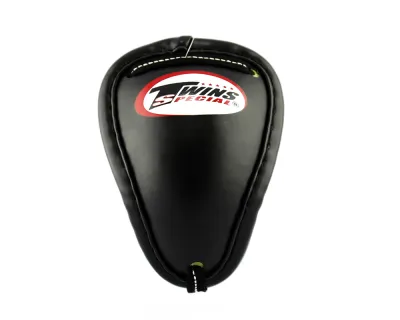
The core protective element of any groin guard is its shell, designed to absorb and redistribute impact forces away from sensitive areas. Traditional Muay Thai training heavily relies on steel cups, which offer exceptional rigidity and impact resistance. Because steel does not deform under pressure, it excels at dispersing high-velocity forces across the pelvic bone, making it the historical standard for competitive fighters. However, steel cups are inherently heavier and require a robust padding border—usually made of rubber or dense foam—to prevent the hard metal edge from pressing painfully into the pelvis during movement.
Products mentioned in this guide
![[SG FREE ] Groin Protector Cup Men Boxing Kickboxing Guard Muay Groin Guard Ventilated Adjustable Karate Fighting Trai](https://img.lazcdn.com/g/p/40638f93ec1dfbe25093f298a9b2dc40.jpg_400x400q80.jpg_.webp)
Prices are valid at publication and may change. Please refer to the product page for the latest price.
Modern combat sports engineering has introduced high-density polymers and composite plastics as viable alternatives to traditional steel. These modern materials are significantly lighter, reducing the overall weight of your training gear and allowing for faster, more fluid hip transitions. While high-quality polymers can withstand substantial impact, they may exhibit slight flex under extreme loads compared to steel. When selecting a composite guard, it is essential to verify the manufacturer’s specifications regarding material density and intended impact levels, as lightweight plastic cups designed for low-impact sports may crack under the force of a Muay Thai kick.
Beyond the shell itself, the internal padding and lining materials dictate how well the guard performs in Singapore’s humid training environments. Closed-cell foams are highly recommended for the border padding because they do not absorb moisture, preventing the guard from becoming heavy with sweat or harboring bacteria. Conversely, open-cell foams or untreated fabric linings can act like sponges, leading to rapid material degradation and persistent odors. Look for guards featuring moisture-wicking, antimicrobial linings or those designed with removable, washable sleeves that simplify post-training hygiene.
To ensure safety, inspect the product packaging or manufacturer documentation for material compositions and certified impact standards. Avoid generic, unbranded guards that do not disclose their plastic or metal grades, as these items often lack the structural integrity required for combat sports. Verifying clear labeling regarding durability and shock-absorption ratings is a crucial step before training.
Evaluating Protection Coverage and Striking Angles
Muay Thai involves a diverse array of striking angles, including upward knee strikes in the clinch, low kicks that can accidentally deflect upward, and descending front kicks. Standard athletic cups, such as those used in baseball or cricket, are primarily designed to protect against frontal impacts from a ball and often feature a narrow, shallow profile. In contrast, Muay Thai-specific groin guards utilize a deeper, teardrop-shaped design with extended lateral shields. This specialized geometry ensures that the guard remains effective even when strikes land from lateral or upward trajectories, which are common during dynamic exchanges.

Adequate coverage must extend beyond the immediate groin area to protect the lower abdomen and the junction where the upper thigh meets the pelvis. During a clinch, training partners operate at extremely close range, and knee strikes can easily slip past a standard cup if the guard lacks sufficient vertical coverage. The extended upper rim of a Muay Thai guard helps bridge the gap between your shorts and your lower torso, absorbing glancing blows that might otherwise cause significant discomfort or injury.
To verify that a guard provides adequate coverage without restricting movement, perform a physical assessment. Put on the guard and execute slow, controlled knee raises to simulate a block. The guard should remain flush against your body without pinching the inner thighs or digging into the hip flexors. Next, perform a deep lateral lunge; if the edges create sharp pressure points against your pelvic bone, the cup shape may be too wide or poorly contoured.
Additionally, pay close attention to how the guard’s profile interacts with your hip rotation during kicking motions. A guard that is too bulky or improperly shaped will physically block your thighs from crossing your midline, limiting the power of your roundhouse kicks and making your movements predictable. The ideal guard should feel like an extension of your body, providing a secure barrier while allowing your hips to rotate freely through every plane of motion.
Sizing, Fit, and Strap Configurations
Achieving a secure fit is as important as selecting the right material, as even a steel cup cannot protect you if it shifts out of alignment. When determining your size, do not rely on standard apparel sizes, which do not correlate directly with protective gear. Instead, consult the manufacturer’s sizing charts, which typically require measuring your waist circumference and matching it to the corresponding cup volume. Note that cup size and waistband size are sometimes adjusted independently depending on the brand.
The securement method plays a major role in stability, comfort, and durability. Traditional Muay Thai steel cups utilize a three-string tie system, where cotton cords are threaded through the cup’s padded border and tied around the waist and under the glutes. This classic configuration offers excellent stability because the tension can be customized precisely to your body shape, keeping the cup locked in place during intense clinching. However, tying these straps correctly requires practice, and the cords can feel abrasive if not positioned carefully.
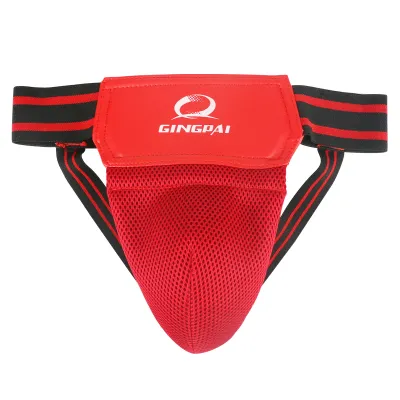
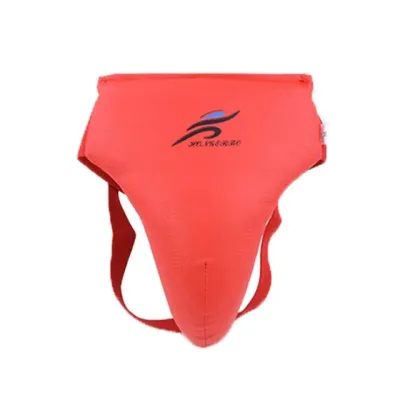
Alternatively, many modern guards utilize elastic waistbands and jockstrap systems, favored for convenience. These systems allow you to slip the guard on quickly and often feature wide, moisture-wicking bands that distribute pressure evenly. While comfortable, elastic materials are susceptible to stretching and losing tension over time, especially when exposed to repeated washing in Singapore’s humid climate. If you opt for an elastic system, prioritize heavy-duty, multi-stitched bands.
Regardless of the configuration you choose, the guard must fit snugly enough to prevent any lateral or vertical movement of the cup during training. A loose guard can allow the cup to slip, which can cause the hard edge of the shell to strike sensitive areas during an impact, defeating the purpose of the protection. Ensure the straps are tight enough to hold the cup firmly against your pelvic bone without restricting your breathing, impeding your circulation, or leaving deep, painful indentations on your skin.
Condition-Based Selection: Matching Gear to Training Intensity
Your choice of groin guard should align with your current training intensity, sparring frequency, and gym activities rather than aspirational competition goals. For beginners whose training consists of shadowboxing, bag work, and pad drills, a lightweight composite shield integrated into compression shorts is often the most practical choice. These systems offer excellent mobility, are highly breathable, and provide sufficient protection against occasional accidental bumps. Because the impact risk during pad work is low, prioritizing comfort and ease of washing is sensible.
As you transition into technical sparring and light clinch work, the demand for reliable impact dispersion increases. Technical sparring involves controlled, light-contact exchanges where the goal is to practice timing and defense. For this level, a high-density polymer cup secured by a wide elastic jockstrap provides an ideal balance of protection and agility. The polymer shell offers robust defense against controlled kicks, while the elastic harness keeps the guard centered during rapid footwork.
For heavy sparring, hard clinch work, and amateur competition, maximum protection is non-negotiable. At this intensity, the force of accidental strikes can be substantial, requiring the rigidity of a reinforced steel cup or a heavy-duty, competition-grade polymer guard. These high-intensity scenarios demand a secure three-string tie system or an ultra-reinforced jockstrap to ensure the guard cannot be displaced by forceful knee strikes or vigorous clinch work.
To help guide your selection, refer to the following decision matrix to match your primary training activities with the appropriate guard specifications:
| Training Scenario | Recommended Shell Type | Strap/Securement System | Key Feature to Verify |
|---|---|---|---|
| Pad Work & Bag Drills | Lightweight Polymer / Plastic | Compression Shorts or Elastic Jockstrap | Breathable lining, high mobility |
| Technical Sparring | High-Density Polymer | Elastic Jockstrap (Wide Band) | Edge padding, secure fit during movement |
| Hard Sparring & Clinch Work | Traditional Steel Cup | Three-String Tie System or Heavy-Duty Jockstrap | Deep cup profile, shock-absorbing rubber border |
| Amateur Competition | Steel or Certified Heavy Polymer | Three-String Tie System | Sanctioning body approval, zero-shift stability |
Always remember that over-equipping with a heavy, restrictive steel cup for basic fitness classes can hinder your learning experience, while under-equipping with a basic plastic cup during hard sparring poses serious safety risks. Assess your weekly training routine honestly and select the gear tier that matches the actual contact levels you encounter.
Inspection, Maintenance, and Replacement Triggers
Proper maintenance is essential to preserve the protective qualities of your groin guard and ensure hygienic training conditions. After every training session, remove the cup from its sleeve or harness and wipe down the shell with a damp cloth and mild, non-abrasive soap. In Singapore’s humid climate, leaving damp gear in a closed gym bag encourages the growth of mold and bacteria, which can lead to skin infections and rapid material rot. Allow all components to air-dry completely in a well-ventilated area away from direct sunlight, as extreme heat can warp plastic shells and degrade elastic straps.
Regularly inspect your equipment for physical signs of wear that could compromise its structural integrity. For plastic and composite cups, look closely for micro-fractures, deep scratches, or areas where the plastic has begun to discolor or bend easily under hand pressure. For steel cups, check for any signs of rust, pitting, or peeling of the protective coating, as well as degradation of the rubber border padding. If the padding separates from the metal shell, the guard is no longer safe to use, as the exposed metal edge can cause severe bruising or lacerations upon impact.
Additionally, evaluate the condition of the securement system by checking the elasticity of the waistbands and the integrity of the stitching. Frayed threads, stretched-out elastic, or torn eyelets on a tie-strap cup indicate that the harness can no longer hold the cup securely in place. If you notice the guard shifting during light movement, it is time to replace the straps or the entire unit.
Finally, establish a strict replacement protocol based on impact history. If your groin guard sustains a direct, unusually heavy strike that results in visible deformation, cracking, or a noticeable change in how the cup sits against your body, stop using it immediately. Do not attempt to glue cracked plastic or bend deformed steel back into shape; instead, consult the manufacturer’s guidelines or replace the guard entirely to ensure your continued safety on the mats.
Frequently Asked Questions (FAQ)
Can I use a standard MMA or baseball cup for Muay Thai?
Standard MMA and baseball cups are generally not recommended for Muay Thai training due to differences in design and coverage. Baseball cups are engineered primarily for frontal, linear impacts and often feature a flatter, narrower profile that does not protect against the upward and lateral angles of kicks and knees. MMA cups sometimes offer better lateral protection but may still lack the deep, teardrop shape and extended lower-abdominal coverage characteristic of traditional Muay Thai guards. Using an improperly shaped cup increases the risk of the guard shifting or failing to cover the pelvic junction during dynamic striking exchanges.
Should I wear compression shorts over or under the groin guard?
For optimal stability and comfort, the groin guard should be worn directly against your base layer or skin, with compression shorts worn over the securement system. The primary jockstrap or tie-strap system must sit flush against your anatomy to prevent the cup from shifting during movement. Wearing compression shorts over the entire setup provides a secondary layer of compression that helps hold the straps and cup firmly in place, while also preventing the edges of the guard from catching on your outer Muay Thai shorts.
Community discussion
Share your experience or ask a question. Comments are reviewed before publication.