
Finding a bottle strap that securely holds a wide, insulated sports bottle without slipping requires matching the strap’s grip mechanism to the bottle’s surface texture and weight. Standard straps designed for lightweight, single-walled plastic bottles often fail when paired with heavy, double-walled stainless steel flasks. To prevent your bottle from sliding out and sustaining damage, look for straps featuring high-friction silicone collar rings, adjustable cord locks, or full-body neoprene sleeves that physically lock the bottle in place.
Why Standard Straps Slip on Wide Insulated Bottles
Insulated sports bottles present unique physical challenges that standard carrying straps are simply not engineered to handle. The primary issue lies in the surface finish of the bottle. Many stainless steel bottles feature either a highly polished, smooth bare metal finish or a powder-coated exterior. While powder coating provides some texture, both surfaces offer remarkably low friction when paired with standard polyester or nylon webbing loops. Without a physical barrier or a high-friction interface, a simple fabric loop will slide effortlessly up or down the smooth, cylindrical body of the bottle.
Weight distribution further compounds this slipping hazard. A fully filled, double-walled insulated bottle is significantly heavier than its single-walled plastic counterpart. For instance, a one-litre stainless steel bottle filled with water can easily weigh over 1.3 kilograms. When you walk, run, or hike, this substantial mass creates dynamic downward force. If the strap relies solely on a narrow loop tightened around a gently tapering neck, the constant bouncing motion pulls the loop downward, stretching the material or sliding it past the bottle’s shoulder.
Products mentioned in this guide
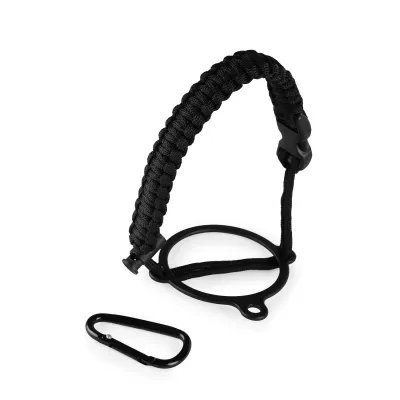
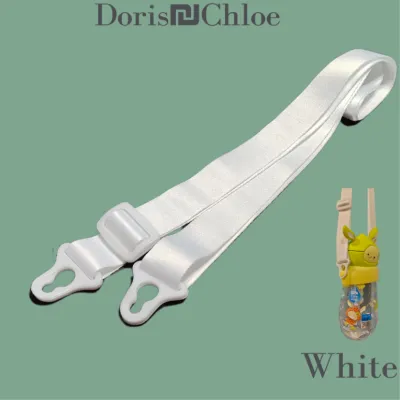
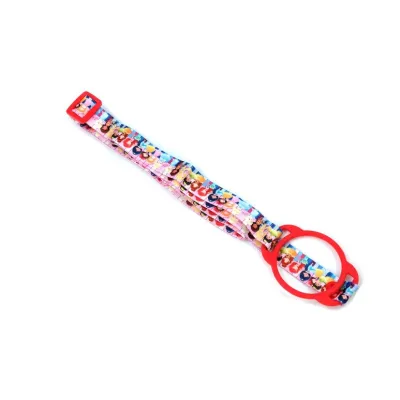
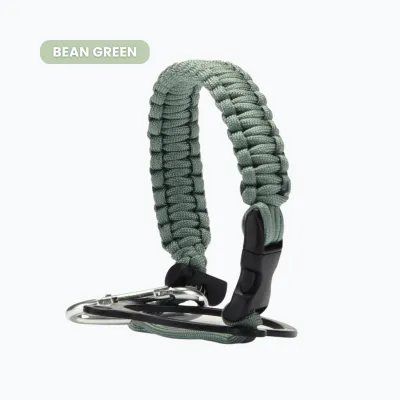
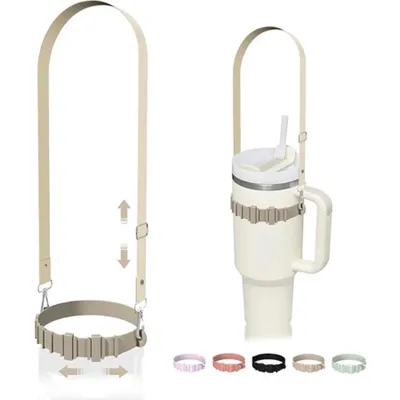
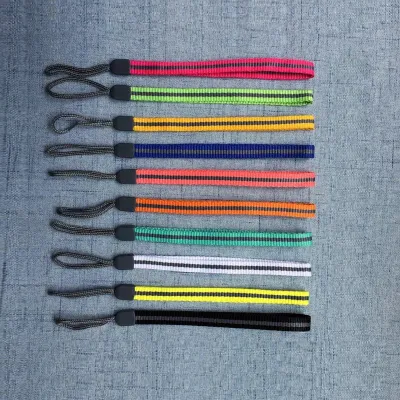
Prices are valid at publication and may change. Please refer to the product page for the latest price.
Furthermore, diameter mismatches are incredibly common. Standard bottle straps are often designed with fixed-diameter loops intended for narrow-neck disposable or thin plastic sports bottles. Wide-mouth insulated bottles have much larger diameters, often ranging from 70mm to over 90mm. Forcing a standard strap onto a wide-body bottle usually results in an insecure fit, as the strap’s fastening mechanism cannot close fully or sit flush against the bottle’s surface, leaving it prone to sudden failure under load.
Grip Mechanisms and Materials That Prevent Slipping
To ensure your insulated bottle remains secure, you must select a strap utilizing materials and fastening designs engineered specifically for high-friction grip. Silicone is one of the most reliable materials for this purpose. High-tensile silicone rings or collars stretch tightly over the neck or body of the bottle, conforming to its shape and creating a powerful vacuum-like grip against both bare metal and powder-coated surfaces. Unlike fabric, silicone does not slide easily when wet, making it excellent for humid environments or sweaty hands during intense workouts.

Neoprene sleeves offer another highly effective solution. By wrapping the entire lower half or full body of the bottle, a neoprene sleeve distributes the carrying tension across a massive surface area rather than concentrating it on a single point. The inherent elasticity of neoprene provides a snug, compressive fit, while its textured inner surface prevents the bottle from rotating or sliding out.
If you prefer fabric-based straps, such as heavy-duty nylon webbing, look for designs that incorporate inner rubberized linings or silicone grip strips. These strips act as friction barriers, preventing the smooth nylon from sliding against the metal. Additionally, adjustable toggle locks and elastic bungee cords are essential for maintaining constant tension. A spring-loaded cord lock allows you to manually tighten the strap around the bottle’s neck or body, compensating for any minor stretching of the material over time.
When choosing between these materials, consider the trade-offs in maintenance and durability. Silicone rings are incredibly easy to clean and do not absorb sweat or odors, but they can tear if nicked by sharp objects. Neoprene provides excellent impact protection against drops but can harbor mold and bacteria in humid climates like Singapore if not washed and dried thoroughly. Nylon webbing with rubberized linings is exceptionally durable and resistant to abrasion, but the rubberized elements can degrade and become sticky over time if exposed to direct sunlight and high temperatures for prolonged periods.
Matching Strap Types to Your Activity and Carry Style
Your choice of bottle strap should align directly with your specific activity, venue, and how you prefer to carry your gear. For hands-free convenience during long outdoor treks, day hikes, or walks through nature reserves, a crossbody strap or shoulder sling is highly practical. These straps feature long, adjustable bands that distribute the bottle’s weight across your torso. When selecting a shoulder sling for a heavy insulated bottle, ensure the strap includes a wide, padded shoulder section to prevent the webbing from digging into your skin under the heavy load.
For gym environments, indoor fitness classes, or quick transitions between workout stations, a short wrist lanyard or a strap equipped with a heavy-duty carabiner clip is often more appropriate. These shorter configurations allow you to clip the bottle securely to a gym bag, weight rack, or fence, keeping it off the floor and within easy reach. A wrist lanyard provides a secure backup grip while carrying the bottle in your hand, preventing accidental drops on hard concrete or rubber gym flooring.
Rugged outdoor activities, such as camping or off-trail scrambling, demand heavy-duty tactical straps. These systems often utilize a harness-style design with reinforced D-rings, multiple attachment points, and thick webbing that wraps around both the neck and base of the bottle. This multi-point support prevents the bottle from swinging wildly as you move, reducing dynamic stress on the strap and keeping your center of gravity stable.
A simple handle loop or finger strap is generally sufficient only when you are moving short distances, such as from your car to an indoor office desk, and when the bottle is relatively light. However, when navigating uneven terrain, carrying other gear, or managing a bottle larger than 800ml, a full-body support strap or a dedicated bottle sling becomes necessary to ensure physical safety and prevent fatigue.
How to Measure Your Bottle and Verify Strap Compatibility
Before purchasing any bottle strap from an online marketplace or local sports retailer, taking precise measurements of your insulated bottle is critical to ensure a non-slip fit. Do not rely solely on the bottle’s fluid capacity, as different brands design their flasks with vastly different heights, diameters, and neck profiles.
First, use a flexible measuring tape to find the circumference and diameter of three key areas: the bottle neck (directly below the collar or lid threads), the shoulder taper (where the neck widens into the main body), and the widest part of the main body. If you do not have a flexible tape, wrap a piece of string around these areas, mark the overlap, and measure the string against a standard ruler.
Next, compare these measurements against the manufacturer’s strap specifications. Pay close attention to whether the strap utilizes a fixed-size loop or an adjustable mechanism. Fixed-size silicone rings must be slightly smaller than the bottle neck diameter to ensure they stretch and grip tightly; however, if the ring is too small, you risk tearing the material during installation. For adjustable straps, verify that the maximum and minimum adjustment ranges fully encompass your bottle’s dimensions.
You must also check for physical clearance around the bottle’s lid, flip-top spout, and existing carry handles. A strap that sits too high on the neck can interfere with the screw threads, preventing the lid from sealing completely and causing leaks. Ensure the strap loop sits low enough to allow the lid to operate freely. Finally, if your bottle has an extremely steep taper angle or lacks a distinct neck ridge, standard loop straps may not have a physical ledge to rest against. In such cases, stop and consult the bottle manufacturer’s guidelines, or opt for a full-body sleeve style strap that does not rely on a neck ridge for support.
Evaluating Weight Capacity and Durability
A fully loaded insulated bottle represents a significant dynamic load when you are in motion. Therefore, evaluating the weight capacity and structural durability of a bottle strap is essential to prevent sudden failures that could damage your bottle or cause injury.
When reviewing product specifications, look for stated weight limits and understand the difference between static and dynamic load capacity. A strap might easily support a 1.5-kilogram bottle while hanging still (static load), but the force exerted when you jump, run, or drop the bottle slightly can double or triple that weight momentarily (dynamic load). Always choose a strap with a rated capacity that comfortably exceeds the fully filled weight of your bottle.
Inspect the construction quality of the strap thoroughly. Look for reinforced stitching, particularly bar tacks (dense, zigzag stitching patterns) at high-stress connection points where the strap joins the bottle loop or hardware. Examine the hardware materials carefully; high-grade metal carabiners, solid brass D-rings, or thick, impact-resistant polymer buckles are far more reliable than thin, brittle plastic clips.
Regularly inspect your carrying system for signs of wear and tear. Check for fraying fabric, loose threads, cracking silicone, or stretched-out elastic. If you notice any hardware stress, such as a bent carabiner gate or a slipping cord lock, replace the strap immediately. To maintain safety, avoid swinging the bottle excessively while attached to the strap, and never drop the bottle from a height while holding only the strap, as the sudden deceleration can easily snap plastic buckles or tear fabric seams.
Frequently Asked Questions (FAQ)
Can I use a paracord strap on a smooth insulated bottle?
Paracord straps can be used on smooth insulated bottles, but they require specific precautions because nylon paracord has very low natural friction against bare stainless steel or smooth powder coatings. To prevent a paracord loop from slipping off, you should always pair it with a high-friction silicone O-ring or a rubber stopper that sits directly beneath the paracord knot. This rubberized barrier prevents the knot from sliding up over the bottle’s shoulder. Additionally, always check the tightness of the paracord knot before each use, as nylon fibers can naturally loosen under dynamic movement.
How do I clean a silicone or neoprene bottle strap?
To maintain the grip and hygiene of your bottle strap, clean it regularly using mild dish soap and warm water. For silicone straps, gently wipe the surface with a soft sponge to remove sweat, oils, and dirt that can reduce friction; avoid using abrasive scrubbers or harsh chemical solvents, which can degrade the silicone polymer. For neoprene sleeves, hand wash them in warm soapy water, squeeze out the excess water gently without wringing, and hang them to air-dry completely in a well-ventilated area. Never reattach a damp strap to your bottle, as trapped moisture can lead to mold, mildew, and unpleasant odors, especially in humid climates.
Will a tight strap dent my stainless steel bottle?
A standard, properly adjusted bottle strap will not dent a stainless steel bottle. Vacuum-insulated bottles are constructed with double-walled steel, which provides excellent structural rigidity. However, you should avoid using mechanical tools or excessive force to tighten adjustable metal clamps or ultra-rigid straps around the bottle body. Only apply enough tension to prevent slipping; applying crushing force can compromise the vacuum seal between the inner and outer walls, ruining the bottle’s insulating properties. If you notice any paint chipping or minor metal stress marks, loosen the strap immediately or switch to a soft, flexible silicone or neoprene alternative.
Community discussion
Share your experience or ask a question. Comments are reviewed before publication.