
Parking a bicycle outdoors in Singapore exposes it to intense tropical downpours, high humidity, and relentless sunlight. To protect your investment from rust, mold, and premature wear, a standard plastic sheet is rarely sufficient. A truly rainproof bicycle cover must combine robust waterproof materials, secure fastening mechanisms, and smart ventilation to withstand sudden afternoon squalls and prevent moisture from trapping underneath. Evaluating specific material ratings and structural designs before purchasing ensures your bicycle remains dry and protected in local weather conditions.
Understanding Waterproof Ratings and Material Thickness
When browsing for a bicycle cover, you will frequently encounter technical specifications like Denier (D) and Hydrostatic Head (HH). Understanding these terms helps you look past generic marketing claims and assess how a fabric will actually perform during a heavy downpour.
Denier measures the thickness of the individual yarns used to weave the fabric. A higher Denier rating, such as 190D, 210D, or 300D, indicates a thicker, heavier, and more abrasion-resistant material. While a higher Denier means the cover is less likely to tear when snagged on pedals or handlebars, thickness alone does not make a fabric waterproof. A heavy fabric can still absorb and leak water if it lacks the proper treatment.
Products mentioned in this guide
![[SG SELLER] High Quality Waterproof and Sun-proof Bicycle Cover With Anti-Theft Lock Holes for Mountain Road Electric Bikes [#1] [#3}](https://img.lazcdn.com/g/p/45f77b91ca518233cc145eb211233472.jpg_400x400q80.jpg_.webp)
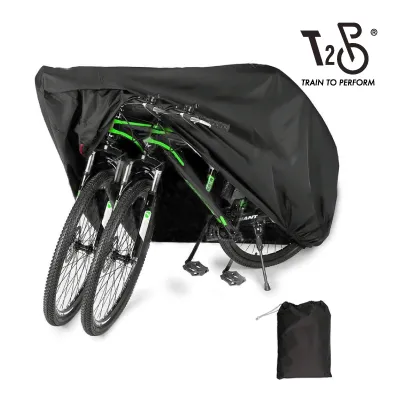
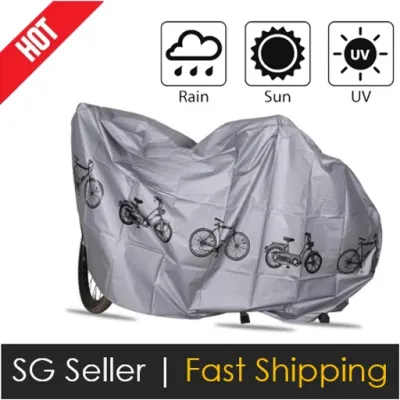
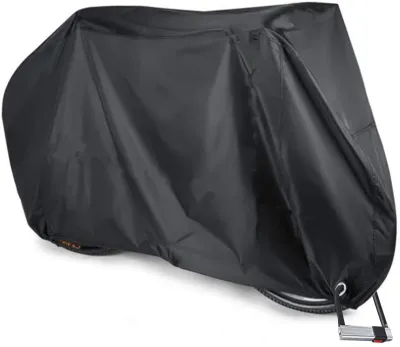
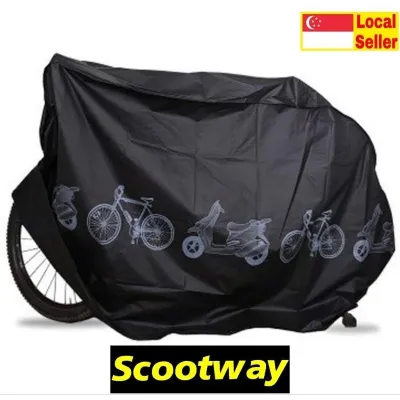
![[SG] Bicycle Cover / Bike Motorbike Motorcycle E-scooter/ Protective Waterproof Covers Rain Weather Resistant](https://img.lazcdn.com/g/p/e9be31b5257cd87cf4db6c0383d6bcf2.jpg_400x400q80.jpg_.webp)
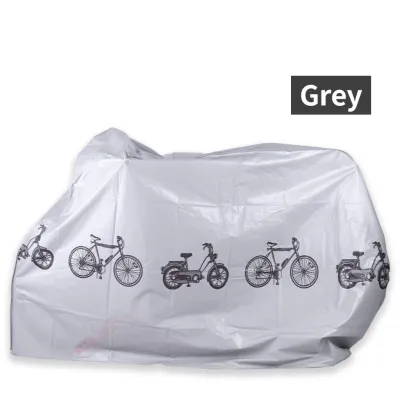
Prices are valid at publication and may change. Please refer to the product page for the latest price.
To repel water effectively, the base fabric must feature a specialized waterproof coating, such as polyurethane (PU) or polyvinyl chloride (PVC). When reviewing product descriptions on an online marketplace, look for the Hydrostatic Head rating, which is measured in millimeters (mm). This rating indicates the amount of water pressure the fabric can withstand before water starts leaking through. For reliable protection against Singapore’s intense tropical rain, look for a rating of at least 1500mm to 2000mm. A higher rating means the cover can endure the force of wind-driven rain without letting moisture seep through the material.
Critical Design Features for Heavy Rain and High Humidity
Even the most waterproof fabric will fail if water can find its way through the seams. When a cover is stitched together, the sewing needle leaves thousands of tiny holes along the seams. During a prolonged storm, water will inevitably seep through these holes and drip onto your bicycle. To prevent this, check the product specifications for taped or heat-sealed seams. This manufacturing process applies a waterproof tape over the stitched areas, effectively sealing the needle holes and blocking water ingress.

In a hot and humid climate, keeping water out is only half the battle. High humidity combined with temperature fluctuations can cause condensation to build up on the inside of the cover. If this moisture cannot escape, it creates a damp microclimate that accelerates rust on chains and gears, and encourages mold growth on saddles and grips. To combat this, look for covers equipped with built-in ventilation vents. These vents are typically covered by small hoods that let air circulate freely while keeping rain out, allowing trapped moisture to evaporate.
Additionally, pay close attention to the closures and openings. If the cover features zippers for easy access or adjustment, they should be shielded by waterproof flaps or rubberized strips. These flaps act as a physical barrier, directing rainwater away from the zipper teeth and preventing slow leaks from reaching your bicycle frame.
Securing the Cover Against Wind and Sun Exposure
Sudden squalls and strong winds can easily lift and blow away a loose bicycle cover, leaving your bike completely exposed to the elements. To ensure the cover stays firmly in place, look for adjustable bottom hems, elasticized edges, and heavy-duty buckle straps. Elastic hems help the cover wrap snugly around the bottom of the wheels, while adjustable straps that buckle underneath the frame prevent the wind from catching the cover like a sail.
The tropical sun is just as damaging to outdoor gear as heavy rain. Prolonged exposure to ultraviolet (UV) radiation breaks down fabric fibers, causing them to fade, become brittle, and eventually tear under minor stress. When selecting a cover, verify that the material has been treated with a UV-resistant coating. This protective layer reflects or absorbs harmful radiation, extending the lifespan of the cover and keeping the fabric pliable over years of outdoor use.
For bicycles parked in shared outdoor spaces, such as HDB void decks, common corridors, or public bicycle racks, visibility is another important safety factor. Covers with integrated reflective strips or bright, high-visibility accents make your parked bicycle easier to spot at night. This simple feature helps prevent accidental bumps or damage from pedestrians, delivery riders, or other cyclists navigating dark pathways.
Evaluating Fit and Practical Usability
A cover that is too small will leave parts of your bicycle exposed, while one that is too large will sag, collect pools of water, and flap excessively in the wind. Before purchasing, measure your bicycle’s total length, height from the ground to the handlebars, and the width of the handlebars. If your bicycle is equipped with accessories such as a front basket, a rear rack, a child seat, or wide mountain bike handlebars, make sure to add these dimensions to your measurements, as standard covers are typically designed for bare frames.
Security is another critical consideration for outdoor parking. Look for covers that feature reinforced lock holes or metal grommets near the front or rear wheels. These openings allow you to pass a heavy-duty U-lock or cable lock through both the cover and the bicycle frame, securing the entire setup to a fixed public rack. This design keeps your bicycle secure while ensuring the cover cannot be easily removed or stolen.
Finally, consider how easy the cover is to store and transport. A wet, bulky cover can be difficult to manage after a rainy commute. A dedicated storage pouch or carrying bag allows you to fold and pack the dry cover neatly, making it convenient to carry in a backpack or attach to your bicycle rack when you are on the move.
Frequently Asked Questions (FAQ)
Can I use a generic waterproof tarp instead of a dedicated bicycle cover?
Using a flat, generic tarp is generally impractical for outdoor bicycle protection. Tarps lack a tailored shape, making them incredibly difficult to secure tightly around a bicycle frame during strong winds. Without elastic hems or fitted contours, wind can easily blow the tarp away or cause it to flap violently, which can scratch your bicycle’s paint. Furthermore, flat tarps tend to sag and collect large pools of rainwater in the center, creating heavy pockets of water that can collapse the setup or slowly seep through the material. A dedicated bicycle cover provides a snug, secure fit that sheds water naturally.
How do I prevent mold and rust under the cover in a humid climate?
To prevent rust and mold, never put a wet cover over a wet bicycle. If you ride in the rain, wipe down your bicycle with a dry cloth and let it dry completely before covering it. Ensure your cover has functional ventilation vents to allow airflow. Additionally, make it a habit to remove the cover periodically—especially after consecutive days of heavy rain—to let both the bicycle and the inside of the cover air out in the sun. Regularly inspecting your bicycle for early signs of moisture buildup allows you to address dampness before rust or mold can take hold.
Community discussion
Share your experience or ask a question. Comments are reviewed before publication.