
Starting a home Pilates practice in Singapore requires a thoughtful approach to selecting equipment. A reformer pilates bed is a significant investment, and for a beginner, the variety of brands and specifications can feel overwhelming. Rather than searching for a single, universally “best” brand, your decision should focus on finding a manufacturer whose design matches your physical dimensions, home space constraints, and safety requirements. Because you will be performing dynamic movements under spring tension, prioritizing structural integrity, smooth mechanical operation, and reliable local after-sales support is far more critical than aesthetic appeal or generic online endorsements.
To make an informed choice, you must evaluate how a reformer’s physical footprint fits into your living space, how its mechanical components support your learning curve, and how the manufacturer handles maintenance and warranties within Singapore. This guide provides a structured framework to help you assess these factors, ensuring you select a high-quality reformer that supports your fitness progression safely and effectively over the long term.
Defining Your Space and Physical Requirements
Before comparing specific reformer brands, you must accurately assess your physical environment and your own body metrics. Home layouts in Singapore, particularly in high-rise apartments, often require careful spatial planning. A standard studio-grade reformer typically requires a dedicated floor area of approximately 2.4 meters in length and 0.7 meters in width. You must also account for a safety clearance zone of at least 0.6 meters around all sides of the machine to allow for unrestricted limb movement. If your workout area is multi-functional, look for brands that specialize in foldable models or those designed for vertical storage. For vertical storage, verify your ceiling height against the upright height of the reformer, ensuring there is sufficient clearance to tip the machine upward safely.
Products mentioned in this guide
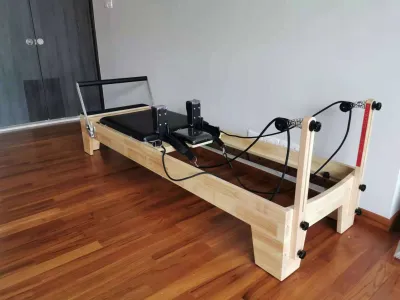
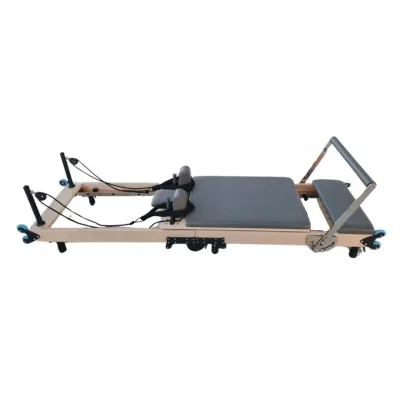
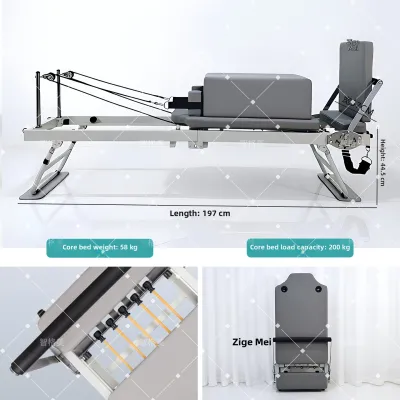
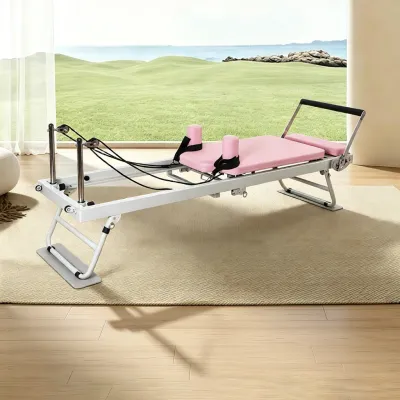
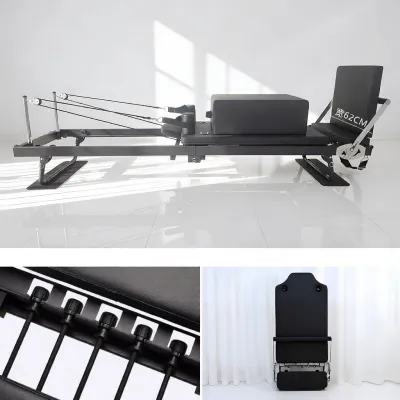
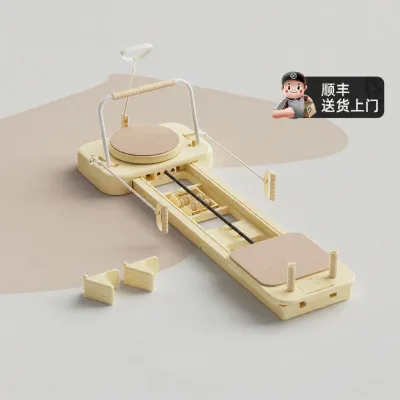
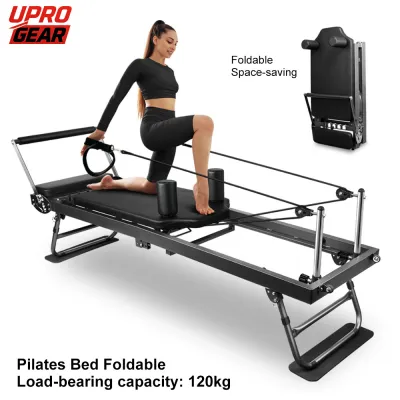

Prices are valid at publication and may change. Please refer to the product page for the latest price.
Your physical baseline is the next critical factor in selecting a reformer. Not all carriages and frames are built to accommodate every body type. If you are taller or have longer limbs, a standard carriage may limit your range of motion, preventing you from fully extending during exercises. Look for brands that offer extended frame options or adjustable carriage stoppers that allow you to customize the starting position. Conversely, shorter users should verify that the shoulder rests and footbar can be adjusted closer together to maintain proper biomechanical alignment.
Weight capacity is another non-negotiable safety specification. Manufacturers specify both static weight limits (the weight the frame can support when stationary) and dynamic weight limits (the weight supported during active, high-velocity movement). As a beginner, you should always select a reformer with a dynamic weight capacity that exceeds your current body weight by a comfortable margin. This ensures the frame, carriage wheels, and suspension system do not experience premature wear or structural fatigue.
Finally, estimate your projected weekly usage frequency to determine the appropriate material grade. If you plan to use the reformer once or twice a week for gentle stretching and basic alignment work, a light-commercial or high-end home-use model will suffice. However, if multiple household members plan to use the machine daily, or if you intend to progress quickly to high-intensity, advanced repertoires, investing in a commercial-grade reformer with heavy-duty components is highly recommended. This upfront consideration prevents the need for a costly equipment upgrade as your strength and skill levels advance.
Core Mechanical Features for Beginner Safety and Progression
The mechanical performance of a reformer directly influences how safely and effectively you can learn Pilates movements. The carriage, which is the sliding platform you lie or stand on, must glide smoothly along the frame tracks. When evaluating different brands, pay close attention to the wheel and bearing system. High-quality reformers utilize precision-engineered polyurethane or nylon wheels paired with sealed ball bearings. This combination minimizes friction, eliminates jerky movements, and ensures a quiet ride. For a beginner, a jerky carriage can disrupt your balance and make it difficult to isolate specific muscle groups, whereas a smooth, predictable glide allows you to focus entirely on core engagement and control.

The resistance system is the heart of the reformer, consisting of a series of springs attached to a springbar. Most reputable brands use color-coded steel springs to indicate different levels of tension, ranging from very light to heavy. As a beginner, you must understand that Pilates resistance is unique; lighter spring settings often make exercises more challenging by requiring greater core stabilization, while heavier settings provide more support or increase muscle loading. Ensure the brand you choose provides a clear, documented spring tension chart. The springs should be easy to attach and detach from the gearbar without pinching your fingers, and the system should allow for incremental adjustments as your strength develops.
The rope and pulley system must also be highly adjustable and robust. Look for reformers featuring quiet, low-friction pulleys that rotate smoothly to accommodate different angles of pull. The ropes should be made of high-tensile, non-stretch marine-grade materials to prevent elongation over time, which can lead to uneven alignment during bilateral exercises. Quick-adjust rope systems, such as those utilizing cam cleats or nautical-style locking mechanisms, are highly beneficial for beginners. They allow you to quickly equalize the length of both straps without interrupting the flow of your workout.
Additionally, the footbar and shoulder rests must offer multiple adjustment points. A footbar with multiple locking height positions allows you to modify the angle of hip and knee flexion, which is essential if you have tight hamstrings or limited joint mobility. The shoulder rests should be ergonomically shaped, adequately padded to prevent pressure points, and removable for exercises that require a flat carriage surface. Verifying these mechanical adjustments ensures that the reformer can be tailored precisely to your body’s unique proportions, reducing the risk of strain or injury during your practice.
Verifying Build Quality and Weight Specifications
A reformer pilates bed must withstand significant dynamic forces, making structural build quality a primary safety consideration. Frame materials generally fall into two categories: solid hardwoods (such as maple, oak, or beech) and metallic alloys (such as anodized aluminum or steel). Solid wood frames are highly valued for their natural shock-absorption properties, aesthetic warmth, and exceptional stability, making them a popular choice for permanent home setups. Aluminum frames, on the other hand, offer a modern, sleek appearance, are typically lighter, and are often easier to clean or move. Regardless of the material, inspect the joint reinforcement methods. Look for frames joined with heavy-duty steel brackets, dowels, or welds rather than simple wood screws, as reinforced joints prevent the frame from flexing or squeaking under load.
To verify the safety limits of a reformer, locate the manufacturer’s specification label, which is typically found on the underside of the frame or near the springbar. This label should clearly state the maximum weight capacity certified by international safety standards. Do not rely on vague marketing claims of “high capacity.” Instead, look for specific compliance certifications, such as ISO or CE markings, which indicate the equipment has undergone rigorous stress testing. If a brand cannot provide documented proof of these weight limits, it is best to avoid them, as uncertified frames may warp, bend, or fail during dynamic exercises.
Furthermore, you must carefully inspect the locking mechanisms of all adjustable components. If the reformer includes an adjustable footbar, the locking pin or bar must seat deeply and securely into its positioning slots. Any play or wobbling in the footbar can cause it to slip suddenly when you apply body weight, leading to a fall. If you plan to use accessories like a jump board or a cardio rebounder, verify how they attach to the frame. The insertion points should feature robust tightening knobs or locking pins that eliminate any movement. For foldable models, the central hinge mechanism must have a secondary safety lock that prevents the frame from buckling or folding unexpectedly while in use.
Evaluating Warranties and Local After-Sales Support
Purchasing a reformer is a long-term investment, and the quality of after-sales support is just as important as the machine’s initial build quality. When comparing brands, read the warranty terms carefully, as coverage is almost always split into different tiers. The structural frame typically carries the longest warranty, often ranging from five years to a lifetime, reflecting the manufacturer’s confidence in its durability. Mechanical parts, such as the wheels, pulleys, springbar, and gearbar, usually have a shorter warranty period, typically one to two years. Wear-and-tear items, including the springs, ropes, straps, and vinyl upholstery, generally have the shortest coverage, often limited to 90 days or six months. Avoid brands that offer vague, all-inclusive warranties without these specific breakdowns, as they can be difficult to enforce.
In Singapore, local availability of replacement parts is a critical factor that directly impacts the lifespan of your reformer. Springs, ropes, and carriage wheels are consumable parts that will eventually need replacement due to material fatigue. Before purchasing, confirm whether the brand has a dedicated local distributor or service center in Singapore that stocks these specific components. If a brand does not have a local presence, you may face exorbitant shipping fees and weeks of downtime waiting for a replacement spring or rope to arrive from overseas. A reputable brand should be able to supply replacement parts promptly to ensure your training routine is not indefinitely disrupted.
Additionally, consider the logistics of delivery, assembly, and maintenance. A commercial-grade or solid wood reformer can weigh anywhere from 60 to over 100 kilograms, making self-assembly a challenging and potentially hazardous task for a beginner. Check if the brand or its local distributor offers professional delivery and on-site assembly services within Singapore. Professional technicians can ensure the frame is perfectly level, the carriage tracks are aligned, and the spring tension is calibrated correctly. Some local distributors also offer routine maintenance packages, where a technician visits your home annually to inspect the structural joints, lubricate the tracks, and replace worn parts, giving you peace of mind that your equipment remains safe to use.
Safe Purchasing Channels and Delivery Inspections
To protect your investment and ensure you receive a genuine product with full warranty backing, you must choose your purchasing channel carefully. The safest route is to buy directly from the brand’s official online store or through an authorized local fitness equipment distributor in Singapore. These channels guarantee that you are receiving authentic equipment and provide direct access to local customer service and technical support. Be cautious when browsing general online marketplaces or e-commerce platforms. While you may find listings for reformers at significantly lower prices, these are often parallel imports or unauthorized replicas. Purchasing from unauthorized sellers usually voids any manufacturer warranty, leaving you without recourse if the machine arrives damaged or develops a mechanical fault.
When evaluating cross-border listings, look out for red flags such as extremely low prices, generic brand names, or a lack of clear contact information for customer support. Many of these low-cost alternatives use inferior materials, such as thin-walled steel or low-grade plastics, which compromise safety and durability. Furthermore, shipping a heavy, bulky item like a reformer internationally carries a high risk of transit damage. If the seller does not have a robust local return policy, returning a defective 80-kilogram machine can be logistically impossible and financially prohibitive.
Once your reformer is delivered, conduct a systematic visual and functional inspection before your first workout. Start by checking the external packaging for any signs of rough handling, such as deep punctures or crushed corners, and document any damage with photographs before unpacking. Once unpacked, inspect the frame for scratches, dents, or misaligned joints. Run your hands along the carriage tracks to ensure they are completely smooth and free of debris or manufacturing residue.
Next, test the mechanical functions. Slide the carriage back and forth along the entire length of the tracks; it should move silently and without any resistance or catching. Attach each spring individually to the springbar to verify that they seat securely and do not make any unusual squeaking or popping noises when stretched. Check that the footbar locks firmly into every designated position and does not wobble when you apply downward pressure. Finally, inspect the ropes and straps for any fraying or uneven stitching, and ensure the pulley wheels rotate freely. Conducting this thorough inspection ensures that your reformer is in perfect working order, allowing you to begin your home Pilates journey with confidence and peace of mind.
Frequently Asked Questions (FAQ)
Can I use a standard fitness mat on a reformer carriage?
No, you should not use a standard fitness mat on a reformer carriage. Standard yoga or exercise mats are typically too thick and soft, which can interfere with your stability and body alignment on the moving carriage. More importantly, a loose mat can slide during exercise, potentially blocking the carriage tracks, interfering with the wheel movement, or catching in the spring mechanism. This creates a serious safety hazard. If you require additional cushioning or grip, use only specialized, non-slip reformer carriage towels or mats designed specifically to fit the exact dimensions of your reformer model, ensuring they do not overhang or obstruct any moving parts.
How often should I inspect the springs and ropes?
You should perform a basic visual inspection of your reformer’s springs and ropes at least once a month if you use the machine two to three times a week. For daily use, weekly inspections are recommended. Examine the springs closely for any signs of rust, gaps between the coils, or uneven stretching, which indicate that the metal has fatigued and the spring must be replaced immediately. Inspect the ropes and straps for fraying, worn stitching, or thinning fibers, especially at the points where they contact the pulleys or cleats. As a general safety rule, even if no visible damage is present, reformer springs should be replaced every one to two years of home use to prevent sudden breakage under tension.
Is professional assembly required for home reformer beds?
While some lightweight or foldable reformers are designed for straightforward self-assembly, professional assembly is highly recommended for standard, solid wood, or heavy metal home reformer beds. These units are extremely heavy and bulky, often requiring at least two people to lift and position safely. Professional assembly ensures that the frame is perfectly leveled, the carriage tracks are precisely aligned, and the complex spring and pulley systems are calibrated correctly. Furthermore, some manufacturers make their product warranties conditional upon professional installation, meaning that any damage or alignment issues resulting from self-assembly may not be covered. Always check the brand’s warranty policy before attempting a DIY setup.
Community discussion
Share your experience or ask a question. Comments are reviewed before publication.