
To choose the right shoulder guard for sports, you must evaluate the level of support required, the breathability of the materials, and how the brace fits your body during dynamic movement. A proper shoulder guard should stabilize the joint without unnecessarily restricting the range of motion needed for your specific sport. Balancing these factors ensures you protect your shoulder while maintaining comfort and performance on the field or in the gym.
Understanding Support Levels and Compression Types
Selecting the right shoulder guard begins with identifying your primary goal, whether you are managing an active recovery process or seeking preventive stability. Mild compression sleeves are designed for minor soreness and general joint awareness. These sleeves provide light pressure and retain body heat, which helps keep the muscles warm and flexible during warm-ups and low-impact activities.
For severe instability, ligament tears, or post-operative recovery, heavy support braces are necessary. These models typically feature adjustable tension straps, chest bands, or rigid mechanical components designed to physically restrict harmful movements. Always check the product label for support grade classifications and specific symptom indications to ensure the brace matches your physical needs.
Products mentioned in this guide
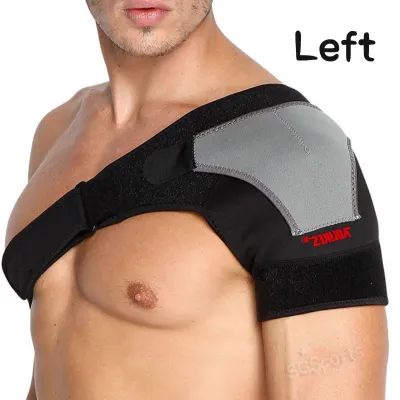
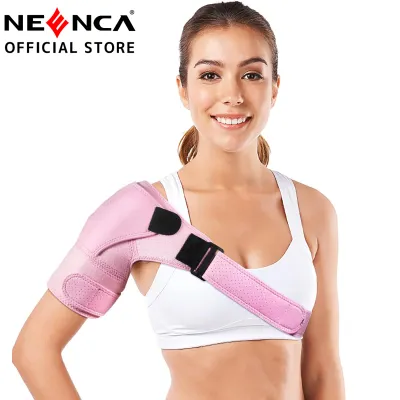
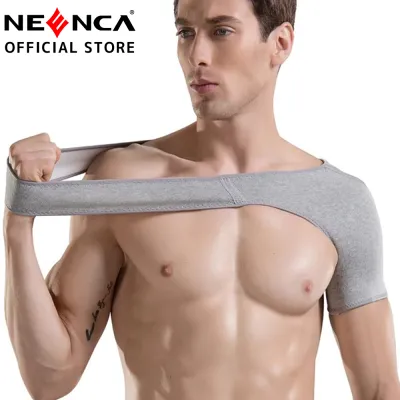
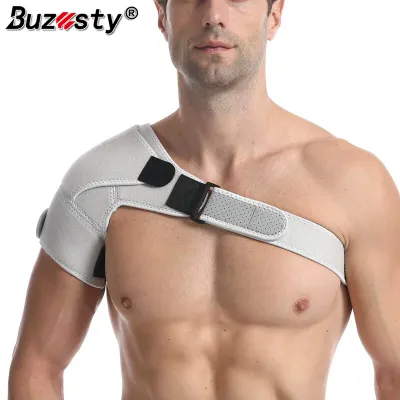
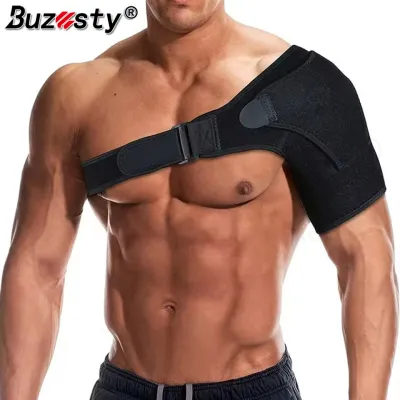
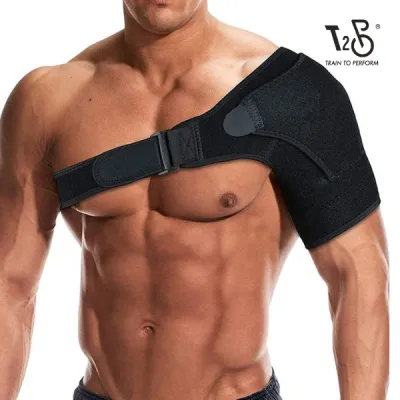
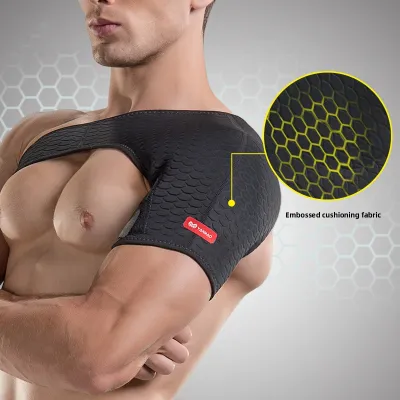
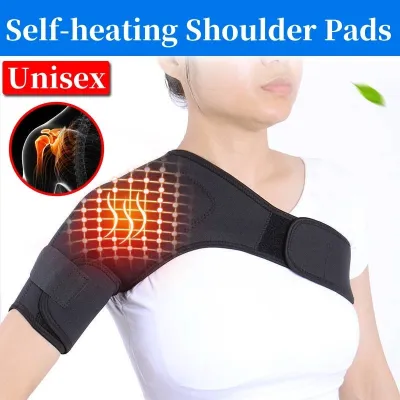
Prices are valid at publication and may change. Please refer to the product page for the latest price.
It is crucial to remember that heavy, medical-grade support must follow a doctor’s or physical therapist’s specific prescription. Self-selecting a highly restrictive brace without professional guidance can lead to muscle weakness or improper joint alignment. A professional can help you determine the exact level of restriction required for your recovery timeline.
Material and Breathability Specifications
In warm and humid climates, material selection directly impacts how long you can comfortably wear a shoulder guard. Neoprene is a common choice because it is highly durable and provides excellent heat retention, which keeps muscles warm. However, standard neoprene lacks breathability and can trap sweat, leading to skin irritation during intense workouts.

If you play high-intensity sports, look for advanced nylon blends or engineered fabrics with integrated mesh panels. These materials offer superior moisture-wicking capabilities, drawing sweat away from your skin to keep you cool and dry. Additionally, check if the inner lining features anti-chafing flat seams and hypoallergenic properties to protect sensitive skin from friction.
Maintaining the integrity of these technical fabrics requires proper care. Elastic fibers and adhesive materials degrade quickly when exposed to high heat. Always confirm the manufacturer’s washing instructions, which typically recommend hand washing in cold water with mild detergent and air drying away from direct sunlight.
Fit, Sizing, and Adjustability Features
An ill-fitting shoulder guard can cause more harm than good by either failing to provide support or restricting healthy blood circulation. To find your correct size, use a flexible measuring tape to measure your chest circumference at the widest point and your upper arm girth. Cross-reference these measurements with the brand’s specific sizing chart, as sizing standards vary significantly between manufacturers.
Adjustability is key to securing a personalized fit that stays in place during dynamic movements. Look for wide hook-and-loop closures and durable D-rings that allow you to adjust the tension across your chest and shoulder independently. High-quality straps distribute pressure evenly, preventing the brace from digging into your underarms or neck.
You will also need to choose between ambidextrous and anatomically directed designs. Ambidextrous braces can be worn on either the left or right shoulder, offering versatility if you require occasional support on both sides. Anatomically directed designs are tailored specifically for either the left or right shoulder, providing a more precise contour that matches the natural asymmetry of your body.
Sport-Specific Design and Mobility Trade-offs
Every sport demands a unique balance between joint stability and freedom of movement. For overhead sports such as badminton, tennis, or swimming, a highly restrictive brace with dislocation-prevention straps will severely hinder your performance. In these scenarios, a flexible compression sleeve is usually preferred to allow a natural range of motion while providing light joint feedback.
For contact sports like rugby or martial arts, you need a low-profile design that fits comfortably under protective pads or compression shirts. The brace must be durable enough to withstand impact and friction without shifting out of place. Ensure the materials can handle the physical demands of contact sports without tearing or losing tension.
Before heading out to play, perform a simple range-of-motion test during your initial fitting. Put on the brace and slowly move your arm through your sport’s typical movement patterns. If you experience sharp pain, pinching, or excessive restriction that forces you to alter your natural biomechanics, stop using the brace immediately and consult a sports professional.
Evaluating Secondary Features and Build Quality
High-quality construction details distinguish a durable sports brace from a temporary fix. Examine the seam construction closely; flatlock or seamless designs are essential for minimizing skin friction in highly sensitive areas like the underarm and neck. Rough, raised seams can quickly cause painful abrasions during repetitive movements.
Anti-slip features are also vital for maintaining support during active play. Look for silicone grip strips along the inner bands or reinforced edge binding that prevents the brace from riding up or twisting. These features ensure the guard remains in the correct position even when you sweat heavily.
Be skeptical of marketing claims that promise advanced healing through unverified technologies. Concepts like “magnetic therapy” or “far-infrared” lack unified sports medicine performance standards and should not drive your purchasing decision. Focus your evaluation on physical support, material quality, adjustability, and fit.
Frequently Asked Questions (FAQ)
Can I wear a shoulder guard over my clothing?
Wearing a shoulder guard directly on your skin provides the most effective compression and prevents the brace from slipping. However, if you have highly sensitive skin, you can wear it over a thin, moisture-wicking compression shirt. Avoid wearing it over loose or thick clothing, as this reduces compression transfer and can cause the brace to bunch up.
How do I know if my shoulder guard is too tight?
A shoulder guard should feel snug and supportive, not painful or restrictive. Warning signs that your brace is too tight include tingling or numbness in your fingers, a cold sensation in your arm, skin discoloration, or deep, painful indentations in your underarm area. If you experience any of these symptoms, loosen the straps immediately or size up.
When should I stop using a shoulder support and see a doctor?
A shoulder guard is a supportive tool, not a cure for underlying joint issues. If you experience persistent pain, increased joint clicking or popping, muscle weakness, or a feeling that your shoulder is slipping out of place despite wearing the brace, stop playing immediately. Seek a professional medical diagnosis from a doctor or physical therapist to address the root cause of the issue.
Community discussion
Share your experience or ask a question. Comments are reviewed before publication.