
Fitting a treadmill into a Singapore Housing & Development Board (HDB) flat requires balancing your fitness goals with the physical realities of high-density vertical living. A practical treadmill for a typical HDB bedroom or study area is one that features a compact footprint—typically under 160 centimetres in length and 70 centimetres in width—along with a reliable folding mechanism and robust vibration-dampening features. While a larger commercial-grade machine offers a spacious running deck, it often blocks essential walkways and creates excessive noise that can disturb your downstairs neighbors. By focusing on space-saving designs, such as flat-folding walking pads or hydraulic-assisted vertical folding decks, you can maintain an active lifestyle without compromising your home’s comfort or safety.
How to Measure Your HDB Room for a Treadmill
Before purchasing any cardio equipment, map out the exact zone where the machine will sit. Start by measuring the floor area of your designated room, keeping in mind that the physical dimensions of the treadmill represent only a fraction of the space required during operation. You must account for a safety clearance zone around the machine. Safety guidelines recommend leaving at least 2 meters of clear, unobstructed space behind the treadmill deck to prevent injury in the event of a slip or fall, along with at least 0.5 meters on both sides.
In a standard HDB bedroom or study, furniture placement heavily dictates available floor space. Use a measuring tape to plot how the treadmill will interact with wardrobe doors, study desks, and bed frames. Ensure wardrobe doors can swing fully open and that the primary walkway remains clear when the treadmill is unfolded. If the machine blocks a main path, you will likely find yourself constantly folding and unfolding it, which can discourage regular use.
Products mentioned in this guide
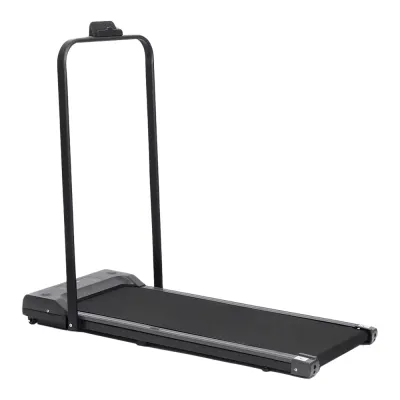
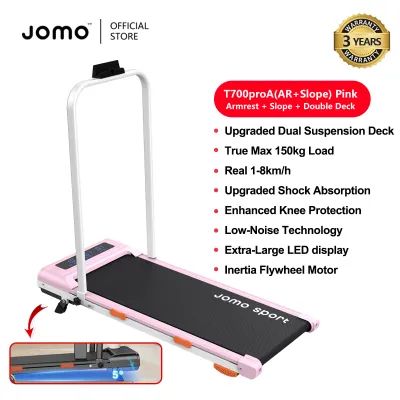
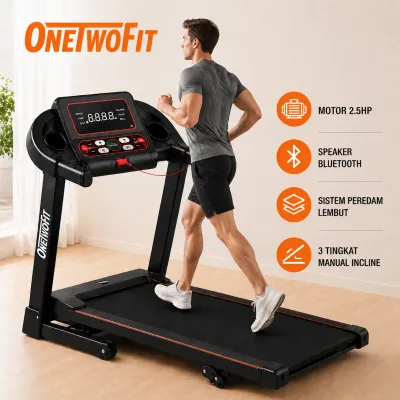
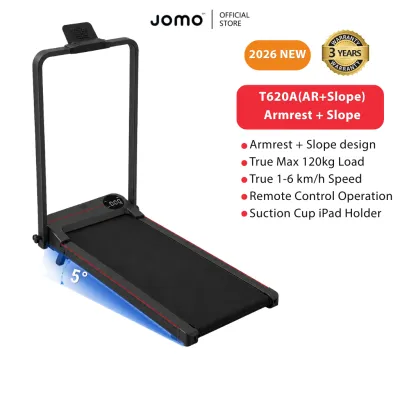
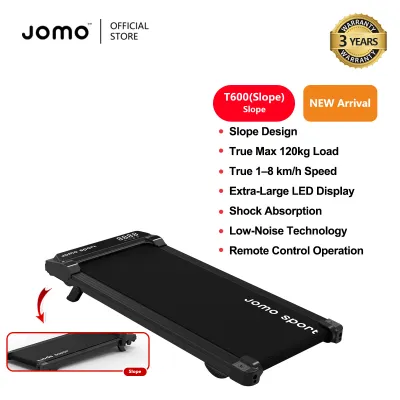
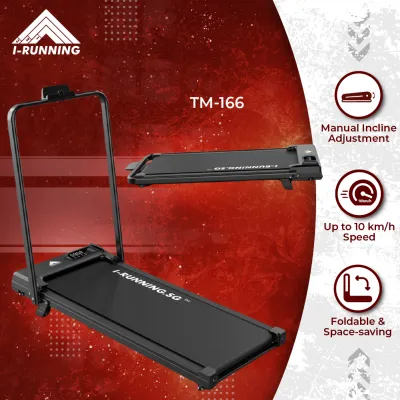
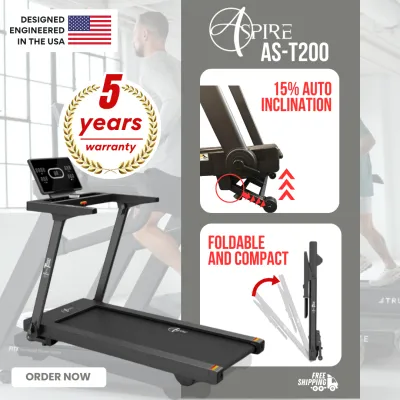
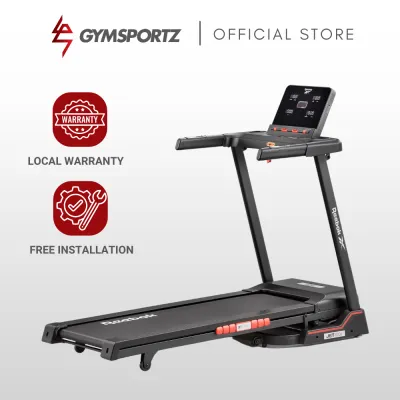
Prices are valid at publication and may change. Please refer to the product page for the latest price.
Ceiling height is another critical factor. Standard HDB ceilings measure around 2.6 meters. To calculate your required vertical clearance, add your height to the height of the treadmill’s running deck. If you plan to use an incline feature, add the maximum height the deck reaches at its highest incline setting. Ensure there is at least 30 centimeters of clearance between the top of your head and the ceiling to prevent accidental head injuries.
Key Treadmill Dimensions and Footprint Considerations
Selecting the right treadmill dimensions requires a careful trade-off between your physical stride and the limits of your room. For walking or light jogging, a belt length of 120 centimeters is generally sufficient. However, if you are taller or plan to run at faster paces, you will need a belt length of at least 140 centimeters to accommodate your natural stride without stepping off the rear of the deck.

The width of the belt also impacts safety. A belt width of 40 to 45 centimeters is standard for compact, space-saving models, which works well for focused, straight-line walking or jogging. Wider belts of 50 centimeters or more provide a more comfortable safety margin but significantly increase the overall width of the machine. Verify that the overall width of the treadmill frame fits comfortably within your measured space, leaving enough room to step on and off safely.
Be aware that the advertised running belt dimensions do not represent the total footprint of the machine. The motor housing at the front of the deck and the console assembly at the top add substantial length and width. A treadmill with a 120-centimeter belt can easily have an overall physical length of 160 centimeters or more. Always check the manufacturer’s specification sheet for the “assembled dimensions” rather than relying solely on the running surface measurements.
You must also decide between an ultra-compact walking pad and a standard folding treadmill. Walking pads are highly space-efficient, often folding completely flat to slide under a bed or sofa, but they generally feature smaller motors and lower maximum speeds, making them unsuitable for vigorous running. Standard folding treadmills offer more powerful motors, sturdier frames, and higher speed limits, but they occupy a much larger physical volume even when folded.
Folding Mechanisms and Storage Features for Small Rooms
For multi-purpose HDB rooms, the folding mechanism is a key feature governing daily usability. Standard fold-up decks utilize a hydraulic or manual hinge system that lifts the running deck upward toward the console, reducing the floor footprint by roughly half. These models remain upright and cannot be easily tucked away, meaning they still present a significant visual and physical presence in the room. They are well suited for dedicated workout corners.
Vertical wall-folding models and flat-folding walking pads offer excellent space savings. Flat-folding models allow the console handrails to fold down parallel to the running deck, reducing the machine’s height to 15 centimeters or less. This low profile allows you to store the unit horizontally under a bed frame or vertically against a wall. If you choose a vertical storage option, verify that the machine has a secure locking mechanism or a dedicated stand to prevent it from tipping over.
The ease of moving the treadmill is just as important as its folding design. Even compact treadmills can weigh anywhere from 30 to over 80 kilograms. Look for models equipped with multi-directional transport wheels, which allow you to roll the machine across laminate, vinyl, or tile flooring without straining your back. Ensure the folding hinges and locking pins are made of high-grade steel to withstand the repeated stress of folding and unfolding without loosening over time.
Managing Noise, Vibration, and Floor Constraints in HDB Flats
Operating a treadmill in an HDB flat introduces acoustic challenges due to the shared concrete structure of the building. Noise generally travels in two ways: airborne sound and structural vibration. Airborne sound consists of the hum of the electric motor and the friction of the running belt sliding over the deck. To minimize this, look for treadmills equipped with brushless DC motors, which tend to operate more quietly than traditional brushed motors, and keep the belt properly lubricated.
Structural vibration, or impact noise, is the sound of your feet striking the deck, which travels directly through the treadmill frame and into the concrete floor slab. This low-frequency thudding can easily disturb neighbors living directly below you. To mitigate this impact, select a treadmill with a built-in shock absorption system, such as elastomeric cushions or spring-loaded dampeners beneath the deck. These systems protect your joints and absorb a portion of the downward force.
In addition to built-in shock absorption, using a specialized anti-vibration mat is highly recommended for HDB apartments. A high-density rubber or closed-cell foam mat placed under the treadmill helps isolate the machine from the floor, dampening vibrations and protecting your flooring from scratches or indentations. Ensure the mat is thick enough—typically 6 to 10 millimeters—to provide effective acoustic isolation without compromising the stability of the treadmill during workouts.
Common Space Planning Mistakes to Avoid
One of the most frequent mistakes is placing the rear of the treadmill directly against a wall or wardrobe. If you lose your balance or slip while running, a lack of rear clearance can trap you between the moving belt and the wall, leading to severe friction burns or impact injuries. Always maintain the recommended safety clearance behind the deck, even if it means pulling the machine into the center of the room during your workout and folding it away immediately afterward.
Another common error is failing to check the weight of the machine relative to your ability to handle it. While HDB floor slabs are engineered to support standard residential loads, a heavy commercial-grade treadmill can be incredibly difficult to assemble, move, or service in a tight space. Choose a model that matches your physical capability to maneuver, or ensure you have assistance available whenever the machine needs to be relocated.
Lastly, avoid blocking essential home infrastructure. Placing a treadmill directly under an air conditioning unit can lead to condensation dripping onto the sensitive electronic console, while blocking ventilation grilles or windows can restrict airflow, making your workout uncomfortably warm. Ensure the treadmill is positioned within safe reach of a dedicated wall power outlet; avoid using light-duty extension cords or multi-way adapters, as treadmills draw significant electrical current.
Frequently Asked Questions (FAQ)
Can I place a treadmill on a balcony or near an open window in an HDB flat?
Placing a treadmill on an HDB balcony or directly next to an open window exposes the machine to significant environmental hazards. Singapore’s high humidity, frequent rain splashes, and airborne dust can quickly penetrate the motor housing and console, leading to electrical short circuits, rusted components, and premature belt wear. Additionally, direct sunlight can degrade the rubber running belt and cause plastic parts to become brittle over time. For safety and longevity, always operate and store your treadmill in a fully enclosed, dry indoor area away from direct weather exposure.
Community discussion
Share your experience or ask a question. Comments are reviewed before publication.