
Finding the right treadmill for home use in a typical HDB flat requires balancing personal fitness goals with the spatial realities of high-density living. Because space is at a premium in modern apartments, selecting a machine is not just about finding the most powerful motor or the widest running belt. Instead, it involves a careful calculation of physical dimensions, storage capabilities, safety clearances, and noise-mitigation features. By understanding how to measure your home and evaluate treadmill specifications, you can integrate a high-quality cardio workout into your daily routine without compromising your living space or disturbing your neighbors.
Measuring Your Available Space and Clearances
Before browsing online marketplaces or visiting fitness showrooms, you must establish the exact physical boundaries of your intended workout area. Start by measuring the dedicated floor space where the treadmill will sit during use. In multi-purpose rooms or living areas, consider how the machine’s footprint interacts with daily walkways, furniture placement, and door swings. A treadmill should never block natural traffic flow or restrict access to built-in cabinets and household shelters.
Beyond the static footprint of the machine, you must account for delivery logistics. Measure the dimensions of your HDB lift, the width of the common corridor, and the clearance of your main entryway and internal doorways. Many high-performance treadmills are delivered in large, heavy, non-folding boxes that require a significant turning radius in tight corners. Verifying these entry paths beforehand prevents the frustration of a delivery that cannot physically enter your home.
Products mentioned in this guide
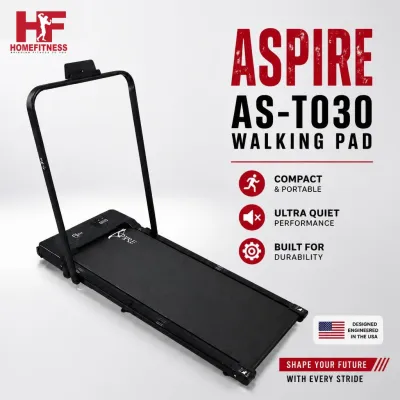
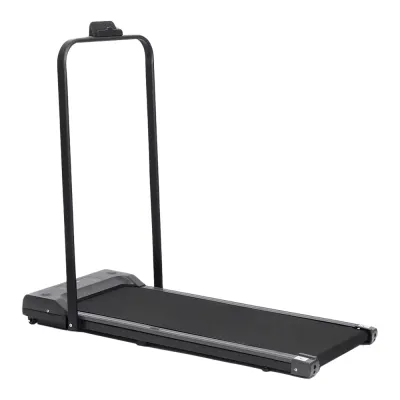
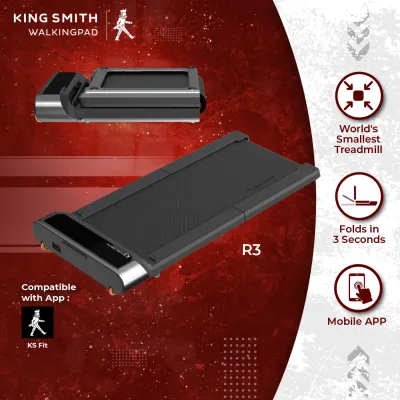
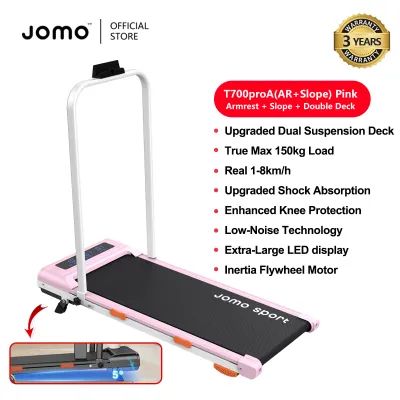
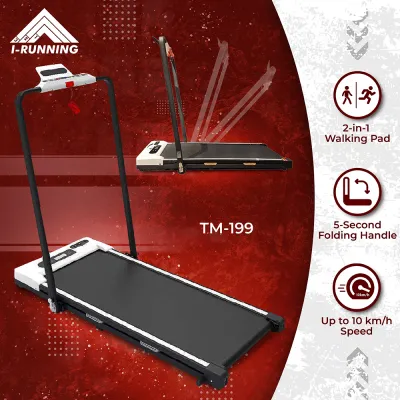
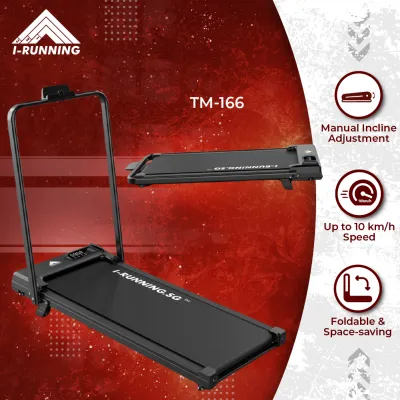
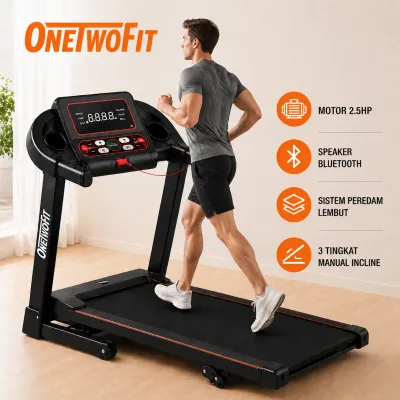
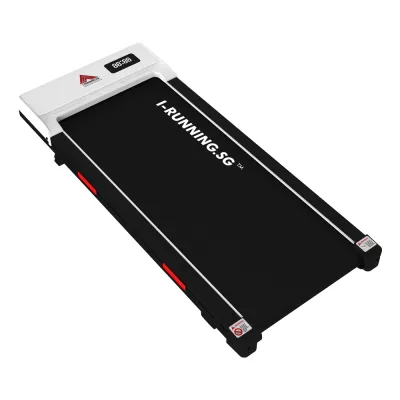
Prices are valid at publication and may change. Please refer to the product page for the latest price.
Finally, prioritize safety clearances around the machine. Manufacturers typically recommend leaving at least 1 to 2 meters of clear, unobstructed space directly behind the running belt. This rear drop-off zone is critical in preventing severe friction burns or impact injuries if you lose your footing and are thrown off the back of the moving belt. Additionally, maintain a clearance of at least 0.5 meters on both sides of the treadmill to allow for safe mounting, dismounting, and emergency stepping off.
Evaluating Treadmill Dimensions and Running Surface
When choosing a treadmill for home use, you must balance the overall physical footprint of the machine with the size of its running surface. The total dimensions of a treadmill are always larger than the actual belt area due to the motor housing, side rails, and console uprights. A compact machine might fit perfectly in a small corner, but if the running belt is too narrow or short, it can compromise your safety and running form.

To find the right belt size, match the running surface dimensions to the tallest user’s stride and intended exercise intensity. For walking or light jogging, a belt length of 120 cm to 130 cm is generally sufficient for most users. However, if you plan to run at faster speeds, your stride naturally lengthens, requiring a belt length of at least 140 cm to prevent your feet from clipping the front motor cover or slipping off the rear roller. Similarly, a belt width of 40 cm to 45 cm works well for walking, but a width of 50 cm or more provides the lateral safety margin needed for confident, high-speed running.
Additionally, review the manufacturer’s specified weight capacity limits. A treadmill’s weight capacity is a direct indicator of its structural integrity, frame thickness, and motor durability. For high-impact running, choose a machine with a weight capacity that comfortably exceeds the weight of the heaviest user by at least 20 to 30 kilograms. This buffer ensures the deck remains stable, the motor does not overheat, and the frame does not flex excessively during intense workouts.
Space-Saving Mechanisms and Storage Options
For HDB flats where rooms serve multiple functions, a folding treadmill is often the most practical choice. These machines allow you to reclaim valuable floor space when your workout is finished. When evaluating folding mechanisms, look for hydraulic soft-drop systems. These gas-assisted shocks support the weight of the running deck as you fold it upward and allow it to lower slowly and hands-free when unfolded, preventing sudden drops that could damage your flooring or cause injury.
If you plan to store the treadmill vertically, verify the required ceiling height when the deck is folded upright. Some heavy-duty folding treadmills fold at an angle, which can still take up a significant amount of horizontal space, while ultra-compact models fold completely flat to a depth of less than 30 cm. Flat-folding models can sometimes be rolled under a bed or stood upright against a wall, but you must ensure the locking mechanisms are robust and secure, especially in households with children or pets.
Mobility is another critical factor if you do not plan to keep the treadmill in a permanent spot. Check for integrated transport wheels on the base of the frame. Some models only feature two-way wheels that require you to tilt the heavy machine at a steep angle to move it, while others offer multi-directional wheels for easier maneuvering. Keep in mind that high-quality treadmills can weigh anywhere from 60 to over 100 kilograms; moving such heavy equipment across delicate flooring requires careful effort, even with built-in wheels.
Selecting Features for Shared Living Environments
Living in a high-rise apartment means your workout environment is shared with family members and downstairs neighbors. Minimizing noise and vibration transmission is essential for maintaining household harmony and neighborly relations. The primary sources of treadmill noise are the motor, the mechanical movement of the belt, and the physical impact of your feet striking the deck.
When comparing motors, look for continuous horsepower (CHP) ratings rather than peak horsepower. A motor with a higher CHP rating (ideally 2.0 to 3.0 CHP for running) can maintain consistent speeds without running at its absolute limit, resulting in quieter operation and a longer lifespan. Brushless DC motors also tend to operate more quietly and generate less heat than traditional brushed motors, making them highly suitable for apartment settings.
To address impact noise, prioritize treadmills equipped with advanced deck shock absorption systems. These systems use elastomeric cushions, springs, or flexible deck materials to absorb the downward force of your stride. This cushioning not only protects your joints from high-impact forces but also dampens the low-frequency vibrations that travel through the machine’s frame and transfer directly into the concrete floor slab of your flat.
To complement the machine’s built-in shock absorption, always plan to use a high-density equipment mat. A thick rubber or specialized PVC mat placed under the treadmill serves multiple purposes: it further dampens residual vibrations, absorbs high-frequency motor hum, prevents the treadmill from shifting or sliding during use, and protects your vinyl, laminate, or parquet flooring from scratches, sweat, and pressure indentations.
Common Placement and Sizing Mistakes
One of the most common mistakes when buying a treadmill for home use is overlooking ceiling height restrictions. Standard HDB ceilings typically measure around 2.6 to 2.8 meters. When you stand on a treadmill, you are already elevated by the height of the deck, which is usually 15 to 30 cm off the ground. If you use the machine’s incline feature, your head will rise even higher. Always calculate your height, plus the deck height, plus the maximum incline height, to ensure you have comfortable clearance from ceiling fans, light fixtures, and concrete beams.
Another frequent error is placing the treadmill in a location that blocks critical household pathways or utilities. Avoid positioning the machine where it obstructs access to emergency exits, electrical distribution boards, air conditioning units, or natural light sources. Blocking airflow from air conditioners or windows can also make your workout environment uncomfortably warm and humid, reducing your overall performance and comfort.
Lastly, do not assume that all compact or “under-desk” treadmills are suitable substitutes for a standard running machine. While ultra-compact models are excellent for walking while working, they often lack the motor power, belt length, and structural stability required for running. Attempting to run on a machine designed solely for walking can overload the motor, cause the belt to slip, and increase the risk of trips and falls.
Frequently Asked Questions (FAQ)
Do I need to check HDB floor weight limits for a treadmill?
Standard HDB residential floors are designed to support a structural load of 150 kilograms per square meter (1.5 kN/m²). While a typical home treadmill and runner combined rarely exceed this limit, heavy-duty commercial-grade machines can weigh over 150 kg on their own. To distribute the weight safely, use a wide equipment mat and place the treadmill close to load-bearing walls or structural columns rather than in the center of a wide, unsupported floor span.
Can I place a treadmill on a balcony or outdoor corridor?
It is highly recommended to keep your treadmill in a climate-controlled indoor space. Placing electronic fitness equipment on a balcony or outdoor corridor exposes it to high humidity, rain splashes, dust, and direct sunlight. These environmental factors can rapidly degrade the running belt, rust the steel frame, and cause electrical short circuits in the motor and console, voiding your warranty and creating safety hazards.
Community discussion
Share your experience or ask a question. Comments are reviewed before publication.