
To start jigging successfully in Singapore, beginners should focus on versatile, entry-level rod and reel brands that offer robust local warranty support and match the specific depths of local waters. Rather than investing immediately in premium, specialized setups, the most practical approach is to select reliable utility gear from established global manufacturers or reputable regional brands. This ensures you can comfortably practice the repetitive physical motions of jigging while targeting common local species without overspending.
Selecting your first setup requires understanding how different specifications translate to real-world performance on the water. By focusing on key physical traits, construction materials, and local support networks, you can make an informed decision that balances cost, durability, and fish-catching capability.
Key Specifications for Beginner Jigging Rods
Jigging rods are typically shorter than standard casting or spinning rods, usually ranging between 5 feet 6 inches and 6 feet 3 inches. This shorter length provides better leverage when pulling fighting fish up from the seabed, reducing the strain on your back and arms. A moderate-to-fast action is highly recommended for beginners. Moderate action allows the rod to bend deeper into the blank, which absorbs the sudden shocks of a striking fish and reduces physical fatigue. Fast action, on the other hand, offers quicker recovery and more precise control over the jig’s movement, making it easier to learn the rhythmic “pitch” of the technique.
Products mentioned in this guide
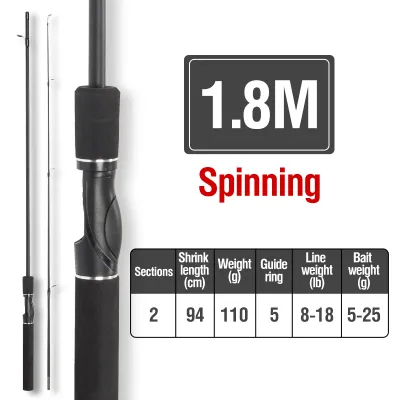
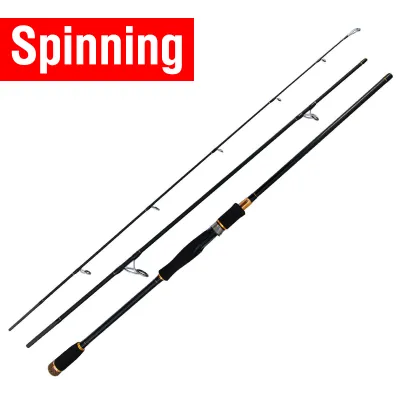
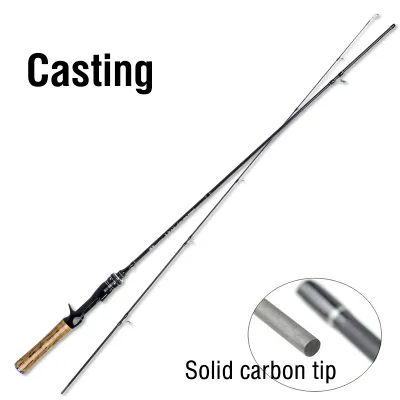
Prices are valid at publication and may change. Please refer to the product page for the latest price.
When examining a rod at a local tackle shop, look closely at the manufacturer’s printed specifications near the foregrip. These labels indicate the recommended jig weight range (often between 40 grams and 150 grams for light offshore jigging) and the PE line rating (typically PE 1 to PE 3 for beginners). Matching your rod’s backbone to these ratings is crucial. Using a jig that is too heavy for the rod will cause the blank to overload and lose its spring, while a jig that is too light will not load the rod sufficiently to create the desired fluttering action.
Beginners must choose between high-modulus graphite (carbon fiber) and composite blends. Graphite rods are exceptionally lightweight and sensitive, allowing you to feel subtle bites even in deep water, but they can be brittle if high-sticked or subjected to sudden impacts. Composite rods, which blend fiberglass and carbon, offer superior durability and a more forgiving bend profile. For a novice, a composite rod or a durable, low-tonnage carbon rod is often the safer choice, as it tolerates the minor handling errors common during early learning phases.
Essential Features of Entry-Level Jigging Reels
The gear ratio of a reel determines how many times the spool rotates with a single turn of the handle. For jigging, reels generally fall into high-speed (6.0:1 or higher) or power-speed (around 5.0:1 to 5.8:1) categories. High-speed reels retrieve line quickly, which is excellent for fast-paced speed jigging where you want to trigger aggressive strikes from pelagic fish. However, lower gear ratios provide more mechanical advantage, making it significantly easier to crank up heavy jigs or fight stubborn bottom-dwelling fish. Beginners should look for a balanced mid-range ratio to minimize physical fatigue during long sessions.

A smooth, reliable drag system is the most critical component of any jigging reel. When a strong fish runs, the drag must release line smoothly without jerking, which could snap the leader. Check the manufacturer’s specifications for the maximum drag rating, but keep in mind that you will rarely fish at the absolute maximum limit. For Singapore’s typical coastal and offshore waters, a reel with a verified smooth drag capacity of 5 kg to 8 kg is more than sufficient. Look for carbon fiber drag washers, which handle heat and friction much better than felt washers.
Your reel must hold enough braided line to reach the seabed with ample reserve for a running fish. For local trips, a spool capacity of at least 200 to 300 meters of PE 2 or PE 3 braid is ideal. While manufacturers often highlight high ball-bearing counts as a sign of quality, beginners should focus on the quality and placement of those bearings rather than the sheer number. A reel with four or five high-quality, shielded stainless steel bearings in key areas (like the drive shaft and line roller) will perform better and last longer in saltwater than a cheap reel boasting double-digit unshielded bearings.
How to Evaluate Jigging Brands in the Singapore Market
In Singapore, the marine environment is harsh, and fishing gear inevitably faces wear and tear. Before purchasing any rod or reel, verify whether the brand has an authorized local distributor or a dedicated service center in the country. Buying from authorized channels ensures that if a rod blank snaps or a reel gear strips, you can easily source genuine replacement parts or submit a warranty claim. Brands with a strong local footprint often have established service networks in areas like Beach Road or Ubi, making maintenance and repairs straightforward.
The market features several distinct brand tiers. Global giants like Shimano, Daiwa, and Penn are highly regarded for their engineering and offer dedicated entry-level lineups (such as the Shimano Nexave or Daiwa Phantom series) that inherit technology from their premium models. On the other hand, regional house brands like Pioneer, Storm, or SureCatch offer highly competitive specifications at a lower price point. These regional brands are excellent options for beginners who want to test the waters of jigging without a major financial commitment, as they are designed specifically for Southeast Asian fishing conditions.
Saltwater is highly corrosive, making protective features a priority. When evaluating brands, look for specific manufacturing technologies such as sealed drag systems, anti-corrosion bearings, and anodized aluminum frames. Many reputable brands apply proprietary protective coatings to their entry-level reels to prevent salt buildup. However, no technology replaces manual care. Always check the manufacturer’s user manual to understand the required post-trip maintenance routines, as even the most advanced anti-corrosion features can fail if salt crystals are left to dry inside the mechanism.
Matching Your Combo to Singapore's Coastal Conditions
Fishing in Singapore typically involves targeting species like groupers, snappers, threadfin, and small trevally. The depths can range from shallow coastal reefs of 15 to 30 meters around the Southern Islands to deeper offshore waters of 50 to 80 meters. For shallower waters, lighter jigs (30g to 60g) and a lighter PE 1-2 rod are perfect. If you plan to fish deeper channels with stronger currents, you will need heavier jigs (80g to 120g) and a PE 2-3 setup to keep your line vertical and maintain contact with the bottom.
Slow pitch jigging involves a slow, rhythmic lift-and-drop motion where the jig mimics a wounded baitfish fluttering down. This style requires a highly responsive, parabolic rod that does the work of lifting the jig. Speed jigging, or vertical jigging, involves fast, aggressive upward jerks to mimic a fleeing baitfish, requiring a stiffer rod with a fast recovery. For beginners, a versatile light jigging rod that can handle both micro-jigs and moderate slow-pitch actions is the most practical starting point, allowing you to experiment with both techniques.
A poorly balanced setup will quickly cause wrist fatigue and ruin your fishing trip. To check the balance, mount your chosen reel onto the rod and hold the setup at the foregrip where you would naturally grip it during a retrieve. The rod should sit relatively level or slightly tip-up in your hand. If the tip plunges downward heavily, the rod is too heavy for the reel; if the butt drops sharply, the reel may be excessively heavy. A balanced combo ensures that your physical effort goes into working the jig rather than fighting the weight of the gear.
Purchasing Channels and Pre-Buy Verification
Singapore offers several avenues for purchasing fishing gear. Specialized local tackle shops are highly recommended for beginners, as the staff can provide hands-on advice, spool your reel with line, and help you match your rod and reel. Official brand stores or authorized dealers offer the highest assurance of authenticity and warranty coverage. While general e-commerce platforms and online marketplaces may offer lower prices, buyers must exercise caution to avoid counterfeit products and ensure they are purchasing from reputable sellers who provide local warranty support.
Before leaving the shop or finalizing an online purchase, perform a thorough physical inspection. Run your fingers along the ceramic inserts of the rod guides to check for cracks or chips, which can easily shred braided line under tension. Assemble the rod and gently flex it to ensure there are no clicking sounds or structural creaks in the joints. For the reel, turn the handle slowly to check for any grinding sensations, test the drag knob to ensure smooth tension adjustment, and verify that the anti-reverse mechanism engages instantly without backplay.
When planning your purchase, remember that the rod and reel are only part of the equation. You must allocate a portion of your budget for essential terminal tackle and accessories. This includes high-quality braided main line (PE line), fluorocarbon leader material to protect against sharp rocks and teeth, a selection of jigs in various weights and colors, and pre-rigged assist hooks. Investing in a pair of split-ring pliers is also essential for safely and quickly changing jigs while on a moving boat.
Frequently Asked Questions (FAQ)
Can I use a standard spinning rod and reel for jigging?
While you can technically drop a standard spinning setup over the side of a boat, generic casting rods are not designed to handle the continuous, vertical loading and unloading of heavy jigs. Standard rods often lack the specialized blank construction needed to bounce a jig effectively, leading to poor action and increased physical fatigue. Furthermore, standard spinning reels may lack the robust gearing and saltwater sealing required to withstand the constant high-tension retrieves of jigging. If you find your wrist aching quickly or struggle to keep your jig moving rhythmically, it is a clear signal to upgrade to dedicated jigging gear.
How much should a beginner expect to spend on a full jigging setup?
Instead of focusing on a single price tag, beginners should budget using a balanced allocation ratio across their entire setup. A practical framework is to allocate approximately 40% of your budget to a reliable, entry-level reel with a smooth drag, 40% to a durable composite or low-tonnage carbon jigging rod, and the remaining 20% to high-quality braided line, fluorocarbon leader, and a selection of basic jigs and assist hooks. This balanced approach ensures you do not pair an expensive reel with a low-quality rod, or run out of funds for the critical terminal tackle that actually connects you to the fish.
What maintenance is required to keep jigging reels functional in saltwater?
To protect your investment from the corrosive Singapore saltwater, establish a strict post-trip cleaning routine. After every outing, tighten the reel’s drag knob completely to prevent water from entering the drag washers, then gently rinse the exterior with fresh, low-pressure running water. Avoid using high-pressure sprays, which can force salt and water deep into the internal gears. Wipe the reel down with a clean microfiber cloth and back off the drag tension completely to prevent the washers from compressing and losing their elasticity. Allow the reel to air-dry completely in a well-ventilated indoor area away from direct sunlight before storing it.
Community discussion
Share your experience or ask a question. Comments are reviewed before publication.