
Selecting the ideal basketball for outdoor concrete courts requires balancing durability, grip, and cost. For players choosing a Molten ball, the best option depends on whether you prioritize maximum lifespan or a realistic indoor feel. For pure durability on rough, unsealed concrete, a heavy-duty rubber model like the Molten GR series is the most practical choice. If you want a closer approximation of indoor leather playability on outdoor surfaces, a specialized outdoor composite leather model, such as the Molten BG3000, offers a suitable compromise.
Concrete courts act as severe abrasives, rapidly wearing down standard basketball materials. Understanding the differences in Molten’s materials, structural designs, and maintenance requirements will help you choose a ball that retains its grip and shape over months of play.
Understanding the Concrete Court Challenge: Abrasion, Dust, and Grip
Outdoor concrete courts present a harsh environment that differs significantly from polished indoor wooden floors. The primary challenge is the sheer abrasiveness of concrete. Unsealed concrete surfaces feature microscopic peaks and rough textures designed to provide foot traction, but this same texture acts like heavy-grit sandpaper against a basketball. Every bounce, pass, and rim contact scrapes away the outer layer of the ball, gradually smoothing out the surface texture that is essential for grip.
Products mentioned in this guide
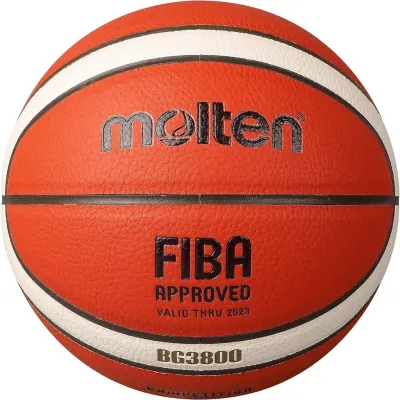
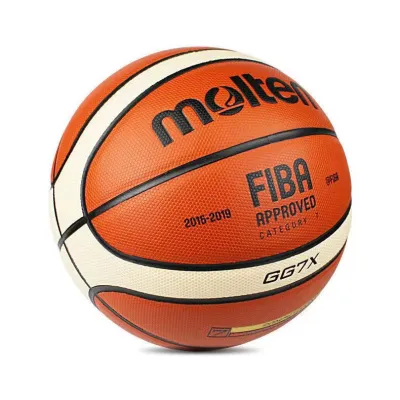
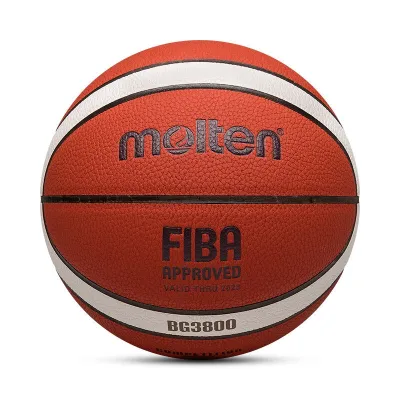
Prices are valid at publication and may change. Please refer to the product page for the latest price.
In addition to physical wear, concrete dust poses a constant obstacle to ball control. As concrete wears down under foot traffic and environmental exposure, it produces a fine, powdery dust. This dust settles into the pebble patterns and deep channels of the basketball. When dust fills these spaces, it creates a barrier between your hands and the ball’s surface, causing the ball to feel slick and slippery. This dust accumulation can severely affect shooting accuracy and dribbling control during fast-paced games.
Singapore’s tropical climate introduces further complications. High ambient humidity and sudden, heavy downpours mean outdoor courts are frequently damp or subjected to rapid moisture changes. Moisture can seep into the seams of a basketball, weakening the internal adhesives that hold the outer panels to the carcass. Furthermore, intense equatorial heat and direct sunlight can cause the air inside the bladder to expand, increasing the risk of structural warping if the ball is left exposed on hot concrete surfaces. Heat also accelerates the degradation of rubber and synthetic compounds, making them brittle over time.
Material Breakdown: Rubber vs. Composite Leather for Concrete
To select the right Molten basketball, you must evaluate the three primary materials used in their construction: rubber, composite leather, and genuine leather. Each material responds differently to the high-friction environment of an outdoor concrete court.

Rubber Basketballs
Rubber basketballs, such as those in the Molten GR series, are the undisputed standard for raw durability on concrete. Molten constructs these balls using a highly durable synthetic rubber compound designed to resist abrasion. The rubber is molded with deep, pronounced channels that help displace concrete dust and light moisture during play. This ensures that even when the court is dusty, you can maintain a secure grip. The trade-off is tactile feel; rubber balls are stiffer, have a more metallic bounce, and lack the soft, cushioned touch preferred for precise shooting and ball handling. They are, however, highly economical, typically priced between S$20 and S$35 in Singapore.
Composite and Synthetic Leather
Composite or synthetic leather basketballs offer a compromise between the premium feel of indoor leather and the durability of rubber. These balls utilize a polyurethane (PU) or polyvinyl chloride (PVC) outer layer over a cushioned carcass. While composite leather provides excellent grip, sweat absorption, and a soft touch, standard indoor composite balls will degrade rapidly on concrete. To counter this, Molten offers specific outdoor-rated composite models, such as the BG3000 or D3500 series. These models feature a tougher, more abrasion-resistant synthetic cover designed to withstand outdoor surfaces while retaining a realistic leather feel. They generally cost between S$45 and S$80, representing a higher investment with a shorter lifespan than rubber on rough concrete.
Genuine Leather
Genuine leather basketballs, like the premium Molten BG5000 used in international competitions, are strictly unsuitable for outdoor concrete courts. Genuine leather is highly porous and absorbs moisture, dirt, and oils. When exposed to concrete dust, the leather pores clog immediately, turning the ball slick. Furthermore, the abrasive concrete surface will tear the soft leather fibers within a single session, permanently ruining an expensive piece of equipment.
How to Choose the Right Molten Series for Outdoor Play
Choosing the right Molten series requires aligning your playing frequency, skill level, and budget with the ball’s material characteristics. You must also verify the product specifications carefully to ensure the model is intended for outdoor use.
Matching Material to Usage
If you play daily recreational games or perform solo drills on rough neighborhood concrete courts, prioritize the Molten GR series. The GR7 (Size 7 for adult men), GR6 (Size 6 for women and youth), and GR5 (Size 5 for juniors) are built specifically to endure constant concrete scraping without losing their structural integrity. For competitive players, team practices, or those who transition between indoor and outdoor courts, an outdoor-rated composite model like the Molten BG3000 is more appropriate. This model provides the necessary tactile feedback for advanced ball handling and shooting while offering reasonable resistance to outdoor wear.
Verifying Specifications
To verify outdoor suitability, always check the official manufacturer specifications and product tags. Molten clearly categorizes its balls. Look for the explicit “Outdoor” or “Indoor/Outdoor” designation on the packaging or product description. Avoid purchasing models labeled strictly as “Indoor,” as their outer covers are too soft to survive concrete play. Additionally, pay attention to the model prefixes; for instance, Molten’s “BG” series spans multiple tiers from entry-level outdoor composite (BG3000) to elite indoor-only leather (BG5000), making verification essential.
Evaluating Surface Design
When purchasing, physically inspect or review the surface design of the ball. Look for a dense pebble pattern and deep, wide channels. Molten’s outdoor designs often feature deeper channels to help channel away dust and moisture, ensuring that your fingers can find purchase even when the ball is dirty. A higher pebble density provides more contact points for your fingers, which helps offset the slippery effect of concrete dust.
Maintenance Tips to Preserve Grip and Shape on Abrasive Surfaces
Proper maintenance is essential to extend the lifespan of your Molten basketball and preserve its grip on abrasive concrete surfaces. Because concrete dust and tropical humidity accelerate wear, routine care can save you the cost of frequent replacements.
Routine Cleaning
Perform a routine cleaning after every outdoor session. Use a soft, clean cloth dampened with lukewarm water to gently wipe down the surface of the ball. Focus on clearing out the concrete dust that accumulates in the channels and between the pebbles. Avoid using harsh detergents, chemical solvents, or abrasive brushes, as these can strip the protective coating from composite leather or degrade the rubber compound. Once clean, allow the ball to dry naturally in a well-ventilated indoor space. Always consult the manufacturer’s care instructions for model-specific cleaning guidelines.
Pressure Management
Manage inflation pressure carefully to prevent shape deformation. Outdoor concrete courts exert high impact forces on the ball. If the ball is overinflated, these impacts put excessive stress on the internal nylon windings and butyl bladder, which can lead to warping or “egging.” Conversely, underinflation reduces bounce consistency and forces you to play with a sluggish ball. Check the recommended inflation pressure, typically stamped near the inflation valve (usually between 7.25 and 8.7 PSI). Use a pressure gauge and a standard hand pump to maintain this level.
Proper Storage
Store your basketball correctly to prevent material degradation. Avoid leaving the ball in direct sunlight, on outdoor balconies, or inside hot car trunks. High heat and UV exposure dry out rubber, melt the adhesives holding composite panels together, and cause the bladder to expand dangerously. Store the ball in a cool, dry indoor environment away from direct heat sources and moisture.
Frequently Asked Questions (FAQ)
Can I use an indoor Molten basketball on a concrete court occasionally?
Using an indoor-specific Molten basketball on a concrete court is highly discouraged, even for a single session. Indoor balls, particularly those made of premium composite or genuine leather, are engineered for smooth wooden surfaces. Concrete acts like sandpaper, instantly scuffing the soft outer cover, tearing the seams, and clogging the pebble pattern with dust. This leads to irreversible damage, permanently ruining the ball’s grip and touch for future indoor use.
How do I know when my outdoor basketball needs to be replaced?
An outdoor basketball should be replaced when its physical wear begins to compromise your play or safety. Inspect the ball for visual and tactile indicators of end-of-life wear. These include a completely smoothed-out pebble pattern (bald spots), shallow or worn-down channels that no longer provide grip, and an uneven or unpredictable bounce. Additionally, look for visible peeling of composite panels, deep cracks in the rubber, or persistent air leaks from the valve or seams.
Community discussion
Share your experience or ask a question. Comments are reviewed before publication.