
Selecting a single inflation tool capable of handling both high-pressure bicycle tires and high-volume car tires requires a careful balance of power, portability, and valve compatibility. While many cyclists are familiar with standard hand pumps, choosing a dual-use rockbros pump requires understanding the distinct mechanical demands of these two very different vehicle types. Bicycle tires require relatively low volumes of air but often demand high pressures, whereas passenger car tires require massive volumes of air at moderate pressures.
To bridge this gap effectively, portable electric air compressors have become the preferred choice for modern multi-vehicle households. These battery-powered devices eliminate the physical exhaustion associated with manual pumping while providing the precise pressure control required for sensitive bicycle tires. By choosing the right model, you can confidently manage roadside emergencies for your car and routine maintenance for your bicycles with a single, compact tool.
Manual vs. Electric: What Actually Works for Car Tires?
When looking for a versatile rockbros pump, the choice between manual and electric models is the first major decision.
Products mentioned in this guide
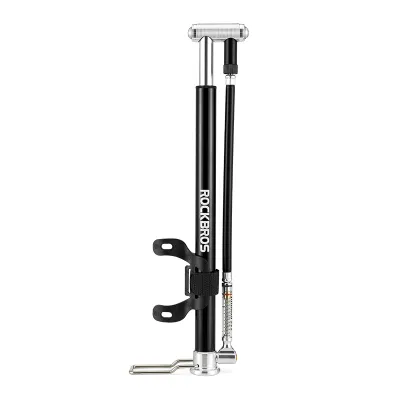
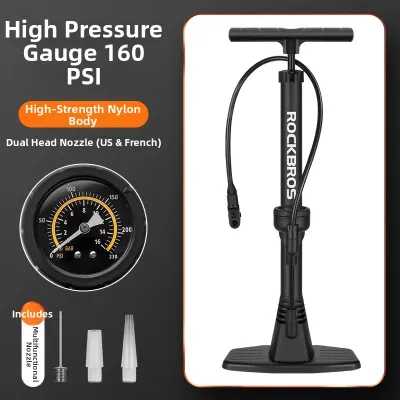
![[Ready Stocks in SG!] ROCKBROS Foot Pump High Pressure Portable Basketball Bicycle Pump Electric Bicycle Motorcycle Car Air Pump Daily Inflator Bike](https://img.lazcdn.com/g/p/7c008e466259c136ffaad2f8643b0736.png_400x400q80.png_.webp)
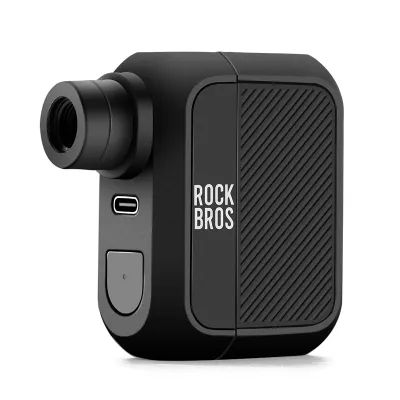
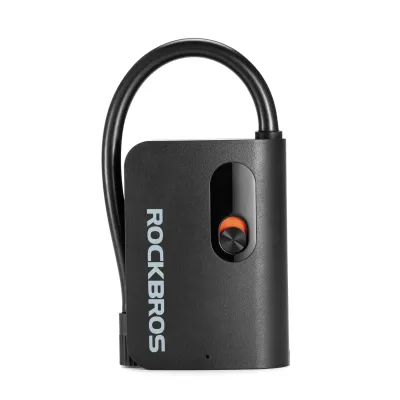
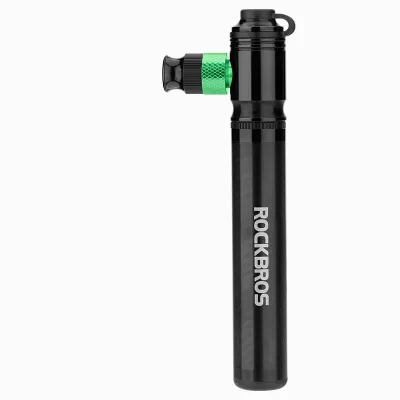
![[LOCAL SELLER] ROCKBROS A320 120PSI Bicycle Air Pump Aluminum Alloy Bike Mini Pump for Balloon Football Basketball Bicycle](https://img.lazcdn.com/g/p/4cdf88dce9570556e1ae5796568391e5.png_400x400q80.png_.webp)
Prices are valid at publication and may change. Please refer to the product page for the latest price.
The primary challenge of dual-use inflation lies in the sheer volume of air required by a passenger car tire compared to a bicycle tire. A standard road bike tire holds roughly 4 to 5 liters of air, whereas a typical passenger car tire holds between 30 and 40 liters of air. This massive difference in volume means that a pump designed solely for bicycle tires will struggle significantly when tasked with filling a car tire.
Manual floor pumps are designed to deliver small, high-pressure bursts of air with each stroke. While they are highly effective for bicycles, using them to inflate a car tire from flat requires thousands of full-body strokes. This level of physical exertion is not only exhausting but also highly impractical for roadside situations where time and safety are paramount.
Furthermore, prolonged manual pumping generates intense friction heat inside the pump’s cylinder. Manual pumps are not engineered to dissipate heat over long periods of continuous operation. The resulting thermal buildup can quickly dry out internal lubricants, melt rubber piston seals, and render the pump completely useless.
Portable electric air compressors, on the other hand, utilize a motorized piston to automate the compression process. These units are engineered to run continuously for several minutes, delivering a steady stream of air without requiring physical effort from the user. This makes them the only realistic option for drivers who also want to maintain their bicycles.
As a safety boundary, manual pumps should only be considered for minor car tire top-ups of 1 to 2 PSI in emergency scenarios. Attempting to fully inflate a flat car tire with a manual pump can lead to tool failure, physical exhaustion, and unsafe delays on the roadside.
Key Specifications to Check for Dual-Use Inflation
To select a pump that can safely transition between bicycles and passenger vehicles, you must evaluate several critical technical specifications.

- Maximum Pressure (PSI): While car tires typically operate at moderate pressures between 30 and 35 PSI, a dual-use pump should feature a much higher maximum pressure rating, such as 120 to 150 PSI. High-pressure capability is essential for road bikes, which often require 80 to 100 PSI or more. Additionally, a pump with a higher maximum rating is built with a more robust motor and cylinder, meaning it will experience less mechanical strain when operating at lower car tire pressures.
- Airflow Rate (L/min): Airflow rate, measured in liters per minute, determines how quickly the pump can move air into the tire. A higher airflow rate significantly reduces inflation times for large-volume car tires. If the airflow rate is too low, the pump's motor must run for an extended period, which increases the risk of overheating and shortens the overall lifespan of the device.
- Power Source and Battery Capacity: Portable electric pumps rely on internal lithium-ion batteries, typically rated in milliampere-hours (mAh). Because car tires require a substantial volume of air, inflating them consumes a large amount of electrical energy. A larger battery capacity ensures that the pump can complete a car tire top-up without running out of power mid-way through the process.
- Valve Compatibility: Car tires exclusively use Schrader valves, which feature a wide, threaded design. Bicycles, however, use a mix of Schrader valves (common on mountain and city bikes) and Presta valves (standard on road bikes). A versatile pump must feature a smart valve head that automatically accommodates both types, or include secure, screw-on adapters to prevent air leakage during high-pressure inflation.
Evaluating ROCKBROS Pump Categories for Dual Use
Understanding the strengths and limitations of each pump category helps you choose the right tool for your specific needs.
Portable Electric Air Compressors (The Practical Choice)
Portable electric air compressors are the most effective solution for dual-use inflation. These compact devices feature digital screens that display real-time pressure readings and allow you to preset your desired target PSI. Once the pump reaches the target pressure, it automatically shuts off, preventing over-inflation and allowing you to monitor the process safely.
The main operating constraint of these portable electric units is heat management. Because the motor and piston are housed in a small, portable casing, heat builds up rapidly during high-volume tasks like inflating a car tire. Users must check the manufacturer’s instructions for the recommended continuous run-time—usually around 5 to 10 minutes—and allow the device to cool down completely between tires to prevent motor damage.
High-Volume Floor Pumps (The Manual Backup)
High-volume floor pumps feature a stable base, a long cylinder, and an ergonomic T-handle, allowing you to use your body weight to pump air. These manual pumps are incredibly reliable because they do not rely on battery power or electrical outlets, making them excellent tools for home garages and routine bicycle maintenance.
However, using a floor pump on a car tire is a slow, physically demanding task. While it is entirely feasible to use a floor pump to add a few PSI to a slightly low car tire, fully inflating a flat tire requires an immense amount of time and physical effort. This category is best suited as a reliable manual backup rather than a primary tool for vehicle emergencies.
Mini Hand Pumps and CO2 Inflators (Why to Avoid for Cars)
Mini hand pumps are ultra-compact tools designed to be mounted on bicycle frames for emergency roadside repairs. CO2 inflators use small, pressurized gas cartridges to rapidly inflate a bicycle tire after a puncture.
Neither of these tools should ever be used on a car tire. Mini hand pumps have tiny cylinders that move very little air per stroke, meaning it would take hours of continuous pumping to make a noticeable difference in a car tire, likely destroying the pump’s seals in the process. CO2 cartridges do not contain nearly enough gas volume to inflate a car tire, and attempting to use them is a waste of emergency resources.
Safe Operation: Inflating a Car Tire with a Portable Pump
Operating a portable pump on a car tire requires adherence to specific safety protocols to protect both the vehicle’s tires and the inflation equipment.
Before attempting to inflate any vehicle tire, always check the vehicle manufacturer’s instructions and the tire sidewall markings. If there is any conflict or if you are unsure of the compatibility, stop immediately and consult a professional technician.
- Preparation: Locate the recommended tire pressure for your vehicle, which is typically found on a sticker inside the driver's side door jamb or in the owner's manual. Do not use the maximum pressure printed on the tire sidewall, as this is the maximum pressure the tire can safely hold under full load, not the ideal daily operating pressure.
- Connection: Ensure the car's valve stem is clean and free of debris. Attach the pump's connector securely to the Schrader valve. A tight, secure connection is critical; any air leakage will force the pump's motor to run longer, leading to unnecessary heat buildup and battery drain.
- Heat Management: Monitor the temperature of the pump housing and the connection hose during operation. The hose near the pump body can become extremely hot to the touch. If the device feels excessively hot, turn it off immediately and allow it to cool for 10 to 15 minutes before continuing.
- Auto-Shutoff Usage: Program the digital target pressure on your electric pump before starting. This feature allows the pump to run unattended while you stand by to monitor the connection, ensuring the pump stops precisely at the correct pressure without risk of over-inflation.
Maintenance and Care for Your Dual-Use Pump
Proper maintenance ensures your pump remains reliable when transitioning between rugged outdoor car environments and clean bicycle storage.
- Cleaning the Hose and Nozzle: Car wheels are exposed to road grime, brake dust, and mud. After using your pump on a car tire, wipe down the hose and nozzle with a clean, damp cloth to remove any abrasive particles. This prevents dirt from entering the pump's internal mechanism or damaging the valve connectors during future bicycle use.
- Battery Care in Warm Climates: Portable electric pumps use lithium-ion batteries, which can degrade rapidly if exposed to extreme heat. In Singapore's warm and humid climate, avoid storing your electric pump in a hot car trunk or direct sunlight for extended periods. Store the pump in a cool, dry indoor location, and keep the battery charged between 50% and 80% when not in use to preserve its overall lifespan.
- Inspecting and Lubricating Seals: The rubber O-rings and gaskets inside the pump nozzle and adapters are critical for maintaining an airtight seal. Periodically inspect these rubber components for signs of cracking or wear. Applying a light coat of silicone grease to the seals will keep them pliable and ensure a secure, leak-free connection across different valve types.
Frequently Asked Questions (FAQ)
Can I use a manual floor pump to top up a slightly flat car tire?
Yes, you can use a high-volume manual floor pump to top up a car tire if you only need to add 2 to 5 PSI. Because floor pumps have larger cylinders than hand pumps, they can deliver enough air to make minor adjustments feasible without immediate tool damage. However, you must be prepared for a moderate physical workout, and you should stop immediately if the pump’s base or lower cylinder begins to feel excessively warm.
Will inflating a car tire drain the battery of a portable electric pump?
Yes, inflating a car tire will drain the battery of a portable electric pump much faster than inflating bicycle tires. Car tires require a massive volume of air, which forces the electric motor to run continuously under load. Depending on the battery capacity of your specific model, fully inflating a single flat car tire can consume 50% or more of the total battery charge. It is highly recommended to recharge the pump fully after any car tire inflation task to ensure it is ready for future emergencies.
Do I need an adapter to switch between bike and car valves?
It depends on your bicycle’s valve type. Car tires exclusively use Schrader valves, which are also standard on most mountain bikes. If you are inflating a car tire or a mountain bike tire, you can connect the pump’s nozzle directly. However, road bikes typically use Presta valves. To inflate a road bike tire, you must use a Presta-to-Schrader adapter, which is often included in the box with your pump, or utilize a dual-purpose pump head that accommodates both valve types.
Community discussion
Share your experience or ask a question. Comments are reviewed before publication.