
Setting up a home gym in a Singapore HDB flat requires a smart balance between your fitness goals and spatial reality. While a barbell is the ultimate tool for building strength, its physical length and the space needed to load weights can quickly overwhelm a compact living room or spare bedroom. Choosing the right barbell type ensures you can perform compound lifts safely without damaging your walls, furniture, or relationship with your neighbors.
Measuring Your HDB Space and Defining Training Goals
Before purchasing any fitness equipment, you must accurately assess your designated workout area. Begin by measuring the clear floor length of your room, keeping in mind that you need not just the length of the bar itself, but also at least 50 to 60 centimeters of open space on either side to safely slide weight plates on and off. Ceiling height is another critical factor; if you plan to perform overhead presses or clean-and-presses, ensure your reach plus the height of the barbell plates clears your ceiling lights and fans. Additionally, measure your doorway and hallway widths to guarantee you can physically maneuver a long steel bar into your apartment upon delivery.
Your training style directly dictates the specifications of the bar you need. If your primary goal is heavy powerlifting (squats, bench presses, and deadlifts), you will require a bar with a high weight capacity and standard sleeve dimensions. For general fitness, high-intensity interval training, or accessory work, a lighter, shorter bar may be far more practical.
Products mentioned in this guide
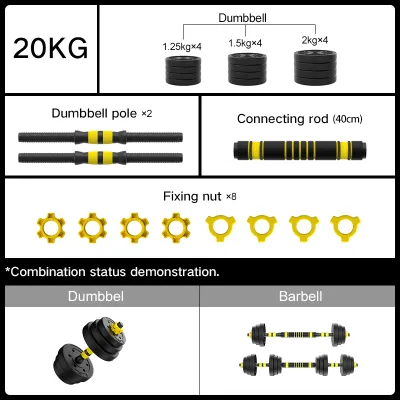
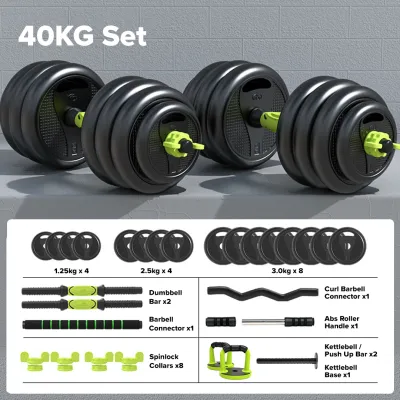
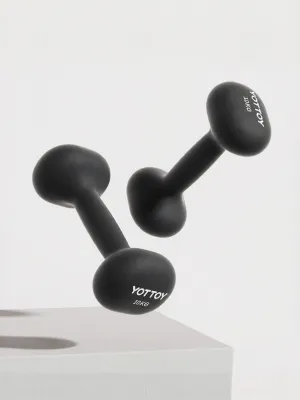
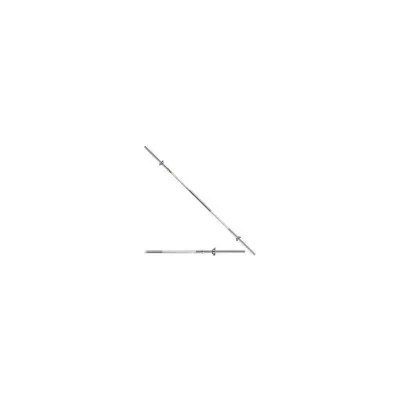
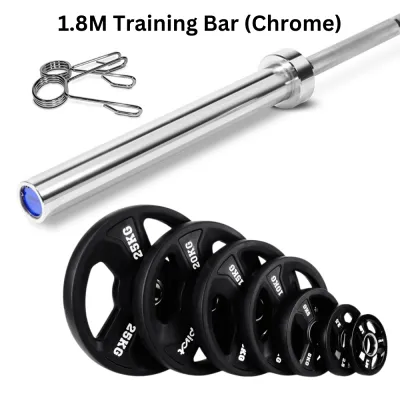
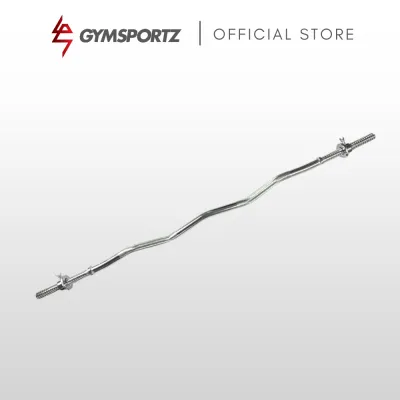
Prices are valid at publication and may change. Please refer to the product page for the latest price.
Living in a high-rise HDB flat also means considering structural limits and communal harmony. Standard residential floors in Singapore are designed to support specific structural loads, typically around 150kg per square meter. While a standard workout setup rarely exceeds this limit, dropping heavy weights can create localized impact forces that risk cracking floor tiles or disturbing neighbors downstairs. Planning for adequate floor protection and noise-dampening materials is essential from day one.
Evaluating Barbell Types for Compact Home Gyms
When shopping for a barbell, understanding the structural differences between the main types will help you make an informed decision for your space.

Olympic Barbells Standard Olympic barbells are the industry benchmark for strength training. They typically measure 2.2 meters (7.2 feet) in length, weigh 20 kilograms, and feature 50mm (2-inch) rotating sleeves. The rotating sleeves are crucial for reducing wrist strain during dynamic lifts like cleans and snatches. However, their sheer length makes them incredibly challenging to use in standard HDB bedrooms. If you are committed to the Olympic standard but have limited space, look for “shorty” or junior Olympic bars. These are often shortened to 1.5 or 1.8 meters by reducing the length of the shaft or the weight sleeves, allowing you to use standard Olympic plates while saving valuable floor space.
Standard Barbells Standard barbells are lighter and thinner, typically featuring a 25mm (1-inch) diameter shaft and non-rotating sleeves. They usually range from 1.5 to 1.8 meters in length and weigh between 5 and 10 kilograms. Because they are shorter and have a smaller footprint, they fit much more easily into tight spaces. The trade-off is their lower weight capacity and lack of rotating sleeves, which makes them less suitable for heavy powerlifting or Olympic weightlifting movements. They are, however, highly effective for general strength training, curls, rows, and overhead work.
Adjustable and Collapsible Barbells For the ultimate space-saving setup, some manufacturers offer adjustable or modular barbell systems. These designs allow you to unscrew or disassemble the bar into smaller sections that can be easily tucked away in a closet or under a bed when not in use. While highly convenient, you must carefully review the manufacturer’s specifications regarding weight limits and locking mechanisms. These bars are generally best suited for light to moderate resistance training rather than heavy compound lifts, as the joint connections can wear over time under extreme loads.
EZ-Curl and Specialty Bars If your training focuses heavily on isolation movements like bicep curls, tricep extensions, and upright rows, an EZ-curl bar is an excellent compact alternative. Measuring around 1.2 meters, these bars feature an angled, zig-zag shaft that reduces stress on your wrists and elbows. Because of their short length, they can be safely used in almost any corner of an HDB flat without any risk of hitting walls or furniture.
Practical Storage and Setup Solutions for Small Flats
Storing a barbell in a small apartment requires creativity to keep your living space uncluttered and safe.
Freestanding weight trees that include vertical barbell holders are highly efficient, as they store both your plates and your bar within a single, compact footprint. If you prefer to keep your floor completely clear, wall-mounted brackets are an option. However, you must verify the structural integrity of your walls before drilling. In HDB flats, internal partition walls (like drywall) may not support the weight of heavy steel bars; structural concrete walls are much safer, though you must avoid drilling into the designated household shelter (bomb shelter) walls, as this is strictly regulated.
When setting up your workout zone, plan a clear loading path. Ensure that the ends of your barbell do not sit close to glass sliding doors, television consoles, or main walkways where family members might walk past unexpectedly.
To protect your flooring and maintain peace with your neighbors, invest in high-quality protective flooring. Standard yoga mats are insufficient for barbell training. Instead, opt for high-density rubber gym tiles that are at least 15mm to 20mm thick. These tiles distribute the weight of the barbell, protect your underlying vinyl or ceramic tiles from impact damage, and significantly dampen the vibration and sound of weights touching the floor.
Common Sizing and Clearance Mistakes to Avoid
Many home gym enthusiasts in Singapore make preventable mistakes when ordering their first barbell setup.
The most common error is failing to account for the extra clearance needed to load weight plates. A room might physically measure 2.4 meters wide, which technically fits a 2.2-meter Olympic bar. However, once the bar is positioned, you will have only 10 centimeters of space on either side—making it physically impossible to slide a weight plate onto the sleeve or secure it with a collar. Always add at least 1 meter to the total length of the barbell when calculating your minimum required room width.
Another frequent oversight involves logistics and delivery. Long, rigid boxes containing 2.2-meter barbells may not fit easily into standard HDB passenger lifts or around tight stairwell corners. Before ordering, verify the dimensions of your building’s lift and ensure you have a clear path from the loading bay to your front door.
Finally, never assume all weight plates and barbells are universally compatible. Standard plates with 25mm holes will not fit on Olympic barbell sleeves, and Olympic plates with 50mm holes will slide loosely on standard bars without specialized adapters. Always double-check the exact sleeve diameter of your barbell and the center hole diameter of your weight plates before finalizing your purchase.
Frequently Asked Questions (FAQ)
Can I use a full-length Olympic barbell in a standard HDB bedroom?
While physically possible if the room is completely empty, using a standard 2.2-meter Olympic barbell in a typical HDB bedroom is highly impractical. Most HDB bedrooms measure between 3 and 3.5 meters in width. Once you account for a bed, wardrobe, and the necessary 0.5-meter clearance on both ends of the bar for loading plates, you will run out of space. For bedroom workouts, a 1.5-meter or 1.8-meter short Olympic bar is a much safer and more practical alternative.
Are adjustable or collapsible barbells safe for heavy compound lifts?
Adjustable or collapsible barbells are generally safe for light to moderate training, but they are not recommended for heavy compound lifts like maximum-effort deadlifts or squats. You must always check the manufacturer’s certified maximum load rating before training. Over time, the threaded joints or locking pins on modular bars can experience wear and tear. Regularly inspect these connection points for any signs of loosening, thread stripping, or structural bending, and immediately stop using the bar if you notice any play in the joints.
Community discussion
Share your experience or ask a question. Comments are reviewed before publication.