
To choose the right bicycle rear bag for Singapore’s Park Connector Network (PCN) and daily commuting, you need to prioritize reliable weather protection against sudden tropical downpours, secure mounting systems compatible with your bike’s rear rack, and organized compartments that balance work essentials with leisure gear. Because commuting and recreational riding present different demands, the ideal bag must transition seamlessly from a stable, rattle-free attachment on the frame to a comfortable, easy-to-carry shoulder bag or backpack when you reach your destination.
Whether you are looking at a budget-friendly option or investing over S$150 in a premium waterproof model, understanding these key features will help you find the perfect balance of utility and comfort. By focusing on practical design elements rather than brand names, you can ensure your gear remains safe, dry, and accessible throughout your journey.
Weather Resistance for Tropical Showers and High Humidity
Singapore’s tropical climate is characterized by sudden, heavy downpours and consistently high humidity. When evaluating a bicycle rear bag, you must verify its water-resistance rating or check if it includes a high-visibility, fitted rain cover. While some bags rely on water-repellent coatings that handle light drizzle, fully waterproof bags typically feature roll-top closures and welded seams rather than traditional stitched seams, which can let water seep through during a torrential storm.
Products mentioned in this guide
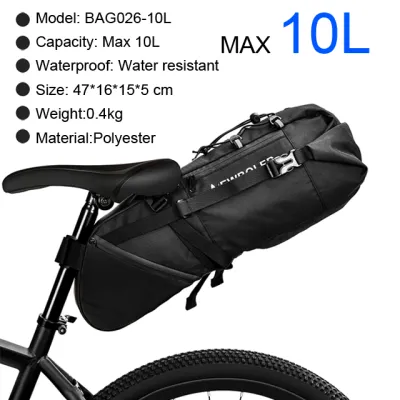
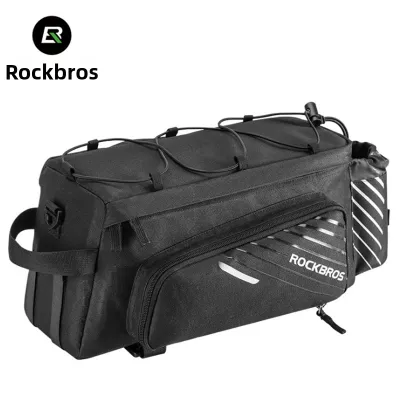
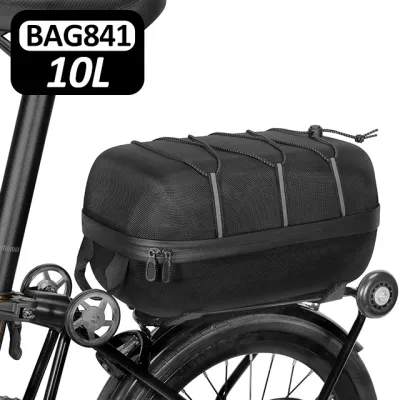
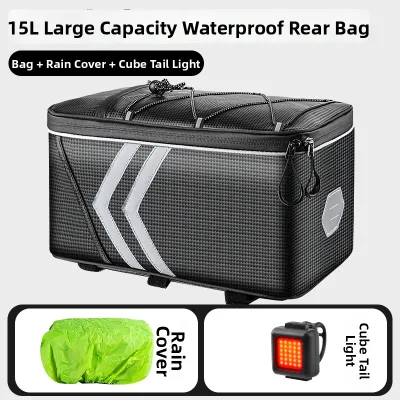
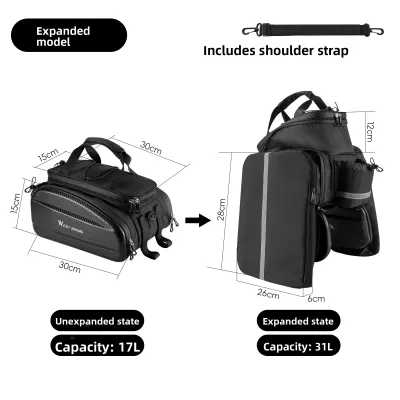
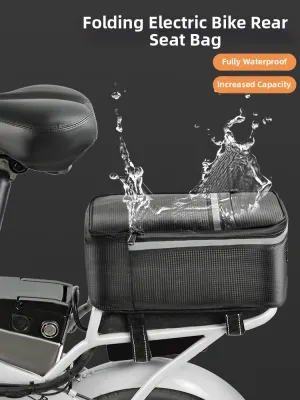
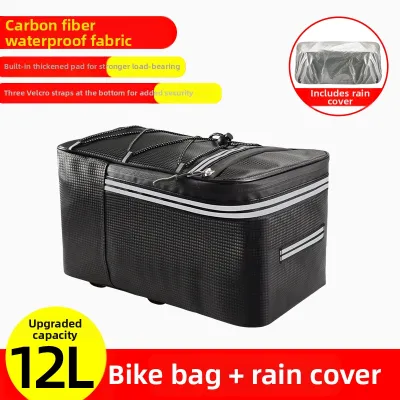
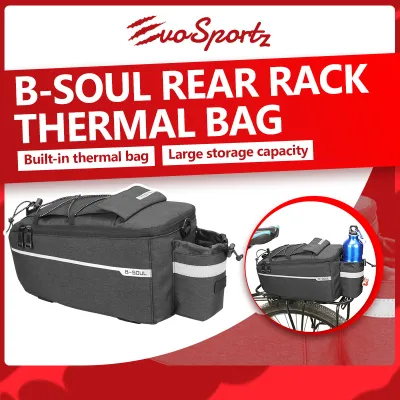
Prices are valid at publication and may change. Please refer to the product page for the latest price.
Examine the zippers closely before purchasing. Look for rubberized, water-resistant zippers or protective storm flaps that cover the zipper tracks to keep moisture out. Additionally, high humidity can lead to mold growth if the bag is stored in damp, unventilated areas. Choosing materials treated for UV and mildew resistance, or ensuring the bag can dry completely after a wet ride, helps maintain the structural integrity of the fabric over time.
Capacity and Organization for Laptops and Leisure Gear
A versatile rear bag must accommodate both your professional tools and your weekend leisure gear. If you commute with a laptop, check the manufacturer’s specifications for the internal sleeve dimensions to ensure your computer fits securely. Look for padded compartments that suspend the laptop slightly above the bottom of the bag, protecting your electronics from sudden jolts when riding over curb transitions or uneven PCN paths.

For leisure rides, quick-access pockets are essential for storing items like water bottles, sunscreen, snacks, and a compact tire repair kit. Having dedicated external pockets or mesh sleeves allows you to grab these items without opening the main compartment. This separation also keeps damp or dirty gear away from your clean work clothes and electronics.
Consider expandable designs to handle varying daily loads. Roll-top closures allow you to adjust the bag’s volume based on what you are carrying, while external bungee cords or daisy chains provide convenient spots to lash a light jacket or a wet towel. This flexibility ensures the bag remains compact when nearly empty but can expand when you need to run quick errands on your way home.
Mounting Stability and Quick-Release Convenience
Mounting stability is critical for safety, especially when carrying heavier loads on shared paths. Before purchasing, verify that the bag’s mounting system is compatible with your bicycle’s rear rack. Check the manufacturer’s specified limits for rack tube diameters, as some mounting hooks require adapters or inserts to fit thinner or thicker rack rails securely without rattling.
Quick-release brackets offer significant convenience for daily commuters who need to transition from riding to walking. Look for systems that lock securely onto the rack rail and release with a simple upward pull of a handle or a push of a button. A secure locking mechanism prevents the bag from bouncing off the rack when you encounter tree roots or speed bumps along the PCN.
Safety on the move also requires managing loose straps. Ensure that any shoulder straps, backpack harnesses, or carrying handles can be tucked away securely into dedicated pockets or clipped down tightly while riding. Loose, dangling straps pose a serious hazard if they become entangled in your rear wheel spokes or drivetrain, which can cause sudden stops or falls.
Visibility and Safety Features for Early and Late Rides
Commuting during early mornings or late evenings requires excellent visibility, particularly on unlit or dimly lit sections of the park connectors. Inspect the placement of reflective elements on the rear bag. High-quality reflective strips or logos should be positioned on the back and sides of the bag, ensuring you remain visible to overtaking cyclists and pedestrians from multiple angles.
Active lighting is equally important for low-light safety. Look for bags equipped with dedicated light loops, clips, or integrated mounts designed specifically for attaching a rear LED safety light. Mounting your light directly to the bag ensures it remains visible and is not blocked by your gear or the rear rack itself.
While classic black bags are popular, high-visibility color options like neon yellow, orange, or bright red offer superior contrast against typical urban and park backgrounds. If you prefer a darker bag for professional settings, consider choosing one that includes a bright, reflective rain cover that you can easily deploy during low-light rides or sudden downpours.
Security and Theft Prevention for Quick Stops
Stopping for a quick coffee or a convenience store run along the PCN requires a practical security strategy. Some rear bags feature lockable zipper pulls that allow you to secure the main compartment with a small padlock, or hidden zipper garages that make it harder for opportunistic hands to open the bag quickly. Secure buckle closures that require two hands to release also add a layer of deterrence.
For added peace of mind when carrying the bag off the bike, look for designs with hidden anti-theft pockets. These pockets are typically positioned against your back when the bag is worn as a backpack or shoulder bag, keeping passports, wallets, and keys completely inaccessible to others in crowded spaces. Some heavy-duty commuter bags also incorporate slash-resistant fabrics or internal wire mesh to prevent quick cut-and-run thefts.
Ultimately, the most reliable security measure is a fast and efficient detachment system. Choosing a bag that converts instantly into a backpack or shoulder bag allows you to take your most valuable items with you whenever you step away from your bicycle, eliminating the risk of leaving expensive electronics or personal documents unattended on your rack.
Frequently Asked Questions (FAQ)
Can I use a seatpost bag instead of a rack-mounted rear bag for commuting?
Yes, you can use a seatpost bag, but it comes with distinct trade-offs compared to a rack-mounted rear bag. Seatpost bags generally have lower weight capacities and are prone to swaying side-to-side when loaded heavily, which can affect your balance on the PCN. If you need to carry a laptop, a rigid rear rack and a dedicated pannier or trunk bag are highly recommended, as they provide a stable platform, better impact protection, and easier access to your daily work essentials.
How do I clean and maintain my rear bag after riding in heavy rain?
After riding through a tropical downpour, empty the bag completely and wipe down both the interior and exterior with a clean, damp cloth to remove road grime and grit. Hang the bag to air-dry completely in a well-ventilated indoor area away from direct heat sources or intense sunlight, which can degrade waterproof coatings. Always check the manufacturer’s care label before using any mild soaps or attempting to machine wash the bag, as harsh detergents can strip away water-resistant treatments.
Community discussion
Share your experience or ask a question. Comments are reviewed before publication.