
Setting up a home gym in a compact Singapore Housing & Development Board (HDB) flat requires balancing workout versatility with spatial efficiency. While bodyweight training is highly effective, finding space for dedicated strength equipment like a dip bar can be challenging. The ideal setup must not only fit within your available floor area but also respect the structural limits of your home and any tenancy agreements. By understanding the unique design characteristics of different dip bars, you can select an option that supports your fitness goals without cluttering your living space.
Assessing Your HDB Space and Installation Limits
Tenancy status is the first filter when choosing home gym equipment. If you rent your HDB flat, your tenancy agreement almost certainly prohibits drilling into walls or making permanent structural modifications. Homeowners have more freedom, but they must still navigate HDB renovation guidelines, which restrict drilling into structural columns or load-bearing shear walls. Identifying these boundaries early prevents costly damage and potential lease violations.
Multi-purpose room usage is another reality of modern HDB living. Bedrooms often double as home offices, and living rooms serve as communal spaces, meaning fitness equipment cannot permanently occupy the center of the room. Choosing equipment that can be easily folded, disassembled, or tucked away ensures your home remains functional and uncluttered when you are not exercising.
Products mentioned in this guide
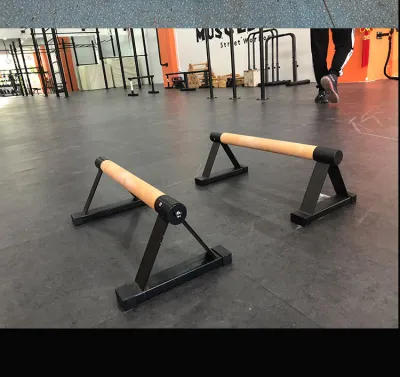
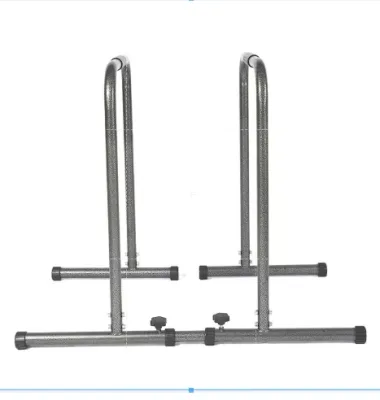
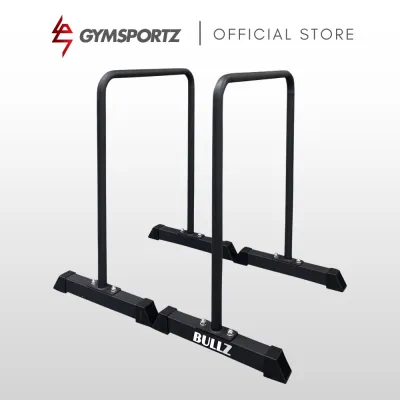
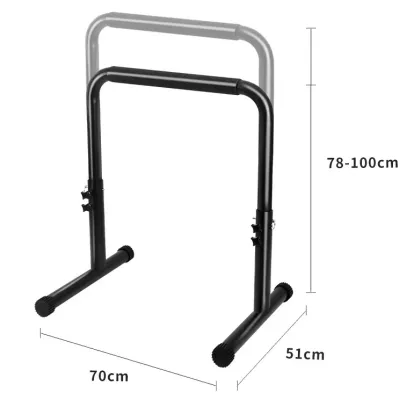
![[SG STOCK]Heavy Duty Portable Parallel Dip Bar for Home Gym Body Weight Training Crossfit Push Up Pull Up](https://img.lazcdn.com/g/p/9c3951e5a4163b367f36e6bebfcd222f.jpg_400x400q80.jpg_.webp)
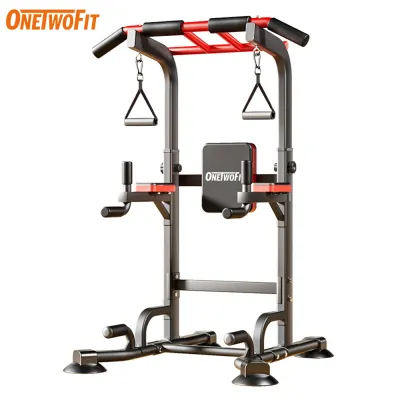

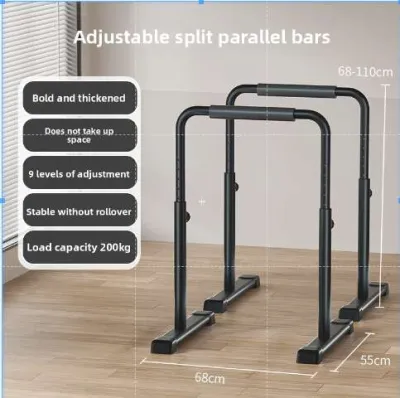
Prices are valid at publication and may change. Please refer to the product page for the latest price.
Floor load limits and neighbor relations are critical considerations in high-rise apartments. Dynamic movements, such as explosive dips or leg raises, transfer significant force through the equipment to the floor. This kinetic energy can cause vibrations and noise that travel easily to the unit below, potentially straining relations with your neighbors. Selecting stable equipment and using proper dampening accessories helps maintain a peaceful living environment.
Evaluating Dip Bar Designs for Compact Living
Dip bars come in several configurations, each presenting distinct trade-offs between stability, portability, and installation complexity. Permanent fixtures, such as wall-mounted units, offer exceptional stability but require a dedicated wall space and permanent installation. Portable, freestanding units offer the flexibility to move your workout outdoors or to another room, but they require more floor space during use.

Regardless of the design you choose, verifying the manufacturer’s weight capacity and structural stability guidelines is essential. Dynamic exercises place much higher stress on equipment than static holds, meaning a bar must be rated well above your actual body weight. Checking these specifications before purchase ensures your safety and prevents premature equipment failure. Remember that equipment cannot replace proper training or physical judgment; if you experience joint pain or instability during a movement, stop immediately and verify your form.
Freestanding and Foldable Dip Bars
Freestanding dip bars, often sold as pairs of separate equalizer arches or single connected frames, are highly popular for their versatility. Standard power towers combine pull-up and dip stations but carry a massive footprint that can easily overwhelm a small HDB bedroom. In contrast, individual equalizer bars or telescopic frames can be positioned as wide or narrow as your shoulder width requires, then stacked together when your workout is complete.
When evaluating freestanding options, pay close attention to the base width and the specifications of the anti-slip feet. A wider base distributes your weight more evenly, reducing the risk of the bars tipping outward during wide-grip dips or horizontal rows. High-quality rubber or thermoplastic elastomer (TPE) feet are crucial for gripping smooth HDB flooring surfaces like polished porcelain tiles or vinyl planks.
Storage convenience relies entirely on the folded dimensions of the equipment. Before purchasing a foldable model, measure the clearance under your bed frame or the available depth inside your wardrobe. Some models fold completely flat to a thickness of under ten centimeters, making them exceptionally easy to slide out of sight, while others may still require significant vertical storage space.
Doorway and Wall-Mounted Options
Doorway dip bars and multi-use pull-up bars leverage existing architectural features to save floor space. These units typically hang from the door frame trim, using leverage to secure themselves during use. Because they rely entirely on the structural integrity of your door frame, precise physical measurements of the frame’s depth, width, and trim thickness are required before purchase to ensure a secure fit.
Wall-mounted dip bars provide a rock-solid platform for advanced movements but come with strict installation demands. In an HDB flat, internal partition walls are often made of lightweight concrete or drywall, which cannot safely support the cantilevered weight of a person performing dips. Mounting these units requires locating solid concrete walls, using a rotary hammer drill, and ensuring you do not violate any estate management rules or rental agreements.
Wall clearance is a frequently overlooked safety factor for wall-mounted equipment. To perform a full range of motion without restriction, you need sufficient clearance between the bar handles and the wall surface. If the handles are positioned too close to the wall, your knees, hips, or head may strike the wall during the eccentric phase of the exercise, limiting your workout quality and risking injury.
Measuring Clearance and Planning Your Workout Zone
Accurate spatial planning is the key to a safe and comfortable home workout. Start by measuring your ceiling height, especially if you plan to use a taller freestanding tower or a high-mounted wall bar. Standard HDB ceilings typically measure around 2.6 meters, which may leave limited overhead clearance if you are performing exercises where your head rises significantly above the bar level.
Beyond the physical footprint of the equipment, you must establish a clear buffer zone around your workout area. This zone should extend at least one meter in all directions from the outer edges of the dip bar. Having this open space prevents your limbs, feet, or head from accidentally striking nearby furniture, television consoles, or glass sliding doors during dynamic movements.
Protecting your flooring and managing acoustics should be integrated into your spatial planning. Placing a high-density rubber or foam exercise mat beneath your dip bar is highly recommended. These mats distribute the concentrated weight of the equipment, protect delicate flooring finishes like parquet or vinyl from scratches, and absorb the vibrations generated during intense training sessions.
Decision Checklist for Your Final Choice
To finalize your decision, match your tenancy status and structural constraints to the appropriate equipment type. If you are renting, prioritize freestanding, foldable equalizer bars or verified doorway units that require zero drilling. If you own your home and have a solid concrete wall with ample clearance, a wall-mounted unit offers a permanent, highly stable solution.
Next, verify your physical measurements against the product specifications. Ensure the equipment’s base fits comfortably within your designated workout zone with the necessary buffer clearance, and confirm that the folded dimensions align with your intended storage space.
Finally, review the manufacturer’s assembly instructions, warranty terms, and maximum weight limits. Ensure you have the necessary tools for assembly and that the weight capacity safely accommodates your body weight plus any additional resistance you plan to use, such as a weighted vest or dipping belt.
Frequently Asked Questions (FAQ)
Can I use a doorway dip bar on any HDB door frame?
No, doorway-mounted equipment cannot be used universally on all door frames. You must measure the exact width of the door opening, the depth of the wall, and the thickness of the top trim to ensure compatibility with the product’s design.
Avoid installing these units on hollow-core doors, sliding door tracks, or weakened wooden frames. Using leverage-based equipment on unsuitable frames can lead to structural failure, damaging your home and causing serious fall injuries.
Will a freestanding dip bar damage my HDB flooring?
Over time, the concentrated weight of a freestanding dip bar combined with the dynamic forces of your workout can scratch, dent, or discolor certain flooring materials. This is particularly true for softer surfaces like natural wood parquet or luxury vinyl tiles.
To prevent damage, verify that the equipment features non-marking rubber feet. Additionally, always place a high-density, non-slip exercise mat under the base to distribute the load, absorb impact, and prevent the frame from sliding during use.
Community discussion
Share your experience or ask a question. Comments are reviewed before publication.