
Setting up a home gym in a Singapore HDB flat requires balancing personal fitness goals with the realities of shared residential spaces. The ideal dumbbell set size and weight range depends on your current strength and training style, but for most residents, a compact adjustable dumbbell set ranging from 2 kg to 24 kg offers the most practical solution. This configuration provides sufficient resistance for progressive strength training while occupying less than half a square meter of floor space when stored.
Selecting the right equipment involves evaluating how much physical room you have to perform exercises safely, the durability of your flooring, and how to minimize noise to maintain good relations with your neighbors. By understanding these factors, you can build an effective workout routine without cluttering your living area.
Assessing Space and Floor Constraints in Your Apartment
Before purchasing any fitness equipment, you must measure the actual floor area where you plan to exercise. A safe workout zone requires a clear space of approximately 2 meters by 2 meters. This clearance ensures you can perform wide movements like lateral raises, chest flies, or lunges without colliding with walls, television consoles, or low-hanging ceiling fans.
Products mentioned in this guide
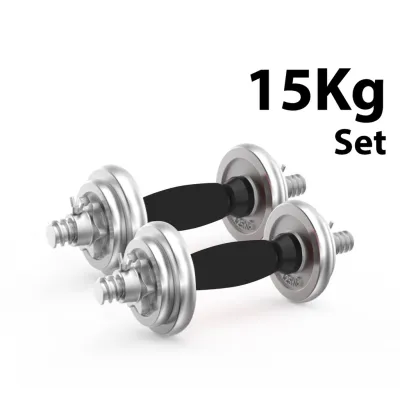
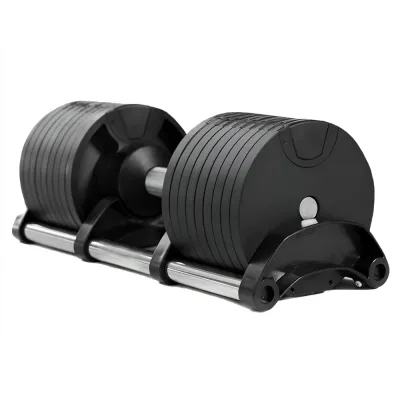
![[BULKY] Dumbbell Set Adjustable Exercise Weight Plates Dumbbell Barbell Convertible Gym Set](https://img.lazcdn.com/g/p/084fbf90618f02a1a89eb8fb30f8a31e.jpg_400x400q80.jpg_.webp)
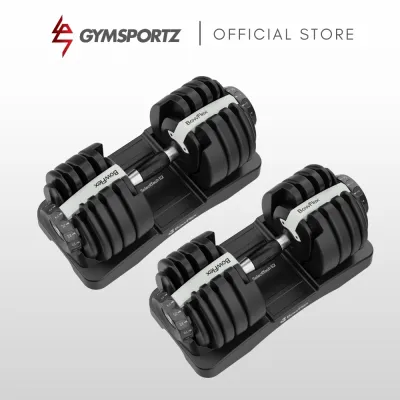
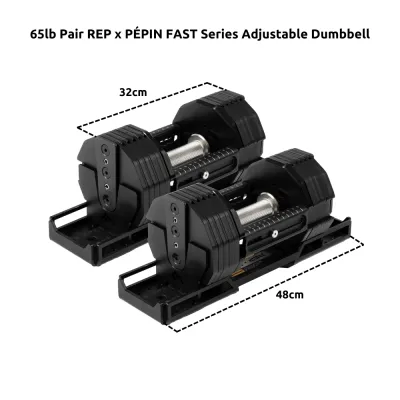
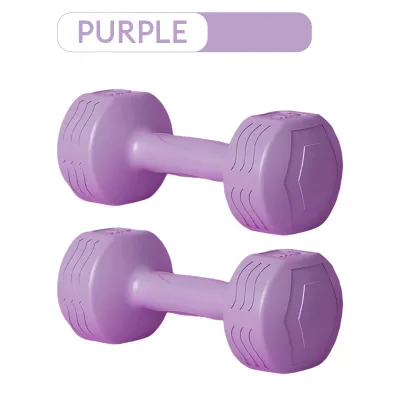
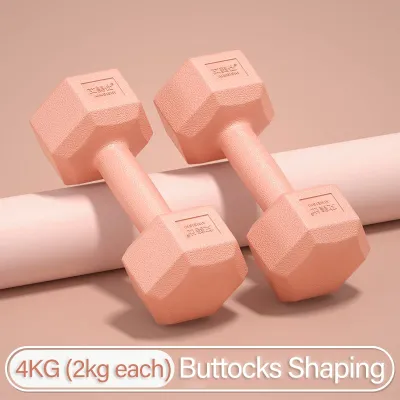
![[SG In Stock]Neoprene Dumbell Set for Weight Strength Training 1/2/3KG Suitable for Home Gym Exercise Small Dumbbell Set](https://img.lazcdn.com/g/p/923f27057110e9aadae3d93d3c8f3495.jpg_400x400q80.jpg_.webp)
Prices are valid at publication and may change. Please refer to the product page for the latest price.
Floor composition is another critical factor in an HDB flat. Modern apartments typically feature vinyl, laminate wood, or polished ceramic tiles. None of these materials are designed to withstand the direct impact of heavy metal weights. Dropping a dumbbell can easily crack tiles, dent laminate, or tear vinyl surfaces. To prevent costly damage, you should plan to use high-density rubber tiles or interlocking EVA foam mats to distribute the weight and protect the subfloor.
Storage limits will dictate the physical style of the dumbbells you can buy. If you intend to keep your weights out of sight, measure the clearance height under your bed frame or inside your utility closet. Many adjustable dumbbell cradles require at least 25 to 30 centimeters of vertical clearance, which may not fit under low-profile furniture. If space is exceptionally tight, a vertical dumbbell rack placed in a corner is often the most efficient way to utilize vertical space rather than floor area.
Matching Weight Ranges to Your Training Goals
To avoid buying a set that you will quickly outgrow or one that is too heavy to use safely, analyze the specific exercises you plan to perform. Isolation movements, such as bicep curls, tricep extensions, and lateral raises, target smaller muscle groups and require lighter, highly precise weight increments. For these exercises, a range starting at 2 kg and moving up to 10 kg is generally sufficient for most lifters.

Compound movements engage multiple large muscle groups simultaneously and demand significantly heavier loads. Exercises like goblet squats, Romanian deadlifts, and dumbbell chest presses require a higher weight ceiling to remain challenging. For these lifts, you will likely need weights ranging from 15 kg to 24 kg, or even up to 40 kg as your strength progresses over time.
If you choose a fixed-weight dumbbell set, you might need to purchase five or six different pairs to cover this entire spectrum, which quickly creates a storage challenge in a small room. An adjustable set solves this problem by packing multiple weight increments into a single pair of handles. Furthermore, if multiple family members of varying fitness levels share the equipment, look for a set that offers small weight steps, such as 1 kg or 2 kg increments, so everyone can train at their appropriate intensity.
Comparing Dumbbell Types for Compact Spaces
Fixed-weight dumbbells are the standard choice in commercial gyms because of their extreme durability and simplicity. They have no moving parts to wear out, and you can transition between weights instantly during fast-paced workouts. However, storing a full progression of fixed dumbbells requires a multi-tier rack that takes up substantial wall space, making them impractical for most HDB bedrooms unless you limit yourself to just two or three key pairs.
Traditional spin-lock dumbbells consist of a threaded steel bar, loose weight plates, and screw-on collars. This option is highly budget-friendly and allows you to add or remove plates as your strength grows. The primary drawback is the time-consuming process of spinning the collars off and on to change weights, which can disrupt the flow of your workout. They also require a dedicated box or tray to keep loose plates from rolling around the floor when not in use.
Quick-adjust dumbbells utilize a dial or pin-selector system to change weights in seconds. This design offers the smallest physical footprint, replacing up to 15 individual pairs of dumbbells with just one set resting on a compact tray. The trade-off is their mechanical complexity. The internal gears can be sensitive to impact, meaning they cannot be dropped without risking permanent damage. They also tend to have a wider physical profile even at lighter weight settings, which can feel slightly bulky during certain movements.
Planning Safe Storage and Noise Reduction
Living in close proximity to neighbors in an HDB block means noise management is a priority. Dropping weights or even clanking them together can send vibrations through the concrete floor slab, disturbing those living below you. To prevent this, invest in high-density rubber mats at least 10mm to 15mm thick. These mats absorb the impact and deaden the sound of placing weights down.
Keep your workout area organized to prevent tripping hazards. A dedicated floor tray or a small, low-profile dumbbell stand keeps your equipment secure and prevents weights from rolling away. This is especially important for round-plated dumbbells, which can easily roll on slightly uneven floors.
Establish a simple maintenance routine to keep your equipment safe and functional. Regularly inspect the locking mechanisms of adjustable sets to ensure they engage fully before lifting them over your body. Wipe down the handles after use to prevent sweat from corroding the metal or degrading the rubber grips over time.
Frequently Asked Questions (FAQ)
Is it safe to drop adjustable dumbbells?
No, you should never drop quick-adjust dumbbells. These models contain intricate internal selector dials, alignment pins, and plastic components that can easily crack or misalign upon impact. Unlike heavy-duty rubber hex dumbbells, dropping an adjustable model can ruin the locking mechanism, causing plates to slip out during use and posing a serious safety risk. Always place them down gently on a protective mat.
Do you need a weight bench for dumbbell workouts?
While a weight bench increases the variety of exercises you can perform, it is not strictly necessary for a productive home workout. You can perform many effective movements directly on the floor, such as floor presses and glute bridges. Alternatively, stable household furniture like a sturdy chair can support seated exercises, while standing variations of squats, overhead presses, and deadlifts require no extra equipment at all.
Community discussion
Share your experience or ask a question. Comments are reviewed before publication.